
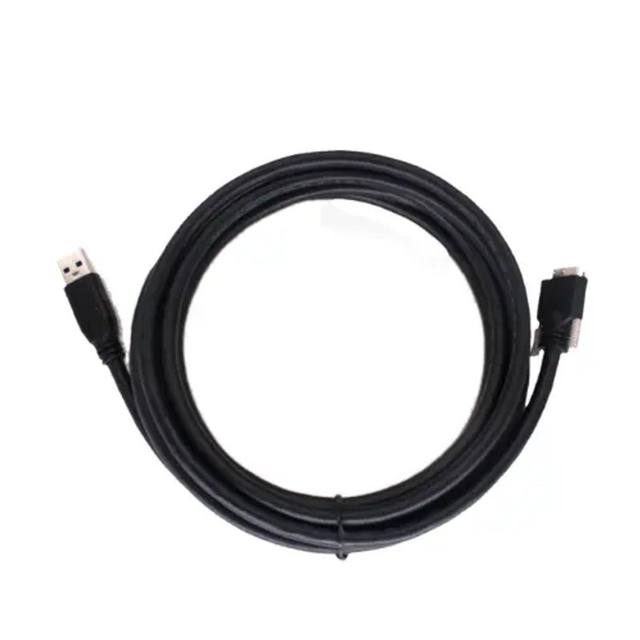
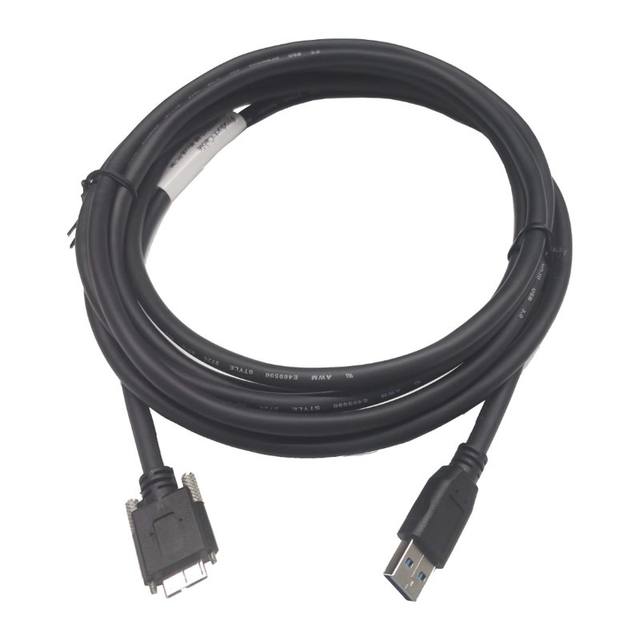
- USB 3.0
- 0.5–3 m (4 lengths: 0.5 / 1 / 2 / 3 m)
- Micro-B male (with screw)
- A male
- Recommended by AIS Vision
On request
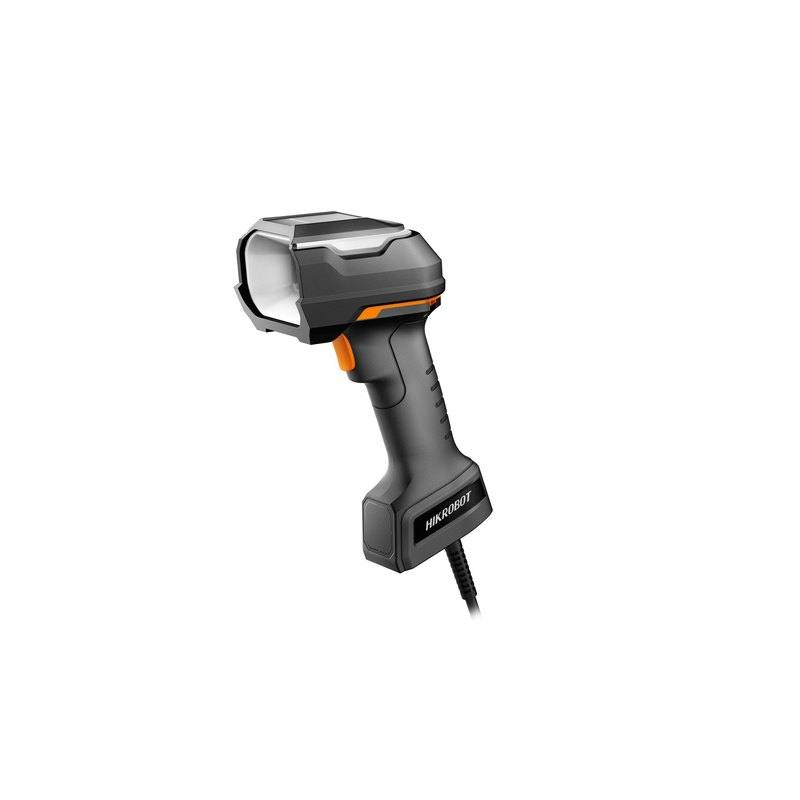
MV-IDH9000/13HHD/16RP
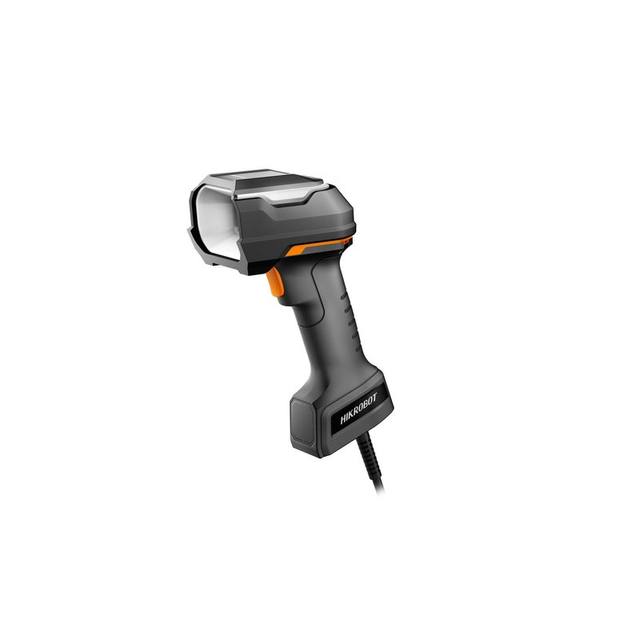
Hikrobot MV-IDH9000/13HHD/16RP — corded handheld code reader, 1.3 MP (1280 × 1024 px), 4.3–16 mm lens, read distance 0–350 mm, red / white illumination, DPM reading, USB / Ethernet / RS-232 / PROFINET / EtherNet/IP, IP67.
Two lenses in one body define this model: a 4.3 mm wide-angle lens (43.6° × 35.5°) and a 16 mm telephoto (10.4° × 8.3°) on the same 1280 × 1024 sensor. The telephoto view is what brings the minimum module down to 1.57 mil (about 0.040 mm), against 3 mil on the single-lens IDH9000/13DP/04RP. At an example 100 mm the telephoto field is 2 × 100 mm × tan 5.2° ≈ 18.2 mm wide, or 0.0142 mm per pixel on 1280 px, so a 1.57 mil module (1.57 × 0.0254 mm ≈ 0.040 mm) covers about 2.8 px, while the wide lens at the same distance spans about 80 mm. Ask us for the telephoto working window at your module size before fixing a stand-off.
| Brand | Hikrobot |
|---|---|
| Form factor | Handheld |
| Reader type | IDH9000 Series |
| Resolution | 1.3 MP (1280 × 1024 px) |
|---|---|
| Horizontal resolution | 1280 px |
| Communication | USB 2.0, DC terminal; protocols: SmartSDK, USB (HID/CDC), Serial2 | Fast Ethernet (100 Mbit/s), RS-232, DC terminal; protocols: SmartSDK, UDP, TCP Client, Serial, FTP, TCP Server, Profinet, Ethernet/IP, ModBus |
|---|---|
| Cordless | Wired (USB 2.0, DC terminal) |
| Focal length | Wide-angle lens: 4.3 mm; Telephoto lens: 16 mm |
|---|---|
| Field of view | Wide-angle lens: horizontal 43.6°, vertical 35.5°; Telephoto lens: horizontal 10.4°, vertical 8.3° |
| Integrated lighting | Diffused reflection lighting (red LED), bi-directional lighting (red LED), direct lighting (white LED), polarized lighting (white LED); Smart scanning mode is set by default, and auto polling of lights is supported according to the code reading scene. |
| Illumination colour | Diffused reflection lighting (red LED), bi-directional lighting (red LED), direct lighting (white LED), polarized lighting (white LED); Smart scanning mode is set by default, and auto polling of lights is supported according to the code reading scene. |
| Supply voltage | 12 VDC (MV-IDH9000/13HHD/16RP/U; varies by order code) |
|---|---|
| Power over cable (PoE / PoCXP / PoCL) | PoE3: 48 V (MV-IDH9000/13HHD/16RP/L) |
| Drop resistance | Dropping: 2.5 m, 50 times; Rolling: 0.5 m, 20000 times |
|---|---|
| IP rating | IP67 |
| Operating temperature | -10 °C to 50 °C |
| Scan technology | 2D imager (CMOS) |
|---|---|
| Supported codes | 1D codes: Code 39, Code 93, Code 128, CodaBar, EAN8, EAN13, ISBN, ISSN, ITF25, ITF14, UPCA, UPCE; 2D matrix codes: QR Code, Data Matrix, MicroQR, Aztec; Stacked barcode: PDF417; DPM (Hikrobot: "The device which supports ultra-small code and DPM code recognition has a lens for reading ultra-small code with a minimum module size of 0.04 mm and a zoom lens for high-speed reading with large depth of field.") |
| Read distance | 0 mm to 350 mm (envelope of Hikrobot's depth-of-field table, all code sizes) |
| Min. code resolution | 1.57 mil |
| Dimensions | 74 mm × 109.9 mm × 227.1 mm |
|---|---|
| Weight | Approx. 490 g (without cable) |
A practical engineering guide to selecting image-based 1D, 2D and DPM code readers: how to match resolution and field of view to module size, set working distance and depth of field, pick DPM lighting and optics, and choose decode strategy, communication and grading.
How to size camera resolution from field of view and the smallest defect using the 3-5 px rule, plus why optics, lighting and bandwidth cap usable resolution.
A field checklist to de-risk a machine vision project before you buy hardware: define defects and tolerances, collect representative samples, prove the imaging, budget resolution and field of view, lock motion and triggers, then run a structured proof of concept against measurable acceptance criteria.
Often used with
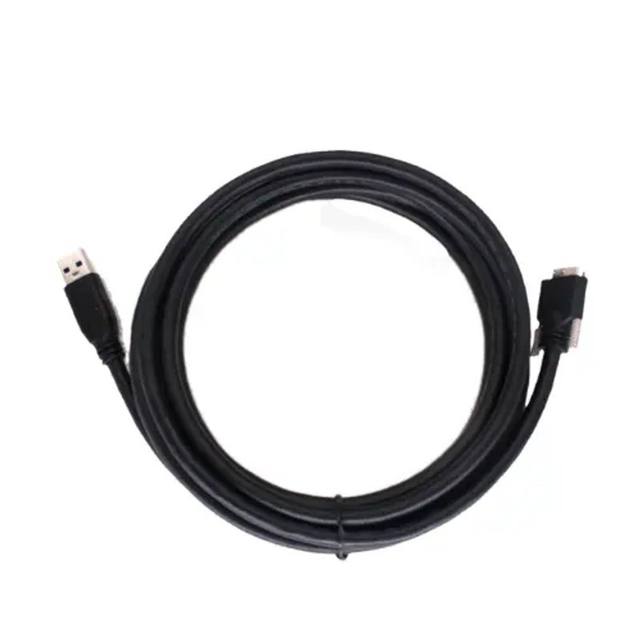
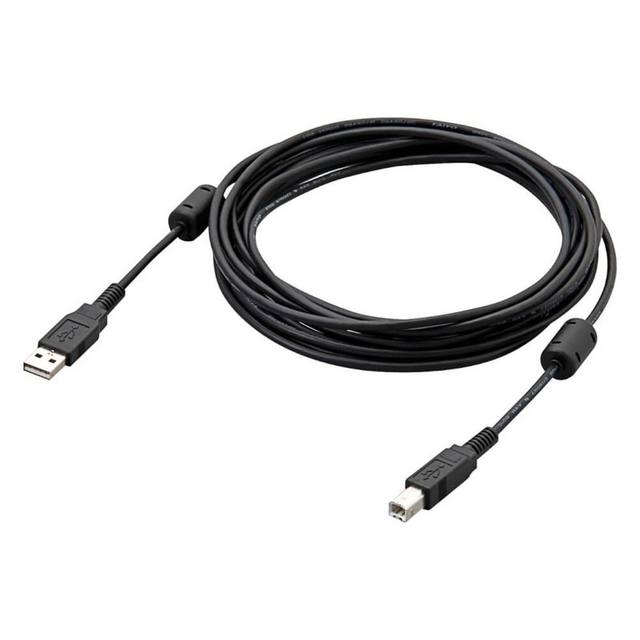
Industrial USB cables with locking connectors. Check length and flex rating against your installation.
AIS Vision · Integration
AIS Vision defines and tests the optimal combination of camera, optics and lighting for your application before you buy.