Compact LED spot lights that concentrate output on a small area, for targeted highlights, long throws and tight installations.
A spot light does the opposite of a diffuse light: it concentrates its output into a small pool, so a modest source can deliver high irradiance on one feature or reach a long way. It is useful when you want to light one region rather than a whole scene, when there is no room for a ring or bar, or when the light has to sit well back from the part.
Spot lights in this category come from Lumher. Compare environmental specs too, since these lights often sit exposed on the machine. AIS Vision can test whether a spot gives you enough contrast on your parts in a lighting study.
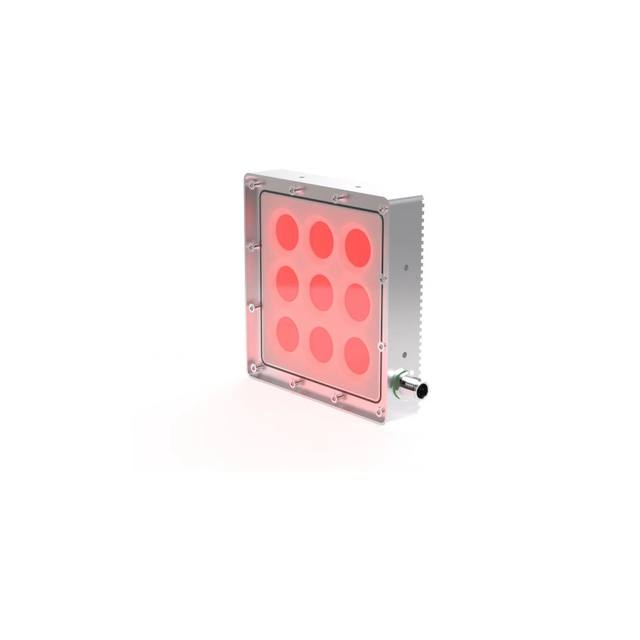
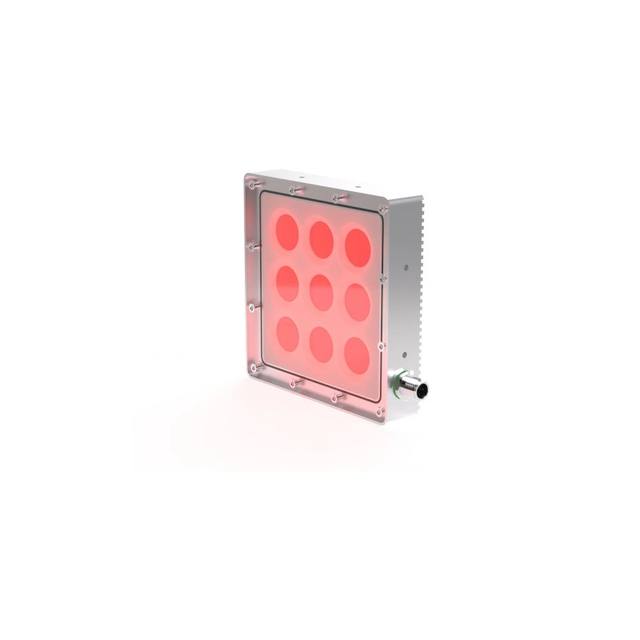
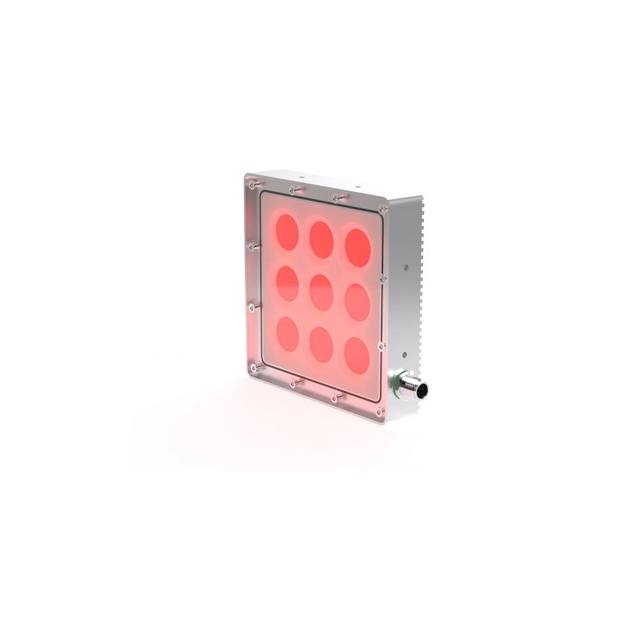
Lumher BS LED spotlight (Spotlight series), Infrared 850nm. The Spot or BS luminaire is a product specifically designed to provide focused or directional lighting. It is especially recommended for projects where the target surface is at a considerable distance from the camera. Made of anodised aluminium, this luminaire complies with IP65 watertightness standards, guaranteeing its durability and resistance.
Lumher BS LED spotlight (Spotlight series), Red 620nm. The Spot or BS luminaire is a product specifically designed to provide focused or directional lighting. It is especially recommended for projects where the target surface is at a considerable distance from the camera. Made of anodised aluminium, this luminaire complies with IP65 watertightness standards, guaranteeing its durability and resistance.
Lumher BS LED spotlight (Spotlight series), White 5000K. The Spot or BS luminaire is a product specifically designed to provide focused or directional lighting. It is especially recommended for projects where the target surface is at a considerable distance from the camera. Made of anodised aluminium, this luminaire complies with IP65 watertightness standards, guaranteeing its durability and resistance.
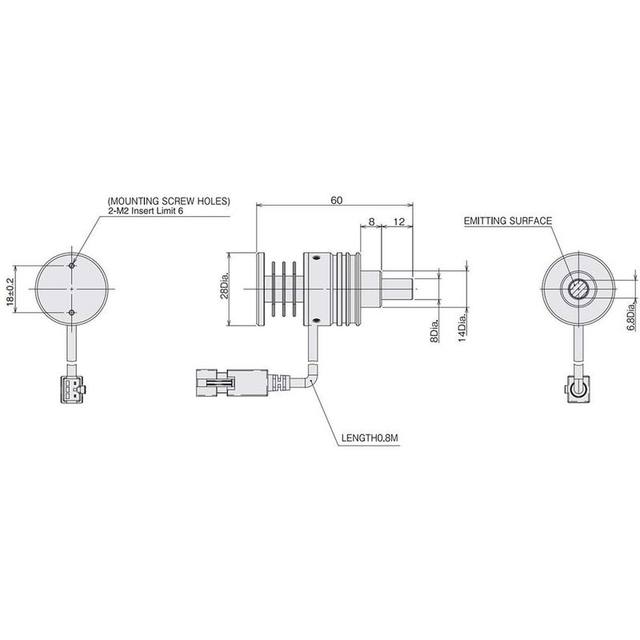
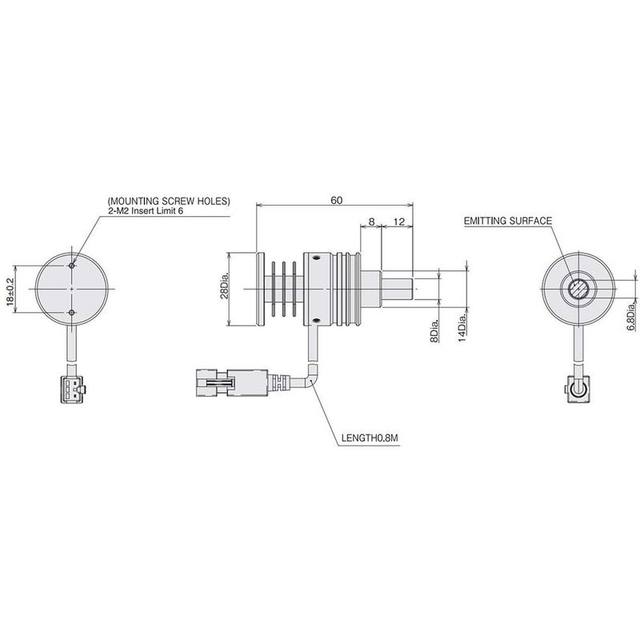
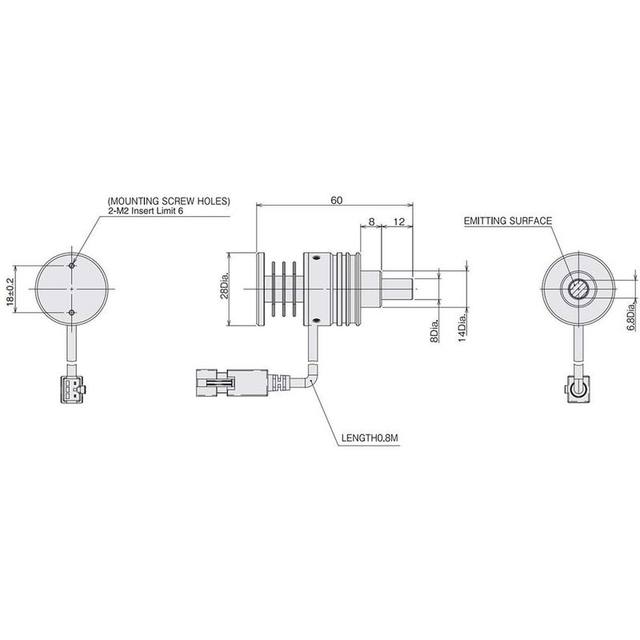
High-power LED spot light (8 mm dia. emitter) of Omron's FLV-EP08 series, designed to inject axial/coaxial illumination through a TCH telecentric lens for alignment-mark detection and small-code reading.
Spot lights suit small fields of view, single-feature checks such as a code, a fastener or a seal, and oblique highlights that bring out relief on one side of a feature. Mount them off-axis at an angle that keeps the mirror reflection out of the lens.
They are a poor fit for large, uniform fields. The beam is brightest in the middle and falls off toward the edges, and flat-field correction can only compensate so far before noise and dynamic range suffer. A simple check is to image a matt white card and inspect the grey-level profile across the field; if the variation is large, a bar or ring is the better choice.
What to compare
Compare these specs on any shortlisted model.
Color / wavelength: choose for contrast on the part and the sensor's response at that wavelength.
Mode and driver technology: determine whether the light runs continuously, strobes from a trigger, or needs an external driver.
Supply voltage and connection: check them against the cabinet supply and the cable route to an often remote mounting point.
IP rating and housing material: important when the light sits outside any enclosure, near washdown or splashes.
Installation mistakes
Because the pool of light is small, a slight angular shift moves it a long way across the part. Use a rigid bracket, lock it and mark the position, then recheck after the machine has run and vibrated for a while. Follow the maker's eye-safety guidance too, particularly for infrared light, which gives no visible warning.
Frequently asked questions
A ring is the easier default for evenly lighting a small part from the camera's position. Pick a spot when you need more intensity on one feature, an oblique highlight, a long distance from the part, or a mounting location where a ring cannot fit.
Move the light further back, so that the field sits in the flatter centre of the beam, add a diffuser at the cost of some intensity, or overlap several spots. If it remains uneven, the field is probably too large for this geometry.
Confirm the sensor's response at that wavelength and remove any IR-cut filter. Check focus at the infrared wavelength too, since many lenses focus it at a slightly different distance than visible light.