Skip to content
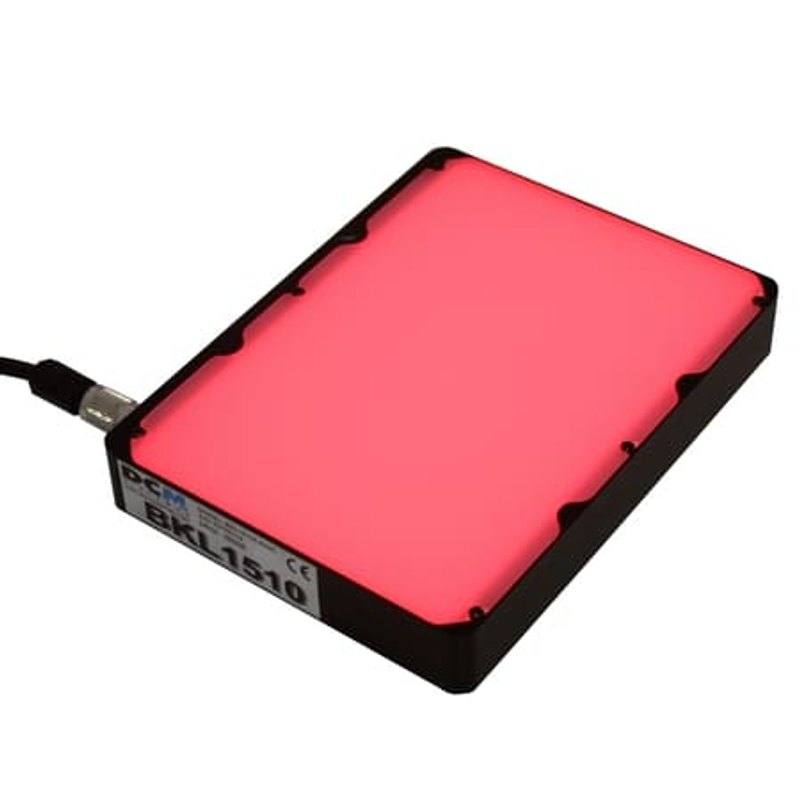
DCM Sistemes BKL1510A machine vision lighting
  • Rosepetal compatible
  • Recommended by AIS Vision

DCM Sistemes BKL1510A Backlight

BKL1510A

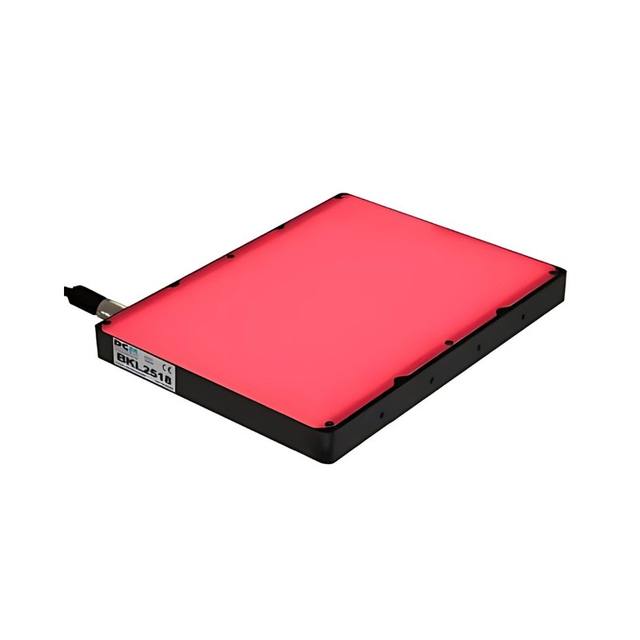
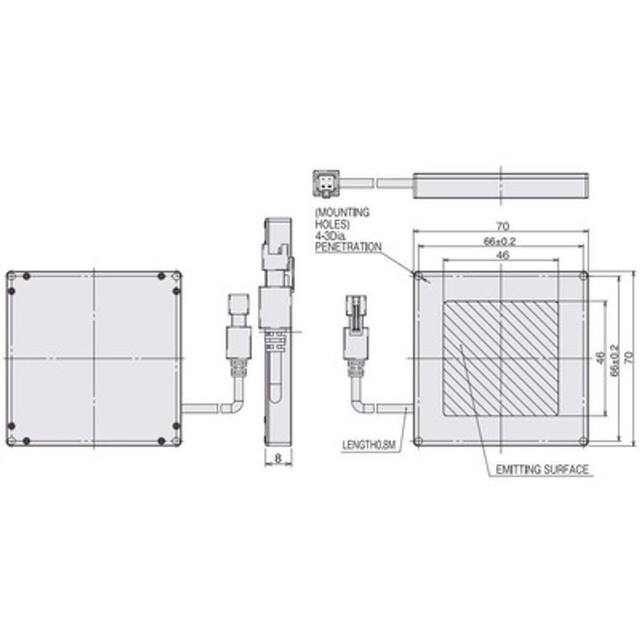
The BKL1510A is a backlight illuminator from DCM Sistemes' BKL series, providing a highly uniform ultra-diffuse 100 x 150 mm light-emitting area within a 154 x 116 x 22 mm black anodized aluminium housing. It is offered in continuous (C), strobe (S) and iBlueDrive (i) operating modes and in blue (470 nm), green (525 nm), red (630 nm), IR (850 nm), RGB and white (W00) wavelengths. Continuous mode runs on 24 VDC +/-3% via a 2-pole chassis connector, while iBlueDrive runs on 24 VDC +/-8% with a 3-pole aerial connector; strobe variants require an external strobe controller. Standard protection is IP40, with optional IP65 (/65A modifier) and IP67 iBlueDrive variants, operating from 0 to 40 C.

Brand
DCM Sistemes
Lighting type
Backlight
Color / wavelength
Red 630 nm (also available 470 nm blue, 525 nm green, 850 nm IR, RGB, W00 white)
Available wavelengths
470 nm (blue), 525 nm (green), 630 nm (red), 850 nm (IR), RGB, W00 (white)
Mode
Continuous (C), Strobe (S), iBlueDrive (i)
Diffuser
Yes - ultra-diffuse emitting surface
Emission angle
Diffuse (uniform backlight)
Illuminated area
100 x 150 mm active surface
Supply voltage
24 VDC +/-3% (continuous); 24 VDC +/-8% (iBlueDrive)
Power consumption
Max instantaneous current 535 mA continuous (850 nm); up to 4020 mA iBlueDrive
Controller required
Yes for strobe variants (VS Series strobe controller); not required for continuous
Connection
2P on chassis (continuous), 3P aerial 150 mm (iBlueDrive), 4P on chassis (RGB strobe)

Technical overview

The BKL1510A is a backlight illuminator from DCM Sistemes' BKL series, built around a 100 x 150 mm ultra-diffuse light-emitting surface inside a compact 154 x 116 x 22 mm black anodized aluminium housing. A backlight works by placing the part between the panel and the camera, so the emitting area is what defines your usable measurement window: the part you silhouette must fit comfortably inside that 100 x 150 mm field, with margin for placement tolerance. Because the surface is ultra-diffuse rather than directional, light leaves it evenly across the whole area and from a wide range of angles, which is exactly what you want for silhouette work. The diffuse, uniform emission collapses surface texture, color and gloss into a clean dark-on-bright outline, so the camera sees crisp edges instead of reflections. The 22 mm-thin profile makes it practical to mount under a conveyor, in a fixture, or on a backlit stage where vertical clearance is limited.

The unit is offered in three operating modes and six spectral options, and the choice drives both wiring and electrical behaviour. Continuous mode (C) runs on 24 VDC +/-3% through a 2-pole chassis connector and is the simplest to integrate where the part is static or slow; its draw is modest, with a maximum instantaneous current of around 535 mA quoted for the 850 nm version. iBlueDrive mode (i) runs on 24 VDC +/-8% through a 3-pole 150 mm aerial connector and is the high-intensity overdrive path, pulling up to roughly 4020 mA in short bursts to deliver far more light during a short exposure, which is how you freeze a moving part without motion blur. Strobe variants (S) take their pulse from an external strobe controller (DCM's VS Series), and the RGB strobe build uses a 4-pole chassis connector. So the same emitting geometry can be specified as a steady lamp, a controller-driven strobe, or a self-overdriving high-output source depending on line speed.

Wavelength is a real, selectable parameter here and it changes what the silhouette reveals. The default is red at 630 nm, with blue (470 nm), green (525 nm), IR (850 nm), RGB and W00 white also available. Shorter wavelengths like blue resolve finer edge detail; red and IR penetrate or pass through certain materials differently and tend to be more forgiving on translucent or tinted parts; IR at 850 nm is useful when you want to suppress visible-light interference or see through some films, and RGB/white give flexibility when the same station also does color or general imaging. On protection, the standard rating is IP40, with an optional IP65 build (the /65A modifier) for washdown or dusty environments and an IP67 iBlueDrive variant for the harshest cells. The operating range is 0 to 40 C, so this is an indoor industrial lamp rather than an outdoor or high-temperature one. Pair it with a camera and lens framed to the part outline, and let the diffuse backlight, not the camera, do the work of producing a uniform, high-contrast edge.

Best for

  • Dimensional gauging and edge measurement of parts that fit within the 100 x 150 mm window, where the diffuse silhouette gives stable, sub-pixel edges independent of part surface
  • Presence/absence and completeness checks in packaging inspection, silhouetting blister packs, caps, seals or filled positions against a uniform bright field
  • Surface and defect inspection of translucent or thin parts (films, molded plastics, glass) where transmitted light exposes pinholes, cracks or inclusions
  • High-speed inline inspection on a moving conveyor using the iBlueDrive overdrive mode or a strobe variant to freeze the part during a short exposure
  • Inspection of dark, glossy or textured components in electronics and automotive, where front lighting would create reflections but a backlit outline stays clean

Selection notes

  • Size the part to the emitting area, not the housing: the active surface is 100 x 150 mm, so leave margin inside that for part placement tolerance and conveyor jitter. The external footprint is 154 x 116 x 22 mm.
  • Pick the operating mode before wiring: continuous (2-pole chassis, 24 VDC +/-3%) for static/slow parts, strobe (needs an external DCM VS Series controller) or iBlueDrive (3-pole aerial, 24 VDC +/-8%, up to ~4020 mA bursts) for moving parts that need motion freezing.
  • Choose wavelength deliberately. Default red 630 nm is a safe general choice; blue 470 nm sharpens fine edges; IR 850 nm helps with translucent films and suppressing ambient visible light; RGB or W00 white suit stations that also do color or general imaging.
  • Match the protection rating to the cell: IP40 standard is for clean, dry enclosures; specify the /65A IP65 option for washdown or dust, or the IP67 iBlueDrive build for the harshest environments. Keep ambient within the 0 to 40 C operating range.
  • Budget the power path for the chosen mode: continuous draw is modest (~535 mA max instantaneous on 850 nm), but iBlueDrive's ~4020 mA peaks and the strobe controller for S variants must be accounted for in the 24 VDC supply and connector selection.

Specifications: General
BrandDCM Sistemes
Lighting typeBacklight

Specifications: Interface
Connection2P on chassis (continuous), 3P aerial 150 mm (iBlueDrive), 4P on chassis (RGB strobe)

Specifications: Optical
Color / wavelengthRed 630 nm (also available 470 nm blue, 525 nm green, 850 nm IR, RGB, W00 white)
Available wavelengths470 nm (blue), 525 nm (green), 630 nm (red), 850 nm (IR), RGB, W00 (white)
DiffuserYes - ultra-diffuse emitting surface
Emission angleDiffuse (uniform backlight)

Specifications: Electrical
ModeContinuous (C), Strobe (S), iBlueDrive (i)
Supply voltage24 VDC +/-3% (continuous); 24 VDC +/-8% (iBlueDrive)
Power consumptionMax instantaneous current 535 mA continuous (850 nm); up to 4020 mA iBlueDrive
Controller requiredYes for strobe variants (VS Series strobe controller); not required for continuous

Specifications: Environment
IP ratingIP40 standard; optional IP65 (/65A); IP67 iBlueDrive (ST00/ST01)
Operating temperatureUnverified from public sources (general specs are login-gated)

Specifications: Geometry
Illuminated area100 x 150 mm active surface

Specifications: Mechanical
Housing materialUnverified from public sources (general specs are login-gated)
Dimensions154 x 116 x 22 mm (external)

Frequently asked questions

Related technical guides

Rosepetal · AI

Test this camera with Rosepetal

Validate your visual inspection with AI: send us sample images and we evaluate the case on your hardware.

AIS Vision · Integration

We validate camera + lens + lighting

AIS Vision defines and tests the optimal combination of camera, optics and lighting for your application before you buy.