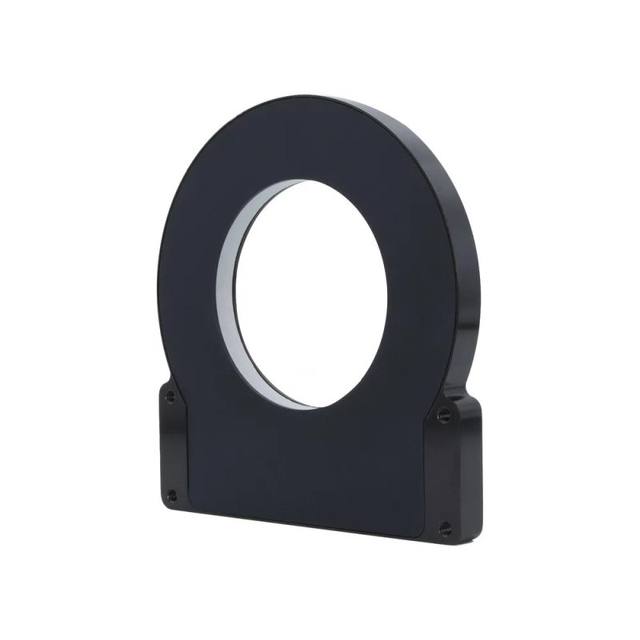
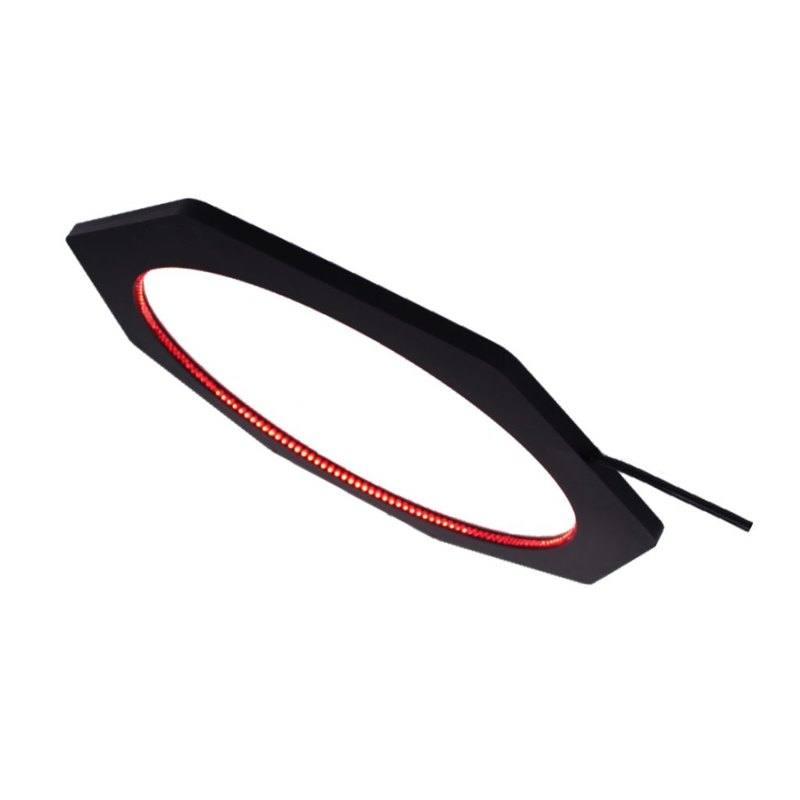
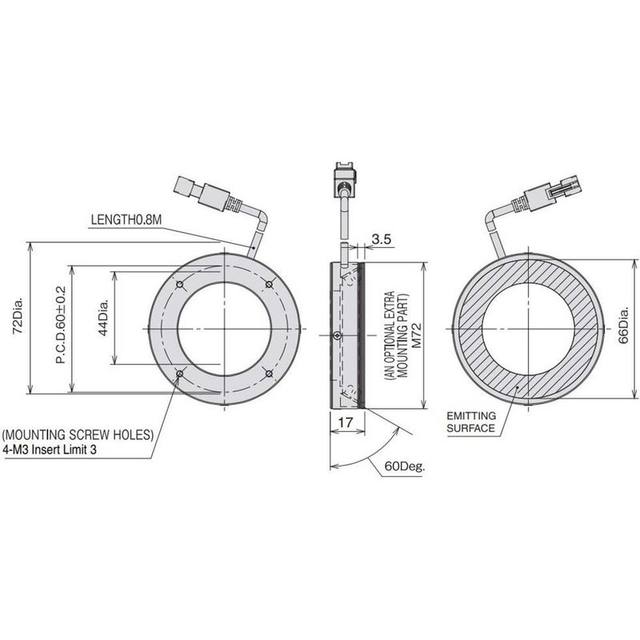
The DKL4132C belongs to DCM Sistemes' DKL darkfield series and shares the 41-size frame of the catalog reference DKL4130A: a 394 x 394 mm anodized-aluminium housing with a 300 mm inner clear aperture and a recommended working distance under 20 mm. The "C" suffix designates Type C (continuous) operation, which needs no external controller and runs directly from 24 VDC via 2-pole flying leads, drawing up to about 27 W. It carries an IP40 rating and is rated for a 0-40 C operating temperature, with the LED ring directing light at a low grazing angle from the camera axis to highlight height variations and fine defects. Standard wavelength options for the DKL series include white, 470 nm blue, 525 nm green, 630 nm red and 850 nm IR.
Brand
DCM Sistemes
Lighting type
Dark field (low-angle direct)
Color / wavelength
White (DKL series options: white, 470nm blue, 525nm green, 630nm red, 850nm IR)
Available wavelengths
White / 470nm Blue / 525nm Green / 630nm Red / 850nm IR
The DKL4132C is a large square dark field (low-angle direct) illuminator from DCM Sistemes' DKL series. Its defining feature is geometry: a 394 x 394 mm anodized-aluminium housing with a 300 mm clear inner aperture carries an LED ring that projects light at a low grazing angle relative to the camera axis, close to the part. With a recommended working distance under 20 mm, the camera looks straight down through the central 300 mm window while the LED ring skims the surface. Anything flat and specular reflects the grazing light away from the lens and stays dark, while edges, scratches, cracks, embossing, laser-etched marks and any height variation catch the light and pop bright. This is the opposite of bright-field or diffuse lighting: dark field reveals relief and discontinuities, not flat tonal detail. The medium emission angle is the default here (narrow, wide and diffuse modifiers exist in the series), and there is no diffuser fitted, so the light stays directional - an optional /FDR diffuser filter is available if you need to soften it.
Electrically it is a Type C (continuous) unit, which is the simplest path to integrate: no external lighting controller is required, and it runs directly from 24 VDC (+/-3%) drawing up to about 27 W at maximum. Connection is via 2-pole flying leads, 180 mm long, with brown to +24 V and blue to 0 V. Because it is continuous rather than strobed, you set brightness and exposure on the camera side and the light simply stays on; there is no overdrive headroom or hardware strobe synchronization, so pair it with the camera's own exposure control and trigger. The standard wavelength on this unit is white, but the DKL series is offered in 470 nm blue, 525 nm green, 630 nm red and 850 nm IR - relevant if you want to enhance contrast on colored surfaces or use a matched bandpass filter to cut ambient light.
Mechanically and environmentally, plan around its size and modest sealing. The housing is anodized aluminium, only 16 mm thick but 394 mm square, weighing 1180 g, so it needs a solid mounting frame and clearance for a part to pass through or sit within the 300 mm aperture at very short standoff. The IP40 rating means it is dust-protected against larger particles but offers no liquid ingress protection, so it suits enclosed cells and clean or dry production areas rather than washdown lines. Operating temperature is rated 0-40 C. The combination of a 300 mm aperture, sub-20 mm working distance and grazing geometry makes this a fixed-station inspection light for flat, relatively large parts where the goal is to expose surface defects and raised or recessed features rather than to flood the scene evenly.
Best for
Surface defect inspection on flat metal, glass or plastic panels where scratches, dents and cracks must be made visible against a suppressed specular background
Reading and verifying embossed, engraved or laser-etched marks and 2D codes by catching the relief of the characters at a grazing angle
AI-based defect detection on large, relatively flat parts that fit within or pass through the 300 mm aperture at short working distance
Detecting raised or recessed features, edge integrity and fine surface relief in electronics, semiconductor and automotive component inspection
Fixed-station inspection cells using 24 VDC directly, where avoiding a separate lighting controller simplifies wiring and cost
Selection notes
Confirm geometry fits your part: the recommended working distance is under 20 mm and the clear aperture is 300 mm, so the camera images down through the center while the part sits very close to the ring - this is a short-standoff, large-flat-part light, not a general-purpose area light
This is a Type C continuous light with no controller and no hardware strobe; if your application needs strobing, overdrive or tight flash-to-trigger sync, this variant does not provide it - control exposure on the camera instead
Power it from a stable 24 VDC (+/-3%) supply sized for up to ~27 W, and wire the 2-pole flying leads correctly (brown +24 V, blue 0 V); leads are only 180 mm so plan an inline connector or junction
IP40 means dust-protected but not sealed against liquids - reserve it for enclosed, clean or dry cells within 0-40 C, not washdown or wet environments
Choose the wavelength deliberately: white is standard, but 470 nm blue, 525 nm green, 630 nm red or 850 nm IR options can lift contrast on specific materials and pair with a matched filter; add the optional /FDR diffuser only if you need softer directional light
Specifications: General
Brand
DCM Sistemes
Lighting type
Dark field (low-angle direct)
Specifications: Interface
Connection
2-pole flying leads, L=180mm (BN=+24V, BU=0V)
Specifications: Optical
Color / wavelength
White (DKL series options: white, 470nm blue, 525nm green, 630nm red, 850nm IR)
Available wavelengths
White / 470nm Blue / 525nm Green / 630nm Red / 850nm IR
Working distance
RWD < 20 mm
Emission angle
Medium angle of emission (default; narrow/wide/diffuse available as modifiers)
Diffuser
No (direct light; diffuser filter /FDR available as option)
Specifications: Electrical
Mode
Continuous (Type C, no controller)
Controller required
No (Type C, runs directly from 24VDC)
Power consumption
Up to 27 W (Type C, 24VDC, max instantaneous)
Supply voltage
24 VDC ±3%
Specifications: Environment
IP rating
IP40
Operating temperature
0 - 40 C
Specifications: Geometry
Inner diameter
300 mm inner diameter
Specifications: Mechanical
Housing material
Anodized aluminium
Dimensions
394 x 394 x 16 mm
Weight
1180 g
Applications this camera is commonly selected for. Open one to see the full recommended hardware and approach.
No. It is a Type C (continuous) unit that runs directly from 24 VDC (+/-3%) via 2-pole flying leads, drawing up to about 27 W. No external controller is required, which simplifies integration.
The recommended working distance is under 20 mm and the clear inner aperture is 300 mm. The camera images straight down through that 300 mm window while the part sits very close to the grazing LED ring, so this is a short-standoff light for large, flat parts.
This is the Type C continuous variant, so it stays on rather than strobing and has no hardware flash sync. For motion you control the freeze with the camera's own exposure and trigger; if you specifically need strobe/overdrive, this variant does not provide it.
The unit ships in white as standard. The DKL series is also offered in 470 nm blue, 525 nm green, 630 nm red and 850 nm IR, which you can choose to improve contrast on particular surfaces or to pair with a matched bandpass filter.
No. It carries an IP40 rating, which protects against larger dust particles but offers no liquid ingress protection. It is rated for 0-40 C and is intended for enclosed, clean or dry inspection cells rather than washdown lines.