Skip to content
DCM Sistemes PRL3602B machine vision lighting
  • Rosepetal compatible
  • Recommended by AIS Vision

DCM Sistemes PRL3602B Line Light Projector

PRL3602B

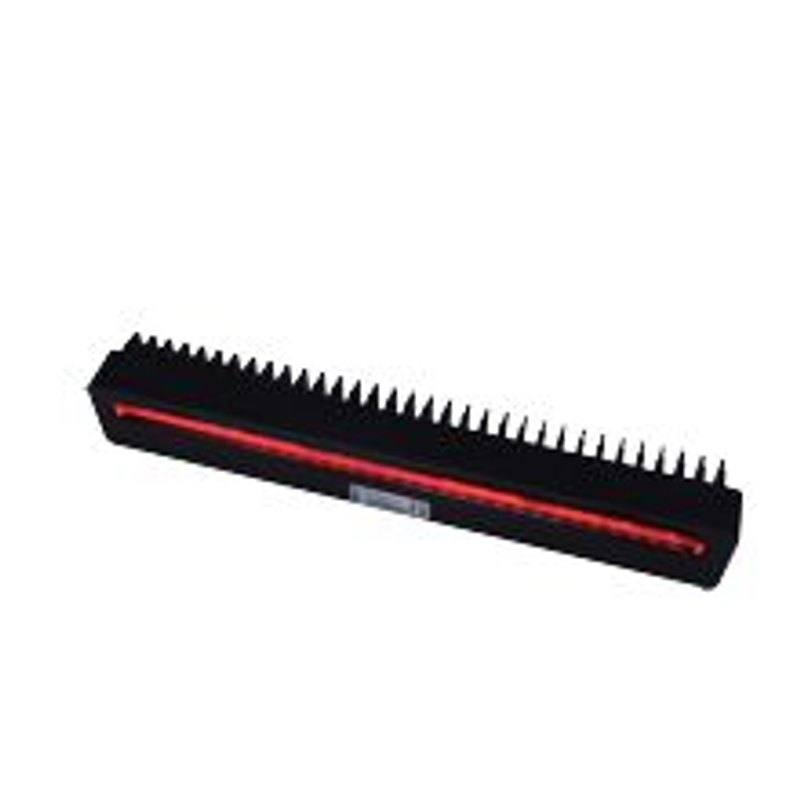
The DCM Sistemes PRL3602B is a 30-LED line light projector from the PRL series, designed to produce a narrow, high-intensity line of light ideal for line-scan cameras and, with area cameras, for dark-field lighting that highlights small reliefs and cracks over large areas or long distances. It runs on 24VDC (±3%) in continuous mode and is available in 470nm (blue), 525nm (green), 630nm (red), 850nm (IR) and W00 (white), with 455nm, 730nm and 940nm or multispectral versions on request. Recommended working distance is set by interchangeable focal-length modifiers (F1=50mm default, F2=150mm, F3=infinite). The housing is anodized aluminium rated IP40, connected via a 2-pole chassis connector using the VCB-series power cable (not included).

Brand
DCM Sistemes
Lighting type
Bar / line light projector
Color / wavelength
White (W00); also available 470nm blue, 525nm green, 630nm red, 850nm IR
Available wavelengths
470nm (blue), 525nm (green), 630nm (red), 850nm (IR), W00 (white); 455nm, 730nm, 940nm and multispectral on request
Mode
Continuous (Type C)
Working distance
Focal-length modifiers: F1 = 50mm (default), F2 = 150mm, F3 = infinite
Controller required
No external driver required (continuous, direct 24VDC)
Diffuser
Optional diffuse-emission modifier (/AD); not standard
IP rating
IP40
Emission angle
Medium angle by default (narrow /AN, medium /AM, wide /AW or diffuse /AD modifiers)
Driver technology
High-intensity LED projector (30 LEDs)
Power consumption
~30W per segment; max instantaneous current at 24VDC: 470nm 2000mA, 525nm 2000mA, 630nm 1708mA, 850nm 1500mA, W00 2500mA

Technical overview

The PRL3602B is a high-intensity LED line light projector from DCM Sistemes' PRL series, built around 30 LEDs in a 395 x 60 x 50 mm anodized-aluminium bar. Its defining trait is geometry: rather than flooding a scene evenly, it concentrates output into a narrow, intense line of light. That makes it the natural illumination partner for line-scan (linear) cameras, where the sensor images one row at a time and the entire light budget should fall on that single imaged line as the web or part moves underneath. With area-scan cameras, the same concentrated stripe is used at an oblique angle to create dark-field lighting, where the flat surface stays dark and only edges, reliefs, scratches and cracks scatter light back toward the sensor and appear bright.

Spectrally the unit is flexible. The standard build is W00 white, with monochromatic options at 470nm blue, 525nm green, 630nm red and 850nm IR, plus 455nm, 730nm, 940nm and multispectral on request. Wavelength choice drives contrast: red and IR can wash out many printed inks for substrate inspection, blue and green sharpen fine surface texture and edge contrast, and IR suppresses color variation so geometry dominates. Working distance is set mechanically through interchangeable focal-length modifiers, F1 = 50mm as default, F2 = 150mm, or F3 = infinite for collimated long-throw work, and the projected stripe's spread is tuned with emission-angle modifiers (narrow /AN, medium /AM as default, wide /AW, or a diffuse /AD modifier when a softer line is needed). This is what lets one fixture cover small reliefs up close or large areas and long distances depending on how it is configured.

Electrically the PRL3602B is deliberately simple to integrate. It runs continuous (Type C) directly from 24VDC at +/-3% with no external driver or controller required, drawing roughly 30W per segment, and maximum instantaneous current at 24VDC ranges by color from 1500mA (850nm IR) up to 2500mA (W00 white), with 470nm and 525nm at 2000mA and 630nm at 1708mA. Power arrives through a 2-pole chassis connector using a VCB-series cable that is not included. The housing is rated IP40, so it tolerates dust and incidental contact but is not sealed against washdown or liquids, and it operates from 0 to 40C (storage 0 to 60C). Because it is a continuous source rather than a strobe-driven one, exposure and motion freezing on a fast line are controlled from the camera's exposure/line rate and the brightness the fixture can deliver, rather than from pulsed overdrive.

Best for

  • Line-scan inspection of continuous webs in printing and packaging, where the concentrated stripe places all available light on the single imaged sensor row
  • Dark-field surface inspection on area cameras to reveal scratches, cracks, embossing and small reliefs on metal, plastic and electronic parts over large fields
  • Defect detection and AI-based surface inspection where consistent high-contrast edge illumination feeds reliable training and inference
  • Long-distance or long-area illumination using the F3 = infinite (collimated) focal modifier for parts that cannot be approached closely
  • OCR/OCV and dimensional measurement on moving product where grazing line light raises contrast on engraved, printed or laser-marked characters

Selection notes

  • Match the focal-length modifier to your geometry up front: F1 = 50mm is the default, F2 = 150mm for mid-range standoff, and F3 = infinite for collimated long throw; this is a mechanical choice made when ordering, not a runtime adjustment.
  • Pick the wavelength for the task, not convenience: red/IR (630nm, 850nm) for ink suppression and substrate work, blue/green (470nm, 525nm) for fine surface and edge contrast; 455nm, 730nm, 940nm and multispectral are special-order, so confirm lead time.
  • Confirm the IP40 rating suits the environment; it handles dust and ambient industrial conditions but is not sealed for washdown, coolant spray or wet zones, and operating range is limited to 0 to 40C (storage 0 to 60C).
  • Plan the power path: the unit needs a clean 24VDC at +/-3% capable of the per-color peak current (up to 2500mA on white, 2000mA on blue/green, 1708mA on red, 1500mA on IR), and the VCB-series 2-pole cable is not included and must be ordered separately.
  • Since it is continuous with no external controller, you cannot strobe-overdrive it for very high line rates; size brightness, working distance and camera exposure together, and use the /AD diffuse modifier only when you need to trade peak intensity for a softer, more uniform line.

Specifications: General
BrandDCM Sistemes
Lighting typeBar / line light projector

Specifications: Interface
Connection2-pole (2P) chassis connector; VCB-series power cable (not included)

Specifications: Optical
Color / wavelengthWhite (W00); also available 470nm blue, 525nm green, 630nm red, 850nm IR
Available wavelengths470nm (blue), 525nm (green), 630nm (red), 850nm (IR), W00 (white); 455nm, 730nm, 940nm and multispectral on request
Working distanceFocal-length modifiers: F1 = 50mm (default), F2 = 150mm, F3 = infinite
DiffuserOptional diffuse-emission modifier (/AD); not standard
Emission angleMedium angle by default (narrow /AN, medium /AM, wide /AW or diffuse /AD modifiers)

Specifications: Electrical
ModeContinuous (Type C)
Controller requiredNo external driver required (continuous, direct 24VDC)
Driver technologyHigh-intensity LED projector (30 LEDs)
Power consumption~30W per segment; max instantaneous current at 24VDC: 470nm 2000mA, 525nm 2000mA, 630nm 1708mA, 850nm 1500mA, W00 2500mA
Supply voltage24VDC ±3%

Specifications: Environment
IP ratingIP40
Operating temperature0 to 40°C (storage 0 to 60°C)

Specifications: Mechanical
Housing materialAnodized aluminium
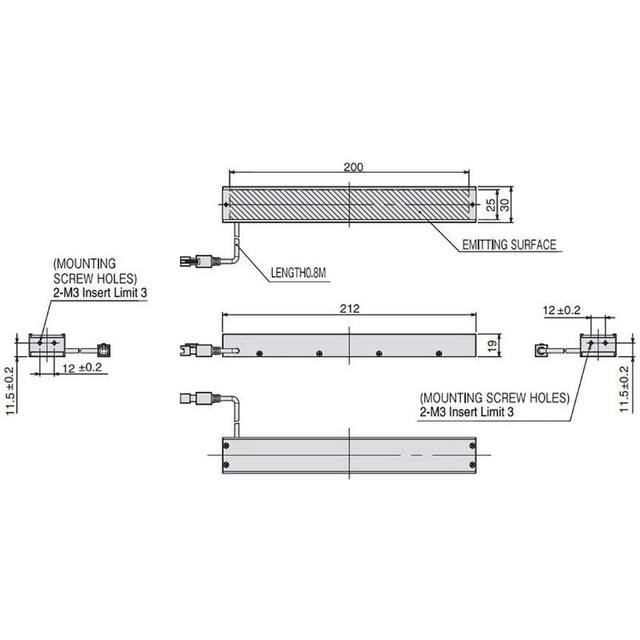
Dimensions395 x 60 x 50 mm

Frequently asked questions

Related technical guides

Rosepetal · AI

Test this camera with Rosepetal

Validate your visual inspection with AI: send us sample images and we evaluate the case on your hardware.

AIS Vision · Integration

We validate camera + lens + lighting

AIS Vision defines and tests the optimal combination of camera, optics and lighting for your application before you buy.