Skip to content
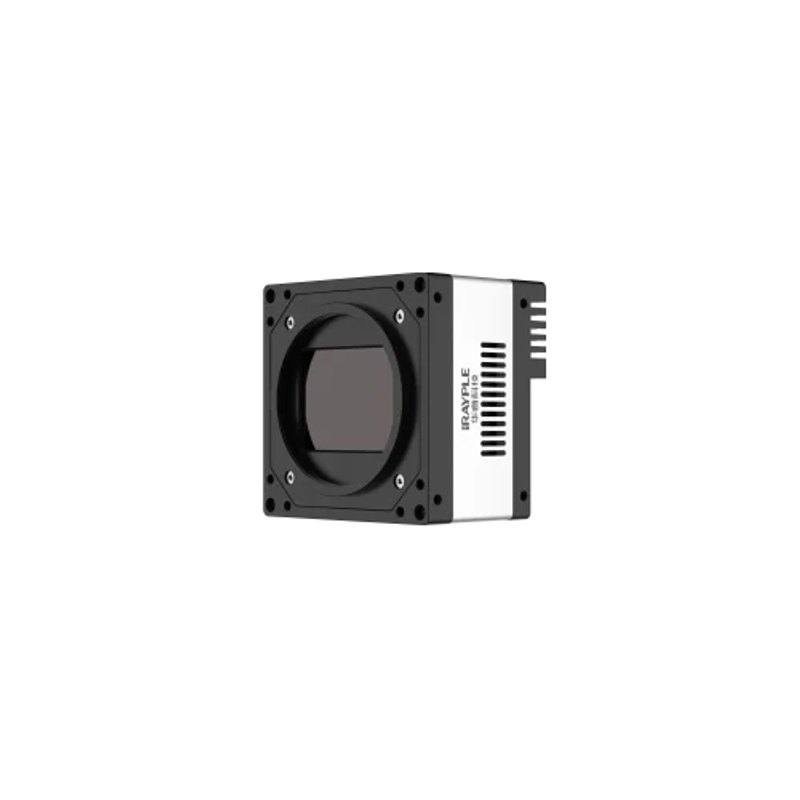
iRAYPLE AX7Q10MX470E / AX7Q10MX770E / AX7Q10CX470E / AX7Q10CX770E (14192x10640, ~6fps, IMX411, CXP-6, ~151MP) machine vision camera
  • Rosepetal compatible
  • Recommended by AIS Vision

iRAYPLE AX7Q10 Large Area Scan Series (151MP CXP-6)

AX7Q10MX470E

The iRAYPLE AX7Q10 is a large-format area-scan camera built on the Sony IMX411 151MP CMOS sensor (53.4 x 40.0 mm, 14192 x 10640 pixels, 3.76 um pixel), reading out at 6.1 fps (MX470E/CX470E) to 6.2 fps (MX770E) over a CXP-6 CoaXPress interface (4 x 6.25 Gbps). It delivers 12-bit output with 90 dB dynamic range and 45 dB SNR, supporting software/hardware/free-run trigger, pixel-by-pixel FFC, ROI and X/Y flip. Monochrome variants output Mono8/10/12 while colour variants output Bayer RG8/10/12. The camera uses an M72x0.75 lens mount, accepts DC 24V via Hirose or PoCXP power (~18 W), conforms to the CoaXPress and GenICam standards, and weighs 890 g.

Brand
iRAYPLE
Camera type
Area scan
Interface
CoaXPress CXP-6 (4 x 6.25 Gbps)
Resolution
151 MP
Horizontal resolution
14192 x 10640 px
Mono / color
Mono (MX) / Color (CX) variants
Sensor manufacturer
sony (Sony Exmor/BSI CMOS, not Pregius)
Sensor model
Sony IMX411 CMOS
Shutter
Rolling shutter
FPS
6.1 fps (470E) / 6.2 fps (770E)
Mount
M72 x 0.75
Sensor size
53.4 mm x 40.0 mm (full frame, ~66.7 mm diag)

Technical overview

The iRAYPLE AX7Q10 is a large-format area-scan camera built around the Sony IMX411, a 151 MP back-side-illuminated (BSI) CMOS sensor measuring 53.4 x 40.0 mm with a roughly 66.7 mm diagonal. At 14192 x 10640 pixels on a 3.76 um pitch, it resolves a single full-frame image with the pixel budget that would otherwise demand a tiled multi-camera rig or a line-scan setup. For an installer, the practical meaning is that a wide part can be captured in one snapshot and still carry enough pixels to detect fine defects across the whole field. The trade-off is the format itself: this is a large full-frame sensor with a wide diagonal, so it needs glass that covers it. The camera uses an M72 x 0.75 mount rather than a C-mount, and lens selection should be driven by the field of view you need and the projected pixel-on-target rather than by habit.

The interface is CoaXPress CXP-6 running four links at 6.25 Gbps, which is what allows a 151 MP frame to come off the sensor at about 6.1 fps on the MX470E/CX470E and 6.2 fps on the MX770E. That bandwidth is the gating factor: this is a high-resolution, modest-frame-rate camera meant for detailed inspection of stationary or indexed parts, not for tracking fast continuous motion. Output is 12-bit, with the data sheet figures of 90 dB dynamic range and 45 dB SNR giving headroom for scenes that mix bright and dark regions in the same frame. Monochrome (MX) variants stream Mono8/10/12, while colour (CX) variants output Bayer RG8/10/12, so the mono/colour decision is a per-variant choice made at order time, not a runtime toggle. The camera also exposes pixel-by-pixel flat-field correction, ROI windowing, and X/Y flip, all of which matter when you are trying to hold uniformity across a sensor this large.

One detail an installer must plan around is the shutter: the IMX411 here is a rolling shutter, not global. Combined with the ~6 fps ceiling, that reinforces the intended use on parts that are stationary during exposure, on an indexed stage, or strobe-frozen, rather than imaged on the fly. Triggering supports software, hardware, and free-run modes, and the camera conforms to the CoaXPress and GenICam standards, so it drops into a standard CoaXPress frame-grabber pipeline and can be slaved to a PLC or encoder index. Power is DC 24V over the Hirose connector or PoCXP down the coax, drawing about 18 W, which simplifies cabling when the grabber supports power-over-CoaXPress. The body is 100 x 100 x 65.7 mm (excluding the rear connector) and weighs 890 g, so mounting needs a rigid bracket, and the rated operating range of -10 to 50 degC should be checked against any heat the 18 W draw adds inside an enclosure.

Best for

  • Single-shot inspection of large flat panels, such as display glass or PCB arrays, where 151 MP captures the whole part in one frame with enough pixel density to find fine surface defects
  • Semiconductor and electronics surface inspection on indexed or stationary stages, using the full-frame sensor and 12-bit, 90 dB dynamic range to separate subtle contrast features
  • High-resolution dimensional measurement of wide parts where stitching multiple lower-resolution cameras would add calibration error
  • Print and web sample inspection on a stop-and-image or strobe-frozen station, taking advantage of the very high resolution rather than continuous speed
  • Industrial OCR/OCV on large fields where many small marks must be read from a single capture

Selection notes

  • Choose the variant at order time: MX (monochrome, Mono8/10/12) for maximum detail and sensitivity on defect and measurement tasks, or CX (colour, Bayer RG8/10/12) when colour is part of the inspection criterion. It is not switchable in the field.
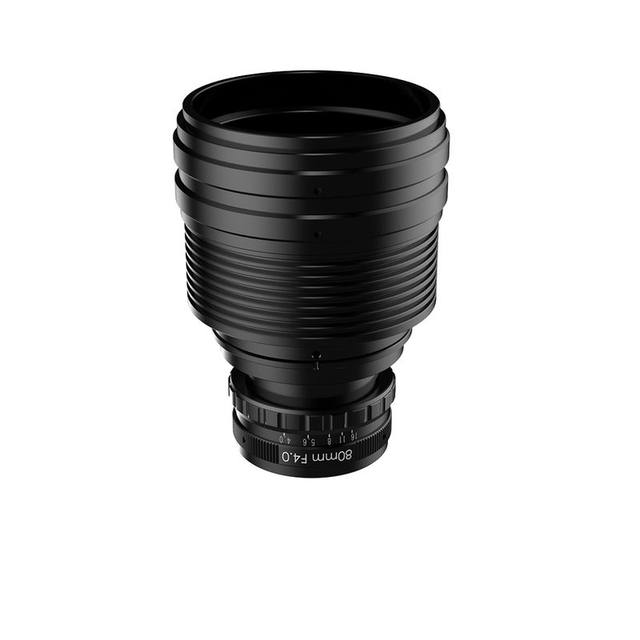
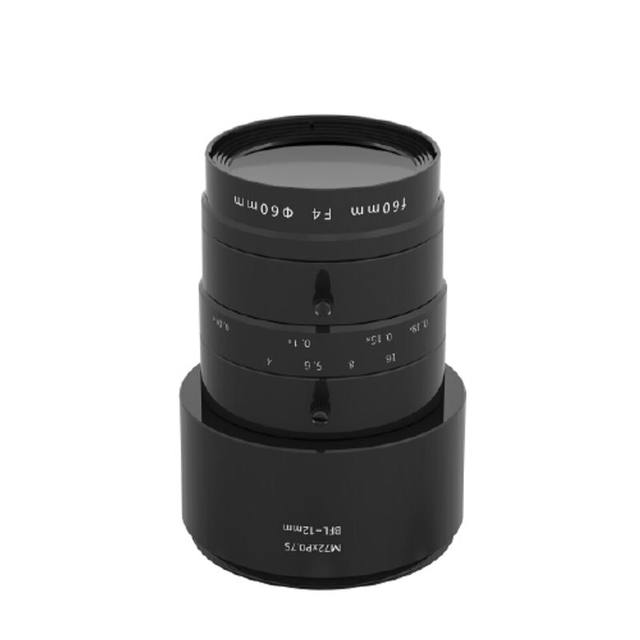
  • Budget for the optics. This is a full-frame 53.4 x 40.0 mm sensor on an M72 x 0.75 mount, so you need a large-format lens that covers the ~66.7 mm diagonal and resolves the 3.76 um pixel pitch, which is a different and more costly class of glass than C-mount.
  • Plan the imaging architecture for the interface: you need a CoaXPress CXP-6 frame grabber with four 6.25 Gbps links, and ideally PoCXP support so the camera can take its ~18 W over the coax instead of a separate DC 24V Hirose feed.
  • Treat this as a high-resolution, low-frame-rate camera. At ~6.1-6.2 fps with a rolling shutter, parts should be stationary during exposure, indexed, or strobe-frozen; it is not intended for fast continuous-motion capture.
  • Account for thermal and mechanical install constraints: an 890 g body dissipating 18 W needs a rigid mount and adequate heat path to stay within the -10 to 50 degC rating, and use the pixel-by-pixel FFC to hold uniformity across the large sensor.

Specifications: General
BrandiRAYPLE
Camera typeArea scan

Specifications: Sensor
Resolution151 MP
Horizontal resolution14192 x 10640 px
Mono / colorMono (MX) / Color (CX) variants
Sensor manufacturersony (Sony Exmor/BSI CMOS, not Pregius)
Sensor modelSony IMX411 CMOS
ShutterRolling shutter
Sensor size53.4 mm x 40.0 mm (full frame, ~66.7 mm diag)
Pixel size3.76 um x 3.76 um

Specifications: Performance
FPS6.1 fps (470E) / 6.2 fps (770E)

Specifications: Interface
InterfaceCoaXPress CXP-6 (4 x 6.25 Gbps)
ProtocolsCoaXPress, GenICam

Specifications: Optics
MountM72 x 0.75

Specifications: Electrical
PowerDC 24V (Hirose) / PoCXP, ~18 W
Power consumption18 W

Specifications: Environment
Operating temperature-10 to 50 degC

Specifications: Mechanical
Dimensions100 x 100 x 65.7 mm (excl. rear connector)
Weight890 g

Frequently asked questions

Related technical guides

Rosepetal · AI

Test this camera with Rosepetal

Validate your visual inspection with AI: send us sample images and we evaluate the case on your hardware.

AIS Vision · Integration

We validate camera + lens + lighting

AIS Vision defines and tests the optimal combination of camera, optics and lighting for your application before you buy.