Skip to content
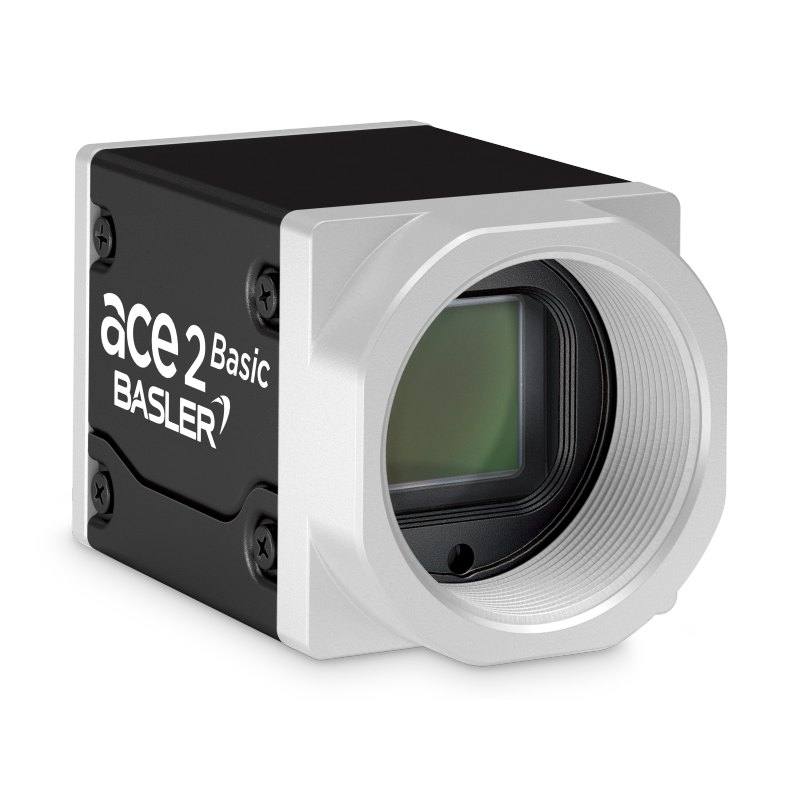
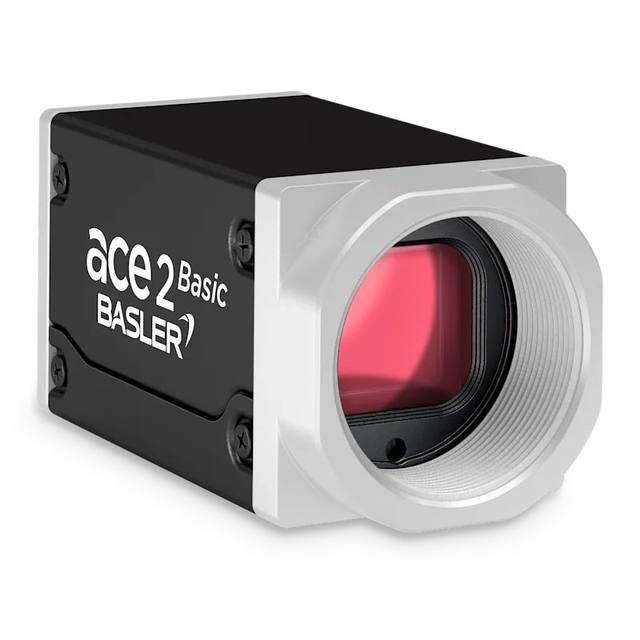
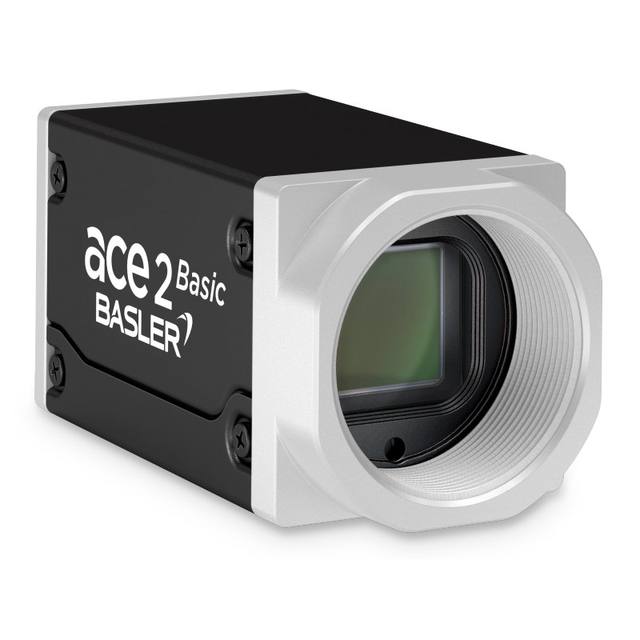
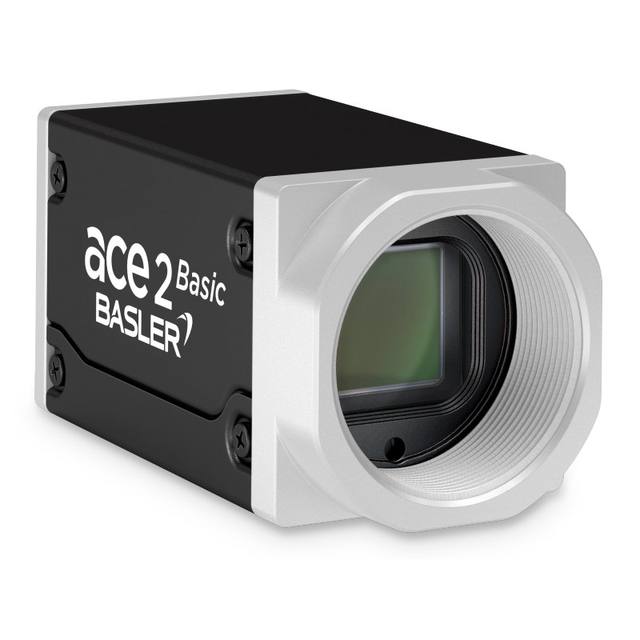
Basler a2A4096-30um machine vision camera
  • Rosepetal compatible
  • Recommended by AIS Vision

Basler ace 2 R a2A4096-30um (12 MP USB3 Mono)

a2A4096-30um

The a2A4096-30um (ace 2 R, order no. 108408) uses Sony's 1/1.1" IMX545 progressive-scan global-shutter CMOS sensor with 2.74 x 2.74 um pixels, outputting 4096 x 3000 px monochrome images at 29.3 fps (up to 31.7 fps with the Device Link Throughput Limit off). It connects via a USB 3.0 (5 Gbit/s SuperSpeed) interface and is fully USB3 Vision and GenICam compliant, drawing roughly 2.9-3.1 W directly over the USB bus. The compact C-mount housing measures about 29 x 29 mm in cross-section, weighs under 85 g, and carries an IP30 protection rating. Pixel data is selectable at 8, 10, or 12 bit depth with features including AOI, binning, automatic exposure/gain, image mirroring, and chunk metadata.

Brand
Basler
Camera type
Area scan
Interface
USB 3.0 (5 Gbit/s SuperSpeed)
Resolution
12 MP (12.3 MP)
Horizontal resolution
4096 x 3000 px
Mono / color
Mono
Sensor manufacturer
Sony (IMX545 Pregius S)
Sensor model
Sony IMX545-AAMJ-C
Shutter
Global shutter
FPS
29.3 fps (up to 31.7 fps)
Mount
C-mount
Sensor size
1/1.1" (14 mm diagonal)

Technical overview

The Basler ace 2 R a2A4096-30um pairs Sony's 1/1.1-inch IMX545 Pregius S CMOS sensor with a true global shutter, so every one of its 4096 x 3000 pixels is exposed simultaneously. That matters for any inspection where the part or the camera is moving: there is no rolling-shutter skew or smear, which is what lets a 12.3 MP frame be captured cleanly on a conveyor or an indexing stage. At 2.74 x 2.74 um, the pixels are small enough to resolve fine detail across the 14 mm sensor diagonal, and the monochrome design means full per-pixel sensitivity and resolution with no Bayer interpolation - the right choice when you care about edges, contrast and defect detail rather than color.

The interface is USB 3.0 SuperSpeed (5 Gbit/s), fully USB3 Vision and GenICam compliant, which keeps integration straightforward on any compliant PC-based vision stack and makes the camera bus-powered at roughly 2.9-3.1 W - no separate power supply or I/O cabling for power. Full 12 MP frames run at 29.3 fps, and up to 31.7 fps with the Device Link Throughput Limit switched off, so this is a high-resolution sensor that still moves fast enough for in-line work. Pixel depth is selectable at 8, 10 or 12 bit, and on-camera features include AOI/region-of-interest, binning, automatic exposure and gain, image mirroring and chunk metadata, so you can trade resolution for frame rate, or carry timestamps and frame data alongside the image.

Physically it is a compact C-mount block, about 48.1 x 29 x 29 mm with connectors and under 85 g, rated IP30 and specified from -10 to 60 C. With a 14 mm sensor diagonal, lens selection should match the 1/1.1-inch format and the 2.74 um pixel pitch so the lens has enough resolving power and image-circle coverage to use the full 4096 x 3000 area without corner softness. Because it is a global-shutter mono camera, it pairs naturally with strobed or continuous LED illumination and an external trigger: freeze motion with a short exposure and a synchronized strobe, and use AOI to lift frame rate on the region you actually inspect.

Best for

  • High-resolution defect and surface inspection on moving lines, where the global shutter freezes motion across the full 12 MP frame without skew
  • Dimensional and metrology measurement that needs fine pixel detail (2.74 um pixels over 4096 x 3000) for accurate edge and feature localization
  • OCR/OCV and 2D code reading where monochrome contrast and 12 MP resolution capture small characters and dense codes in one field of view
  • Electronics, semiconductor and PCB inspection that demands many pixels on small parts with clean, interpolation-free mono imaging
  • Packaging and traceability stations on a PC-based vision system, taking advantage of bus-powered USB3 Vision integration without extra cabling

Selection notes

  • Match the lens to the 1/1.1-inch (14 mm diagonal) format and the 2.74 um pixel pitch - use a lens with enough resolving power and image-circle coverage for the full 4096 x 3000 area, or you will lose detail and see corner falloff.
  • Budget USB 3.0 bandwidth: 12 MP at ~29.3 fps is a heavy data stream over the 5 Gbit/s bus, so use a quality SuperSpeed cable and a capable host controller; the Device Link Throughput Limit governs whether you reach the higher 31.7 fps.
  • It is bus-powered at ~2.9-3.1 W with no separate supply, but it is IP30, so plan an enclosure or protective housing for dusty, wet or washdown environments.
  • Mono only: for color-dependent tasks you would need a different model, but for defect, gauging, OCR and code reading the mono sensor gives you maximum resolution and sensitivity.
  • Use AOI/binning to trade resolution for speed - crop to the inspected region to raise frame rate, or bin to boost sensitivity - and pair with an external trigger and strobed LED lighting to synchronize capture with part motion.

Specifications: General
BrandBasler
Camera typeArea scan

Specifications: Sensor
Resolution12 MP (12.3 MP)
Horizontal resolution4096 x 3000 px
Mono / colorMono
Sensor manufacturerSony (IMX545 Pregius S)
Sensor modelSony IMX545-AAMJ-C
ShutterGlobal shutter
Sensor size1/1.1" (14 mm diagonal)
Pixel size2.74 x 2.74 um

Specifications: Performance
FPS29.3 fps (up to 31.7 fps)

Specifications: Interface
InterfaceUSB 3.0 (5 Gbit/s SuperSpeed)
ProtocolsUSB3 Vision, GenICam

Specifications: Optics
MountC-mount

Specifications: Electrical
PowerVia USB 3.0 (~2.9-3.1 W)
Power consumption2.9 W

Specifications: Environment
IP ratingIP30
Operating temperature-10 to 60 °C

Specifications: Mechanical
Dimensions48.1 x 29 x 29 mm (with connectors)
Weight85 g

Frequently asked questions

Related technical guides

Rosepetal · AI

Test this camera with Rosepetal

Validate your visual inspection with AI: send us sample images and we evaluate the case on your hardware.

AIS Vision · Integration

We validate camera + lens + lighting

AIS Vision defines and tests the optimal combination of camera, optics and lighting for your application before you buy.