
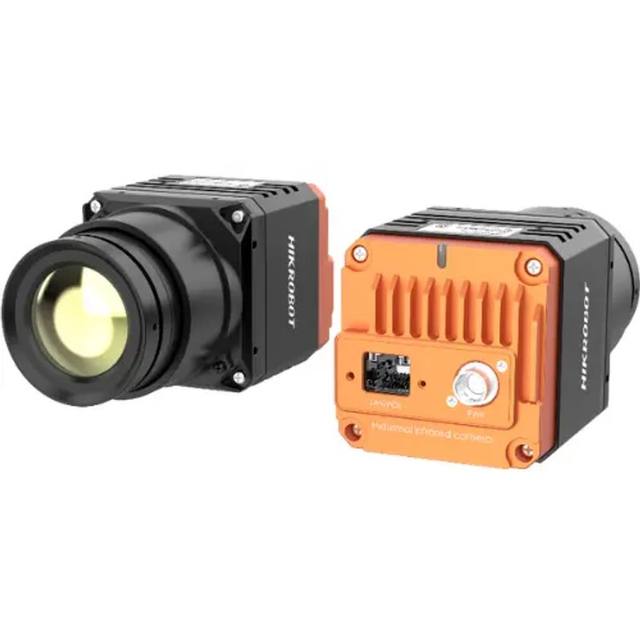
Hikrobot MV-CI003-GL-N15: 0.3MP LWIR Camera, GigE, EFL 15mm.
- Area scan
- GigE
- 0.3 MP
- 50 fps @ 640 × 512
- Rosepetal compatible
- Recommended by AIS Vision
On request
Long-wave infrared thermal cameras for non-contact temperature measurement, thermal inspection and process monitoring.
A thermal camera images the radiation an object emits, not light reflected from it, so it works in darkness and reveals problems with no visible signature: an overheating motor or busbar, an incomplete heat seal, a cold spot on a heated roll. Long-wave infrared cameras sense roughly 8 to 14 µm, typically with an uncooled microbolometer.
Hikrobot models make up the range here. Treat this as a measurement decision: are you looking for a relative pattern, such as a hot spot against its neighbours, or an absolute temperature you will act on? The first is far easier than the second. AIS Vision can check on real samples whether thermal contrast solves your inspection.
5 results
Hikrobot MV-CI003-GL-N15: 0.3MP LWIR Camera, GigE, EFL 15mm.
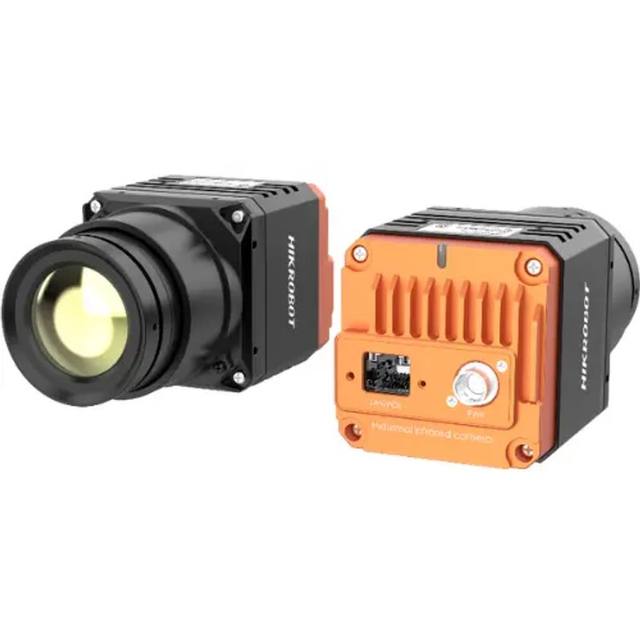
Hikrobot MV-CI003-GL-N25: 0.3MP LWIR Camera, GigE, EFL 25mm.
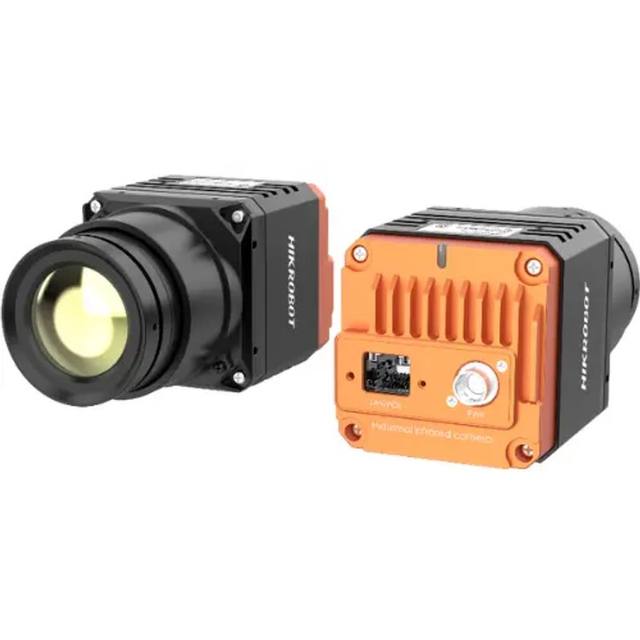
Hikrobot MV-CI003-GL-N35: 0.3MP LWIR Camera, GigE, EFL 35mm.
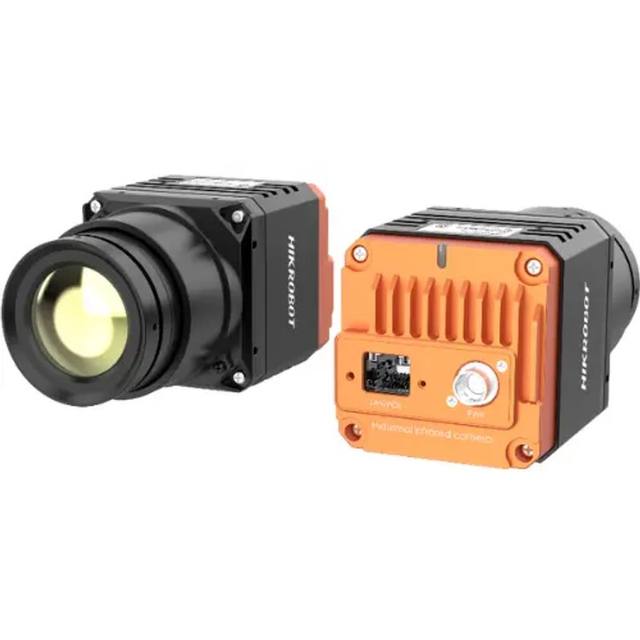
Hikrobot MV-CI003-GL-N6: 0.3MP LWIR Camera, GigE, EFL 6.3mm.
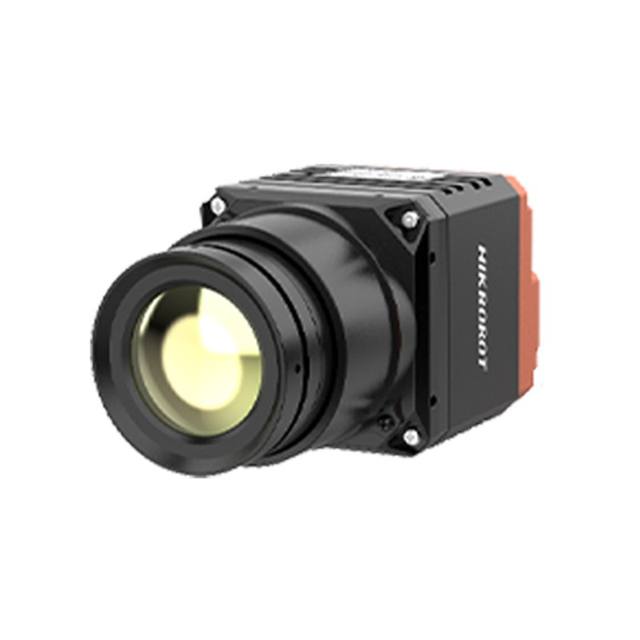
Hikrobot MV-CI003-GL-T6: 0.3MP LWIR Camera, GigE, 6mm, Temperature measurement type.
LWIR sensors have far fewer pixels than visible cameras and a larger pixel pitch, so resolution runs out quickly. Work from the target: calculate how many millimetres each pixel covers at your distance, and make the smallest feature you measure span several pixels. As a rule of thumb, allow at least about 3 × 3 pixels for a reliable reading; below that, a pixel averages target and background and understates the true peak.
Frame rate and thermal time constant limit moving targets. Microbolometers respond much more slowly than photon sensors, so a fast object smears and reads low. Webs and slow processes rarely suffer; for parts passing at speed, hold them in view or test carefully. Interface, protocols, power and IP rating then decide how the camera connects to the cell and whether it needs extra protection.
Most field errors come from the target and the optical path rather than from the camera.
Learn what SWIR, UV and LWIR thermal cameras reveal that visible light cannot, and how sensors, optics, lighting, cooling and cost change the design.
IP codes define narrow tests, so learn what IP65, IP67 and IP69K cover and how to seal, cool and mount vision hardware for washdown and vibration.
A field checklist to de-risk a machine vision project before you buy hardware: define defects and tolerances, collect representative samples, prove the imaging, budget resolution and field of view, lock motion and triggers, then run a structured proof of concept against measurable acceptance criteria.
We help you choose thermal (lwir) cameras based on your application, FOV, working distance and environment.