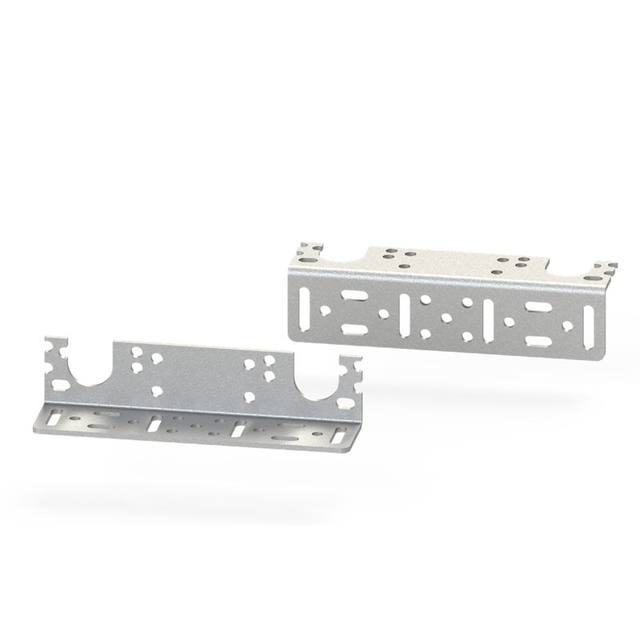
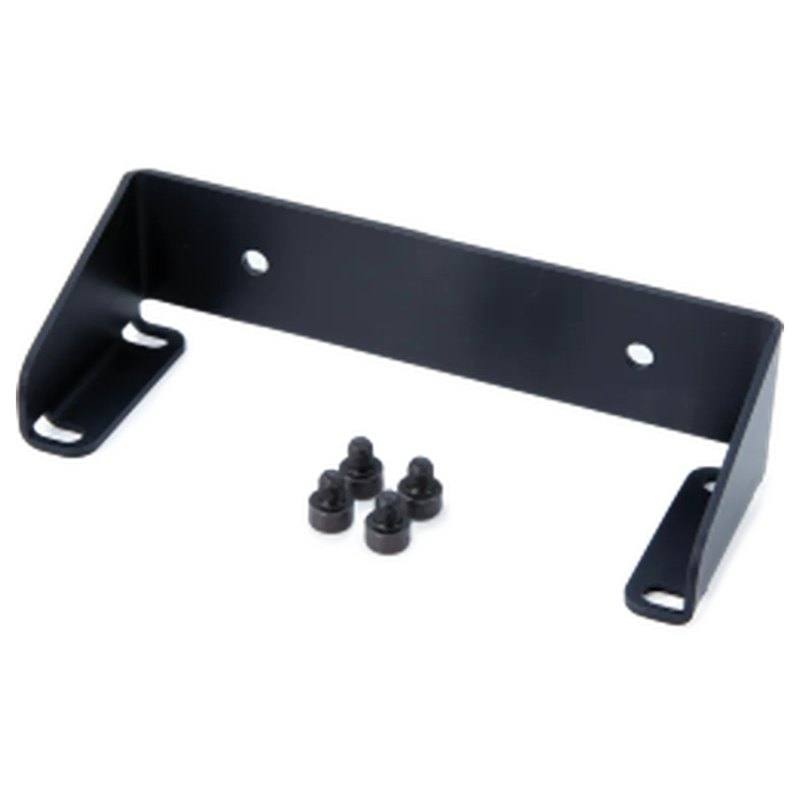
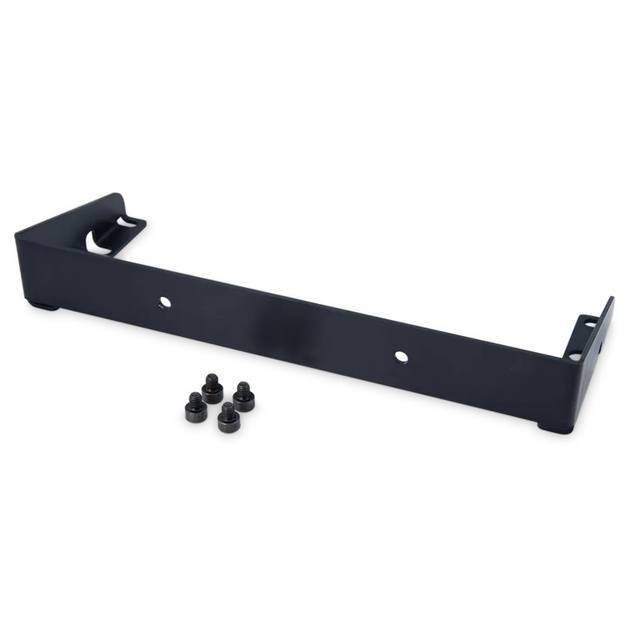
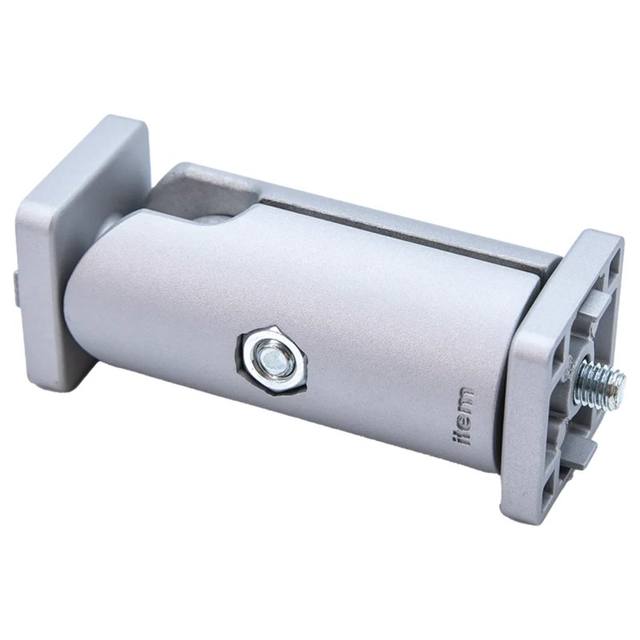
Basler BL Wall Mount for Flatdome M — lighting mount / bracket. Lighting holder matched to the Basler Standard Lights for flexible and quick mechanical integration of the lighting.
Six different lights fit this wall mount: the Flatdome-50x100 and 100x100, the Ring-120OD and the three Darkfield rings 50OD, 75OD and 100OD. That spans bright-field ring light, diffuse dome and dark-field illumination in one bracket position, which makes it the natural fixture for lighting trials.
On a test bench, swapping the light while the part, camera and mount stay put turns a lighting decision into a controlled comparison: the ring shows direct reflections, the dome suppresses them on glossy or curved surfaces, and the dark-field ring lights up scratches and edges against a dark ground. Because the mount carries the light separately from the camera, the light can be moved to its best distance without refocusing the lens.
Best for
Lighting trials that compare ring, dome and dark-field illumination on the same sample part with one bracket.
Small parts lit by a Flatdome 50x100 or 100x100, where the light is hung from the frame and the camera is free to be adjusted.
Dark-field inspection of scratches and edges with the Darkfield-50OD, 75OD or 100OD held independently of the camera.
Selection notes
To carry a light on the camera itself, the BL Camera Mount 36 takes the Flatdomes 50x100 and 100x100, and the BL Camera Mount Ring-120OD takes the Ring-120OD and the three Darkfield rings.
Larger domes (100x200 and up) belong to the BL Wall Mount for Flatdome L, which holds the 100x200 and 200x200.
Not sure which of the six lights shows your defect? AIS Vision can compare them on your sample parts.
Get a first image quickly with the pylon Viewer, then move into the pylon SDK for your application. These cameras are GenICam/GenTL-compliant, so any compliant vision software can drive them as well.
Download and install the pylon Camera Software Suite for your OS from Basler. This provides the pylon Viewer, the GenTL transport-layer producers and the pylon SDK (C/C++/.NET/Python). On Windows the installer adds the needed drivers; on Linux follow the included setup notes for USB and network permissions.
2. Connect the camera and check the link
Cable the camera to its matching interface: GigE Vision to a GigE port (use a quality cable and, ideally, a dedicated NIC with jumbo frames enabled), USB3 Vision to a USB 3.x port with the supplied cable, or CoaXPress to the frame grabber. Provide power where required (PoE, USB bus power, or PoCXP). Open the pylon Viewer and confirm the camera appears in the device list; for GigE, make sure the camera and NIC are on the same subnet.
3. Grab a first image and set exposure, gain and pixel format
Select the camera in the pylon Viewer and start a continuous grab. Adjust exposure time and gain until the image is well exposed (avoid clipped highlights), set the pixel format (e.g. Mono8 or a Bayer/RGB format), and focus the lens. Use a test pattern if the lens or scene is not ready yet.
4. Configure triggering and acquisition
Decide between free-run and triggered acquisition. For synchronized capture, set the trigger source (software or a hardware line on the I/O connector), trigger mode and any debounce or exposure mode, then verify timing. Note the parameter names you change in the Viewer feature tree, as you will reuse them in code.
5. Move to the SDK or a GenICam-compliant library
Recreate your settings in code with the pylon SDK (C, C++, .NET or Python) to open the device, apply the same features and pull frames into your pipeline; pylon vTools and pylon AI can add processing blocks. Because the cameras are GenICam/GenTL standard, third-party vision libraries work too. Once the image stream is stable, you can route frames to a deep-learning inspection such as Rosepetal for automated defect detection.
Frequently asked questions
Light Ring-120OD, Light Flatdome-50x100, Light Flatdome-100x100, and Light Darkfield-50OD, Darkfield-75OD and Darkfield-100OD.
No. It carries the light only; the camera is mounted on its own bracket.