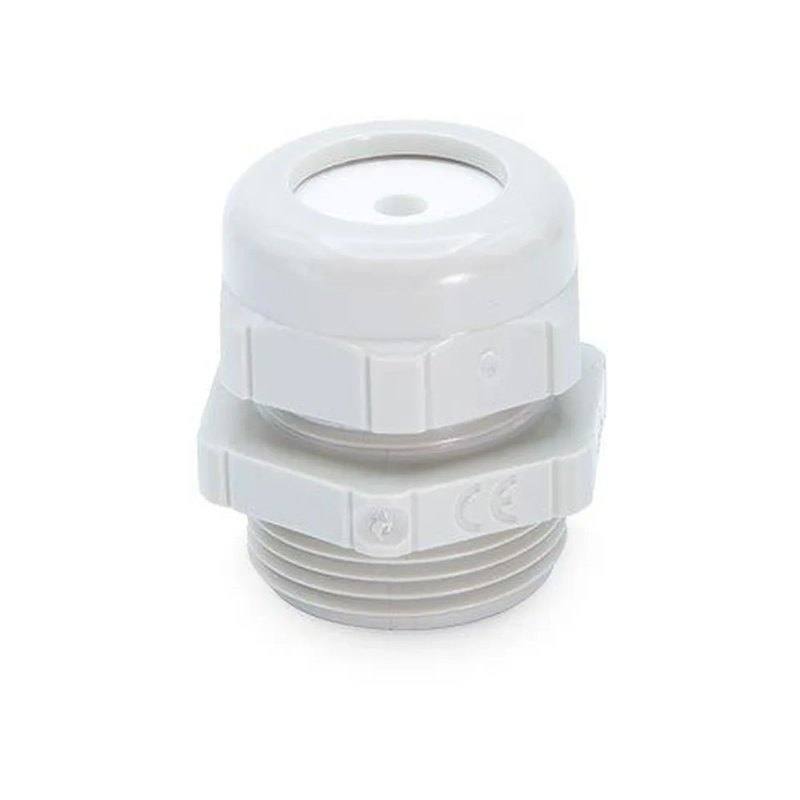
Basler M25 cable gland single hole — M25 cable gland for the IP67 housing, weight 25 g, material Polycarbonate, operating 0 °C - 50 °C, IP67. Note: Camera housing, lens housing, and cable gland are required for complete protection of the camera and lens.
Brand
Basler
Weight
25 g
Housing material
Polycarbonate
Operating temperature
0 °C - 50 °C
IP rating
IP67 (Basler protection class; Basler: camera housing + lens housing + cable gland together give IP67)
Compatible with
Camera Housing: Basler Camera housing ace 2 GigE, Basler Camera housing ace 2 USB / CXP / GMSL, Basler Camera housing ace USB, Basler Camera housing ace GigE
A gland seals only when the cable jacket fills its hole, and this one has a single 6.5 mm hole. It suits a camera that needs only its data cable, such as a GigE camera powered over PoE or a USB camera powered over the bus, with no separate I/O or power cable leaving the housing. Measure the outside diameter of the jacket first: a thinner cable leaves a gap and a thicker one will not pass.
The polycarbonate body weighs 25 g and is rated 0 °C to 50 °C, a narrower range than the -20 °C to 80 °C of the aluminium Medium lens tubes, so in a cold store or near a heat source the gland is among the parts to check first. Polycarbonate typically takes impact well, but strong alkaline cleaners and some solvents can craze it.
Best for
Cameras that need only their data cable, such as a GigE camera on PoE or a USB camera, where one 6.5 mm jacket carries everything and the entry stays simple.
Series builds with many identical stations, because the hole is ready-made and every unit is sealed the same way, unlike a gland drilled by hand.
Housings that may later need a second cable: the double-hole gland is also M25 and fits the same four camera housings, so it can be swapped in.
Selection notes
Measure the cable jacket against the 6.5 mm hole before ordering; a cable noticeably thinner than the hole will not seal.
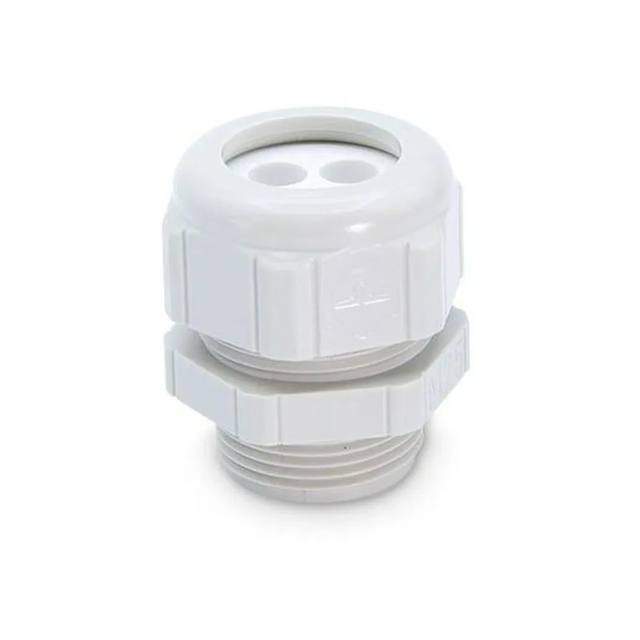
If power or I/O has to leave on a second cable, take the double-hole gland (6.5 mm and 5.5 mm) or the drillable version.
Order the camera housing and lens housing with it: Basler gives IP67 only for the three together.
Specifications: General
Brand
Basler
Compatible with
Camera Housing: Basler Camera housing ace 2 GigE, Basler Camera housing ace 2 USB / CXP / GMSL, Basler Camera housing ace USB, Basler Camera housing ace GigE
Specifications: Environment
Operating temperature
0 °C - 50 °C
IP rating
IP67 (Basler protection class; Basler: camera housing + lens housing + cable gland together give IP67)
Get a first image quickly with the pylon Viewer, then move into the pylon SDK for your application. These cameras are GenICam/GenTL-compliant, so any compliant vision software can drive them as well.
Download and install the pylon Camera Software Suite for your OS from Basler. This provides the pylon Viewer, the GenTL transport-layer producers and the pylon SDK (C/C++/.NET/Python). On Windows the installer adds the needed drivers; on Linux follow the included setup notes for USB and network permissions.
2. Connect the camera and check the link
Cable the camera to its matching interface: GigE Vision to a GigE port (use a quality cable and, ideally, a dedicated NIC with jumbo frames enabled), USB3 Vision to a USB 3.x port with the supplied cable, or CoaXPress to the frame grabber. Provide power where required (PoE, USB bus power, or PoCXP). Open the pylon Viewer and confirm the camera appears in the device list; for GigE, make sure the camera and NIC are on the same subnet.
3. Grab a first image and set exposure, gain and pixel format
Select the camera in the pylon Viewer and start a continuous grab. Adjust exposure time and gain until the image is well exposed (avoid clipped highlights), set the pixel format (e.g. Mono8 or a Bayer/RGB format), and focus the lens. Use a test pattern if the lens or scene is not ready yet.
4. Configure triggering and acquisition
Decide between free-run and triggered acquisition. For synchronized capture, set the trigger source (software or a hardware line on the I/O connector), trigger mode and any debounce or exposure mode, then verify timing. Note the parameter names you change in the Viewer feature tree, as you will reuse them in code.
5. Move to the SDK or a GenICam-compliant library
Recreate your settings in code with the pylon SDK (C, C++, .NET or Python) to open the device, apply the same features and pull frames into your pipeline; pylon vTools and pylon AI can add processing blocks. Because the cameras are GenICam/GenTL standard, third-party vision libraries work too. Once the image stream is stable, you can route frames to a deep-learning inspection such as Rosepetal for automated defect detection.
Frequently asked questions
The hole is 6.5 mm. The jacket should fill it; a noticeably thinner cable will not seal.
The Basler camera housings for ace 2 GigE, ace 2 USB / CXP / GMSL, ace USB and ace GigE.
Camera Housing: Basler Camera housing ace 2 GigE, Basler Camera housing ace 2 USB / CXP / GMSL, Basler Camera housing ace USB, Basler Camera housing ace GigE
Camera Housing: Basler Camera housing ace 2 GigE, Basler Camera housing ace 2 USB / CXP / GMSL, Basler Camera housing ace USB, Basler Camera housing ace GigE