Skip to content
Basler Standard Light Coaxial-100x100-x (W / R / B / IR) machine vision lighting
  • Rosepetal compatible
  • Recommended by AIS Vision

Basler Standard Light Coaxial-100x100

Standard Light Coaxial-100x100-x

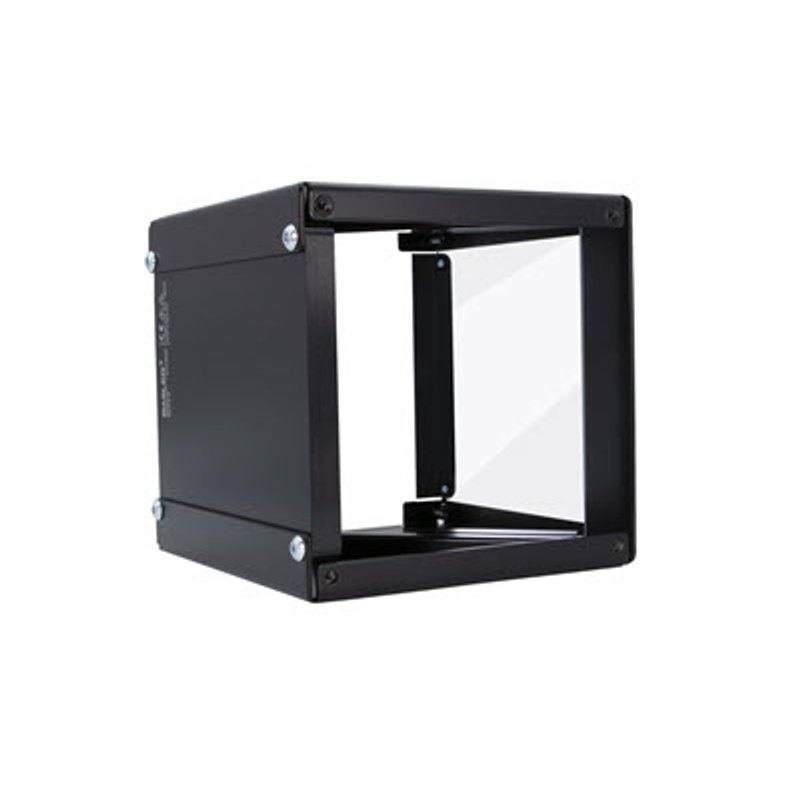
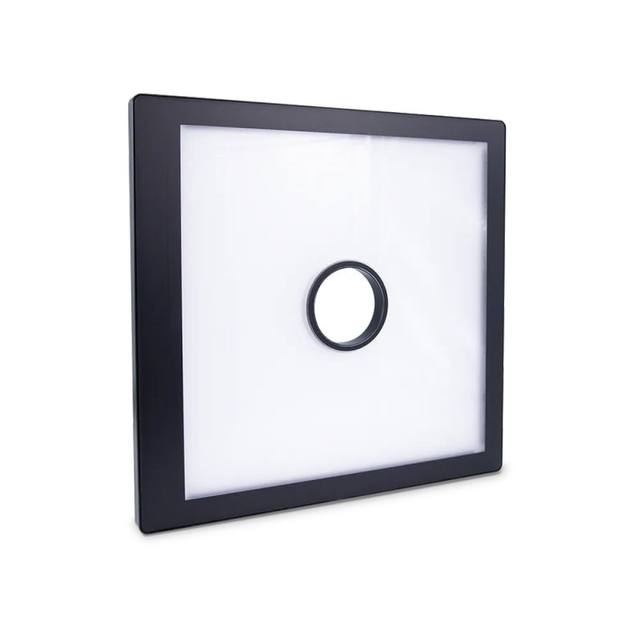
The Basler Standard Light Coaxial-100x100-x projects light through a semitransparent mirror to deliver even, on-axis illumination over a 100 x 100 mm area at a recommended working distance of 1-30 mm, ideal for glossy and reflective objects. It runs from 24 VDC and incorporates an internal LED controller with two operating modes (continuous and strobe), and is also compatible with the Basler SLP Strobe Controller. The light ships in four wavelengths: white (5000 K), red (625 nm), blue (465 nm) and infrared (850 nm), each with the same M8 4-pin connector, IP54 black aluminium housing and 1200 g weight.

Brand
Basler
Lighting type
Coaxial (on-axis)
Color / wavelength
White (5000 K) / Red 625 nm / Blue 465 nm / IR 850 nm
Available wavelengths
White (5000 K), Red (625 nm), Blue (465 nm), Infrared (850 nm)
Color temperature
5000 K (white variant)
Mode
Continuous and strobe (internal LED controller, 2 modes)
Working distance
Recommended LWD 1-30 mm
Controller required
No - internal LED controller (also compatible with Basler SLP Strobe Controller)
Illuminated area
100 x 100 mm luminous area
IP rating
IP54
Power consumption
11 W (voltage control)
Supply voltage
24 VDC ± 10% per docs datasheet (shop pages list ± 5%)

Technical overview

The Basler Standard Light Coaxial-100x100-x is an on-axis (coaxial) illuminator that projects light through a semitransparent glass mirror so that the light travels along the same axis as the camera's line of sight. This geometry is the defining trait: instead of grazing a surface at an angle the way ring or bar lights do, it floods the target perpendicularly, which makes flat, specular, and glossy surfaces appear uniformly bright while scratches, dents, engraving, and printed marks that deviate from the plane appear dark. The result is high-contrast imaging of features that low-angle lighting would wash out or render as confusing glare. The 100 x 100 mm luminous area defines the usable inspection window, and the recommended LWD of just 1-30 mm tells you this light works extremely close to the part: it is designed to sit almost directly over the object, not several centimeters away.

Electrically the unit is self-contained. It runs from 24 VDC (the docs datasheet states +/-10%, while shop pages cite +/-5%) and draws 11 W under voltage control, with an internal LED controller offering two operating modes, continuous and strobe. That built-in controller means no external driver is mandatory for basic deployment, yet the light remains compatible with the Basler SLP Strobe Controller when you need tighter pulse timing, overdriving, or synchronized flashes tied to an encoder or PLC trigger. Strobe mode is what lets coaxial lighting freeze moving parts on a conveyor and extend LED life, while continuous mode suits stationary, indexed, or hand-loaded stations. Connection is via an M8 4-pin male connector, the compact standard you will already be running for many vision-grade lights and sensors.

The light ships in four interchangeable wavelengths that share identical mechanics: white at 5000 K, red at 625 nm, blue at 465 nm, and infrared at 850 nm. Wavelength choice changes what the coaxial geometry reveals: red 625 nm is the workhorse for general contrast and code reading on many substrates, blue 465 nm tightens detail and contrast on fine surface texture, IR 850 nm penetrates some inks and surface films to expose underlying marks, and 5000 K white is the neutral choice when true color or broadband response matters. All variants share the IP54 black aluminium housing with an antireflex cover and glass semitransparent mirror, a 150 x 150 x 151 mm body, 1200 g weight, and a steady operating range of 10-30 degrees C (up to 45 degrees C with added cooling). IP54 indicates protection against dust and splashing water, appropriate for general factory floors but not for washdown or submersion environments.

Best for

  • Inspecting highly reflective and glossy surfaces (polished metal, coated plastics, printed films) where angled lighting would produce glare hotspots
  • Reading 1D barcodes and 2D codes on flat, specular substrates by suppressing surface shine and lifting code contrast
  • Detecting scratches, dents, engraving, and embossing on flat parts, where surface deviations appear dark against a uniformly bright field
  • OCR/OCV of marks printed or laser-etched on glossy labels and metal, leveraging IR 850 nm or blue 465 nm to maximize character contrast
  • Close-proximity, fixed-station inspection within a 100 x 100 mm field where the part can sit at a 1-30 mm working distance directly under the camera axis

Selection notes

  • Budget for the very short working distance: the recommended LWD is only 1-30 mm, so the light and camera must sit close to the part, which constrains lens selection, mechanical clearance, and part-handling geometry. Plan the fixture around this stack-up early.
  • Match the part size to the 100 x 100 mm luminous area. Features must fall inside that window for uniform on-axis illumination; larger parts need a larger coaxial light or a different geometry.
  • Pick the wavelength to the task rather than ordering white by default: red 625 nm for general code and contrast work, blue 465 nm for fine surface detail, IR 850 nm to see through some inks or films, and 5000 K white when color fidelity is required. The four variants are mechanically identical, so the housing and mounting carry over.
  • Decide between the internal controller and the external Basler SLP Strobe Controller up front. The internal controller covers continuous and strobe out of the box on 24 VDC, but if you need precise pulse timing or overdriving synchronized to a PLC or encoder trigger, design in the SLP controller and its wiring from the start.
  • Verify the thermal and ingress envelope against your line: steady operation is rated 10-30 degrees C (up to 45 degrees C with cooling) and the housing is IP54, so hot enclosures or washdown stations will need extra cooling or a different sealing class. Also confirm your supply tolerance, since documentation lists 24 VDC +/-10% while shop pages cite +/-5%.

Specifications: General
BrandBasler
Lighting typeCoaxial (on-axis)

Specifications: Interface
ConnectionM8 socket, 4-pin male connector

Specifications: Optical
Color / wavelengthWhite (5000 K) / Red 625 nm / Blue 465 nm / IR 850 nm
Available wavelengthsWhite (5000 K), Red (625 nm), Blue (465 nm), Infrared (850 nm)
Color temperature5000 K (white variant)
Working distanceRecommended LWD 1-30 mm

Specifications: Electrical
ModeContinuous and strobe (internal LED controller, 2 modes)
Controller requiredNo - internal LED controller (also compatible with Basler SLP Strobe Controller)
Power consumption11 W (voltage control)
Supply voltage24 VDC ± 10% per docs datasheet (shop pages list ± 5%)

Specifications: Environment
IP ratingIP54
Operating temperature10-30 °C steady (max 45 °C with cooling)

Specifications: Geometry
Illuminated area100 x 100 mm luminous area

Specifications: Mechanical
Housing materialBlack aluminium housing; antireflex cover and semitransparent mirror in glass
Dimensions150 x 150 x 151 mm (H x W x D)
Weight1200 g

Frequently asked questions

Related technical guides

Rosepetal · AI

Test this camera with Rosepetal

Validate your visual inspection with AI: send us sample images and we evaluate the case on your hardware.

AIS Vision · Integration

We validate camera + lens + lighting

AIS Vision defines and tests the optimal combination of camera, optics and lighting for your application before you buy.