Skip to content
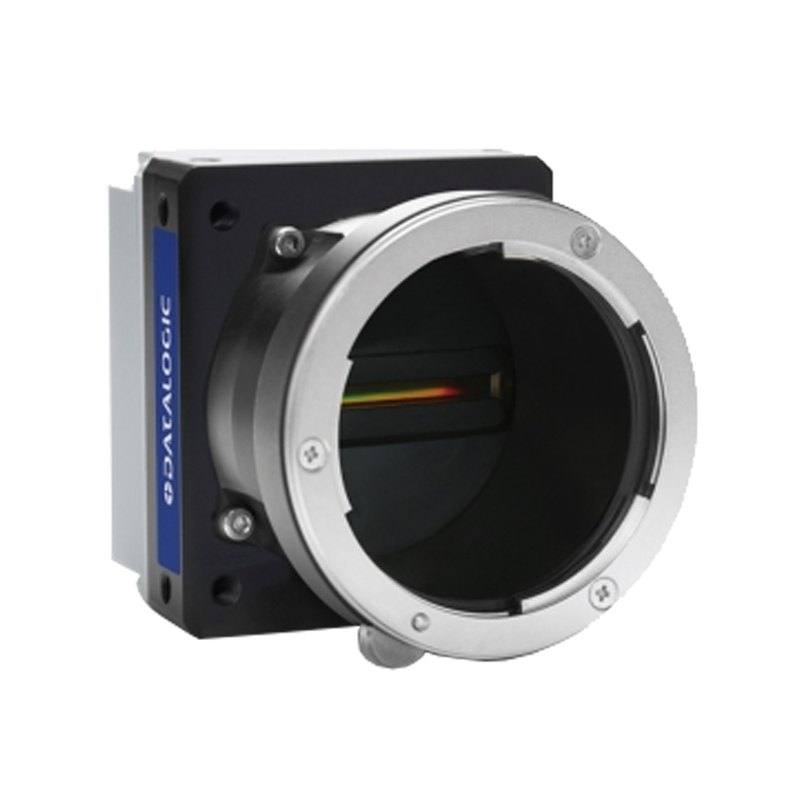
Datalogic / Datasensing CAM-M565-GE (M565) machine vision camera
  • Rosepetal compatible
  • Recommended by AIS Vision

Datalogic / Datasensing CAM-M565-GE-2048 (M565)

CAM-M565-GE-2048

The Datalogic/Datasensing CAM-M565-GE (M565) is a monochrome line-scan camera from the M5xx family with a 2048-pixel sensor, 7 µm pixel pitch and a maximum line rate of 51 kHz over a Gigabit Ethernet (Gig-E) interface. It accepts C-, F- and M42-mount lenses and is powered from 12-24 VDC (no PoE), in a compact 36 x 56 x 62 mm IP30 housing rated for 0 to 50 °C operation. The camera is part number 959931002 and is compatible with Datalogic MX-E45 and MX-E90 industrial vision processors.

Brand
Datalogic / Datasensing
Camera type
Line scan
Interface
Gigabit Ethernet (Gig-E)
Horizontal resolution
2048 px
Mono / color
Grayscale (mono)
Line rate
51 kHz max line rate
Pixel size
7 µm
Mount
c-mount/f-mount/m42-mount (camera supports C, F, and M42 lens mounts)
Power
12-24vdc (range; no PoE)
IP rating
IP30
Dimensions
36 x 56 x 62 mm
Operating temperature
0 to 50 °C

Technical overview

The CAM-M565-GE (M565) is a monochrome line-scan camera built around a single row of 2048 pixels on a 7 µm pitch. Unlike an area-scan camera that grabs a fixed frame, a line-scan sensor images one line at a time and relies on relative motion between the part and the camera to build up the image, one line per encoder or trigger pulse. That makes it a natural fit for continuous web and conveyor material: printed rolls, sheet stock, and any product that moves past the optics at a steady rate. With 2048 active pixels across the line, the achievable resolution is set entirely by how wide a field you spread those pixels over (field width divided by 2048 gives the per-pixel sampling), so a narrow inspection lane yields fine detail while a wide one trades resolution for coverage.

The headline dynamic spec is the 51 kHz maximum line rate, meaning the camera can capture up to 51,000 lines per second. That ceiling, combined with your chosen per-pixel size in the travel direction, dictates the maximum web speed the system can run without smearing or under-sampling, and it is the number to budget against when matching the camera to a line. The grayscale (mono) sensor delivers full per-pixel sensitivity and is well suited to contrast-, texture-, and edge-based tasks such as surface-defect detection and code or character reading, rather than color sorting. The camera ships over a standard Gigabit Ethernet (Gig-E) interface, which simplifies cabling and uses commodity infrastructure, though note it is not PoE: the camera is powered separately from a 12-24 VDC supply, so a power conductor must be run alongside the Ethernet.

Optically, the M565 is flexible at the mount: it accepts C-, F- and M42-mount lenses, so you can scale from compact C-mount optics on shorter lines up to larger-format F- and M42 lenses when a wider line or a larger image circle is needed. The body is compact at 36 x 56 x 62 mm, which helps when fitting it into a tight gantry or over a narrow conveyor. Environmentally it is an IP30-rated housing rated for 0 to 50 °C operation, indicating it is intended for clean, indoor, controlled machine environments rather than washdown or heavily contaminated areas. Datalogic positions it as part number 959931002 within the M5xx family and lists it as compatible with the MX-E45 and MX-E90 industrial vision processors, so in practice it is designed to be paired with one of those processors rather than run as a fully standalone smart camera.

Best for

  • Continuous web inspection of printed rolls, films and labels where the material moves past the camera at a steady, encoder-locked rate
  • Surface and defect inspection of sheet and roll goods (metal, textile, packaging substrates) using the high-contrast grayscale line image
  • Reading printed codes and characters in motion for traceability (OCR/OCV and code reading) on packaging and labeling lines
  • High-throughput inspection lanes that need up to 51,000 lines/second to keep pace with fast-moving conveyors or webs
  • Electronics and printed-material lines where a narrow field across 2048 pixels yields fine per-pixel sampling for small-feature detection

Selection notes

  • Line-scan imaging requires controlled, measured motion: budget for an encoder or precise trigger so each of the 2048-pixel lines is captured at the correct travel increment, otherwise images stretch or compress.
  • Resolution is a design trade-off, not a fixed number: per-pixel detail equals your field width divided by 2048, so set the lens and working distance to spread those pixels over only as wide a lane as the task needs.
  • Size the line rate to the line speed: the 51 kHz ceiling, together with your chosen travel-direction pixel size, sets the maximum web/conveyor speed before under-sampling, so confirm headroom against your fastest product.
  • Plan power separately from data: this is a Gig-E camera with no PoE, so run a 12-24 VDC supply to the camera in addition to the Ethernet cable.
  • Mind the environment and the lens format: the IP30 housing and 0 to 50 °C range suit clean indoor machine builds, and the C/F/M42 mount choice should match the image circle and field width you need; for a wider line, plan for the larger F- or M42-mount optics.
  • It is designed to pair with a processor: Datalogic lists compatibility with the MX-E45 and MX-E90 vision processors, so factor that controller into the system architecture rather than treating the camera as fully standalone.

Specifications: General
BrandDatalogic / Datasensing
Camera typeLine scan

Specifications: Sensor
Horizontal resolution2048 px
Mono / colorGrayscale (mono)
Pixel size7 µm

Specifications: Performance
Line rate51 kHz max line rate

Specifications: Interface
InterfaceGigabit Ethernet (Gig-E)

Specifications: Optics
Mountc-mount/f-mount/m42-mount (camera supports C, F, and M42 lens mounts)

Specifications: Electrical
Power12-24vdc (range; no PoE)

Specifications: Environment
IP ratingIP30
Operating temperature0 to 50 °C

Specifications: Mechanical
Dimensions36 x 56 x 62 mm

Frequently asked questions

Related technical guides

Rosepetal · AI

Test this camera with Rosepetal

Validate your visual inspection with AI: send us sample images and we evaluate the case on your hardware.

AIS Vision · Integration

We validate camera + lens + lighting

AIS Vision defines and tests the optimal combination of camera, optics and lighting for your application before you buy.