
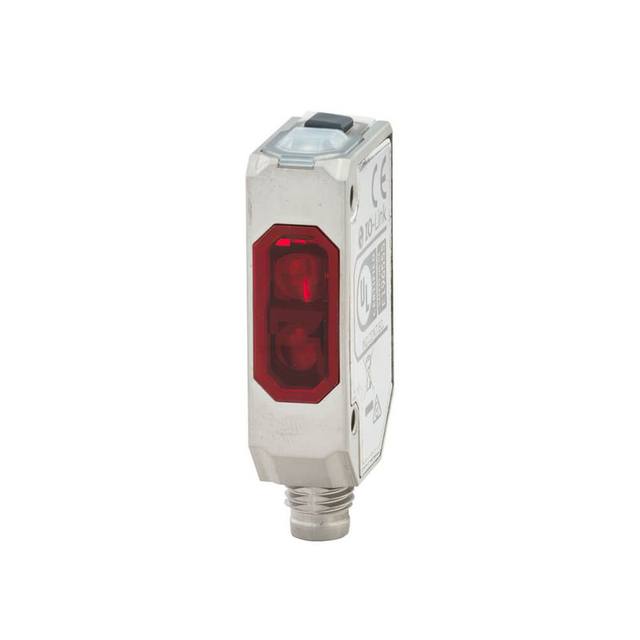
- Recommended by AIS Vision
On request
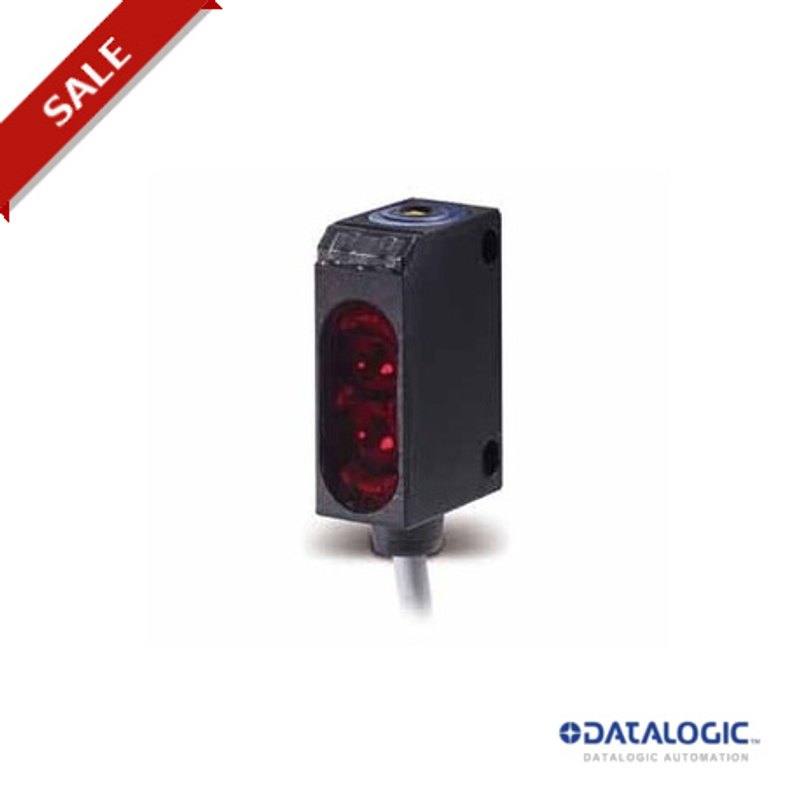
S41 series
The S41 is a basic-line miniature photoelectric sensor in an ABS housing offering multiple optic functions: diffuse proximity adjustable 0.2-35 cm, 11 cm fixed-focus proximity for background suppression, 2.5 m polarised retroreflex, 0.7 m retroreflex for transparents, and up to 6 m through-beam (1.5 m narrow-beam emitter version). Emission is red LED 660 nm (B, D, P, T versions) or infrared LED 880 nm (C, G, H versions), with both NC and NO outputs available as NPN or PNP on separate poles. It runs on 10-30 VDC at 35 mA max, delivers 100 mA output current with 1 ms response time and 500 Hz switching frequency. Connection is via M8 4-pole connector or 2 m cable, with IP67/IP66 protection and -25...+55 degC operating temperature.
The Datalogic Datasensing S41 is a basic-line miniature photoelectric sensor family built around an ABS housing with a PMMA plastic lens, offered in several optic functions so one form factor can cover most part-present and edge-detection tasks in a machine. The sensing principle changes with the model: through-beam reaches up to 6 m (1.5 m on the narrow-beam emitter variant) for the most reliable interruption detection across a gap; polarised retroreflective covers 2.5 m and a dedicated retroreflex version reaches 0.7 m specifically for transparent objects; diffuse/proximity is adjustable from 0.2 to 35 cm; and a fixed-focus version detects to 11 cm with background suppression so it ignores surfaces just behind the target. Emission is either red LED at 660 nm (B, D, P, T versions), which gives a visible spot that speeds up alignment, or infrared LED at 880 nm (C, G, H versions) for use on dark or low-contrast surfaces.
| Brand | Datalogic / Datasensing |
|---|---|
| Sensor type | Photoelectric sensor |
| Range / distance | Up to 6 m through-beam; 2.5 m polarised retroreflex; 0.7 m retroreflex for transparents; 0.2-35 cm diffuse; 11 cm fixed focus |
|---|---|
| Response time | 1 ms max. |
| Switching frequency | 500 Hz max. |
| Communication | Discrete switching output (NO/NC) |
|---|---|
| Connection | M8 4-pole connector, or 2 m diam. 3.5 mm cable (model dependent) |
| Supply voltage | 10...30 VDC, reverse-polarity protected |
|---|
| Operating temperature | -25...+55 degC (storage -25...+70 degC) |
|---|---|
| IP rating | IP67 (P, D, F, G, H versions); IP66 (B, C, T versions) |
| Sensing method | Through-beam, retroreflective (polarised), diffuse/proximity and fixed-focus (background suppression) variants |
|---|---|
| Light source | Red LED 660 nm (B, D, P, T versions); infrared LED 880 nm (C, G, H versions) |
| Output type | NC-NO, PNP or NPN (selectable by model); 100 mA max., short-circuit protected |
|---|
| Housing material | ABS housing, PMMA plastic lens |
|---|---|
| Weight | 10 g max. (connector version); 40 g max. (cable version) |
A practical guide to selecting discrete sensors that trigger cameras, index parts and gate inspection on a vision station. Covers sensing principle, range, target, PNP/NPN/IO-Link outputs, response time and IP rating, plus wiring the trigger to the camera.
A practical guide to the core photoelectric sensing principles, through-beam, retroreflective, diffuse and background suppression, covering range, reliability, target and surface dependence, light source choice, output options and how to pick the right one for your application.
A field checklist to de-risk a machine vision project before you buy hardware: define defects and tolerances, collect representative samples, prove the imaging, budget resolution and field of view, lock motion and triggers, then run a structured proof of concept against measurable acceptance criteria.
AIS Vision · Integration
AIS Vision defines and tests the optimal combination of camera, optics and lighting for your application before you buy.