Skip to content
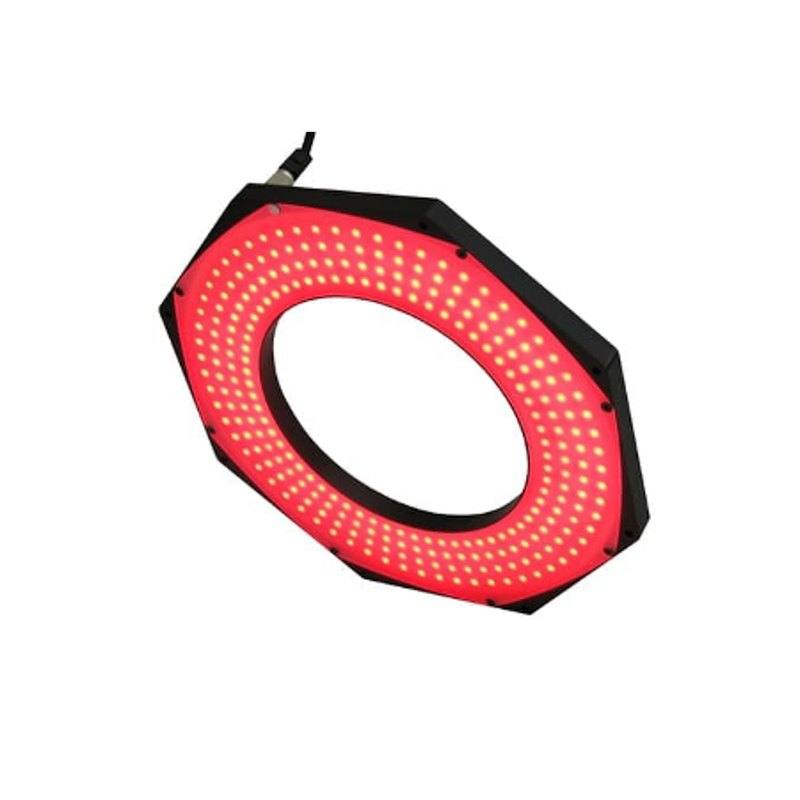
DCM Sistemes ALS2315A machine vision lighting
  • Rosepetal compatible
  • Recommended by AIS Vision

DCM Sistemes ALS2315A Diffuse Ringlight

ALS2315A

The ALS2315A is the largest model in DCM Sistemes' ALS diffuse ringlight series, providing an even frontal diffuse light on the camera axis to uniform textures, eliminate reflections and reduce shadows on specular objects. It works at a light working distance of 80-400 mm, runs on 24 VDC through a 2-pin male chassis connector, and integrates DCM's inline iBlueDrive driver technology supporting continuous and strobe operating modes. It is offered in multiple monochromatic wavelengths (470 nm blue, 525 nm green, 630 nm red, 850 nm IR), white and RGB; continuous (Type C) consumption is 17 W for the 470 nm/525 nm/white variants. The aluminium housing measures 245 x 245 x 13 mm, weighs 880 g and carries an IP40 rating (IP43 when oriented so light falls vertically).

Brand
DCM Sistemes
Lighting type
Diffuse ringlight
Color / wavelength
Blue 470 nm (also available 525 nm green, 630 nm red, 850 nm IR, white, RGB)
Mode
Continuous and strobe (Type C / Type S / iBlueDrive Type i)
Working distance
80-400 mm (RWD)
Controller required
No external controller required; integrated inline iBlueDrive driver
Diffuser
Yes (diffuse ringlight)
IP rating
IP40 (IP43 if light falls vertically)
Inner diameter
145 mm
Emission angle
Diffuse
Available wavelengths
470 nm blue, 525 nm green, 630 nm red, 850 nm IR, white (W00), RGB
Driver technology
iBlueDrive technology (inline)

Technical overview

The DCM Sistemes ALS2315A is the largest member of the ALS diffuse ringlight family, and its geometry is the headline spec: a 245 x 245 mm square aluminium housing with a 145 mm inner aperture. That large open centre lets the camera look straight down the optical axis through the light, so this is an on-axis frontal illuminator rather than a low-angle or backlight. The diffuse emission (the diffuser is built in, and the emission angle is specified simply as 'diffuse') is what makes it effective on the reflective and specular parts it is aimed at: instead of throwing hard directional light that produces hotspots and mirror glare on shiny surfaces, it wraps the part in even, scattered illumination that uniforms texture, suppresses reflections and softens shadows. The trade-off of any diffuse front light is that it flattens contrast, so it reveals surface markings, print and gross defects well but is not the tool for emphasising fine 3D topography (low-angle dark-field lighting does that).

Optically you size this light by working distance and aperture. DCM rates a recommended working distance of 80-400 mm, a wide window that suits both close benchtop stations and taller fixtures. The 145 mm inner diameter sets a practical floor on the field of view it can cover cleanly without the ring itself vignetting the image, so it is matched to medium-to-large parts rather than tiny components a small ringlight would handle. Wavelength is selectable at order time: 470 nm blue (the configured variant here), plus 525 nm green, 630 nm red, 850 nm IR, white and RGB. Shorter wavelengths like the 470 nm blue scatter more and give crisper edges on fine features, red and IR penetrate and can cut through certain colourations or print, and white is the general-purpose choice; pick the colour to maximise contrast against the specific defect or mark you need to read.

Electrically and from an integration standpoint the ALS2315A is designed to drop in without a separate lighting cabinet. It runs on 24 VDC (+/-3%) through a 2-pin male chassis connector (PIN1 +24 V, PIN2 0 V), and DCM's inline iBlueDrive driver is built into the light, so no external controller is required for basic operation; a 3-pin aerial connector exposes the iBlueDrive control. It supports both continuous (Type C) and strobe operation (Type S / iBlueDrive Type i), letting you run it always-on for steady inspection or pulse it in sync with the camera trigger to freeze motion and boost peak intensity on fast lines. Continuous draw is 17 W for the 470 nm, 525 nm and white variants and up to 21 W for the 850 nm IR. The housing is aluminium for heat dissipation, the unit weighs 880 g and is only 13 mm thick, and protection is IP40 (rising to IP43 when mounted so light falls vertically), placing it in clean-to-moderate factory environments rather than washdown zones.

Best for

  • On-axis frontal inspection of reflective and specular parts (machined metal, glossy plastics) where diffuse light must eliminate mirror glare and even out the surface
  • Surface and AI defect inspection of medium-to-large parts that fit within and beyond the 145 mm inner aperture at 80-400 mm working distance
  • Reading printed text and codes for OCR/OCV and traceability tasks, choosing the 470 nm blue (or red/white) variant to maximise mark contrast
  • Packaging inspection stations needing uniform, shadow-reduced frontal light over a wide working-distance window
  • High-speed line inspection where the integrated iBlueDrive driver is pulsed in strobe mode synchronised to the camera trigger

Selection notes

  • Confirm part size against the 145 mm inner diameter and your field of view: the large central aperture suits medium-to-large parts, and a smaller part may waste much of the ring's footprint.
  • Choose the wavelength at order time (470 nm blue, 525 nm green, 630 nm red, 850 nm IR, white, RGB) to suit your contrast target, and note power draw differs (17 W for blue/green/white, up to 21 W for 850 nm IR).
  • Plan the 24 VDC (+/-3%) supply and the 2-pin chassis connector wiring (PIN1 +24 V, PIN2 0 V); if you want strobe control, route the 3-pin aerial iBlueDrive connector to your trigger source.
  • Decide between continuous (Type C) and strobe (Type S / Type i) early: strobe lets you freeze motion and increase peak intensity but needs camera-trigger synchronisation, while continuous simplifies wiring for steady stations.
  • Account for the IP40 rating (IP43 only when light falls vertically): this is a clean-to-moderate environment light, not a washdown-rated unit, so add enclosure protection in wet or particle-heavy lines.
  • Reserve mounting space and thermal headroom for the 245 x 245 x 13 mm aluminium housing (880 g); the thin profile fits tight fixtures but the square footprint is larger than a typical compact ringlight.

Specifications: General
BrandDCM Sistemes
Lighting typeDiffuse ringlight

Specifications: Interface
Connection2-pin male chassis connector (PIN1 +24V, PIN2 0V); 3-pin aerial male connector for iBlueDrive

Specifications: Optical
Color / wavelengthBlue 470 nm (also available 525 nm green, 630 nm red, 850 nm IR, white, RGB)
Working distance80-400 mm (RWD)
DiffuserYes (diffuse ringlight)
Emission angleDiffuse
Available wavelengths470 nm blue, 525 nm green, 630 nm red, 850 nm IR, white (W00), RGB

Specifications: Electrical
ModeContinuous and strobe (Type C / Type S / iBlueDrive Type i)
Controller requiredNo external controller required; integrated inline iBlueDrive driver
Driver technologyiBlueDrive technology (inline)
Power consumption17 W (Type C continuous, 470/525/white); up to 21 W (850 nm)
Supply voltage24 VDC +/-3%

Specifications: Environment
IP ratingIP40 (IP43 if light falls vertically)

Specifications: Geometry
Inner diameter145 mm

Specifications: Mechanical
Housing materialAluminium
Dimensions245 x 245 x 13 mm
Weight880 g

Frequently asked questions

Related technical guides

Rosepetal · AI

Test this camera with Rosepetal

Validate your visual inspection with AI: send us sample images and we evaluate the case on your hardware.

AIS Vision · Integration

We validate camera + lens + lighting

AIS Vision defines and tests the optimal combination of camera, optics and lighting for your application before you buy.