Skip to content
DCM Sistemes DOM0906A machine vision lighting
  • Rosepetal compatible
  • Recommended by AIS Vision

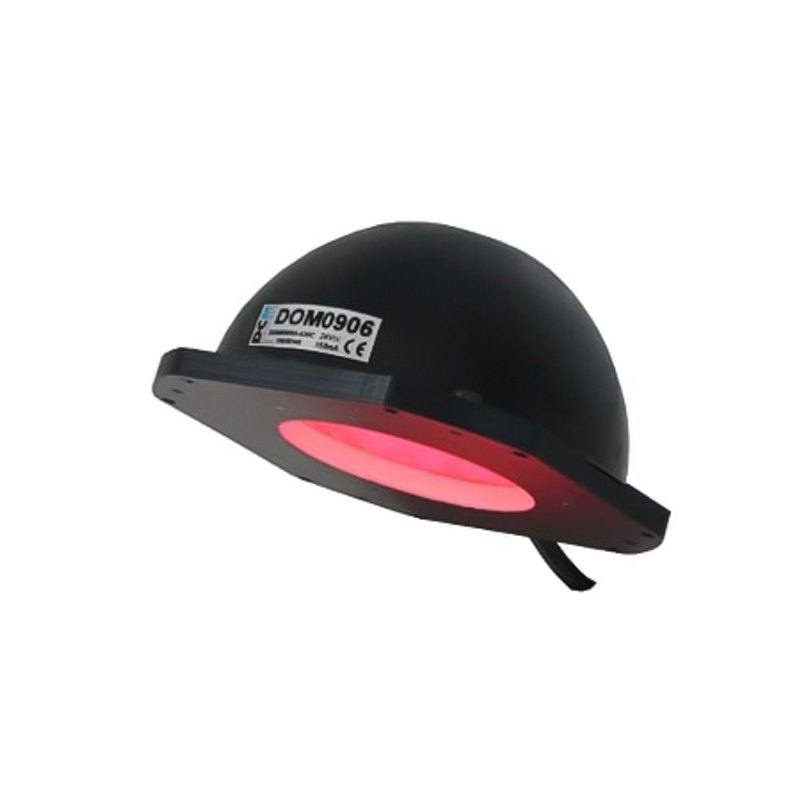
DCM Sistemes DOM0906A Dome Light

DOM0906A

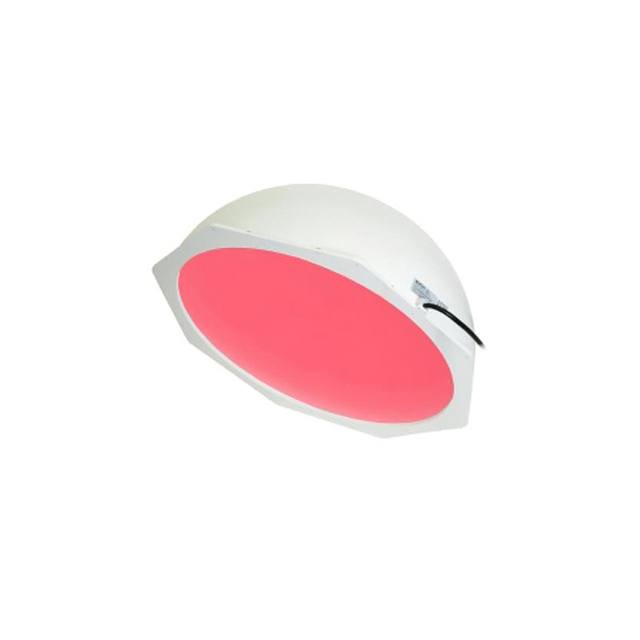
The DOM0906A is DCM Sistemes' smallest DOM-series dome light, using a diffuse hemispherical cavity to illuminate objects simultaneously from the camera axis and from all lateral directions, eliminating shadows and specular highlights on shiny or curved surfaces. It operates at 24 VDC and draws approximately 3.6–4 W continuous, with integrated iBlueDrive technology that enables continuous dimming, NPN/PNP/TTL on-off, and strobe modes (up to 5000 pulses/s with USB programming) without an external controller. The housing is black anodised aluminium rated IP00 as standard (IP65 available as a factory modifier), and the unit ships with a 180 mm flying-lead power cable plus a 715 mm 3-pin aerial inline connector for iBlueDrive. Available wavelengths span 470 nm blue, 525 nm green, 630 nm red, 850/880 nm IR, white, and RGB.

Brand
DCM Sistemes
Lighting type
Dome (cloudy day)
Color / wavelength
White, Red 630 nm, Green 525 nm, Blue 470 nm, IR 850/880 nm, RGB
Mode
Continuous, continuous dimming, strobe (iBlueDrive)
Working distance
< 20 mm (RWD)
Controller required
No — iBlueDrive controller built-in inline
Diffuser
Yes — diffuse hemispherical dome cavity
IP rating
IP00 standard; IP65 optional factory modifier
Inner diameter
55 mm (bottom aperture diameter)
Emission angle
Diffuse (omnidirectional dome, 40° cone half-angle)
Available wavelengths
470 nm (blue), 525 nm (green), 630 nm (red), 850/880 nm (IR), white (W00), RGB
Power consumption
3.6–4 W continuous (varies by wavelength; 3.8 W white/blue/IR, 3.6 W green, 4 W red)

Technical overview

The DOM0906A is DCM Sistemes' most compact DOM-series dome light, measuring 96 x 96 x 50 mm and weighing just 139 g — proportions that suit small robotic cells and benchtop inspection stations where headroom is limited. Its defining geometry is a diffuse hemispherical cavity with a 55 mm bottom aperture that wraps LED emission around the subject from the camera axis and from all lateral angles simultaneously, producing the "cloudy day" effect at working distances below 20 mm. The result is an illumination field that collapses shadows and suppresses specular glare on reflective, curved, or embossed surfaces — exactly the conditions that trip up ring lights or bar lights on polished metals, blister-pack foils, or injection-moulded plastics.

Wavelength selection spans the full usable spectrum for monochrome cameras: 470 nm blue for high-contrast imaging of surface relief and micro-scratches, 525 nm green as a balanced sensitivity option, 630 nm red for minimising veining in translucent materials and pairing with standard red-pass filters, 850/880 nm near-infrared for seeing through certain coatings or inks, and white for colour cameras. An RGB variant is available for applications where multi-channel or sequential illumination is needed. Control is handled entirely by the integrated iBlueDrive inline controller — a 715 mm 3-pin aerial connector carries the control signal, eliminating the cost and panel space of a separate lighting controller. iBlueDrive supports continuous use, continuous dimming, NPN/PNP/TTL on-off switching, and strobe at rates up to 5000 pulses per second with USB-programmable timing, giving integrators full flexibility from simple powered-on fixtures to tightly synchronised high-speed strobing.

Power delivery is 24 VDC ±3% in continuous mode (±8% tolerance in strobe mode), drawing 3.6–4 W depending on wavelength — low enough to run from the same 24 V rail as the vision controller without a dedicated supply. The housing is black anodised aluminium, standard-rated IP00 with an IP65 factory option for environments where splash or dust exposure is expected. Wiring is two flying leads (180 mm, power) plus the iBlueDrive connector; no M8/M12 bulkhead or junction box is required, simplifying cable routing in tight fixtures. Operating temperature is 0–40 °C, appropriate for conditioned manufacturing floors but not unheated outdoor enclosures.

Best for

  • Inspection of shiny or curved metal components — pressed stampings, turned fasteners, bearing races — where ring lights produce unacceptable specular hotspots that mask surface defects.
  • Blister-pack and foil-lidded packaging verification, where the dome geometry reveals embossed date codes, lot numbers, and seal integrity without reflective glare that would obscure contrast.
  • Pharmaceutical tablet and capsule inspection on small parts (fitting within the 55 mm aperture) requiring even, shadowless illumination to detect chips, cracks, or colour anomalies across a curved surface.
  • Surface-defect and scratch detection on injection-moulded plastics or lacquered panels, where shadows from directional lighting hide low-relief flaws that the omnidirectional dome illumination makes visible.
  • Compact PCB traceability and marking verification applications using the strobe mode to freeze motion on a conveyor, with the iBlueDrive eliminating the need for a separate strobe controller in a space-constrained cabinet.

Selection notes

  • Working distance is a hard constraint: the specified recommended working distance is under 20 mm, so the camera lens front element or the part fixture must sit within that window of the 55 mm aperture. Verify the lens working distance at your chosen magnification before committing to this dome.
  • Aperture coverage is 55 mm — parts or field-of-view regions larger than this diameter will receive non-uniform illumination near the edges of the dome. For larger fields, consider a larger DOM-series model rather than increasing working distance beyond the rated 20 mm.
  • The IP00 standard rating means the DOM0906A is not suitable for wet-wash or heavy particulate environments without specifying the IP65 factory modifier at time of order. IP65 is not a field retrofit, so confirm environmental requirements before purchasing.
  • iBlueDrive strobe operation requires 24 VDC ±8% — a wider tolerance than the ±3% needed for stable continuous dimming. If your 24 V rail has moderate ripple, continuous mode performance may benefit from a regulated sub-supply, while strobe mode will tolerate the wider swing.
  • Wavelength choice affects sensor spectral response significantly: 850/880 nm IR will produce near-zero output on standard colour cameras and requires a monochrome sensor with NIR sensitivity; confirm camera QE at the chosen wavelength before selecting the IR variant.

Specifications: General
BrandDCM Sistemes
Lighting typeDome (cloudy day)

Specifications: Interface
Connection2P flying leads 180 mm (power); 3P aerial male inline connector 715 mm (iBlueDrive)

Specifications: Optical
Color / wavelengthWhite, Red 630 nm, Green 525 nm, Blue 470 nm, IR 850/880 nm, RGB
Working distance< 20 mm (RWD)
DiffuserYes — diffuse hemispherical dome cavity
Emission angleDiffuse (omnidirectional dome, 40° cone half-angle)
Available wavelengths470 nm (blue), 525 nm (green), 630 nm (red), 850/880 nm (IR), white (W00), RGB

Specifications: Electrical
ModeContinuous, continuous dimming, strobe (iBlueDrive)
Controller requiredNo — iBlueDrive controller built-in inline
Power consumption3.6–4 W continuous (varies by wavelength; 3.8 W white/blue/IR, 3.6 W green, 4 W red)
Supply voltage24 VDC ±3% (continuous); 24 VDC ±8% (iBlueDrive strobe)

Specifications: Environment
IP ratingIP00 standard; IP65 optional factory modifier
Operating temperature0–40 °C operating; 0–60 °C storage

Specifications: Geometry
Inner diameter55 mm (bottom aperture diameter)

Specifications: Mechanical
Housing materialBlack anodised aluminium
Dimensions96 × 96 × 50 mm (H×W×D)
Weight139 g

Frequently asked questions

Related technical guides

Rosepetal · AI

Test this camera with Rosepetal

Validate your visual inspection with AI: send us sample images and we evaluate the case on your hardware.

AIS Vision · Integration

We validate camera + lens + lighting

AIS Vision defines and tests the optimal combination of camera, optics and lighting for your application before you buy.