Skip to content
Omron / Sentech FLV-DD100 machine vision lighting
  • Rosepetal compatible
  • Recommended by AIS Vision

Omron / Sentech FLV-DD100 Dome Light (100 dia.)

FLV-DD100

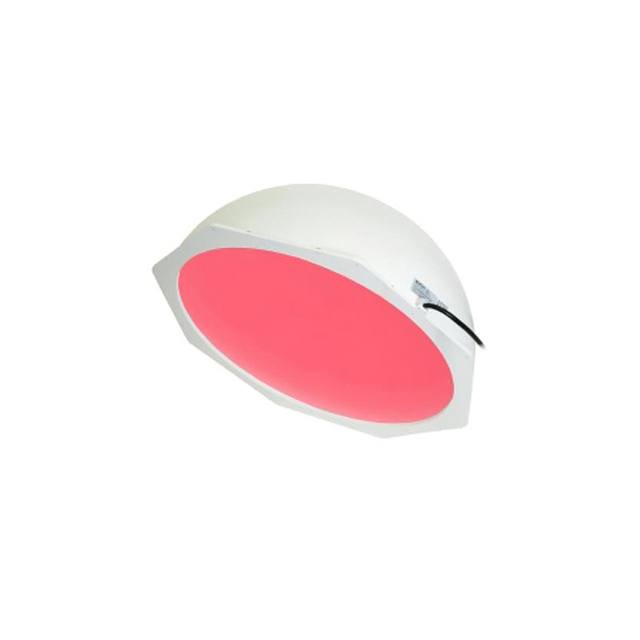
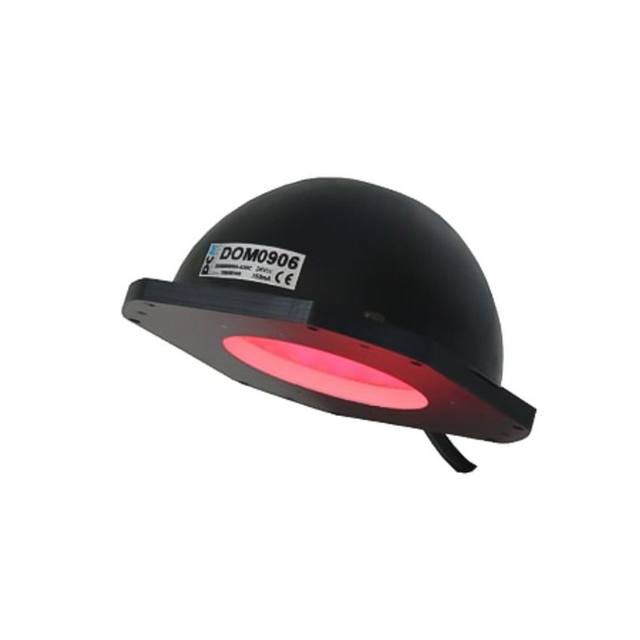
The FLV-DD100 is part of Omron's FLV Series constant-voltage LED dome lights, available in white (FLV-DD100W), red (FLV-DD100R), and blue (FLV-DD100B) variants. It produces uniform diffuse illumination from all directions, making it ideal for imaging curved, uneven, or highly reflective surfaces such as metal and glass. The light uses an internal diffusing reflective dome and ring-shaped LED array in an aluminum alloy housing, and requires an external lighting controller (FLV-ATC or FLV-TCC series). Power consumption is 17.9 W for the white and blue variants and 11.9 W for red, with an illuminated area of 65.6 mm diameter and an overall outside diameter of 114 mm.

Brand
Omron / Sentech
Lighting type
Dome
Color / wavelength
White (also Red, Blue)
Available wavelengths
White, Red, Blue
Mode
Continuous (trigger lighting also supported via controller)
Controller required
Yes — FLV-ATC or FLV-TCC series controller required
Diffuser
Yes — integral diffusing reflective dome
Illuminated area
65.6 mm diameter
Power consumption
17.9 W (white/blue); 11.9 W (red)
Dimensions
114 mm dia. × 56.28 mm (H)
Weight
210 g
Housing material
Aluminum alloy case

Technical overview

The FLV-DD100 is a 114 mm diameter dome light from Omron's FLV Series, built around a ring-shaped LED array whose output is directed into a highly reflective, diffusing internal dome before it reaches the subject. This geometry produces genuinely omnidirectional diffuse illumination — light arrives at the part from every angle simultaneously, collapsing shadows and suppressing specular hot-spots. The illuminated area is 65.6 mm in diameter, making the fixture best matched to small-to-medium parts that fit well within that window. Three wavelength variants are available — white (FLV-DD100W), red (FLV-DD100R), and blue (FLV-DD100B) — giving integrators the ability to tune spectral response to the camera sensor or to exploit wavelength-dependent contrast on specific surface chemistries. Power draw is 17.9 W for the white and blue variants and 11.9 W for red, and is managed entirely by the mandatory external FLV-ATC or FLV-TCC series controller.

Because all illumination is diffuse and omnidirectional, the FLV-DD100 excels on surfaces that defeat directional lighting: curved metal stampings, glass vials, polished plastic caps, etched silicon wafers, solder balls, and machined aluminium faces. On these targets, a ring light or bar light would produce bright arcs or reflections that obscure surface features; the dome converts those reflections into a uniform grey field, leaving only true surface discontinuities — scratches, porosity, contamination, or print defects — as visible tonal changes. The controller-driven constant-current drive keeps LED brightness stable across the operating temperature range of 0 to 50 °C, and trigger lighting is also supported via the controller for applications requiring synchronised strobe operation.

The housing is machined aluminium alloy with an overall profile of 114 mm diameter by 56.28 mm height and a mass of 210 g — a compact, rigid package that is straightforward to mount on standard vision system brackets directly above a part nest or conveyor pocket. Connection is through a 0.8 m cable with a 2-pin connector that mates with the FLV controller, keeping integration wiring simple. The IP20 rating (IEC 60529) suits clean factory and laboratory environments and is consistent with the semiconductor, electronics, packaging, and general metrology settings where dome lights see the most use; installations in dusty or wet environments would require an enclosure around the light. Working distance flexibility is a practical consideration: because the dome's effective illuminated area is 65.6 mm, parts should be placed at the dome aperture or within a few millimetres of it to maintain full angular coverage and uniformity.

Best for

  • Inspection of highly reflective curved surfaces — polished metal stampings, turned parts, solder balls, and glass or plastic containers — where directional lighting creates mirror reflections that mask surface defects.
  • Surface defect detection on etched, laser-marked, or printed substrates such as semiconductor wafers, PCBs, and flexible packaging where uniform background illumination is required for AI-based or threshold-based anomaly algorithms.
  • OCR and OCV verification of marks on shiny labels, embossed characters on metal, and ink-jet date codes on reflective plastic caps, where the shadowless field prevents character edge washout.
  • Dimensional measurement and gauging of small machined parts (fitting within the 65.6 mm illuminated area) where consistent edge contrast without shadow or glare is required for sub-pixel edge detection.
  • Traceability code reading — DataMatrix or QR codes on reflective or low-contrast surfaces in electronics and automotive assembly — where dome illumination recovers contrast uniformly across the entire code area.

Selection notes

  • Part size relative to the 65.6 mm illuminated area is the primary fit criterion: parts or regions of interest that exceed this diameter will receive uneven coverage at the periphery, and a larger dome model should be evaluated instead.
  • An FLV-ATC or FLV-TCC series controller is mandatory — the FLV-DD100 has no internal driver and cannot be powered directly from a DC supply. Budget and cabinet space for the controller, and confirm communication compatibility with the vision system's I/O trigger output if trigger lighting mode is intended.
  • Wavelength selection should be matched to the camera and the target: the white variant suits colour cameras and general-purpose greyscale tasks; red and blue variants can raise or suppress contrast on coloured inks, anodising, or organic residues when used with a monochrome camera — a spectrally sensitive choice that should be validated on actual samples.
  • IP20 protection limits deployment to clean, dry environments. If the application involves coolant mist, dust, or wash-down cycles, the light must be housed inside a protective enclosure, which adds to the mechanical design and may restrict access to the dome aperture.
  • Working distance is effectively zero to a few millimetres from the dome aperture to maintain full omnidirectional coverage; the dome is not a stand-off illuminator. Ensure the part-handling fixture allows the camera lens to clear the 114 mm outer diameter and 56.28 mm height while keeping the part at the aperture plane.

Specifications: General
BrandOmron / Sentech
Lighting typeDome

Specifications: Interface
Connection0.8 m cable with 2-pin connector

Specifications: Optical
Color / wavelengthWhite (also Red, Blue)
Available wavelengthsWhite, Red, Blue
DiffuserYes — integral diffusing reflective dome
Emission angleDiffuse — uniform illumination from all directions

Specifications: Electrical
ModeContinuous (trigger lighting also supported via controller)
Controller requiredYes — FLV-ATC or FLV-TCC series controller required
Power consumption17.9 W (white/blue); 11.9 W (red)
Driver technologyConstant current (via external FLV-ATC / FLV-TCC controller) — not constant voltage

Specifications: Environment
Operating temperatureOperating: 0 to 50°C; Storage: -15 to 60°C
IP ratingIP20 (IEC 60529)

Specifications: Geometry
Illuminated area65.6 mm diameter

Specifications: Mechanical
Dimensions114 mm dia. × 56.28 mm (H)
Weight210 g
Housing materialAluminum alloy case

Frequently asked questions

Related technical guides

Rosepetal · AI

Test this camera with Rosepetal

Validate your visual inspection with AI: send us sample images and we evaluate the case on your hardware.

AIS Vision · Integration

We validate camera + lens + lighting

AIS Vision defines and tests the optimal combination of camera, optics and lighting for your application before you buy.