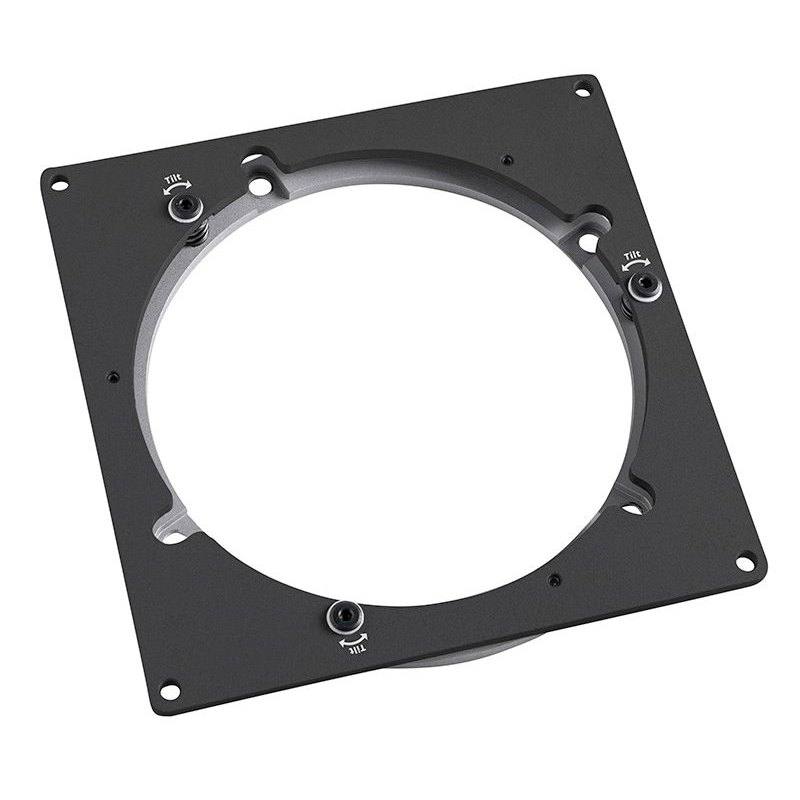
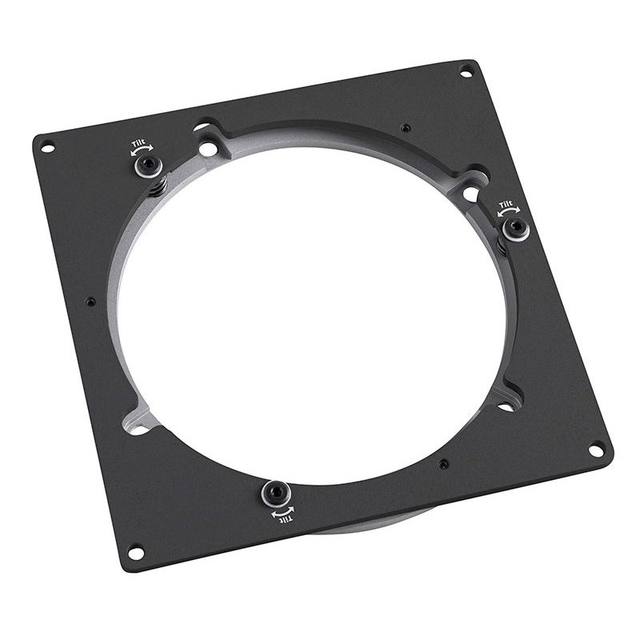
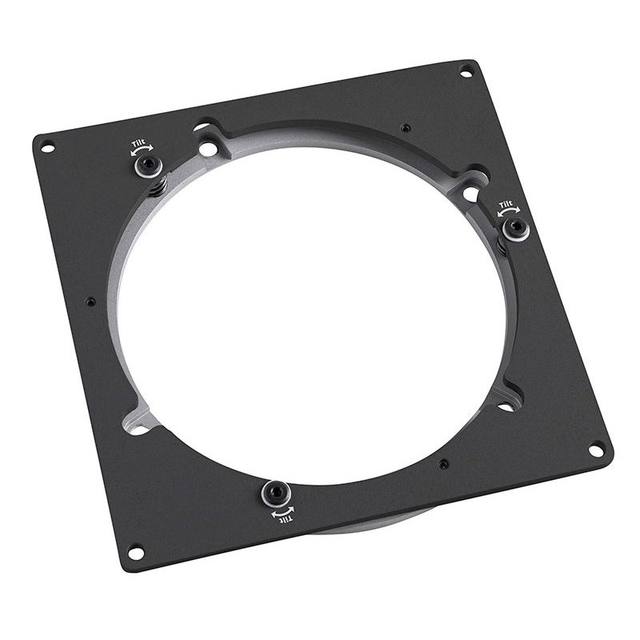
Opto Engineering CMTHCR064 — Precision alignment mechanics for telecentric setup: length 126.0 mm, width 126.0 mm, height 17.5 mm, mass 171 g, tilt axis b ± 1.0 °.
The Opto Engineering CMTHCR064 is precision alignment mechanics for a telecentric setup. It belongs to the CMT series, which the manufacturer describes as precision alignment mechanics for lenses. The body measures 126.0 mm long and 126.0 mm wide, stands 17.5 mm high and has a mass of 171 g. The footprint sets the area it takes up on your fixture, and the 17.5 mm height sets how much axial length it adds to the optical stack, so both belong in the mechanical layout from the first sketch.
The alignment parameter is the tilt about axis b, specified at ±1.0°. This is a fine angular adjustment that brings the lens into the alignment the telecentric setup requires. Pre-align the camera and fixture so the final adjustment stays within the ±1.0° range, rather than depending on the mechanic to absorb larger angular errors.
At 171 g the mechanic adds a modest load to the mounting structure. Include its mass together with the lens and camera when you check the bracket or fixture that carries them, and keep cabling and other parts clear of the 126.0 mm by 126.0 mm body so the adjustment can be made without obstruction.
Best for
Aligning a lens in a telecentric setup that needs a tilt adjustment of ±1.0° about axis b.
Building a telecentric station on a fixture with 126.0 mm by 126.0 mm of space for the mechanic.
Adding a CMT-series alignment mechanic to a vision stack where its 17.5 mm height fits the available axial space.
Setups where the lens alignment must be adjusted and checked again within the ±1.0° tilt range.
Selection notes
Check the axial length of the complete stack, including the lens and camera, against the working distance you need, because the 17.5 mm height adds to it.
Size the fixture around the 126.0 mm by 126.0 mm footprint and make sure the 171 g mass fits within the load your bracket or fixture is designed to carry.
Match the alignment requirement to the ±1.0° tilt range about axis b. If the setup needs a larger angular correction, provide it in the fixture design rather than relying on this mechanic alone.
Confirm the mechanical fit with your lens and camera before ordering so that the alignment mechanic integrates with the optical train as intended.