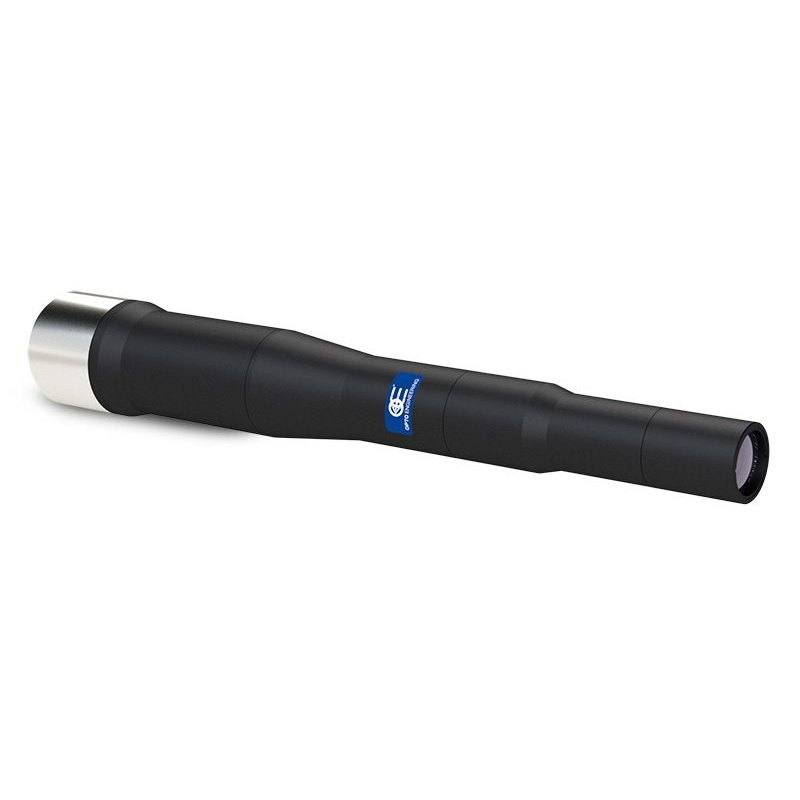
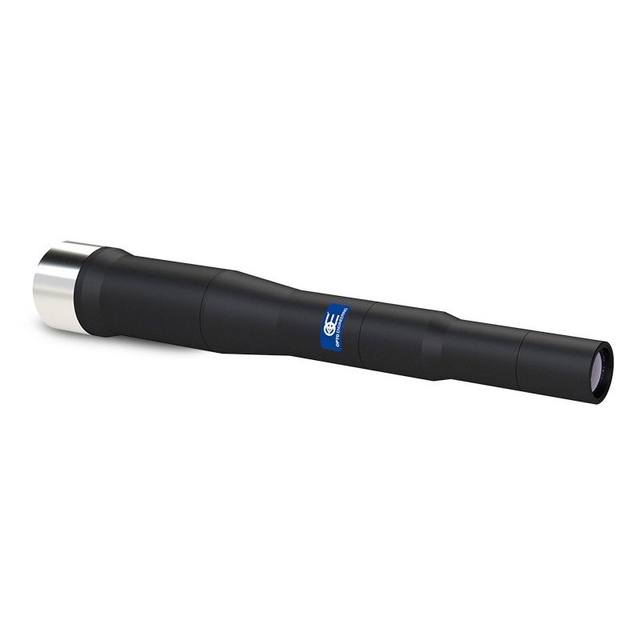
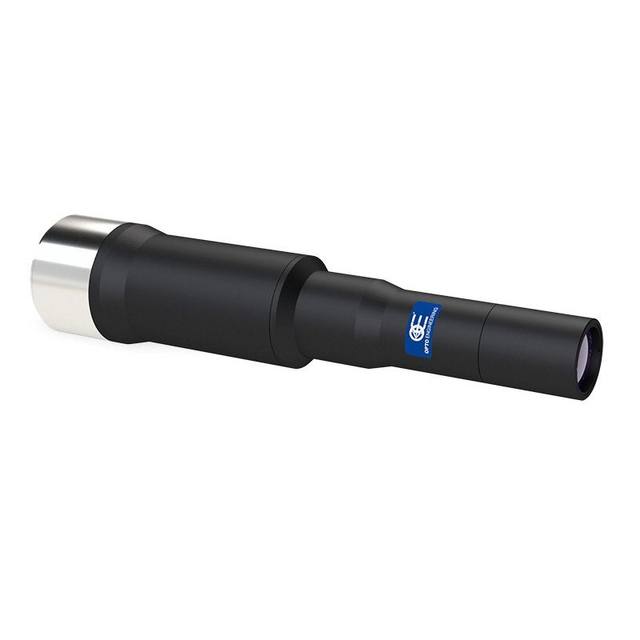
The Opto Engineering TC16M012-Q is a telecentric lens for 35 mm Full Frame sensors, with a 3.000× magnification, a working distance of 57.7 mm and the M58x0.75 FD 6.56 mount. Its Ø 43.3 mm image circle covers the 35 mm Full Frame maximum sensor size, and the working f-number is wF/# 18. The 3.000× magnification enlarges the object three times on the sensor, which makes the lens suited to detailed measurement of small parts.
The specified telecentricity is below 0.03° typical (0.05° maximum), and distortion is below 0.03 % typical (0.05 % maximum). These values support gauging in which the image scale must remain steady as the part moves in depth, and they help keep edges straight across the image circle. Accuracy budgets should use the maximum figures. The 57.7 mm working distance is the focus position, so the fixture must present the object at that spacing.
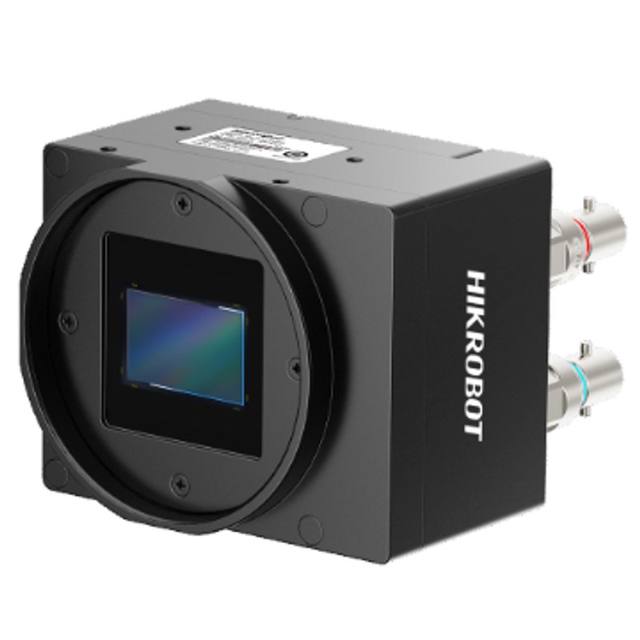
Choose a camera whose mount matches M58x0.75 FD 6.56 and whose sensor fits the Ø 43.3 mm image circle. Size the lighting for the wF/# 18 aperture, since the aperture controls how much light reaches the sensor. For outline and edge measurement, backlighting is commonly paired with telecentric optics, and the part should be held at the 57.7 mm working distance throughout the inspection.
Best for
Detailed measurement of small parts at 3.000× magnification on 35 mm Full Frame sensors.
Setups built around the M58x0.75 FD 6.56 mount with a 57.7 mm working distance.
Telecentric gauging where the image scale should stay steady as part depth varies.
Outline and edge measurement using a backlight.
Selection notes
Match the camera mount to M58x0.75 FD 6.56 in the mechanical design.
Confirm the sensor is 35 mm Full Frame or fits the Ø 43.3 mm image circle.
Fix the object distance at 57.7 mm and keep the fixture rigid, since the magnification is high.
Size illumination for wF/# 18, and use the maximum figures (0.05° telecentricity, 0.05 % distortion) in accuracy budgets.
Specifications: General
Brand
Opto Engineering
Specifications: Optical
Lens mount
M58x0.75 FD 6.56
Image circle / max sensor
Ø 43.3 mm (max sensor 35 mm Full Frame)
Magnification
3.000×
Working distance
57.7 mm
Telecentric
Yes
Applications this product is commonly selected for. Open one to see the full recommended hardware and approach.
Matched automatically by: camera mount fits the lens mount · camera sensor is covered by the lens image circle — this lens: M58x0.75 FD 6.56 · Ø 43.3 mm (max sensor 35 mm Full Frame) image circle.
By category
All 72High-resolution cameras 42Area scan cameras 23High-speed cameras 7