Skip to content
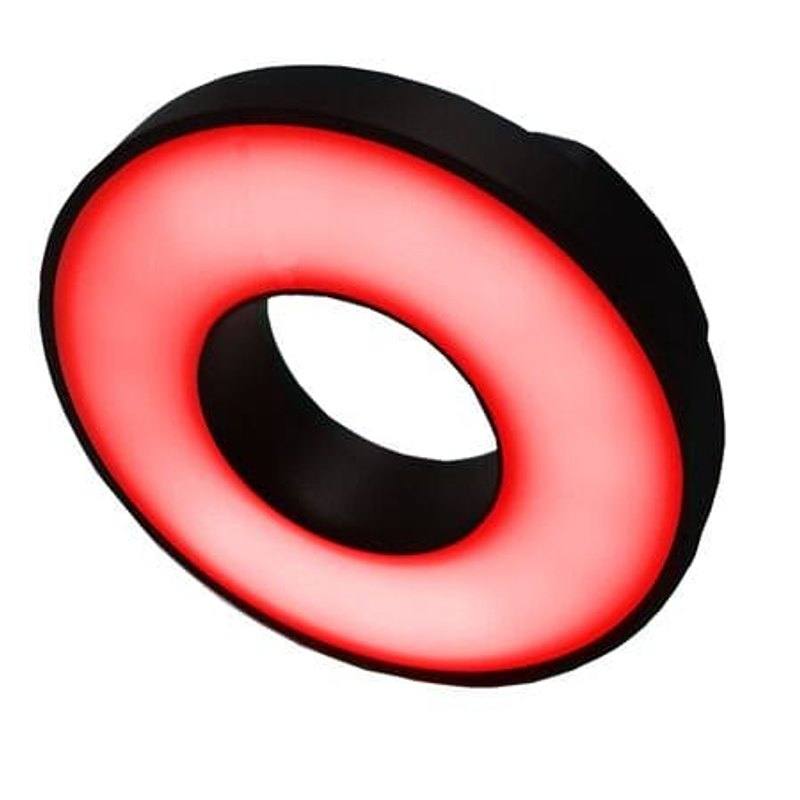
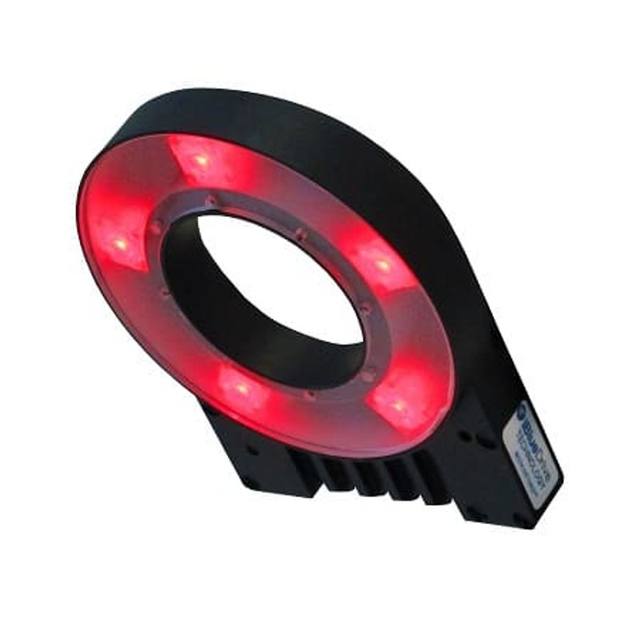
DCM Sistemes ALB1716A-470C/AW machine vision lighting
  • Rosepetal compatible
  • Recommended by AIS Vision

DCM Sistemes ALB1716A Direct Ringlight (Blue 470nm, Continuous, Wide angle)

ALB1716A-470C/AW

The ALB1716A is a large direct high-powered ringlight measuring 168x168x38.5 mm with a 76 mm inner diameter and a recommended working distance >50 mm; it weighs 940 g and is rated IP65 (IP67 available with the /67 modifier). It is powered at 24VDC +/-8% via a 3-pole aerial connector (150 mm) and uses nine M4 mounting holes; the housing is anodized aluminium. In the 470nm (blue) continuous version the maximum instantaneous consumption is 4020 mA, corresponding to roughly 22W. It supports 365/400/470/525/630/850 nm and white, narrow/medium/wide/diffuse emission angles, multisector (2 or 4 sectors) operation, and continuous or iBlueDrive (strobe/overdrive) drive modes.

Brand
DCM Sistemes
Lighting type
Ring light (direct high-powered ringlight)
Color / wavelength
Blue, 470 nm (also available 365/400/525/630/850 nm and white)
Mode
Continuous (C) drive; iBlueDrive (i) strobe/overdrive variant also offered
Working distance
Recommended working distance >50 mm
Controller required
Continuous version powered directly at 24VDC and switched via 3-pin control input (no external controller required)
Diffuser
Diffuse emission (/AD) and diffuser filter (/FDR) available as options
IP rating
IP65 (IP67 with /67 modifier)
Dimensions
168 x 168 x 38.5 mm
Inner diameter
76 mm
Weight
940 g
Supply voltage
24 (+/-8%) VDC

Technical overview

The ALB1716A in this configuration is a large direct ringlight: the LEDs face the part directly through a 76 mm inner aperture, so the camera looks down the centre of the ring while bright, fairly even illumination floods the surface from all around. A direct ring of this kind delivers strong frontal (bright-field) light, which raises overall surface brightness and contrast and is a versatile starting point for inspecting texture, edges and surface features. The wide emission angle spreads that light over a broader cone than the narrow or medium variants of the same body, which suits larger fields of view and shorter working distances where you want the ring to flood the whole part rather than concentrate a tight pool of light on a small spot. The recommended working distance is greater than 50 mm, and the body measures 168 x 168 x 38.5 mm with a 76 mm bore, so you mount it coaxially with the lens looking through the centre; moving it toward the part raises intensity, while backing it off softens the effect and evens out the coverage.

This unit is the 470 nm blue, continuous version. Blue is a short wavelength that scatters more on fine surface structure and pairs well with monochrome sensors, which are most responsive to shorter wavelengths, so it is a common choice for resolving fine surface detail and small features and for working against red or warm-coloured backgrounds where a blue source plus a matching blue bandpass filter on the lens suppresses ambient light. Being the continuous (C) drive variant, it is simply held on: it is powered at 24 VDC and switched through a 3-pin control input, so no external strobe controller is required and integration is reduced to a power feed and a switching line. DCM also offers the same body in an iBlueDrive 'i' variant for strobe and overdrive operation when you need to freeze fast motion or push extra brightness in short bursts, but that capability is not present in this continuous part; here you trade peak strobe punch for the simplicity of a continuously lit, always-ready source.

Electrically and environmentally the light is built for the line. It runs on 24 VDC with a +/-8% tolerance through a 3-pole aerial connector on a 150 mm flying lead, and in the 470 nm continuous configuration it draws up to about 4020 mA instantaneously, on the order of 20-22 W, so the 24 V supply and any switching device must be sized for that load. The housing is anodized aluminium, giving mechanical robustness in an industrial setting, and it weighs 940 g, so the mounting bracket must carry real weight and hold the ring rigidly in front of the lens. Nine M4 holes provide fixing points for that bracket. It is rated IP65 against dust and washdown, with an IP67 option via the /67 modifier for harsher wet environments, and the operating range is 0 to 40 degC. To deploy it, pair it with an area-scan camera and lens whose field of view fits through or just below the 76 mm aperture, set the working distance above 50 mm, and add a blue bandpass filter on the lens if you need to lock out ambient or coloured stray light.

Best for

  • Surface inspection of stamped, machined or cast metal parts in automotive and metalworking lines, where strong direct frontal light raises overall contrast on surface features and finish.
  • AI-based defect inspection on larger components or assemblies, using the wide-angle flood to evenly light a broad field of view through the 76 mm aperture.
  • Dimensional measurement of edges and features on parts up to roughly the inner-bore size, where consistent continuous illumination gives stable contrast for metrology.
  • Packaging inspection in food, consumer-goods or general packaging lines, with the IP65 (or IP67 /67) sealing supporting washdown-adjacent environments.
  • Electronics and PCB-area inspection where the short 470 nm blue wavelength on a monochrome camera resolves fine surface detail and small features.

Selection notes

  • Match the camera field of view to the geometry: the lens must look through the 76 mm inner aperture and the part should sit at more than 50 mm working distance, so confirm your sensor and lens cover the target within that bore and standoff before committing.
  • Pair the 470 nm blue output with a monochrome camera for best response, and add a blue bandpass filter on the lens to reject ambient and warm-coloured stray light when contrast or repeatability is marginal.
  • This is the continuous (C) variant with no controller required, switched via the 3-pin input at 24 VDC; if you instead need to freeze fast-moving parts or overdrive for extra brightness, specify the iBlueDrive 'i' variant rather than this part.
  • Size the power path for the load: up to about 4020 mA instantaneous (on the order of 20-22 W) at 24 VDC +/-8% through the 3-pole aerial connector, and plan a switching device rated for that current.
  • Provide a rigid mount that carries the 940 g weight using the nine M4 holes, and choose IP65 as supplied or the IP67 /67 option for wetter environments; keep ambient within 0 to 40 degC. If the wide angle over-floods a small target, the narrow or medium emission-angle variants of the same body concentrate the light instead.

Specifications: General
BrandDCM Sistemes
Lighting typeRing light (direct high-powered ringlight)

Specifications: Interface
Connection3-pin aerial connector

Specifications: Optical
Color / wavelengthBlue, 470 nm (also available 365/400/525/630/850 nm and white)
Working distanceRecommended working distance >50 mm
DiffuserDiffuse emission (/AD) and diffuser filter (/FDR) available as options
Emission angleWide

Specifications: Electrical
ModeContinuous (C) drive; iBlueDrive (i) strobe/overdrive variant also offered
Controller requiredContinuous version powered directly at 24VDC and switched via 3-pin control input (no external controller required)
Supply voltage24 (+/-8%) VDC
Power consumption20 W
Driver technologyiBlueDrive (built-in, available on 'i' variant)

Specifications: Environment
IP ratingIP65 (IP67 with /67 modifier)
Operating temperature0 - 40 degC

Specifications: Mechanical
Dimensions168 x 168 x 38.5 mm
Weight940 g
Housing materialAnodized aluminium

Specifications: Geometry
Inner diameter76 mm

Frequently asked questions

Related technical guides

Rosepetal · AI

Test this camera with Rosepetal

Validate your visual inspection with AI: send us sample images and we evaluate the case on your hardware.

AIS Vision · Integration

We validate camera + lens + lighting

AIS Vision defines and tests the optimal combination of camera, optics and lighting for your application before you buy.