DCM Sistemes PLA1026A Direct Bar Light (White, Wide angle)
PLA1026A-W00C/AW
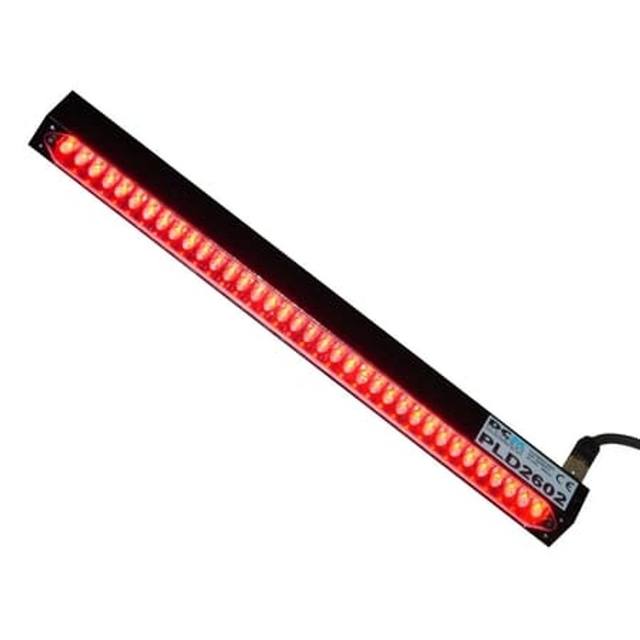
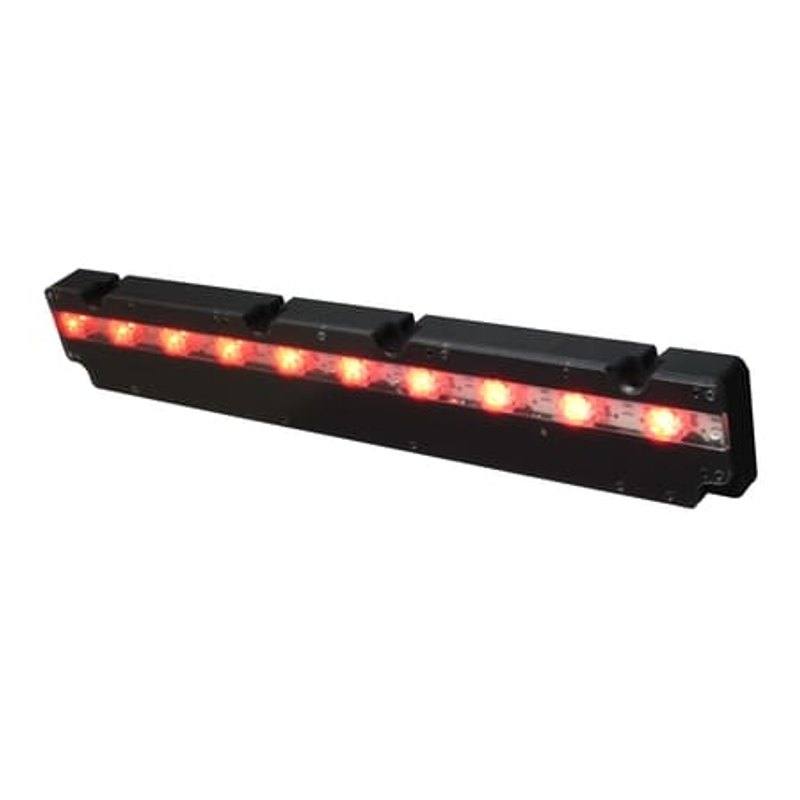
The PLA1026A-W00C/AW is a direct high-power linear LED projector measuring 260x40x16 mm and weighing 267 g, built with DCM's iBlueDrive technology. It uses white LEDs (W00 code) with a wide angle of emission (/AW) and a 40-degree beam, drawing 11 W from a 24 VDC supply. The unit is rated IP40, connects via a 3P aerial male connector (150 mm cable) and supports both continuous and strobe/powered operating modes.
Brand
DCM Sistemes
Lighting type
Bar / linear projector
Color / wavelength
White (W00 code)
Mode
Continuous (direct 24VDC drive)
Controller required
No external controller required (driven directly at 24 VDC; integrated iBlueDrive)
The PLA1026A-W00C/AW is a direct bar (linear projector) light: a 260 mm illuminated strip that throws light forward from a row of white LEDs rather than diffusing it across the field. Because it emits directly, it produces a bright, fairly directional band of light that grazes or floods the target depending on how you angle it. White LEDs give a broad, full-spectrum output (the W00 code), which is the natural choice when colour fidelity matters or when you image in colour and want neutral rendering rather than the contrast tricks a single 470/525/630/850 nm wavelength would buy you. Mounted to skim across a surface at a shallow angle, a bar light of this geometry reveals scratches, dents, embossing and edge defects as raised highlights and shadows; mounted more frontally it acts as general flood illumination for reading print, codes and surface features. The 40-degree beam combined with the wide-angle (/AW) optic spreads that output over a comparatively broad cone, so this variant favours covering a wider working area or a shorter standoff over concentrating light into a tight, long-throw line.
Electrically this is a plug-and-go unit. It runs straight off 24 VDC (plus/minus 8 percent) and draws 11 W, and DCM's integrated iBlueDrive electronics mean no separate lighting controller is required for basic operation: apply 24 V and it lights. That keeps the bill of materials and panel wiring simple, since a single 24 V rail already present in most machines can power it through the 3-pin aerial male connector on its 150 mm lead. The light supports both continuous and strobe/powered operation, so although it will run steadily for continuous-acquisition or human-inspection setups, it can also be pulsed in time with the camera exposure to freeze motion or boost instantaneous brightness on fast lines. Note that to actually strobe the light you still need something to switch and time that 24 V (a vision controller, PLC output or strobe driver synced to the camera trigger); the on-board driver removes the need for a constant-current controller, not the need for a trigger source when you choose to pulse.
Physically the housing is 260 x 40 x 16 mm and weighs 267 g, a slim, low-profile bar that mounts easily alongside a camera or on a frame above a conveyor. The IP40 rating means it is protected against solid objects but offers no protection against water or fine dust ingress, so this is an indoor, dry-environment light for enclosed inspection cells and cabinets rather than washdown or outdoor duty. Because the source is white, you can image in colour or monochrome without a dedicated wavelength filter: you position the bar so its illuminated band falls on the inspected zone, then set working distance and angle to get the highlight/shadow behaviour you want. The same PLA1026A body is offered in 470 nm blue, 525 nm green, 630 nm red and 850 nm IR if a future application needs the contrast or filtering advantages of a narrow band instead of broadband white.
Best for
Surface inspection of electronics and metal parts on an enclosed bench or cell, where the bar is angled to graze the surface and throw scratches, dents and tooling marks into highlight and shadow
Defect-detection and AI vision stations on automotive component lines, using the wide 40-degree white beam as neutral flood illumination so a colour or mono camera sees parts under full-spectrum light
OCR/OCV reading of printed text, date codes and lot markings on packaging, where broadband white light renders ink and substrate naturally without colour bias
Traceability and code reading (printed 1D/2D codes) on a conveyor, with the slim 260 mm bar mounted above the lane to cover a wide read window at short standoff
Continuous-acquisition or operator-assisted inspection in dry indoor enclosures, where its plug-and-go 24 VDC drive avoids the cost and wiring of a separate constant-current controller
Selection notes
Confirm your standoff suits the wide-angle optic: the /AW version with a 40-degree beam spreads light over a broad cone, ideal for covering a wider zone at shorter working distance but less suited to long-throw, tightly-focused line illumination, where a narrow-angle PLA1026A variant would be a better match
White (W00) is the right pick when you image in colour or need neutral rendering; if your task is really about maximising contrast on a single feature (for example darkfield scratch detection or filtering ambient light), consider the 470/525/630 nm or 850 nm IR versions of the same body paired with a matched bandpass filter on the lens
The integrated iBlueDrive lets you run it continuously straight off 24 VDC with no controller, but if you intend to strobe it to freeze fast motion you must supply a switching/timing source (vision controller, PLC output or strobe driver) synced to the camera trigger
Budget the 11 W / 24 VDC load on your existing 24 V rail and route the 3-pin aerial connector and 150 mm lead, allowing for an extension cable if the cabinet is far from the light position
IP40 means indoor, dry use only with no water or fine-dust protection; for washdown, humid or dusty environments specify a higher-IP enclosure or a sealed light instead of this unit
No, not for normal operation. It has DCM's iBlueDrive electronics built in and is driven directly at 24 VDC (plus/minus 8 percent), so applying a 24 V supply through the 3-pin aerial connector is enough to light it. You would only add external switching hardware if you want to pulse it in strobe mode, which needs a timing source synced to the camera.
Yes. The unit supports both continuous and strobe/powered operating modes, so it can be pulsed in sync with the camera exposure as well as run steadily. The on-board driver handles powering it, but pulsing requires you to switch and time the 24 V supply from a controller, PLC output or strobe driver tied to the camera trigger.
It uses white LEDs (the W00 code), giving broad full-spectrum output, which makes it well suited to colour cameras and to any task needing neutral, true-colour rendering. The same PLA1026A body is also available in 470 nm blue, 525 nm green, 630 nm red and 850 nm IR if a narrow wavelength is needed for contrast or filtering.
No. It is rated IP40, which protects against solid objects but offers no protection against water or fine dust. It is intended for dry, indoor inspection cells and cabinets. For wet, humid or dusty conditions you should choose a higher-IP sealed light.
It is a slim bar measuring 260 x 40 x 16 mm and weighing 267 g, with a 150 mm cable ending in a 3-pin aerial male connector. The low-profile shape mounts easily on a frame above a conveyor or beside the camera; you set its angle and working distance to control whether it grazes the surface for defect contrast or floods it for general reading.