Skip to content
DCM Sistemes SAC3010A machine vision lighting
  • Rosepetal compatible
  • Recommended by AIS Vision

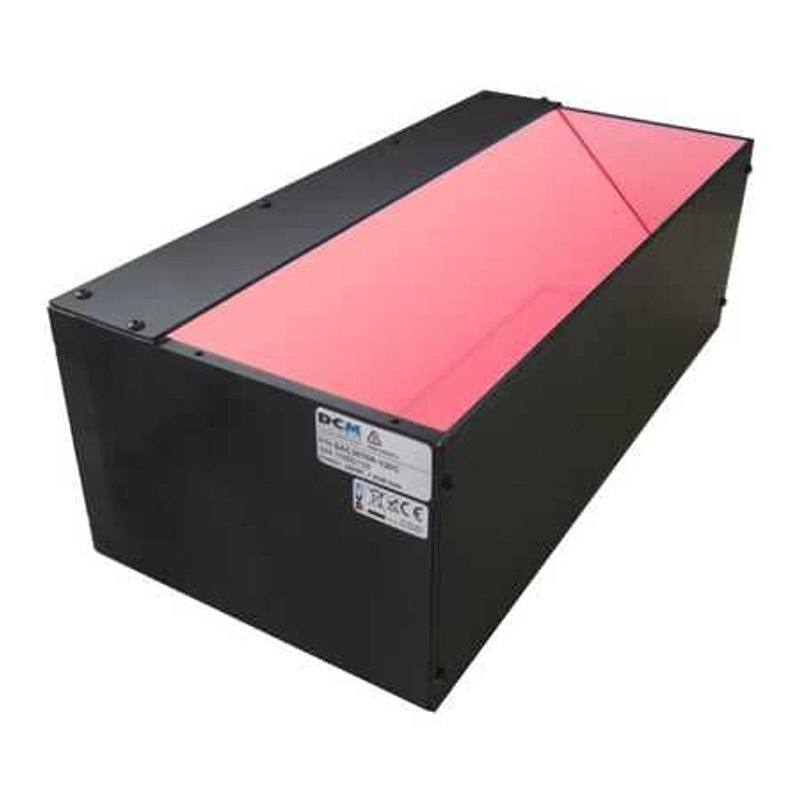
DCM Sistemes SAC3010A Diffuse Axial Compact Light

SAC3010A

The SAC3010A is the largest model of DCM Sistemes' SAC diffuse axial compact series, with a 100x300 mm active illuminated surface and overall dimensions of 312x100x108 mm. It uses a half-mirror (beamsplitter) to deliver coaxial diffused illumination and is offered in multiple wavelengths (470 nm blue, 525 nm green, 630 nm red, 850 nm IR, white and RGB) with optional factory-integrated polarization. The unit ships with built-in iBlueDrive technology enabling continuous, strobe and overdrive (Powered) operation, powered from 24 VDC via a 2-pin male chassis connector plus a 3-pin iBlueDrive control connector. It is housed in an anodized aluminium frame rated IP40, drawing up to ~29 W continuous (Type C) and up to ~38 W in strobe (Type S).

Brand
DCM Sistemes
Lighting type
Coaxial / diffuse axial
Color / wavelength
Available in white, blue (470 nm), green (525 nm), red (630 nm), IR (850 nm) and RGB
Available wavelengths
470 nm (blue), 525 nm (green), 630 nm (red), 850 nm (IR), W00 (white), RGB
Mode
Continuous, strobe and overdrive (iBlueDrive Powered mode)
Working distance
RWD < 200 mm
Controller required
No external controller required; iBlueDrive driver built in
Diffuser
Yes (diffused axial illumination)
IP rating
IP40
Illuminated area
Active surface 100 x 300 mm
Emission angle
Diffuse (axial / coaxial)
Driver technology
iBlueDrive built-in driver (continuous/strobe/overdrive, up to 200% overdrive)

Technical overview

The DCM Sistemes SAC3010A is the largest model in the SAC diffuse axial compact series, a coaxial LED illuminator built around a half-mirror (beamsplitter) that injects diffused light along the camera's optical axis. Light leaves the 100 x 300 mm active surface, reflects off the internal beamsplitter, and travels down onto the part collinearly with the lens line of sight. Because the illumination and viewing axes coincide, flat specular surfaces return light straight back to the sensor and appear uniformly bright, while engraved, etched, or recessed features scatter light away and read dark. The diffused (rather than collimated) character of the emission is what suppresses the shines and hard shadows that off-axis lighting would leave on mirror-like materials.

Geometrically, the SAC3010A is a short-working-distance tool: the recommended working distance is under 200 mm, which is inherent to coaxial geometry because the beamsplitter must sit between the lens and the part and the diffused field falls off with distance. The 100 x 300 mm window makes this a wide-format axial light, suited to long or strip-shaped fields of view rather than the small square footprints of typical compact coaxial heads. The anodized aluminium frame measures 312 x 100 x 108 mm and the unit weighs about 2375 g, so it is a fixed-mount fixture that needs to be designed into the optical stack. The unit is offered in multiple wavelengths -- 470 nm blue, 525 nm green, 630 nm red, 850 nm IR, white, and RGB -- with optional factory-integrated polarization to reduce residual glare on the most reflective parts.

Electrically, the SAC3010A integrates DCM's iBlueDrive driver, so no external lighting controller is required: the head runs from 24 VDC and accepts trigger and mode commands over a separate 3-pin iBlueDrive control connector alongside the 2-pin power connector. iBlueDrive supports continuous, strobe, and overdrive (Powered) operation, allowing the LEDs to be pulsed above their continuous rating (up to 200% overdrive) in sync with the camera to freeze motion or boost contrast on a single inspection frame. Continuous draw is up to about 29 W (Type C) and strobe draw up to about 38 W (Type S). The housing is rated IP40 and the unit operates from 0 to 40 C, which positions it for enclosed indoor inspection stations rather than washdown or heavily contaminated environments.

Best for

  • Inspecting flat, specular, or mirror-like surfaces -- coated metal, glass, brushed or polished panels, foil and laminate -- where off-axis lighting would leave shines and shadows that hide defects
  • Reading laser-etched, embossed, dot-peen, or engraved codes and characters on reflective substrates, where the coaxial geometry makes recessed marks read dark against a bright field
  • Long or strip-shaped fields of view that benefit from the wide 100 x 300 mm active surface, such as inspecting elongated stamped, machined, or printed parts in a single frame
  • Motion-synchronized inspection on indexing or moving lines, using iBlueDrive strobe and overdrive to freeze the part and lift contrast without an external controller
  • Multi-wavelength or polarized contrast tuning -- selecting blue, green, red, IR, white, or RGB plus optional polarization to maximize the brightness difference between good surface and defect

Selection notes

  • This is a short-working-distance device (RWD under 200 mm); the beamsplitter must sit close above the part between it and the lens, so confirm your mechanical stack and focus distance fit inside roughly 200 mm before specifying it.
  • Coaxial light only pays off on specular or semi-specular surfaces. On matte, diffuse, or 3D-textured parts a dome, bar, or ring light will usually give better and more even illumination at lower cost and longer working distance.
  • The 100 x 300 mm window is large for an axial light -- match it to a long or wide field of view. For a small square inspection area a smaller coaxial head delivers higher effective brightness over the region you actually use.
  • It is IP40 only and rated 0-40 C, so it suits enclosed indoor stations; for washdown, dust, or coolant-heavy cells you will need additional enclosure or a more sealed fixture.
  • No external controller is needed because iBlueDrive is built in, but you must wire both the 2-pin 24 VDC power and the 3-pin iBlueDrive control connector, and plan to drive strobe/overdrive timing from the camera or PLC to use the Powered mode and stay within the 38 W strobe envelope.
  • Pick the wavelength and the optional polarization to suit the material: shorter wavelengths (blue/green) tend to sharpen surface and scratch contrast, while integrated polarization further cuts residual specular glare. The best combination is usually found by testing on your actual samples.

Specifications: General
BrandDCM Sistemes
Lighting typeCoaxial / diffuse axial

Specifications: Interface
Connection2-pin male chassis connector (power) + 3-pin male chassis connector (iBlueDrive control)

Specifications: Optical
Color / wavelengthAvailable in white, blue (470 nm), green (525 nm), red (630 nm), IR (850 nm) and RGB
Available wavelengths470 nm (blue), 525 nm (green), 630 nm (red), 850 nm (IR), W00 (white), RGB
Working distanceRWD < 200 mm
DiffuserYes (diffused axial illumination)
Emission angleDiffuse (axial / coaxial)
Color temperatureWhite (W00) option available

Specifications: Electrical
ModeContinuous, strobe and overdrive (iBlueDrive Powered mode)
Controller requiredNo external controller required; iBlueDrive driver built in
Driver technologyiBlueDrive built-in driver (continuous/strobe/overdrive, up to 200% overdrive)
Power consumptionUp to 29 W continuous (Type C, 24 VDC); up to 38 W strobe (Type S)
Supply voltage24 VDC (+24V ±3%, iBlueDrive ±8%)

Specifications: Environment
IP ratingIP40
Operating temperature0 to 40 °C operating (storage 0 to 60 °C)

Specifications: Geometry
Illuminated areaActive surface 100 x 300 mm

Specifications: Mechanical
Housing materialAnodized aluminium frame
Dimensions312x150x108 mm
Weight2375 g

Frequently asked questions

Related technical guides

Rosepetal · AI

Test this camera with Rosepetal

Validate your visual inspection with AI: send us sample images and we evaluate the case on your hardware.

AIS Vision · Integration

We validate camera + lens + lighting

AIS Vision defines and tests the optimal combination of camera, optics and lighting for your application before you buy.