Skip to content
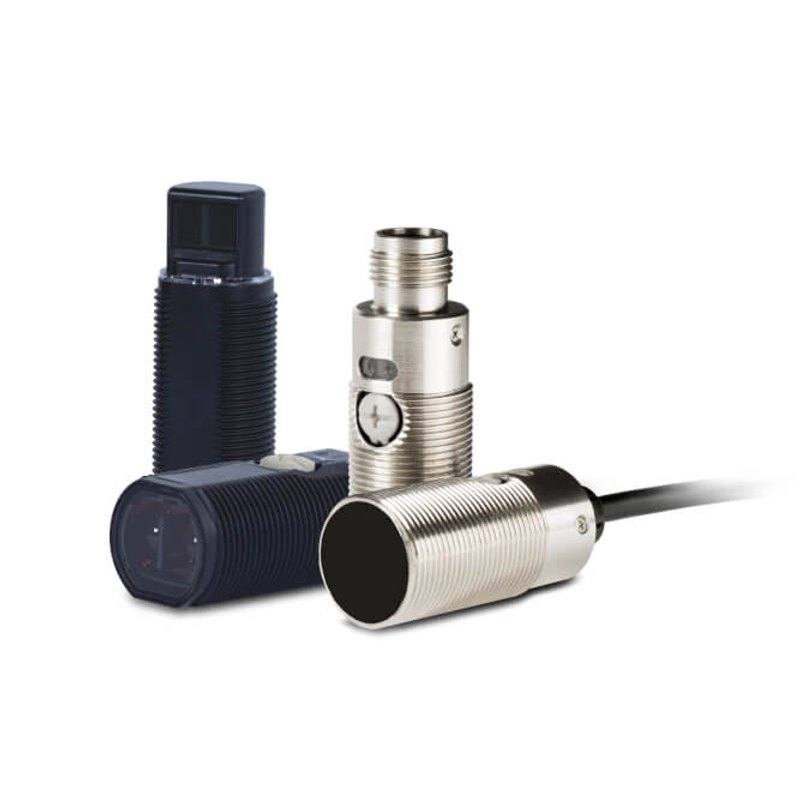
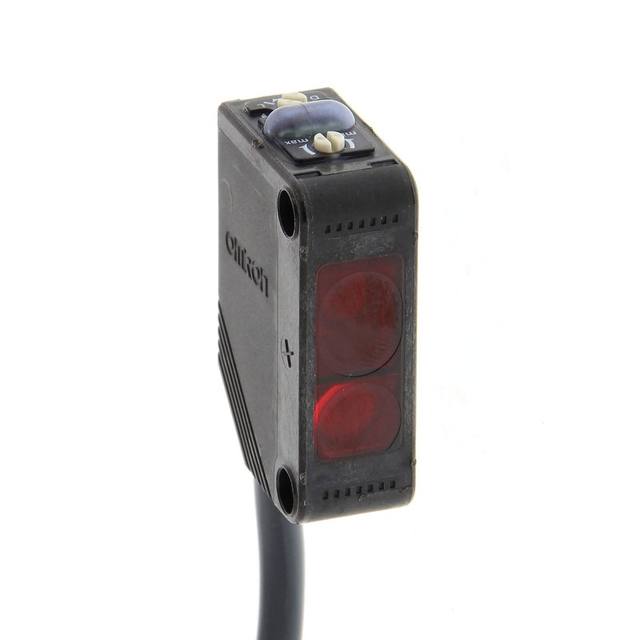
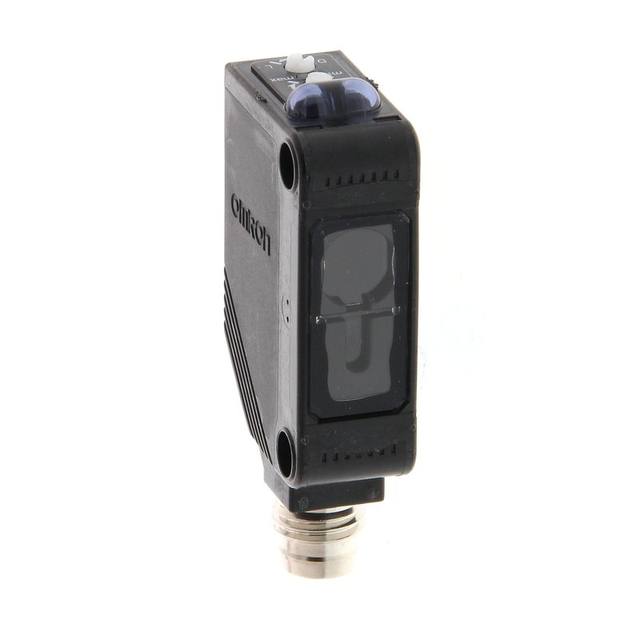
Omron / Sentech E3FA series (M18 plastic) machine vision sensor
  • Recommended by AIS Vision

Omron / Sentech E3FA M18 Plastic-Body Photoelectric Sensor

E3FA series

The E3FA is Omron's M18 barrel photoelectric sensor in a rugged ABS plastic housing rated IP67/IP69K for high-pressure, high-temperature washdown. It uses a high-power 624 nm red LED (850 nm infrared LED on through-beam emitters) and offers a 0.5 ms response time with selectable Light-ON/Dark-ON operation. Models span through-beam (20 m), retroreflective (0.1-4 m), coaxial retroreflective (0-500 mm), diffuse-reflective (100 mm to 1 m), background-suppression (100/200 mm) and limited-reflective sensing, each with NPN or PNP open-collector output. Supply is 10-30 VDC with 2 m/5 m pre-wired cable or M12 connector and an operating range of -25 to 55 C.

Brand
Omron / Sentech
Sensor type
Photoelectric
Sensing method
Through-beam, retroreflective, coaxial retroreflective, diffuse, background suppression, limited reflective
Light source
Red LED (624 nm); infrared LED (850 nm) on through-beam
Range / distance
Through-beam 20 m; retroreflective 0.1-4 m; coaxial retroreflective 0-500 mm; diffuse 100 mm-1 m; BGS 100/200 mm
Response time
0.5 ms
Output type
NPN / PNP (open collector), 100 mA max, residual voltage 3 V max
Communication
discrete (digital switching output, no IO-Link)
Supply voltage
10 to 30 VDC (ripple 10% p-p max)
Connection
2 m pre-wired cable, or M12 connector (5 m available via separate M12 connector cable)
Housing material
ABS plastic (M18 barrel)
Weight
Approx. 60 g (diffuse, 2 m cable); approx. 110 g (through-beam set)

Technical overview

The Omron E3FA is an M18 cylindrical photoelectric sensor built in a rugged ABS plastic barrel and rated to IEC IP67 and DIN 40050-9 IP69K, which is the key signal for where it belongs: high-pressure, high-temperature washdown lines rather than dry-cabinet duty. As a presence/edge-detection device it works as a discrete trigger and gating element, not a measurement instrument. The output is a simple open-collector switching stage available in either NPN or PNP, rated 100 mA max with 3 V max residual voltage, and selectable Light-ON/Dark-ON operation lets you invert the logic in the field so the sensor fires on either object-present or object-absent. With no IO-Link on this family, integration is purely a hard-wired digital switching line into a PLC input card, a camera trigger input, or a strobe controller.

The family is defined by its sensing methods, and the choice between them is really a choice of range and mounting. Through-beam (emitter plus receiver, using an 850 nm infrared LED) reaches 20 m and is the most reliable for opaque objects and dirty environments because it does not depend on target reflectivity. Retroreflective covers 0.1-4 m against a reflector, coaxial retroreflective handles 0-500 mm, diffuse-reflective senses the object itself from 100 mm to 1 m, and background-suppression models are offered at 100 and 200 mm for cases where you must ignore a close back wall or conveyor surface; a limited-reflective method rounds out the range. The non-through-beam models use a high-power 624 nm red LED, which gives a visible spot that makes alignment and commissioning straightforward without a beam finder.

For a vision installer the headline number is the 0.5 ms response time. That fast edge means the E3FA can act as a clean part-in-position trigger on a moving line: at conveyor speeds the sensor latency contributes only a small, repeatable positional error, so it pairs well with a camera's external trigger and a strobed light. Supply is a wide 10-30 VDC with 10% peak-to-peak ripple tolerance, so it runs off the same 24 VDC rail as most cells. Connection is a 2 m pre-wired cable or an M12 connector (with a 5 m run available via a separate M12 connector cable), the diffuse unit weighs about 60 g and a through-beam set about 110 g, and the operating window is -25 to 55 C (storage -30 to 70 C) which comfortably covers chilled and warm wet-process areas but not deep-freeze or oven-adjacent extremes.

Best for

  • Part-in-position triggering for a machine-vision station on a moving conveyor, where the 0.5 ms response gives a clean, repeatable edge to the camera's external trigger input
  • Object presence and gap detection on food and beverage washdown lines, exploiting the IP67/IP69K plastic housing that tolerates high-pressure, high-temperature cleaning
  • Carton and pallet detection in logistics sortation using the 20 m through-beam method, which is unaffected by package surface color or reflectivity
  • Detecting objects near a reflective conveyor using background-suppression models at 100 or 200 mm to reject the close background surface
  • Short-range registration and edge sensing on packaging machinery with coaxial retroreflective (0-500 mm) or diffuse (100 mm-1 m) heads where space is tight

Selection notes

  • Pick the sensing method by range and target: through-beam (20 m, 850 nm IR) for the longest and most reliable opaque detection, retroreflective (0.1-4 m) for medium range with a reflector, coaxial retroreflective (0-500 mm) and diffuse (100 mm-1 m) for short range, and background-suppression (100/200 mm) or limited-reflective when a close back surface would otherwise false-trigger.
  • Confirm your PLC or camera trigger input polarity before ordering: the output is open-collector and comes in distinct NPN or PNP variants, rated 100 mA max with 3 V max residual voltage, so the part number must match your input card's sinking/sourcing convention.
  • This family is discrete-output only with no IO-Link, so plan for one hard-wired switching line per sensor and configure Light-ON/Dark-ON in the field rather than expecting remote parameterization or process-value telemetry.
  • Choose the connection format up front: a 2 m pre-wired cable for fixed installs, or the M12 connector version (5 m connector cable available separately) where serviceability and quick replacement matter on a washdown line.
  • Verify the thermal and supply envelope for your cell: operating range is -25 to 55 C (storage -30 to 70 C) on 10-30 VDC with 10% peak-to-peak ripple max, which suits chilled and warm wet areas but rules out deep-freeze or high-heat oven zones.

Specifications: General
BrandOmron / Sentech
Sensor typePhotoelectric

Specifications: Performance
Range / distanceThrough-beam 20 m; retroreflective 0.1-4 m; coaxial retroreflective 0-500 mm; diffuse 100 mm-1 m; BGS 100/200 mm
Response time0.5 ms

Specifications: Interface
Communicationdiscrete (digital switching output, no IO-Link)
Connection2 m pre-wired cable, or M12 connector (5 m available via separate M12 connector cable)

Specifications: Electrical
Supply voltage10 to 30 VDC (ripple 10% p-p max)

Specifications: Environment
Operating temperatureOperating: -25 to 55 C (storage -30 to 70 C)
IP ratingIEC IP67, DIN 40050-9 IP69K

Specifications: Sensing
Sensing methodThrough-beam, retroreflective, coaxial retroreflective, diffuse, background suppression, limited reflective
Light sourceRed LED (624 nm); infrared LED (850 nm) on through-beam

Specifications: Output
Output typeNPN / PNP (open collector), 100 mA max, residual voltage 3 V max

Specifications: Mechanical
Housing materialABS plastic (M18 barrel)
WeightApprox. 60 g (diffuse, 2 m cable); approx. 110 g (through-beam set)

Frequently asked questions

Related technical guides

AIS Vision · Integration

We validate camera + lens + lighting

AIS Vision defines and tests the optimal combination of camera, optics and lighting for your application before you buy.