
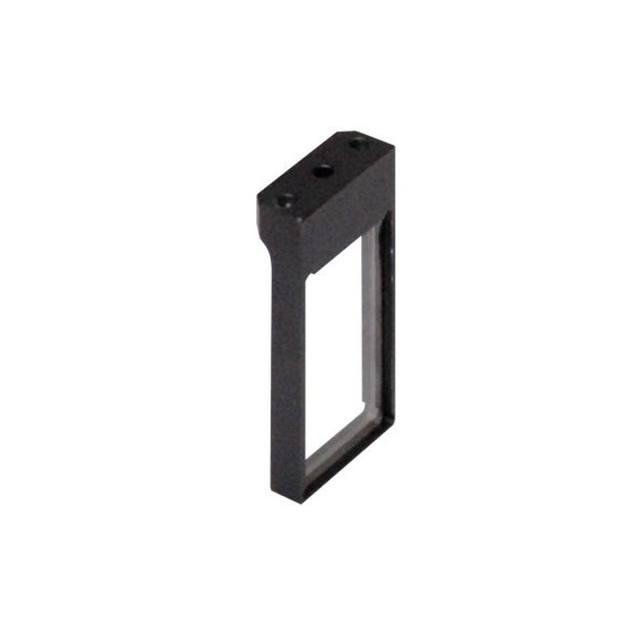
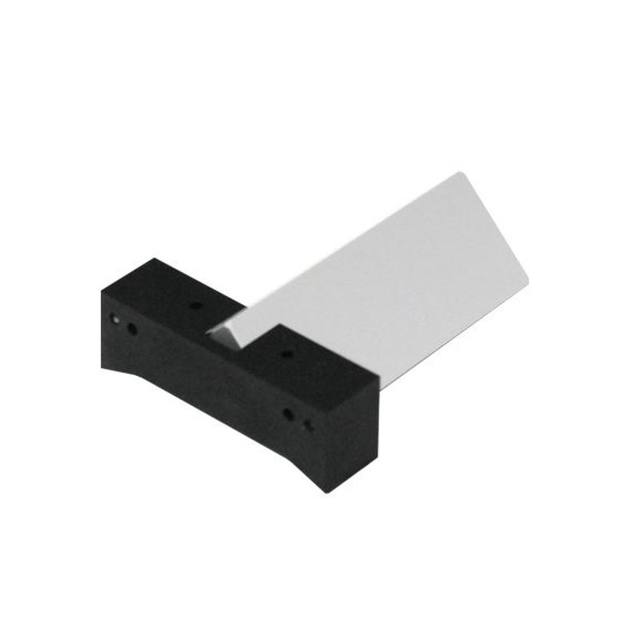
Opto Engineering SPMI001 — First surface mirror, active area 20x40 mm, mount type 1 (RPOP series: Miscellaneous optical replacements).
- Length 25.0 mm, width 10.0 mm, height 54.0 mm
- 16 g
- Recommended by AIS Vision
On request
Mirrors, prisms, beam splitters, extension and step rings, filter holders, protective windows and precision clamps for vision optics.
Optical accessories solve the problems that arise around the lens: there is no room for a straight optical path, the lens needs protection, the filter does not fit, or a long telecentric assembly has to be held in line. They are small parts, but most sit directly in the imaging path or hold something that does, so their quality and stability feed straight into the image.
Opto Engineering, DCM Sistemes and MidOpt supply this range. Check the clamping diameter or thread against your lens or camera before anything else. AIS Vision can check the complete optical chain, adapters included, on your real part.
135 results
Opto Engineering SPMI001 — First surface mirror, active area 20x40 mm, mount type 1 (RPOP series: Miscellaneous optical replacements).
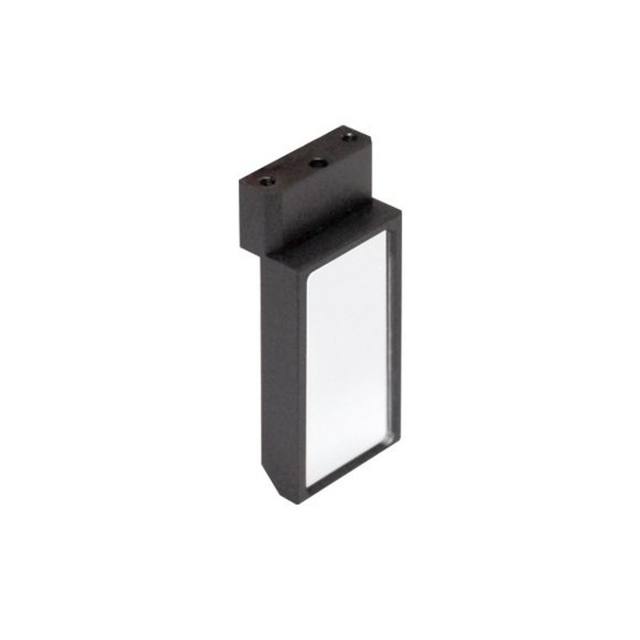
Opto Engineering SPMI002 — First surface mirror, active area 20x40 mm, mount type 2 (RPOP series: Miscellaneous optical replacements).
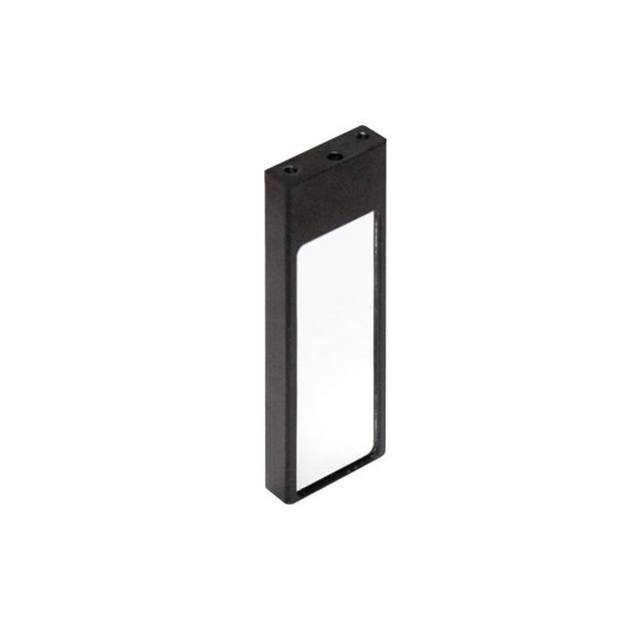
Opto Engineering SPMI003 — First surface mirror, active area 25x75 mm, mount type 1 (RPOP series: Miscellaneous optical replacements).
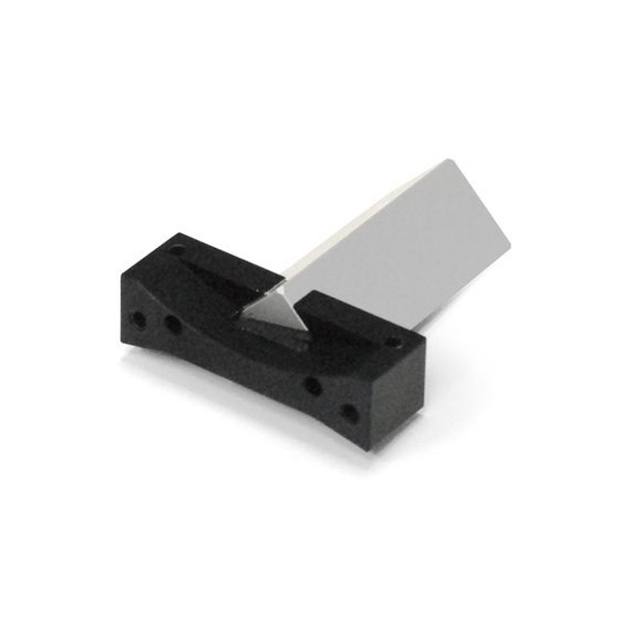
Opto Engineering SPPS001 — Right angle prism, legs 17 mm, H 39 mm, mirror coating (RPOP series: Miscellaneous optical replacements).
Opto Engineering SPPS002 — Right angle prism, legs 33.3 mm, H 72 mm, mirror coating (RPOP series: Miscellaneous optical replacements).
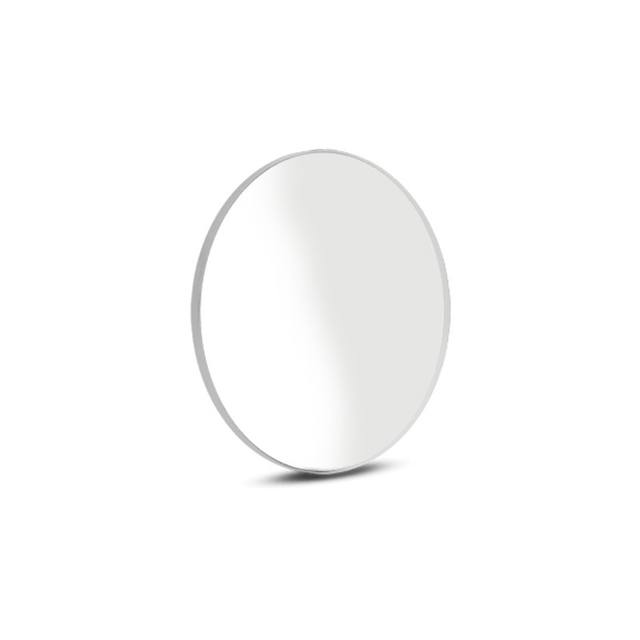
Opto Engineering WI036 — Protective window for 61 mm clamping diameter optics (WI series: Protective windows for lenses).
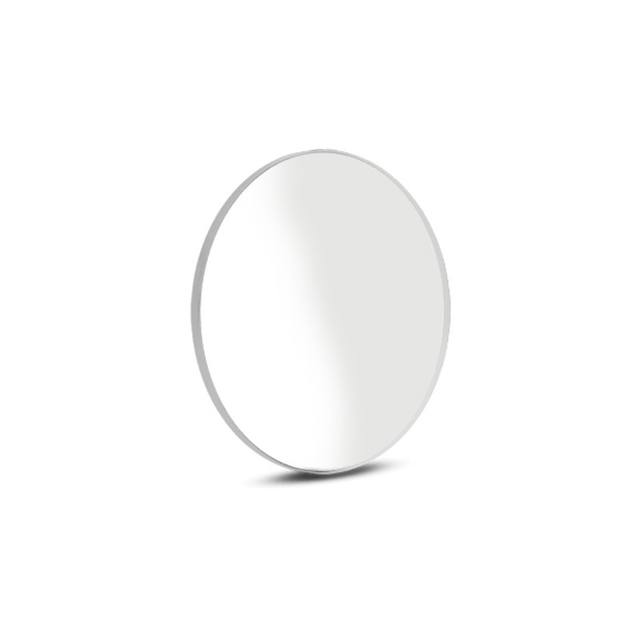
Opto Engineering WI048 — Protective window for 75 mm clamping diameter optics (WI series: Protective windows for lenses).
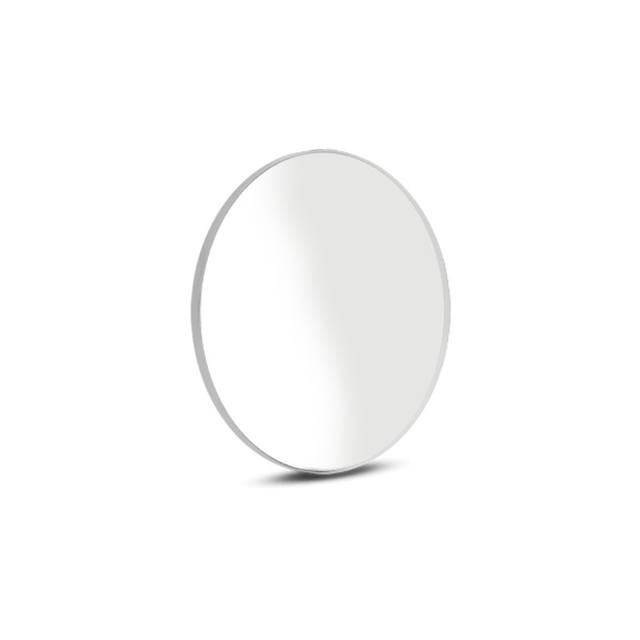
Opto Engineering WI056 — Protective window for 80 mm clamping diameter optics (WI series: Protective windows for lenses).
Opto Engineering WI064 — Protective window for 100 mm clamping diameter optics (WI series: Protective windows for lenses).
Opto Engineering WI080 — Protective window for 116 mm clamping diameter optics (WI series: Protective windows for lenses).
Opto Engineering WI096 — Protective window for 143 mm clamping diameter optics (WI series: Protective windows for lenses).
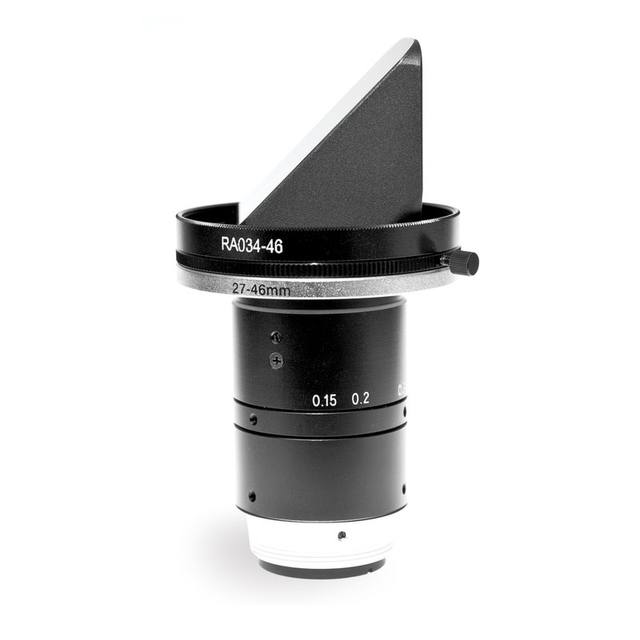
MidOpt RA034 rotating right-angle attachment: lets the camera view at 90°, for applications with space constraints; adjustments through 360°.
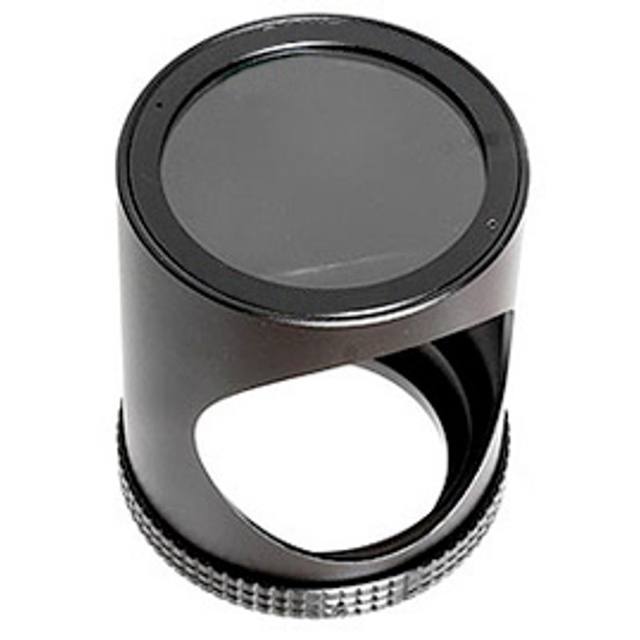
MidOpt RA060 rotating right-angle attachment: lets the camera view at 90°, for applications with space constraints; adjustment through 300°.
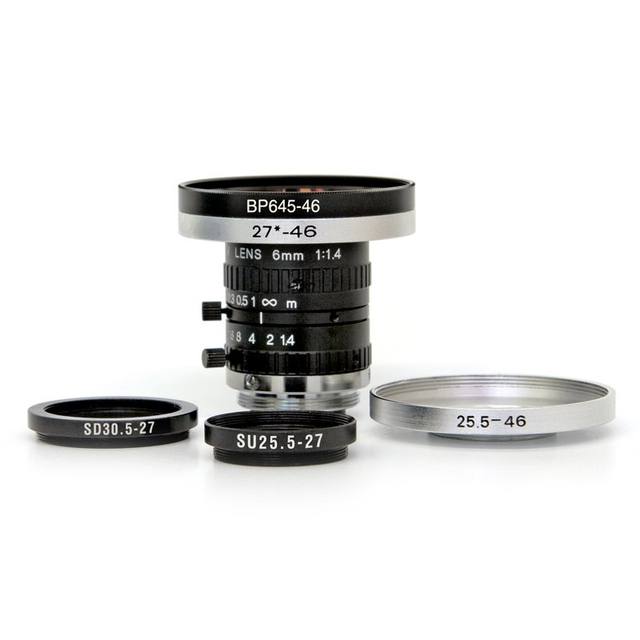
MidOpt SD step-down rings: use smaller diameter filters on lenses with larger diameter filter threads.
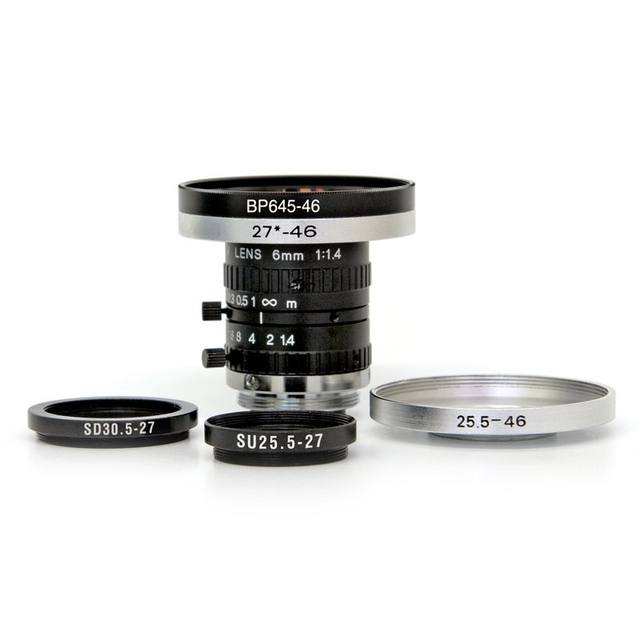
MidOpt SU step-up rings: use larger diameter filters on lenses with smaller diameter filter threads.
This is a mixed category, so begin from the problem you need to solve in the optical path.
Every added component has a cost. A back-silvered mirror creates a ghost image from its glass surface, which is why first-surface mirrors are preferred, although their exposed coating scratches easily. A mirror also reverses the image, which matters for OCR and code reading unless it is corrected in software.
Extension rings let a lens focus closer, but they raise the effective f-number and can soften the corners. Extenders multiply focal length at the expense of light and often resolution. A protective window adds surfaces where dust, scratches and reflections from nearby lights can appear.
Check Compatible with and Lens mount first, then dimensions and weight, because a mirror or splitter adds length and a lever arm that the camera mount was not designed to carry. On telecentric lens and collimated illuminator pairs, dedicated alignment mechanics are worth specifying, since small tilts have a visible effect.
Match C, CS, S, F, TFL, M42, M58 and M72 mounts to your sensor, then size image circle, extension tubes, adapters and filter threads correctly.
Learn how telecentric lenses hold magnification constant, what limits field and depth, when collimated lighting helps and when the cost is justified.
IP codes define narrow tests, so learn what IP65, IP67 and IP69K cover and how to seal, cool and mount vision hardware for washdown and vibration.
We help you choose optical accessories based on your application, FOV, working distance and environment.