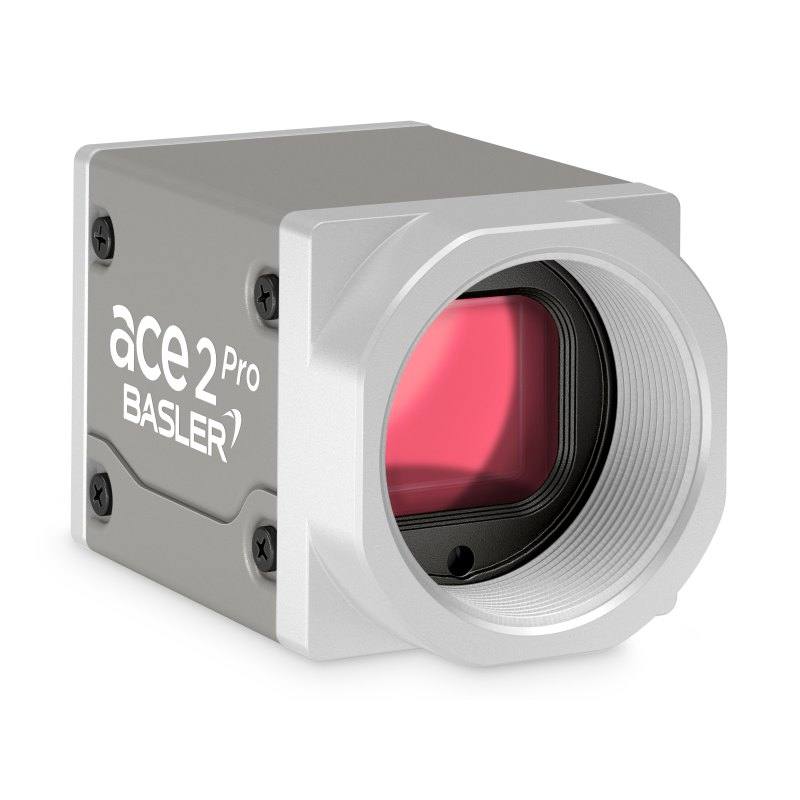
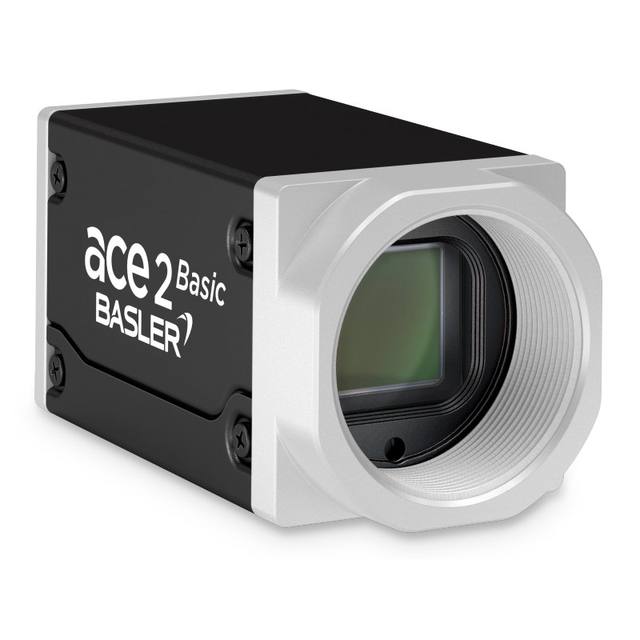
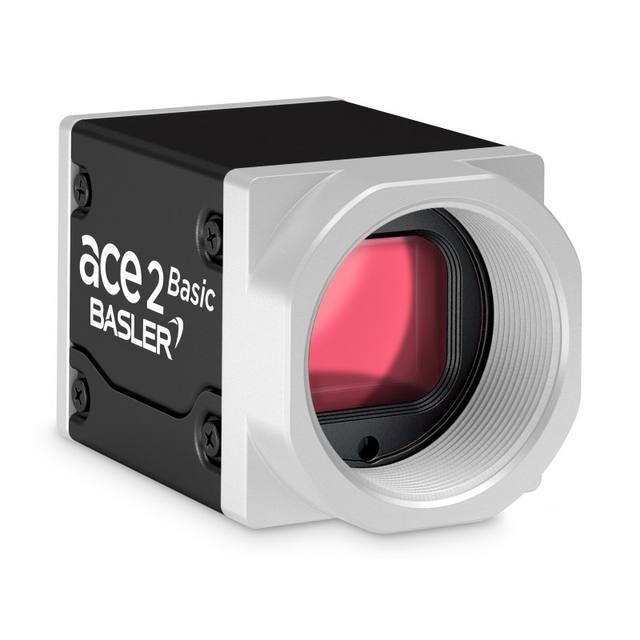
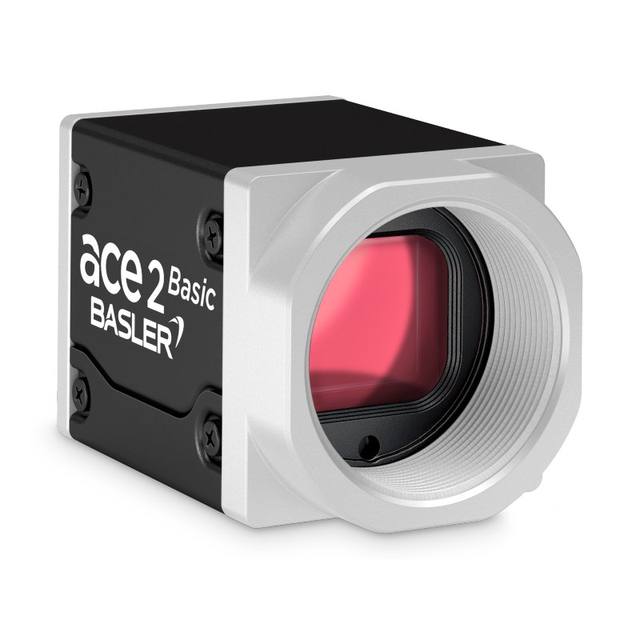
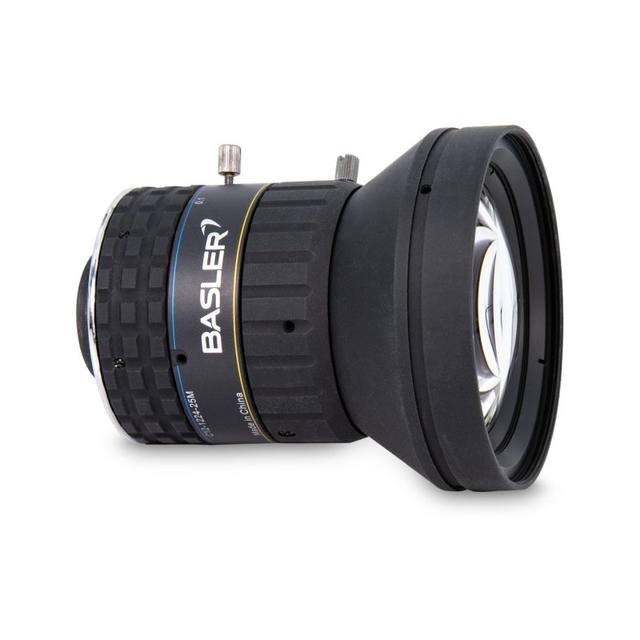
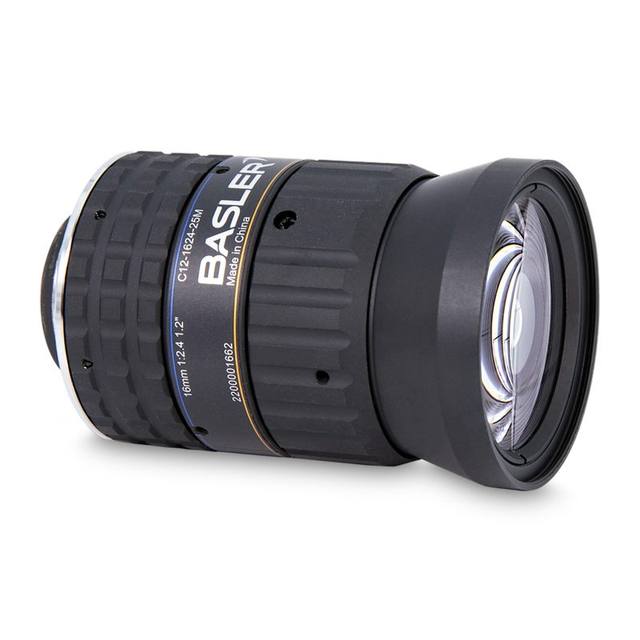
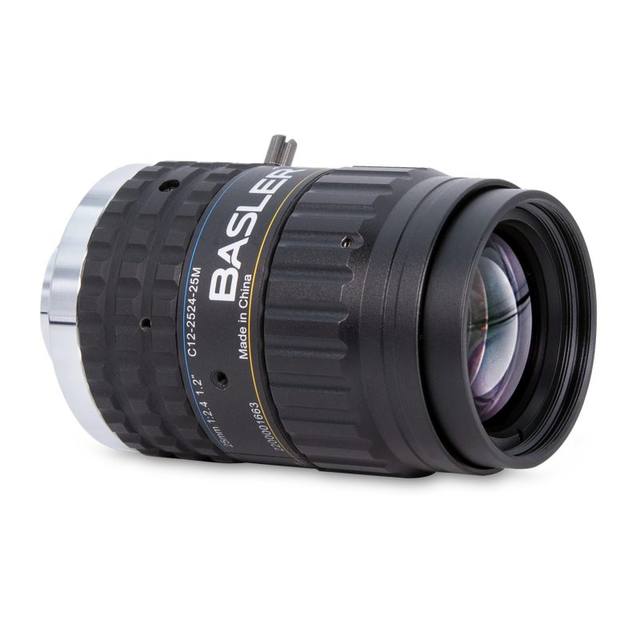
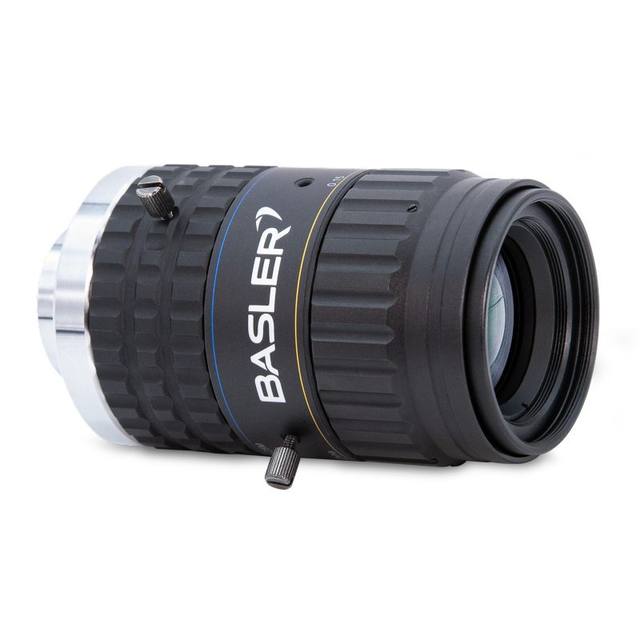
The Basler a2A5328-15uc is part of the ace 2 series and uses the Sony IMX540 (4th-gen Pregius S) stacked CMOS sensor with a 2.74 µm pixel pitch and 1.2" optical format. It delivers up to 15.5 fps at full 24.4 MP resolution over USB 3.0 SuperSpeed (USB3 Vision / GenICam compliant). The camera features a global electronic shutter for distortion-free imaging of fast-moving objects, supports 8/10/12-bit pixel depth, and has a dynamic range of 70.8 dB with very low dark noise of 1.8 e⁻. Available in BAS and PRO variants; all share the same core sensor and imaging performance in a compact 29 × 29 mm cross-section box housing.
Brand
Basler
Camera type
Area Scan
Interface
USB 3.0 (SuperSpeed, 5 Gbit/s)
Resolution
24.4 MP
Horizontal resolution
5328 × 4608 px
Mono / color
Color (with removable IR cut filter)
Sensor manufacturer
Sony Pregius S (Gen 4)
Sensor model
Sony IMX540-AAQJ-C
Shutter
Global Shutter
FPS
14.7 fps (default); 15.5 fps with throughput limit disabled
The Basler a2A5328-15uc is built around the Sony IMX540-AAQJ-C, a fourth-generation Pregius S stacked CMOS sensor occupying a 1.2" optical format (14.57 × 12.6 mm active area, 19.3 mm diagonal). At 2.74 µm pixel pitch and 5328 × 4608 resolution, it delivers 24.4 megapixels — one of the highest pixel counts available in a USB 3.0 camera. That density translates directly into spatial detail: installers gain the ability to resolve very fine features across a wide field of view without stitching multiple cameras or mechanically stepping the field. A global electronic shutter captures all pixels simultaneously, eliminating the row-skew distortion that would otherwise corrupt measurements on conveyors, pick-and-place machines, or any scene with lateral motion.
The imaging performance is anchored by a 70.8 dB dynamic range and an exceptionally low dark noise floor of 1.8 electrons. In practical terms, the camera can simultaneously render bright specular highlights — reflective packaging foils, polished metal surfaces, solder balls — alongside low-reflectance recessed features in the same raw frame, without HDR tricks. Pixel depth is selectable at 8, 10, or 12 bits, giving downstream vision software either fast throughput at 8-bit or fine grey-level discrimination for gradient-based algorithms at 12-bit. Frame rate tops out at 14.7 fps in standard mode and 15.5 fps with the USB throughput limit disabled — workable for quasi-static inspection at this resolution class. The color variant ships with a removable IR cut filter, allowing the integrator to swap in an optical bandpass or remove the filter entirely for near-infrared work.
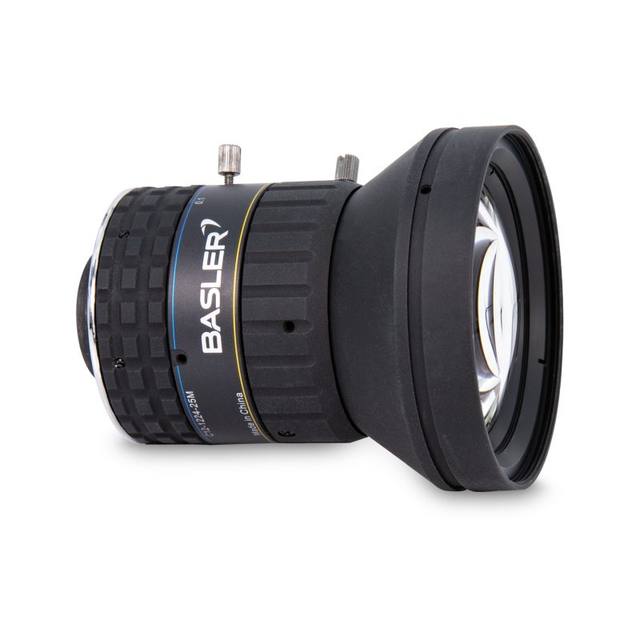
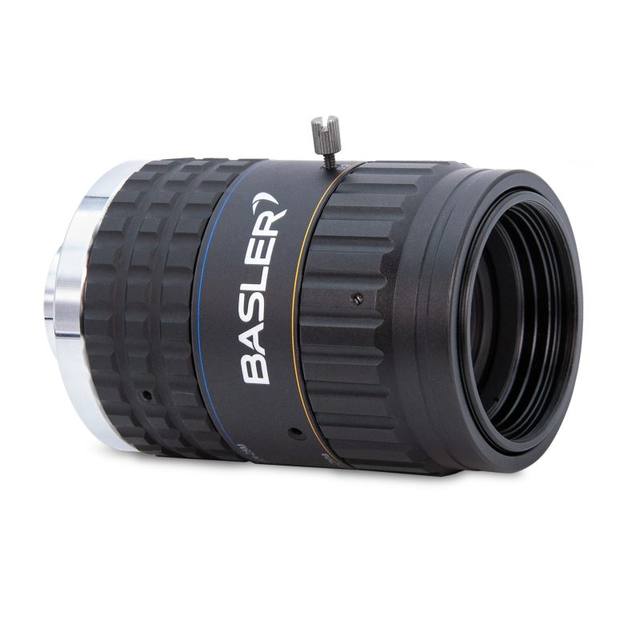
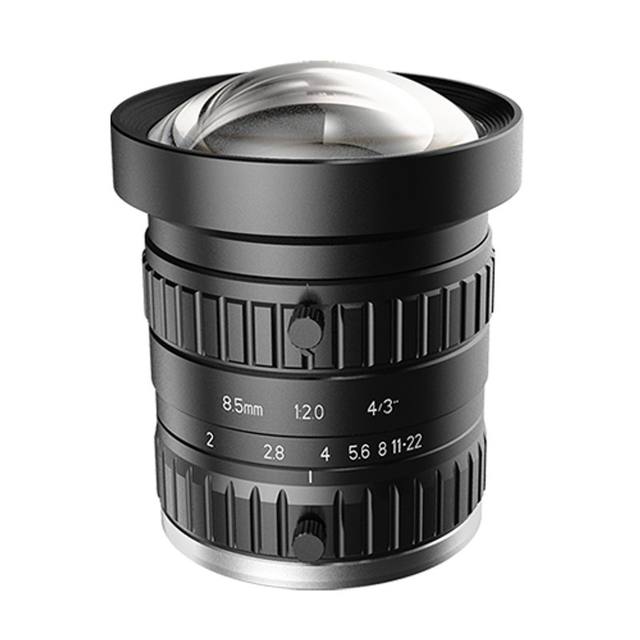
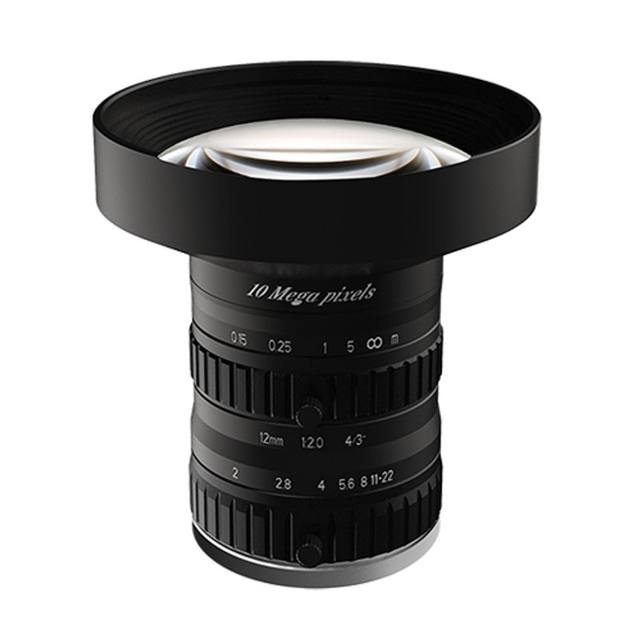
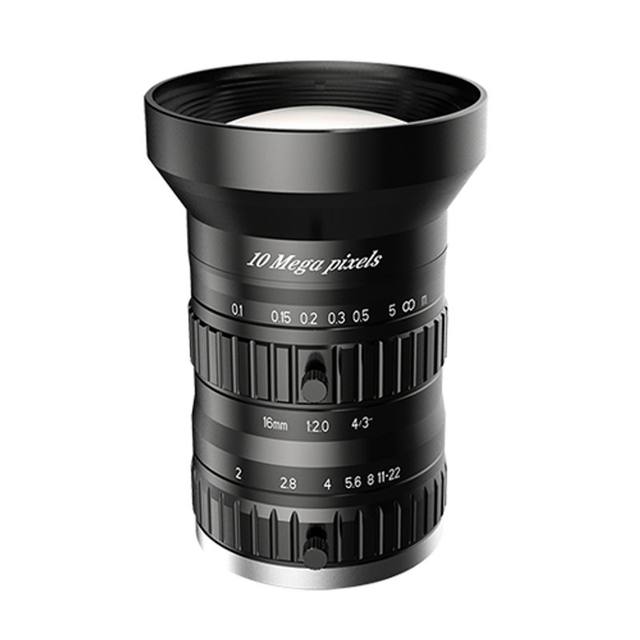
The housing is a compact 29 × 29 mm cross-section box body weighing 85 g, bus-powered at 3.7–4.1 W from the USB 3.0 port. The C-mount lens interface accommodates the broad ecosystem of C-mount optics, but integrators must select lenses designed for at least 1.2" image circle coverage to avoid corner vignetting or resolution falloff — a meaningful constraint given that many mid-tier C-mount lenses are specified for 2/3" or 1" formats. The USB3 Vision / GenICam compliant interface means the camera integrates out-of-the-box with Basler pylon and any other GenICam-compliant SDK. With an IP30 enclosure rating and -10 to 60 °C operating range (BAS variant), the camera suits controlled factory environments but is not suited to wash-down or heavy particulate settings without an enclosure. The PRO variant narrows the thermal ceiling to 50 °C but adds hardware I/O features, so the choice between BAS and PRO depends on whether GPIO-based triggering or sequencer functionality is required.
Best for
High-resolution surface inspection of large panels, wafers, or PCBs where a single camera must capture fine defects (scratches, pits, contamination) across a wide field without sacrificing spatial resolution — enabled by the 24.4 MP sensor and 2.74 µm pixel pitch.
Dimensional measurement and gauging on electronic components, connectors, or machined parts where sub-pixel accuracy is demanded and the global shutter prevents motion-induced geometric distortion during part transit on a conveyor.
Pharmaceutical blister-pack and label inspection, where the high dynamic range (70.8 dB) allows simultaneous reading of glossy foil barcodes and matte printed text in the same frame, reducing the need for multi-shot illumination schemes.
OCR/OCV on serialized packaging — pharmaceutical cartons, medical device labeling, food-and-beverage date codes — where 24.4 MP resolution enables a single camera to cover large label areas while still resolving small font characters reliably.
Semiconductor and electronics traceability tasks such as 2D DPM or QR code reading on component bodies, where the combination of high pixel density, low noise at 12-bit depth, and color imaging with removable IR cut filter supports both visible and near-IR contrast modes.
Selection notes
Lens image circle must cover 1.2" (19.3 mm diagonal): verify the lens datasheet specifies a 1" or larger image circle. C-mount lenses rated for 2/3" will produce visible corner shading and resolution loss at 5328 × 4608, degrading the measurement accuracy the sensor is capable of.
USB cable length is practically limited to 5 m for passive cables at USB 3.0 SuperSpeed; beyond that, active optical USB 3.0 cables are required. Unlike GigE, USB does not support standard industrial Ethernet infrastructure for long cable runs to centralized PC racks, so camera placement close to the host is a layout consideration.
At 15 fps and 24.4 MP, raw USB bandwidth is near saturation — approximately 1.0 Gbit/s of useful pixel data against the 5 Gbit/s physical limit. Running multiple cameras on a single USB host controller is constrained; each camera typically requires its own dedicated host controller port or PCIe USB card to sustain full frame rate.
The IP30 rating requires the camera to be installed inside a sealed enclosure if the environment contains cutting fluid mist, metal dust, or pressure wash. Verify with the manufacturer whether protective housing accessories are available for this series if the application environment is demanding.
The removable IR cut filter opens the door to near-infrared illumination schemes (e.g., 850 nm ring lights to suppress ambient light variation or reveal subsurface features in certain plastics). Because this is a Bayer-pattern color sensor, evaluate actual NIR sensitivity in your specific application before committing to an NIR-only imaging approach.
Specifications: General
Brand
Basler
Camera type
Area Scan
Specifications: Sensor
Resolution
24.4 MP
Horizontal resolution
5328 × 4608 px
Mono / color
Color (with removable IR cut filter)
Sensor manufacturer
Sony Pregius S (Gen 4)
Sensor model
Sony IMX540-AAQJ-C
Shutter
Global Shutter
Sensor size
1.2" (14.57 × 12.6 mm, 19.3 mm diagonal)
Pixel size
2.74 × 2.74 µm
Specifications: Performance
FPS
14.7 fps (default); 15.5 fps with throughput limit disabled
Specifications: Interface
Interface
USB 3.0 (SuperSpeed, 5 Gbit/s)
Protocols
USB3 Vision, GenICam
Specifications: Optics
Mount
C-Mount
Specifications: Electrical
Power
USB (bus-powered, ~3.7–4.1 W)
Power consumption
3.7 W
Specifications: Environment
IP rating
IP30
Operating temperature
−10 to 60 °C (BAS); −10 to 50 °C (PRO)
Specifications: Mechanical
Dimensions
14.57 × 12.6 mm
Weight
85 g
Housing material
Box
Applications this camera is commonly selected for. Open one to see the full recommended hardware and approach.
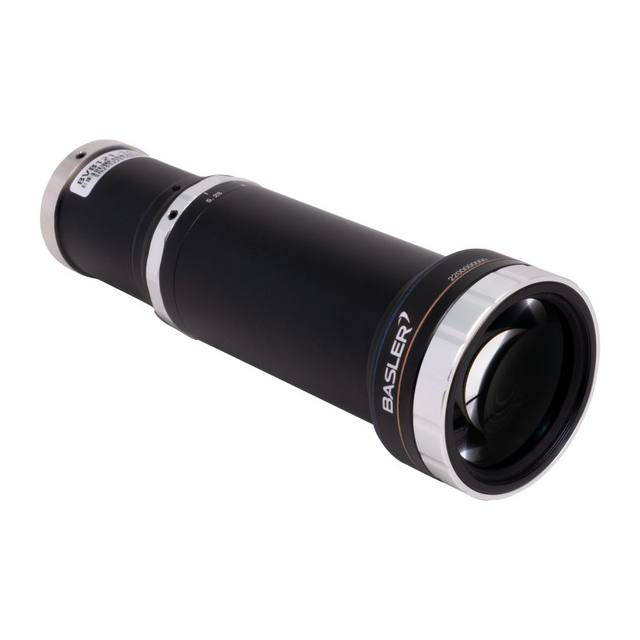
Matched automatically by: lens mount fits the camera mount · lens image circle covers the camera sensor — this camera: C-Mount · 1.2" (14.57 × 12.6 mm, 19.3 mm diagonal) sensor.
By category
All 26C-mount lenses 20Telecentric lenses 6
By brand
All 26Basler 12iRAYPLE 6Omron / Sentech 6Datalogic / Datasensing 2
Get a first image quickly with the pylon Viewer, then move into the pylon SDK for your application. These cameras are GenICam/GenTL-compliant, so any compliant vision software can drive them as well.
Download and install the pylon Camera Software Suite for your OS from Basler. This provides the pylon Viewer, the GenTL transport-layer producers and the pylon SDK (C/C++/.NET/Python). On Windows the installer adds the needed drivers; on Linux follow the included setup notes for USB and network permissions.
2. Connect the camera and check the link
Cable the camera to its matching interface: GigE Vision to a GigE port (use a quality cable and, ideally, a dedicated NIC with jumbo frames enabled), USB3 Vision to a USB 3.x port with the supplied cable, or CoaXPress to the frame grabber. Provide power where required (PoE, USB bus power, or PoCXP). Open the pylon Viewer and confirm the camera appears in the device list; for GigE, make sure the camera and NIC are on the same subnet.
3. Grab a first image and set exposure, gain and pixel format
Select the camera in the pylon Viewer and start a continuous grab. Adjust exposure time and gain until the image is well exposed (avoid clipped highlights), set the pixel format (e.g. Mono8 or a Bayer/RGB format), and focus the lens. Use a test pattern if the lens or scene is not ready yet.
4. Configure triggering and acquisition
Decide between free-run and triggered acquisition. For synchronized capture, set the trigger source (software or a hardware line on the I/O connector), trigger mode and any debounce or exposure mode, then verify timing. Note the parameter names you change in the Viewer feature tree, as you will reuse them in code.
5. Move to the SDK or a GenICam-compliant library
Recreate your settings in code with the pylon SDK (C, C++, .NET or Python) to open the device, apply the same features and pull frames into your pipeline; pylon vTools and pylon AI can add processing blocks. Because the cameras are GenICam/GenTL standard, third-party vision libraries work too. Once the image stream is stable, you can route frames to a deep-learning inspection such as Rosepetal for automated defect detection.
Frequently asked questions
At full 5328 × 4608 resolution the camera delivers 14.7 fps by default, or 15.5 fps when the USB throughput limit is disabled. Reducing the region of interest (ROI) height increases frame rate proportionally, as fewer lines are read from the sensor per frame — useful when only a horizontal band of the field needs to be captured at higher speed.
A global shutter eliminates the geometric distortion caused by rolling-shutter readout, but it does not freeze motion optically. To avoid motion blur on fast-moving parts, the exposure time must be short enough that the part moves less than one pixel during the exposure. Short exposures require brighter illumination, so a pulsed strobe synchronized to the trigger is still the standard approach for high-speed conveyor applications.
Yes. The color variant ships with a removable IR cut filter. Removing it allows the sensor to respond to NIR wavelengths, enabling use with 850 nm or 940 nm illuminators. Evaluate actual sensitivity in your application before committing to this approach, since the Bayer-pattern color sensor's NIR response should be validated for your specific illumination and contrast requirements.
The camera supports 8-bit, 10-bit, and 12-bit output. At 8-bit, bandwidth consumption is lowest and most vision frameworks process data fastest. At 12-bit, 4096 grey levels are available, which benefits gradient-sensitive algorithms (edge detection, photometric stereo, sub-pixel gauging) and preserves more detail in high-dynamic-range scenes. Note that 12-bit output increases USB bandwidth and may reduce the achievable frame rate if the USB host controller is near saturation.
The BAS variant is rated -10 to 60 °C, while the PRO variant is rated -10 to 50 °C. For installations in warm enclosures or near heat sources, the BAS variant provides 10 °C more headroom. The PRO variant is chosen for its additional GPIO and sequencer features, not for superior thermal performance.