Skip to content
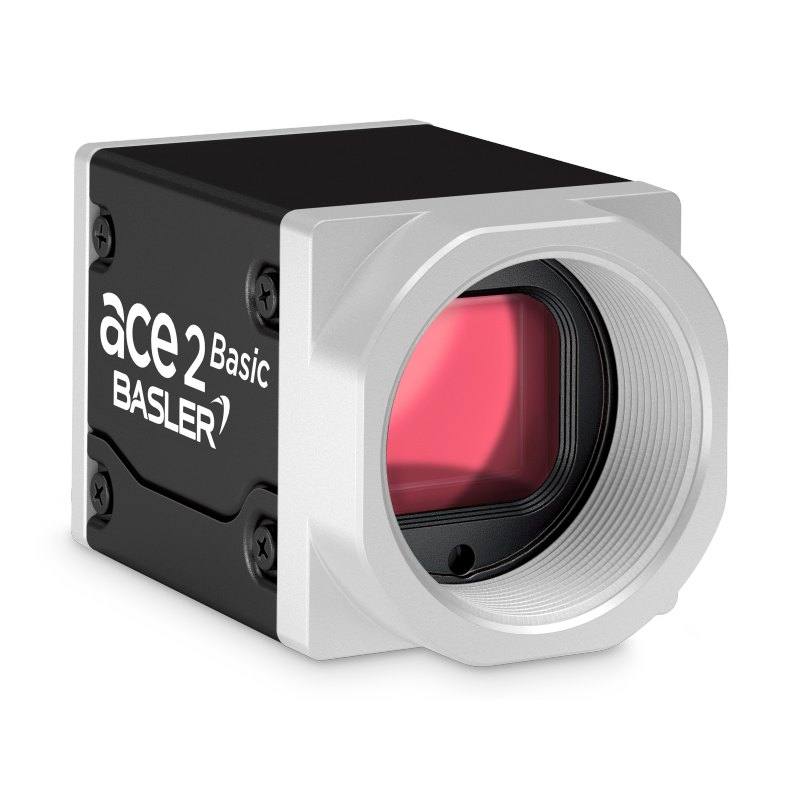
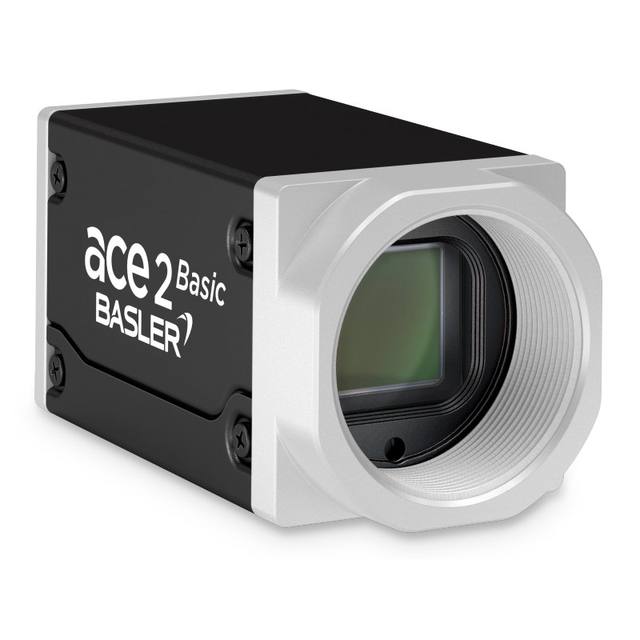
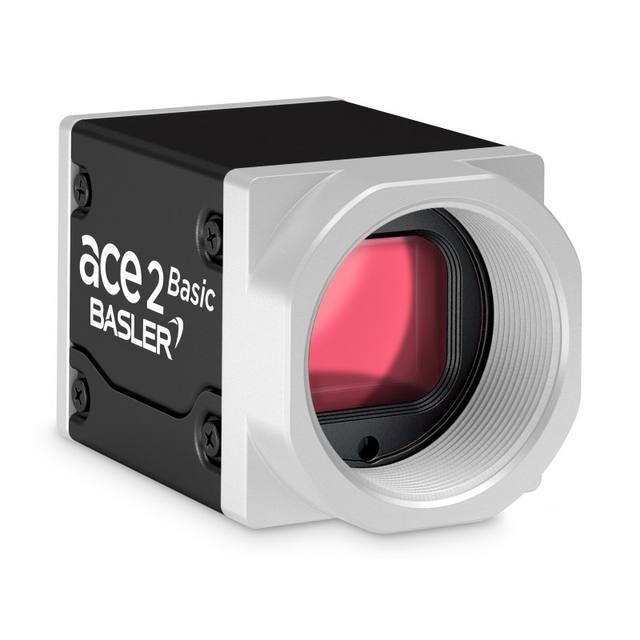
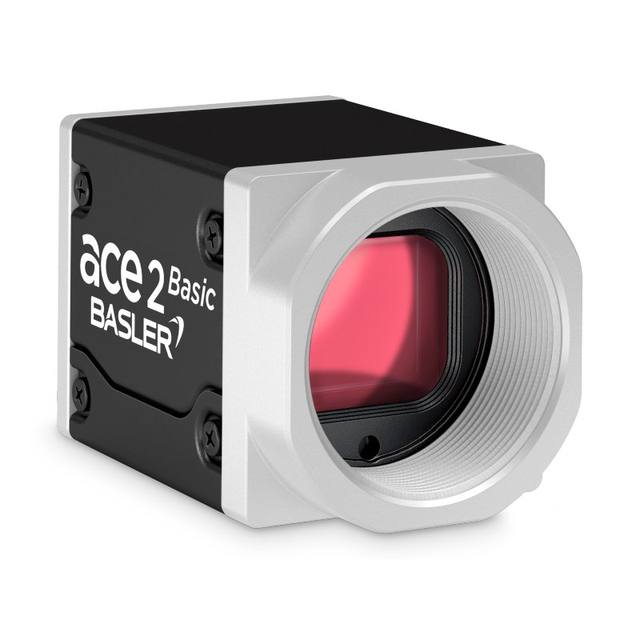
Basler a2A5060-15uc machine vision camera
  • Rosepetal compatible
  • Recommended by AIS Vision

Basler ace 2 a2A5060-15ucBAS

a2A5060-15ucBAS

The Basler ace 2 a2A5060-15ucBAS is a 25-megapixel USB 3.0 area scan camera based on the E2525A CMOS sensor with a 1.1" (17.9 mm diagonal) square format and 2.5 µm pixel pitch. It achieves up to 15.2 fps (14.1 fps with device link throughput limiting enabled) at full 5064 × 5064 resolution with electronic global shutter. The camera outputs 8, 10, or 12-bit pixel depth, complies with USB3 Vision and GenICam standards, and is supported by Basler pylon software on Windows, Linux, macOS, and Android. Its compact 36.3 × 29 × 29 mm body weighs under 85 g, draws 4.1 W via USB, and carries an IP30 protection rating.

Brand
Basler
Camera type
Area Scan
Interface
USB 3.0 (SuperSpeed, 5 Gbit/s)
Resolution
25 MP
Horizontal resolution
5064 × 5064 px
Mono / color
Color (visible spectrum, IR cut filter)
Sensor manufacturer
Teledyne e2v (E2525A)
Sensor model
E2525A
Shutter
Global Shutter (electronic)
FPS
14.1 fps (default) / 15.2 fps (throughput limit off)
Mount
C-Mount
Sensor size
1.1" (12.65 × 12.65 mm, 17.9 mm diagonal)

Technical overview

The Basler ace 2 a2A5060-15uc pairs a Teledyne e2v E2525A CMOS sensor with a 1.1" (12.65 x 12.65 mm, 17.9 mm diagonal) square format and a 2.5 µm pixel pitch to deliver a true 25-megapixel (5064 x 5064 pixel) image in a compact 36.3 x 29 x 29 mm body. The electronic global shutter captures all pixel rows simultaneously, eliminating the motion artifacts and geometric distortion that rolling-shutter sensors produce when imaging moving parts or when the camera itself is mounted on a robot arm or gantry. At full resolution the camera sustains 15.2 fps (14.1 fps when the USB3 Vision device-link throughput limiter is active), making it practical for in-line inspection lines running at moderate belt speeds without sacrificing any of the spatial detail. Pixel depth is selectable at 8, 10, or 12 bits, giving integrators a direct lever over dynamic-range versus bandwidth: 12-bit mode preserves subtle grey-level gradients useful for surface-finish grading, while 8-bit mode maximises frame throughput on bandwidth-limited hosts.

The USB 3.0 SuperSpeed interface (5 Gbit/s) supplies both data and the camera's 4.1 W bus power, simplifying cabling to a single off-the-shelf cable run of up to 3–5 m without active extensions. USB3 Vision and GenICam compliance means standard acquisition libraries (Basler pylon on Windows, Linux, macOS, and Android, plus any third-party GenTL consumer) integrate without custom drivers, and hardware trigger, exposure, and ROI control are all accessible through the standard GenAPI node map. The C-Mount lens interface covers the full 1.1" sensor diagonal, so integrators must select C-Mount lenses rated for at least a 1.1" image circle to avoid vignetting at the corners of the 5064-pixel array; lenses designed for 2/3" or 1" sensors will crop usable area and waste resolution. Because the pixel pitch is a fine 2.5 µm, lens resolution (MTF at the Nyquist frequency of 200 lp/mm) is the binding constraint on system sharpness — a high-grade, low-distortion macro or telecentric lens is strongly recommended for dimensional metrology tasks.

Mechanically the camera weighs 85 g and operates across -10 to 60 °C, fitting process environments from climate-controlled semiconductor fabs to automotive body-shop ambient conditions. The IP30 enclosure rating protects against solid particles larger than 2.5 mm and provides basic touch protection, but offers no dust or liquid ingress protection; installations in dusty or wet environments require an additional protective housing. Power draw of 4.1–4.3 W is low enough that a standard industrial USB 3.0 host controller can power multiple cameras without a powered hub, provided the host's per-port current budget (typically 900 mA at 5 V via USB 3.0) is respected. The color variant carries an integrated IR cut filter, ensuring accurate RGB reproduction under white or broadband illumination and making it well suited to color defect classification, cosmetic grading, and label/print inspection where hue fidelity matters.

Best for

  • High-resolution surface inspection of large flat components (PCBs, display panels, battery electrodes) where the 5064 x 5064 pixel array captures fine defects across a wide field of view in a single shot, avoiding the stitching complexity of multi-camera rigs.
  • Dimensional measurement and gauging of parts on moving conveyors, where the global shutter eliminates geometric distortion caused by part motion during exposure — critical when tolerances are tight and any shutter-induced skew would register as a false dimensional error.
  • Pharmaceutical and medical-device packaging inspection requiring simultaneous color label verification, lot-code OCR, and seal-integrity assessment in one frame, leveraging the 25 MP resolution to resolve small printed characters while the color sensor validates label artwork.
  • Traceability and 2D code reading on large format labels or directly marked parts where the high pixel count allows a wide field of view to be maintained while still resolving fine-pitch Data Matrix or QR codes without a second close-up camera.
  • AI-driven defect inspection workflows on semiconductor wafers or electronic assemblies, where deep-learning models benefit from the dense pixel information (25 MP, 12-bit depth) to distinguish subtle process-variation signatures from true defects.

Selection notes

  • Lens image-circle compatibility is mandatory: the 1.1" (17.9 mm diagonal) sensor requires a C-Mount lens explicitly rated for 1.1" format. Using a 2/3" or 1" lens will produce corner vignetting that wastes the outer pixels and may introduce colour shading — verify the lens datasheet image-circle specification before ordering.
  • At 2.5 µm pixel pitch, optical resolution is the system bottleneck. Specify a lens whose MTF at 200 lp/mm (the Nyquist limit of this sensor) meets your contrast threshold at the chosen working distance and aperture; this often means selecting a high-grade macro or telecentric lens rather than a general-purpose C-Mount optic.
  • USB cable length is limited to approximately 3–5 m with standard passive cables. Runs beyond that require an active optical or copper USB 3.0 extension; budget for this in the cable route layout. Also confirm the host PC's USB controller is a dedicated industrial-grade chip (e.g. Renesas or Intel PCH) rather than a shared hub controller, to guarantee the sustained bandwidth the 25 MP stream demands.
  • IP30 is a minimal ingress rating. For installations in environments with coolant mist, cutting fluid spray, or heavy particulate (e.g. stamping presses, casting lines), the camera must be housed in a sealed protective enclosure with a clean-air purge or optical window — factor this into the mechanical design.
  • Color mode with IR cut filter is fixed for this 'uc' (color) variant. If the application requires near-infrared illumination (e.g. silicon wafer inspection, vein-pattern imaging, or IR-pass polarimetry), the monochrome 'um' variant of the ace 2 a2A5060 must be selected instead; the IR cut filter in this model will block wavelengths above roughly 650–700 nm.

Specifications: General
BrandBasler
Camera typeArea Scan

Specifications: Sensor
Resolution25 MP
Horizontal resolution5064 × 5064 px
Mono / colorColor (visible spectrum, IR cut filter)
Sensor manufacturerTeledyne e2v (E2525A)
Sensor modelE2525A
ShutterGlobal Shutter (electronic)
Sensor size1.1" (12.65 × 12.65 mm, 17.9 mm diagonal)
Pixel size2.5 × 2.5 µm

Specifications: Performance
FPS14.1 fps (default) / 15.2 fps (throughput limit off)

Specifications: Interface
InterfaceUSB 3.0 (SuperSpeed, 5 Gbit/s)
ProtocolsUSB3 Vision, GenICam

Specifications: Optics
MountC-Mount

Specifications: Electrical
PowerUSB (4.1 W typical @ 5 VDC)
Power consumption4.3 W
Supply voltage12–24 VDC

Specifications: Environment
IP ratingIP30
Operating temperature-10 to 60 °C

Specifications: Mechanical
Dimensions36.3 × 29 × 29 mm
Weight85 g
Housing materialBox

Frequently asked questions

Related technical guides

Rosepetal · AI

Test this camera with Rosepetal

Validate your visual inspection with AI: send us sample images and we evaluate the case on your hardware.

AIS Vision · Integration

We validate camera + lens + lighting

AIS Vision defines and tests the optimal combination of camera, optics and lighting for your application before you buy.