Skip to content
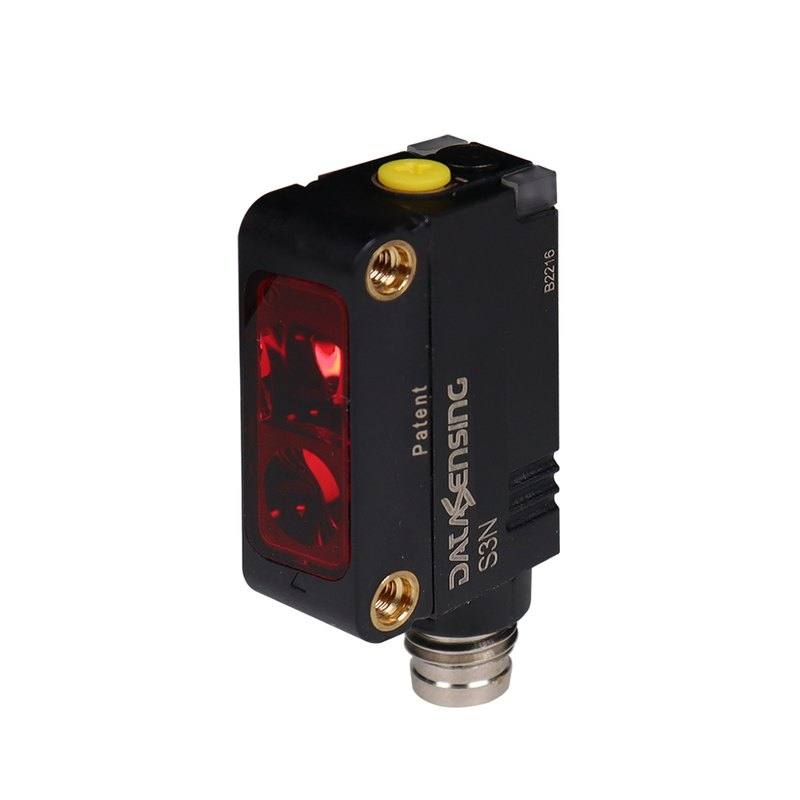
Datalogic / Datasensing S3N-PR-5-C01-PL machine vision sensor
  • Recommended by AIS Vision

Datasensing S3N-PR-5-C01-PL Miniature Narrow-Beam Diffuse Photoelectric Sensor

S3N-PR-5-C01-PL

The S3N-PR-5-C01-PL is a miniature photoelectric sensor in an 11x31x19 mm glass-fibre-reinforced plastic cubic housing. It uses red LED emission (635 nm) in a diffused narrow-beam configuration with a 200 mm short sensing distance (operating 1-250 mm) and a single sensitivity trimmer. Output is PNP light-on (Lon) with a 500 us response time and 1 kHz switching frequency, 10-30 VDC supply, IP67 protection and an M8 4-pin connector.

Brand
Datasensing (Datalogic)
Sensor type
Photoelectric (diffuse narrow beam)
Range / distance
250 mm (2–250 mm)
Response time
500 us (0.5 ms) response time
IP rating
IP67
Switching frequency
1 kHz
Supply voltage
10-30 VDC
Housing material
Glass-fibre reinforced plastic polymer
Dimensions
11 x 31 x 19 mm
Operating temperature
-25 to +55 degC
Sensing method
Diffuse reflective (narrow beam)
Light source
Red LED

Technical overview

The S3N-PR-5-C01-PL is a diffuse-reflective photoelectric sensor, which means it works on a single-housing principle: the 635 nm red LED emitter and the receiver sit side by side, and detection happens when the beam strikes a target and bounces light back into the receiver. Unlike through-beam or retroreflective arrangements, there is no separate reflector or second unit to align, so the sensor only needs a clear line of sight to the object itself. The 'narrow beam' qualifier is the defining trait here: the emission is shaped into a tight spot rather than a broad cone, which gives precise lateral positioning and lets the sensor pick out small features or edges without being confused by nearby surfaces. The trade-off is a deliberately short reach - the technical summary describes it as a 200 mm short-distance device, with the operating range extending to 250 mm - so this is a near-field presence detector, not a long-range scanner. Because diffuse sensing depends on the target reflecting light back, the achievable distance varies with the surface: a matte, dark, or angled object returns less energy than a bright, flat, light-coloured one, and the single sensitivity trimmer is provided precisely so the installer can tune the threshold to the actual material being detected.

Electrically the device is a discrete switch rather than a measurement instrument. It runs on a 10-30 VDC supply and provides a PNP light-on (Lon) output, meaning the transistor sources current to the load when the receiver sees reflected light - the output goes active on object presence. That PNP-sourcing behaviour is the natural fit for sourcing into a PLC sinking input or, in a vision context, into the trigger input of a camera or strobe controller, giving a clean digital edge each time a part enters the beam. Speed is a strong point for a part-presence sensor of this class: a 500 us (0.5 ms) response time paired with a 1 kHz switching frequency means it can resolve up to roughly a thousand transitions per second, fast enough to flag small, closely spaced parts moving at conveyor or indexing speeds and to fire a camera before the part leaves the field of view. The whole sensor wires through a single M8 4-pin connector, so power and the PNP signal share one quick-disconnect lead, simplifying replacement on a line.

Physically this is a miniature device built for tight machine real estate. The cubic housing measures just 11 x 31 x 19 mm and is moulded from glass-fibre-reinforced plastic polymer, giving it mechanical rigidity in a footprint small enough to mount inside fixtures, on small brackets, or between adjacent stations where a barrel-style sensor would not fit. It carries an IP67 rating, so it is sealed against dust and temporary immersion and suited to washdown-adjacent or splash-prone areas, and it operates across a -25 to +55 degC ambient range that covers typical indoor factory, packaging, and chilled-logistics environments. Taken together - small body, narrow red beam, fast PNP output, sealed housing - it is best understood as a compact, robust presence and edge detector that most often serves as the trigger or part-in-position confirmation upstream of a vision inspection rather than as the imaging element itself.

Best for

  • Triggering a machine-vision camera on packaging lines: the narrow red beam detects the leading edge of a carton, label, or pouch at close range and its PNP output fires the camera exactly as the part reaches the inspection window.
  • Part-present confirmation in electronics assembly: the tight beam and miniature 11x31x19 mm body fit between small fixtures to verify that a component, tray, or PCB is seated before the next station acts.
  • Small-part and gap detection on logistics sortation conveyors: the 1 kHz switching frequency and 500 us response resolve closely spaced items moving past the sensor for counting or divert timing.
  • Label and flap presence checks in packaging operations: diffuse near-field sensing detects whether a label, tab, or carton flap is present against the product surface without needing a reflector behind the line.
  • Tight-clearance presence sensing in washdown-adjacent or splash-prone packaging cells, where the IP67-sealed miniature housing survives dust and incidental water that would compromise a larger unsealed sensor.

Selection notes

  • Confirm the target sits inside the short operating window - this is described as a 200 mm short-distance diffuse sensor with a range extending to 250 mm, so it is intended for near-field presence and edge work, not long stand-off detection; if you need to reach further or across a wide gap, choose a through-beam or retroreflective type instead.
  • Set the single sensitivity trimmer against the actual production surface: dark, matte, glossy, or steeply angled targets reflect far less of the 635 nm red light back to the receiver, so commission the threshold on the real material and account for shiny parts that can cause specular dropouts.
  • Wire the PNP light-on output to a sinking (current-receiving) input on your PLC or to the camera/strobe trigger input; if your controller expects an NPN sinking sensor, this device will not interface directly and you will need a PNP-compatible input or an interface relay.
  • Plan the M8 4-pin quick-disconnect into the harness and keep the 10-30 VDC supply within range; the single connector simplifies field replacement, but verify polarity and load type so the PNP source can drive your trigger reliably.
  • Treat this as a trigger or part-in-position device rather than a measurement sensor - it gives a presence on/off signal, not a distance reading; if the application needs an actual gap or height measurement, specify a laser displacement or distance sensor instead.

Specifications: General
BrandDatasensing (Datalogic)
Sensor typePhotoelectric (diffuse narrow beam)

Specifications: Performance
Range / distance250 mm (2–250 mm)
Response time500 us (0.5 ms) response time
Switching frequency1 kHz

Specifications: Interface
ConnectionM8 connector

Specifications: Electrical
Supply voltage10-30 VDC

Specifications: Environment
IP ratingIP67
Operating temperature-25 to +55 degC

Specifications: Mechanical
Housing materialGlass-fibre reinforced plastic polymer
Dimensions11 x 31 x 19 mm

Specifications: Sensing
Sensing methodDiffuse reflective (narrow beam)
Light sourceRed LED

Specifications: Output
Output typePNP

Frequently asked questions

Related technical guides

AIS Vision · Integration

We validate camera + lens + lighting

AIS Vision defines and tests the optimal combination of camera, optics and lighting for your application before you buy.