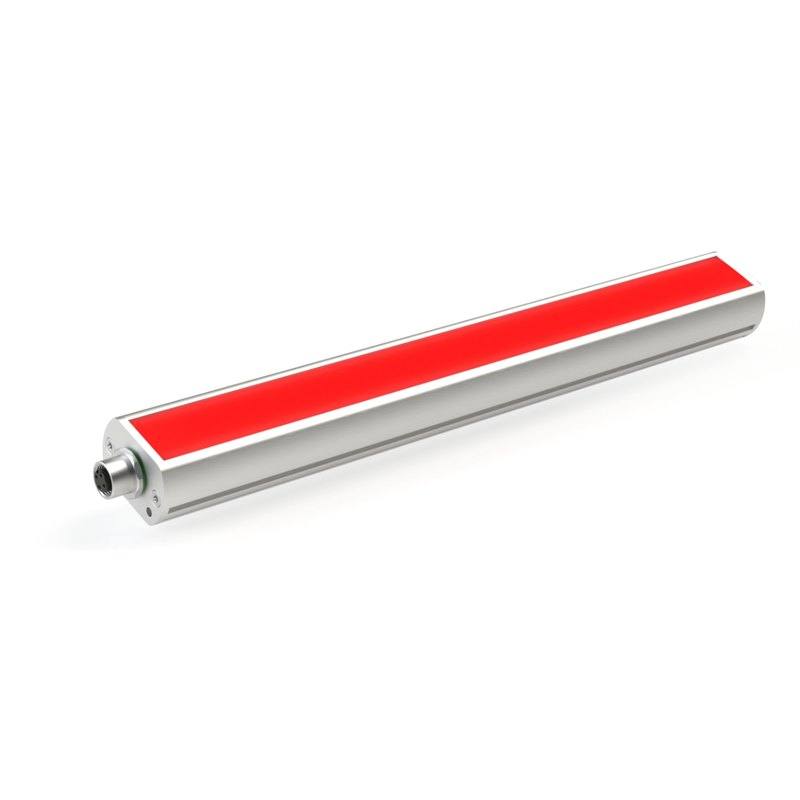
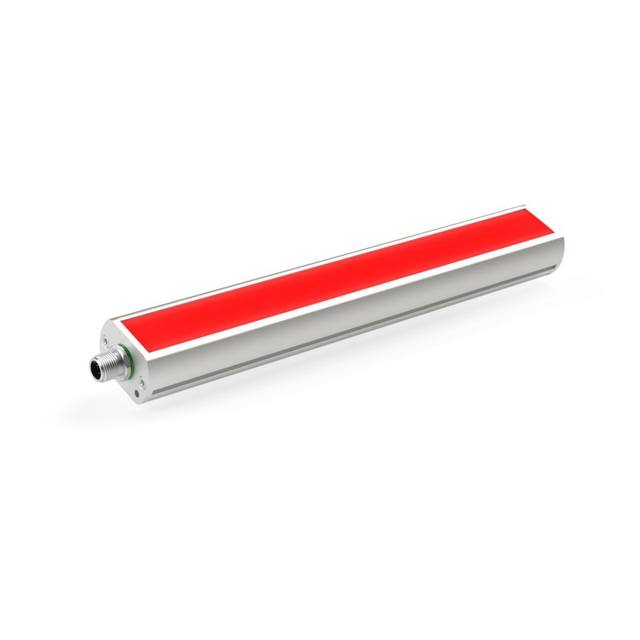
The Lumher FDX-850nm is an infrared linear LED luminaire from the Linear series, emitting at 850 nm. Because 850 nm sits in the near-infrared, the output lies outside the visible range, which makes this bar a fit for applications where visible light is unwanted in the work area. The housing is anodized aluminum with a polycarbonate diffuser, and the output is Infrared 850 nm.
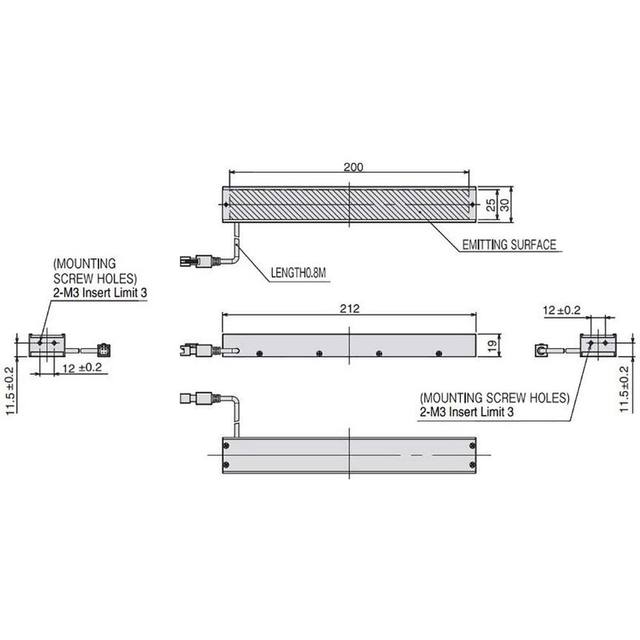
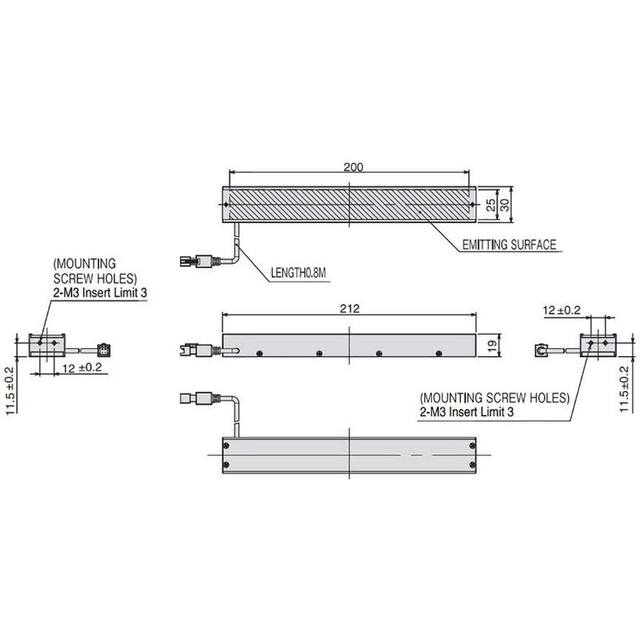
The beam options are Semidiffuse 60° / Ultradiffuse 110°. The semidiffuse angle gives a more directional beam, and the ultradiffuse angle spreads and softens the infrared illumination over a wider area. The bar is offered in fifteen lengths, L1 120–1,380 mm (FDX 01 … FDX 15), and Lumher states that up to 26 cascadable modules can be linked depending on working mode, so one run can be extended along a long inspection line.
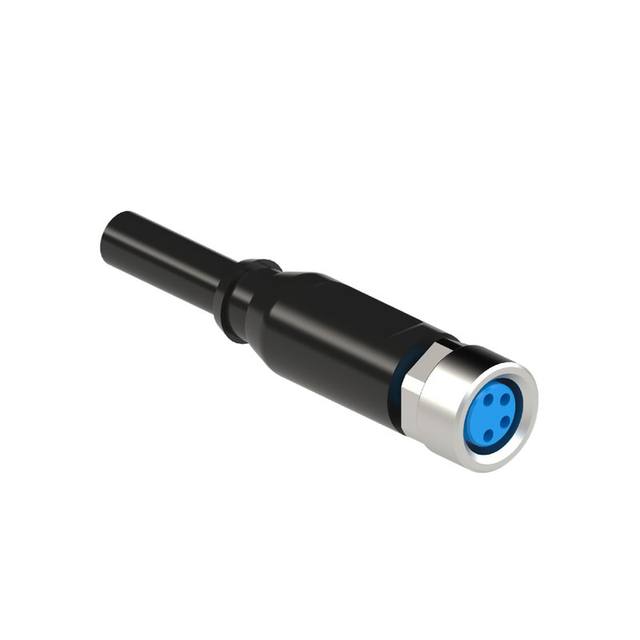
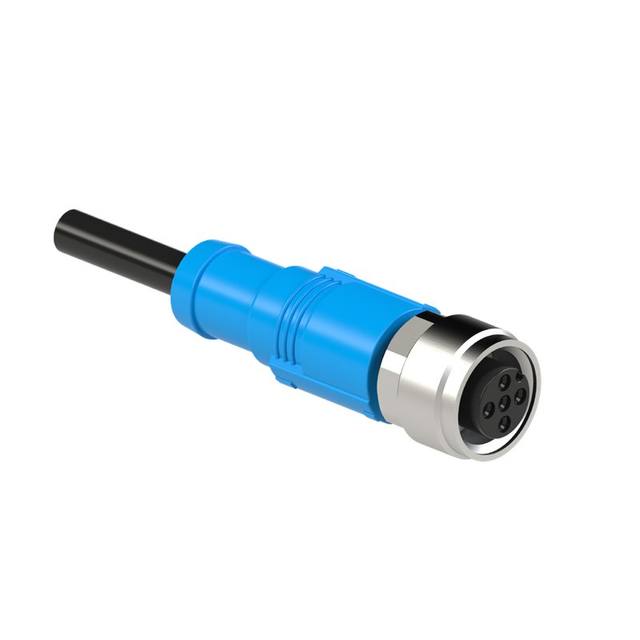
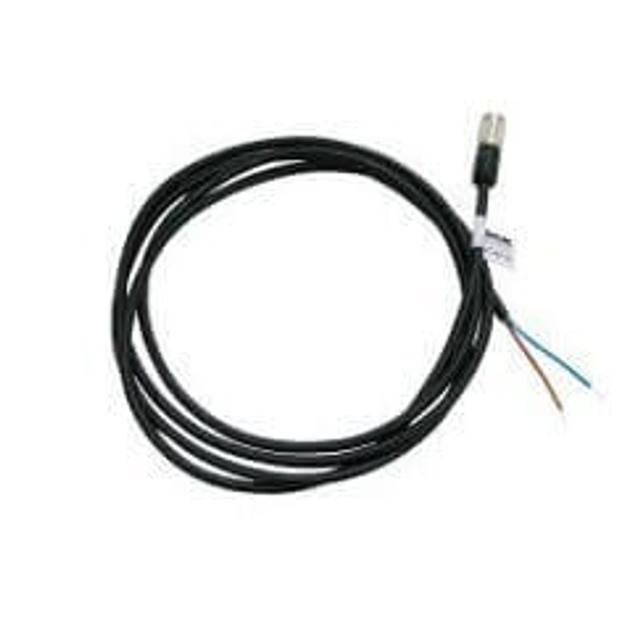
The bar operates in Continuous (1x) / Strobe (2x) mode, with an integrated controller and a 24 Vdc ±5% supply. The connection is M12A with a 2m cable and an M12A connector, the ingress rating is IP40 or IP65 at order, and the operating range is -10°C to +40°C. Imaging at 850 nm depends on a camera sensor that responds at that wavelength, and a filter matched to 850 nm can help keep ambient light from dominating the image.
Best for
Inspection where visible light is unwanted in the work area
Near-infrared imaging with cameras that have sensitivity at 850 nm
Long linear coverage using bar lengths up to 1,380 mm
Moving-part inspection in Strobe (2x) mode
Exposed or enclosed lines that need IP65 protection
Selection notes
Verify that the camera sensor responds at 850 nm before specifying the light.
Use optical filters matched to 850 nm to limit unwanted ambient light reaching the sensor.
Set the beam with Semidiffuse 60° or Ultradiffuse 110°, depending on how directional the infrared should be.
Choose IP40 or IP65 at order, and size the bar length and cascade count to the field.
Confirm the trigger and I/O wiring for strobe operation in the Lumher datasheet.