Omron / Sentech 3Z4S-LE SV-03514V SV-V Series 3.5mm C-Mount Lens
3Z4S-LE SV-03514V
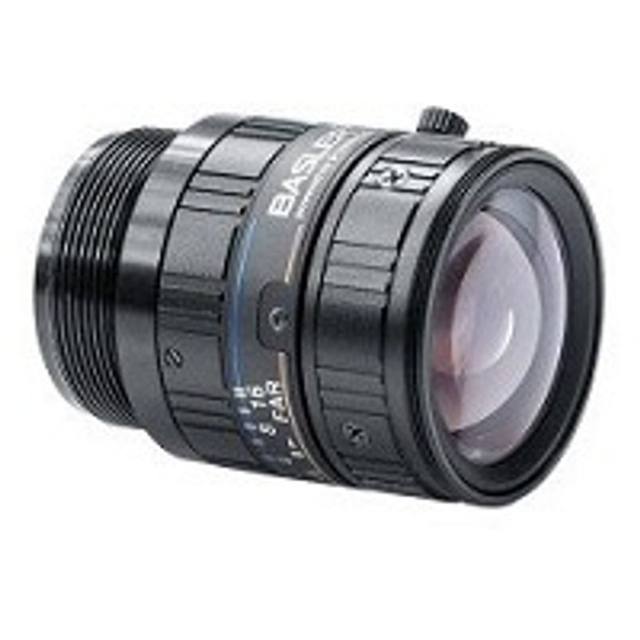
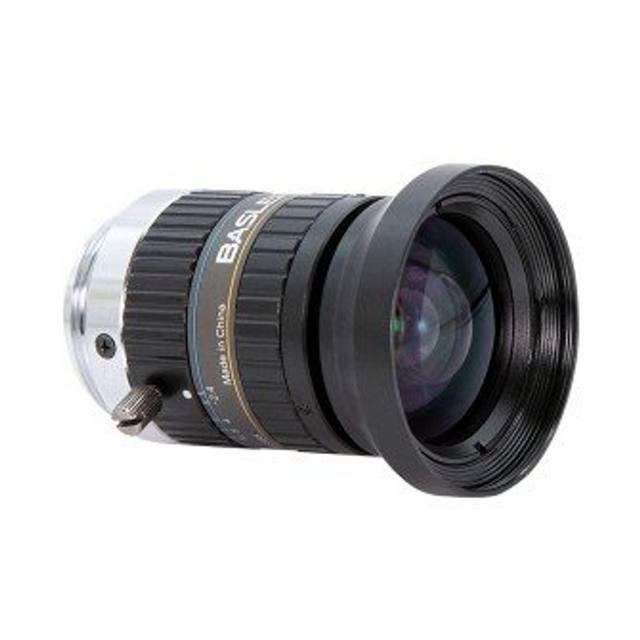
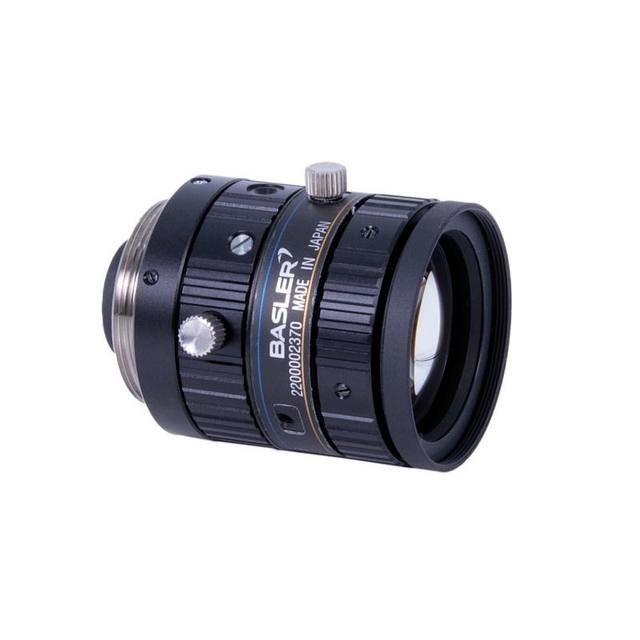
The Omron 3Z4S-LE SV-03514V is a compact wide-angle fixed focal length C-mount lens (actual focal length 3.61 mm) from the SV-V Series, manufactured by VS Technology and sold under the Omron 3Z4S-LE designation. It supports up to 1/2-inch sensors with a diagonal field of view of 136.8° and delivers a maximum aperture of F1.4 with manual iris and focus controls secured by lock screws. TV distortion is -14.7% (barrel) and the minimum object distance is 200 mm. The robust mechanical design with 29.5 mm outer diameter and 30.5 mm length targets industrial machine vision environments operating from 0 to 50°C.
Brand
VS-Technology (sold by Omron as 3Z4S-LE SV-03514V)
The Omron 3Z4S-LE SV-03514V is a 3.5 mm nominal (3.61 mm actual) fixed focal length C-mount lens from the SV-V Series, manufactured by VS Technology and sold under the Omron 3Z4S-LE designation. Its most defining optical characteristic is the 136.8-degree diagonal field of view projected onto a 1/2-inch image circle, making it one of the widest-angle lenses suitable for standard C-mount machine vision cameras. At a minimum object distance of 200 mm, this wide field captures a very large scene footprint in a short standoff, which is advantageous in constrained mounting environments — conveyor underbelly cameras, overhead line-of-sight inspections inside enclosures, or robot-mounted views where arm reach limits how far the camera can stand back from the part. The maximum aperture of F1.4 allows the lens to gather substantial light in low-illumination conditions, giving system designers flexibility to run shorter strobe pulses or lower-power continuous illumination while still achieving adequate sensor exposure.
Resolution and distortion are the two optical trade-offs an installer must weigh at this focal length. TV distortion is specified at -14.7%, which is barrel distortion — characteristic of short focal length wide-angle designs — meaning straight lines near the image periphery bow outward. For applications that require sub-pixel edge accuracy or dimensional measurement across the full field, a software distortion-correction step (lens calibration and remapping) is essential before metrology is performed; the lens is not telecentric, so perspective error also accumulates at the edges of the wide field. Where the lens excels is in presence/absence detection, code reading, and coarse defect classification across a wide scene, tasks where a large field and fast aperture matter more than edge linearity at the frame boundary. Iris control is manual with a lock screw, so aperture is set once during installation and held fixed — appropriate for stable industrial lighting rigs where no run-time iris adjustment is needed.
Mechanically, the lens is compact and robust: 29.5 mm outer diameter and 30.5 mm length at 53 g. It uses the industry-standard C-mount thread, making it compatible with the broad ecosystem of C-mount machine vision cameras. Focus is also manual with a lock screw, so the working distance is fixed at commissioning. Operating temperature of 0 to 50 degrees C covers standard factory-floor environments. When pairing lighting, the 136.8-degree FOV benefits from diffuse dome or on-axis coaxial illumination to maintain even coverage across the extreme angles; narrow-angle ring lights or directional spot lights will produce uneven illumination gradients across such a wide field. For cameras with sensors smaller than 1/2 inch, the image circle overfills the sensor, which means the corners will be sharp and fully illuminated — a useful margin to have.
Best for
Wide-area presence and completeness checks on small or mid-size parts at short standoffs, where a single camera must cover a large footprint within a constrained cabinet or fixture
Robot-guidance and pick-and-feed applications where the camera is mounted on or near the end-effector arm and must capture a broad scene within a short working distance of 200 mm or slightly beyond
Barcode and 2D code reading on wide trays or multi-lane conveyors where many codes must be captured in a single frame without mechanical scanning
Overhead inspection of packaging or tray fills where the camera sits close to the subject inside a housing and the full container width must appear within the image
Low-light or strobe-challenged environments where the F1.4 aperture provides a meaningful light-gathering advantage over slower F2.8 or F4 alternatives at the same focal length
Selection notes
Sensor size compatibility: the 1/2-inch image circle sets an upper limit — cameras with 2/3-inch or larger sensors will show vignetting and resolution fall-off in the corners; pair only with 1/2-inch or smaller sensors for full-field performance
Distortion budget: at -14.7% barrel distortion, any application that requires dimensional measurement or straight-edge detection across the full field must include a camera calibration and undistortion step in the image pipeline; do not assume the raw image is metrologically usable at the periphery
Non-telecentric perspective: because the lens is not telecentric, features at different heights within the scene will shift laterally in the image as the camera-to-subject distance varies; applications with tall or 3D objects and tight positional tolerances must account for this parallax
Fixed focus and fixed iris: both controls are locked with screws after commissioning, so system designers must finalise the working distance and illumination level before camera integration is complete — there is no motorised or remote adjustment available
Wide-angle lighting match: illumination geometry must match the extreme 136.8-degree field; dome diffusers or large-area backlights are preferred; ring lights sized for narrow-angle lenses will leave the outer zones underexposed at this focal length
Specifications: General
Brand
VS-Technology (sold by Omron as 3Z4S-LE SV-03514V)
Specifications: Optical
Focal length
3.5 mm
Lens mount
C-mount
Aperture (f-number)
F1.4 – Close
Image circle / max sensor
1/2"
Telecentric
No
Working distance
200 mm minimum
Specifications: Environment
Operating temperature
0 to 50°C
Specifications: Mechanical
Weight
53 g
Applications this camera is commonly selected for. Open one to see the full recommended hardware and approach.
Matched automatically by: camera mount fits the lens mount · camera sensor is covered by the lens image circle — this lens: C-mount · 1/2" image circle.
By category
All 375Area scan cameras 289High-speed cameras 66High-resolution cameras 20
By brand
All 375Omron / Sentech 178Basler 97iRAYPLE 93Datalogic / Datasensing 7
These steps take an Omron Sentech (STC) camera from the box to a stable first image and on to your own application. They apply across the GigE Vision, USB3 Vision and CoaXPress STC families; the interface only changes how you cable and power the camera.
Download and install the Sentech SDK on the host PC. The package provides StViewer, the viewing and configuration software you use to bring the camera up, and StApi, the programming SDK you integrate later. Because the cameras are GenICam/GenTL-compliant, StApi also registers a GenTL producer, so any GenICam-compliant third-party vision software can discover and drive the camera as an alternative front end.
2. Cable, power and connect the camera
Connect according to the interface. GigE Vision: link to a Gigabit NIC (use PoE or the separate power input) and put the camera and host on the same subnet; for USB3 Vision use a USB 3.x port and a certified cable; for CoaXPress (STC) connect to a CoaXPress frame grabber, which also supplies Power-over-Coax. Then open StViewer and let it enumerate the camera. If a GigE camera does not appear, check the IP configuration and firewall, and on USB3 confirm the host bandwidth and driver.
3. Configure exposure, gain and white balance
Open the device in StViewer and start a live stream. Set exposure and gain for a well-exposed, low-noise image: raise exposure first and only add gain when more light or a faster shutter is not an option, keeping exposure short enough to freeze motion on global-shutter models. On colour cameras, run white balance under your actual production lighting. Adjust the lens aperture and focus on a representative target before tuning anything else.
4. Set the trigger and grab a first image
Start in free-run (continuous) acquisition to confirm a clean, stable image. For inline inspection switch to hardware or software triggering: select the trigger source, set the active edge and any delay, and wire the strobe or illumination to the camera's I/O so lighting fires with each exposure. Acquire and save a frame in StViewer; this saved image is your reference for the SDK stage and for downstream inspection.
5. Move to the StApi SDK (or any GenICam software)
Once the image is stable, reproduce the same settings in code. Use StApi to open the device, apply the GenICam features you validated in StViewer (exposure, gain, trigger, pixel format) and grab frames into your application via the bundled C++, C, C#/.NET or Python interfaces; the included samples are the fastest starting point. Prefer a different stack? The same GenICam/GenTL camera works with third-party vision libraries. With a reliable feed, you can route it into a deep-learning inspection such as Rosepetal for AI-based defect detection.
Frequently asked questions
The lens is specified for a 1/2-inch image circle, so it fully illuminates sensors up to 1/2 inch diagonal (approximately 8 mm). Cameras with 1/3-inch or 1/4-inch sensors will also work and will use only the central, lower-distortion portion of the image circle. Sensors larger than 1/2 inch will experience vignetting and soft corners.
The specified minimum object distance is 200 mm. At that distance, combined with the 136.8-degree diagonal field of view, the captured scene footprint is very large relative to the short standoff — exact field width depends on sensor pixel pitch and active area, but the wide angle is specifically suited to short-range, large-area capture.
Yes, barrel distortion is geometrically deterministic and can be corrected via a standard camera calibration (checkerboard or dot-grid) that computes distortion coefficients, followed by remapping. After correction, the lens can support coarse dimensional tasks, but because it is not telecentric, perspective error at the edges remains and limits absolute metrology accuracy for tall features; a telecentric lens is the better choice for high-precision dimensional inspection.
No. The iris is manual with a lock screw that fixes the aperture after installation. The aperture range runs from F1.4 to closed (no fixed maximum f-number is stated in the specifications), and the setting is chosen once based on the lighting level and required depth of field, then locked. There is no electronic or remote iris control.
The lens uses a standard C-mount thread, which is mechanically compatible with all C-mount cameras. The only limiting factor is the 1/2-inch image circle — the camera sensor must be 1/2 inch or smaller to avoid vignetting.