Skip to content
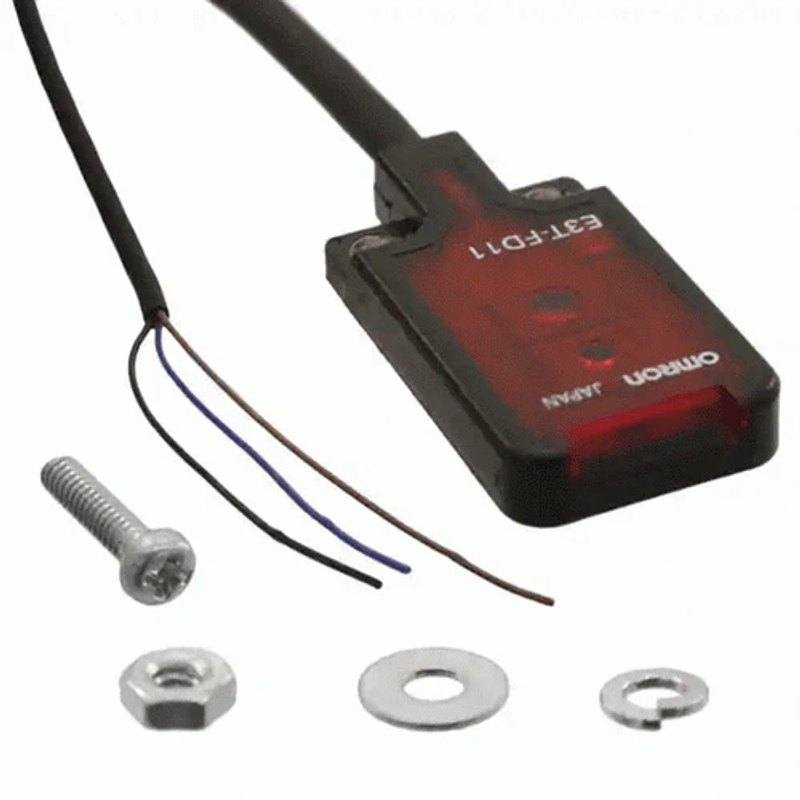
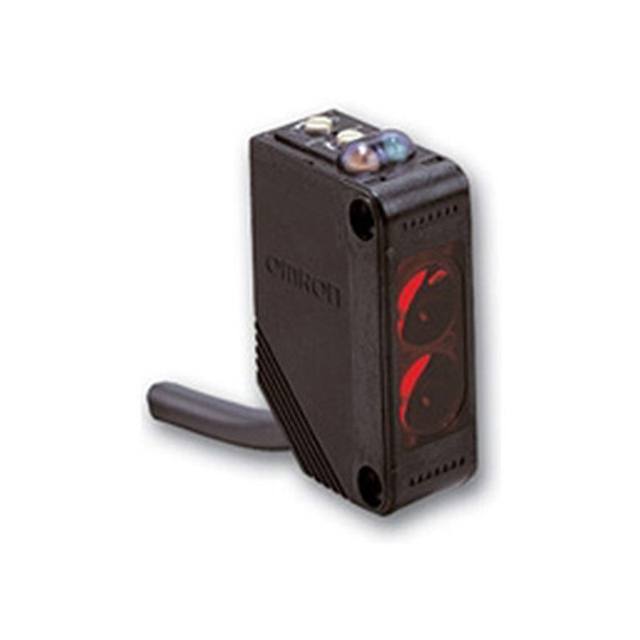
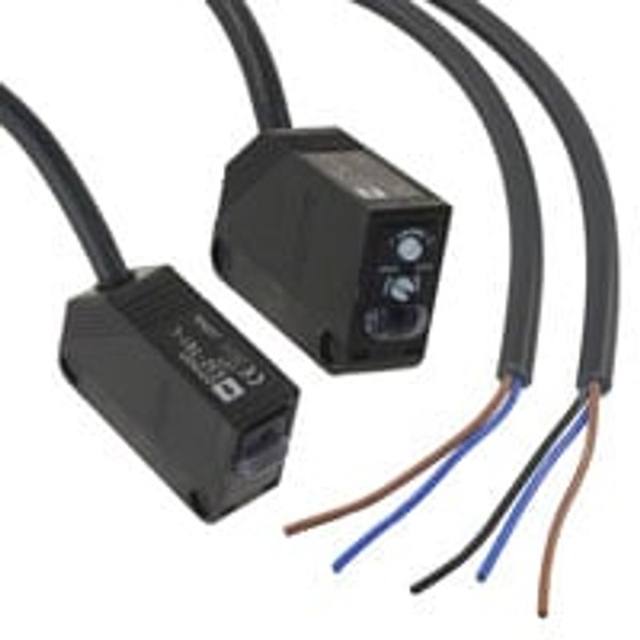
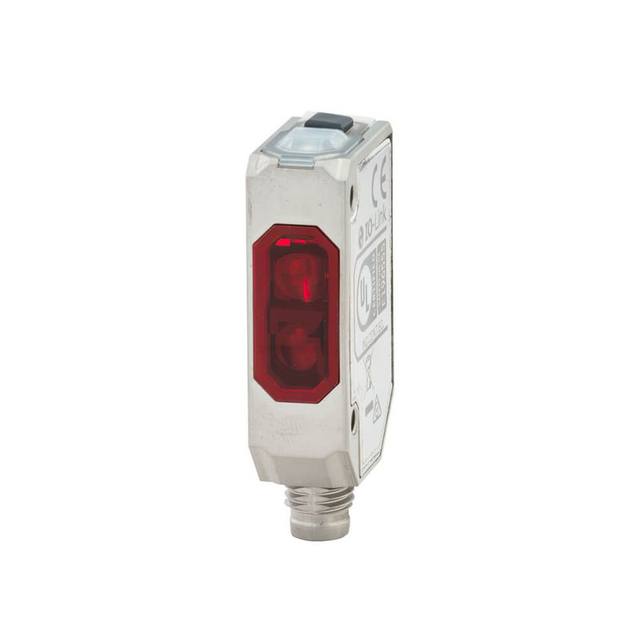
Omron / Sentech E3T-FD / E3T-FL / E3T-FT / E3T-SL / E3T-SR / E3T-ST machine vision sensor
  • Recommended by AIS Vision

Omron / Sentech E3T Series Miniature Photoelectric Sensor

E3T-FD

The Omron E3T is an ultracompact, ultrathin self-contained photoelectric sensor family offered in two body styles: a 3.5 mm flat shape (FT, FD variants) and a 6.6 mm side-view rectangular shape (ST, SR, SL variants), all using Omron's Hyper LED technology with a 670 nm red LED for precision pin-point detection. Sensing distances range from 5–30 mm for diffuse/BGS models, 10–200 mm for retroreflective, and up to 1 m for through-beam side-view models, with a 1 ms response time and 500 mm for flat through-beam. All models operate on 12–24 VDC, offer NPN or PNP open-collector outputs with Light-ON or Dark-ON operation, and are rated IP67 (IP54 for ST side-view models), suitable for space-restricted industrial automation applications.

Brand
Omron / Sentech
Sensor type
Photoelectric
Sensing method
Diffuse (FD), Background Suppression (FL), Through-beam (FT/ST), Retroreflective (SR), Convergent/Limited-reflective (SL)
Light source
Red LED (Hyper LED, λ = 670 nm)
Range / distance
5–30 mm (diffuse/BGS/convergent), 10–200 mm (retroreflective), 500 mm (through-beam flat), 1000 mm (through-beam side-view)
Response time
1 ms max (on and off)
Output type
NPN or PNP open-collector, 50 mA max, Light-ON or Dark-ON
Supply voltage
12–24 VDC ±10%, ripple (p-p) 10% max
Connection
Pre-wired PVC cable 2 m standard (5 m optional); M8 and M12 connector options on newer variants
Housing material
PBT (case); Polycarbonate (lens and cover)
Dimensions
Flat (FT/FD): 12 W × 24 H × 3.5 D mm; Side-view (ST): 7 W × 18.5 H × 9.5 D mm; SR/SL: 7 W × 20.6–24.5 H × 11 D mm
Weight
Approx. 20 g (sensor); approx. 40 g (with packaging)

Technical overview

The Omron E3T series is a family of ultracompact, self-contained photoelectric sensors built around Omron's Hyper LED technology, which emits a precisely focused 670 nm red beam. That visible-red wavelength is a practical advantage on the shop floor: installers can see exactly where the beam lands during alignment without any separate alignment tool. The flat-body variants (FD diffuse and FT through-beam) measure just 12 × 24 × 3.5 mm — thin enough to tuck into conveyor slots, fixture gaps, or robot end-of-arm tooling where a conventional barrel-style sensor simply cannot fit. The side-view rectangular variants (ST through-beam, SR retroreflective, SL convergent/limited-reflective) use a different body style suited to a perpendicular mounting orientation: the ST measures 7 × 18.5 × 9.5 mm, while the SR and SL variants are slightly taller and deeper at 7 × 20.6–24.5 × 11 mm depending on sub-variant. Both body styles share the same 12–24 VDC supply range and NPN or PNP open-collector output rated at 50 mA maximum, so the same wiring standard used elsewhere on a panel carries over without modification.

Sensing distance and method selection determine which E3T model fits a given detection task. The diffuse (FD) model works at 5–30 mm and reflects the beam off the target itself, making it the simplest single-sided installation but sensitive to target surface reflectivity. The background-suppression (FL) model operates over the same 5–30 mm envelope but uses a fixed cut-off point that ignores objects beyond the set distance, which is useful when a similar-coloured background sits close behind the target. The convergent/limited-reflective (SL) model shares this short-range band and focuses energy at a defined spot, adding immunity to near and far objects simultaneously — well-suited to detecting small parts on a moving carrier. The retroreflective (SR) model extends detection to 10–200 mm by bouncing the beam off a reflector, combining easy single-side cabling with reliable operation on transparent or low-reflectivity targets. Through-beam variants push detection distance further still: the flat through-beam (FT) reaches 500 mm while the side-view through-beam (ST) reaches 1,000 mm, delivering the highest excess gain and best noise immunity for detecting even translucent films or sparse features. All models share a 1 ms response time for both on and off transitions, which corresponds to an object-detection rate well above 500 events per second — sufficient for high-speed conveyor lines running at typical industrial part rates.

Mechanical integration and environmental ratings complete the installation picture. The PBT housing and polycarbonate lens cover are rated IP67 on all variants except the ST side-view through-beam, which carries an IP54 rating. IP67 means the sensor can be washed down with pressurised water jets and temporarily submerged — appropriate for food-grade conveyor cleaning routines or coolant-splash environments in machining cells. At approximately 20 g without cable, the sensors add negligible mass to moving tooling. The pre-wired 2 m PVC cable (extendable to 5 m as an option) suits most cabinet-to-sensor runs, while M8 and M12 connector variants are available on newer sub-variants for quick-change maintenance. Light-ON or Dark-ON operation is selectable, letting integrators choose whether the output energises when the beam is received or when it is blocked, without any additional relay inversion stage.

Best for

  • High-speed part-present detection on narrow-pitch conveyors where a 3.5 mm flat sensor profile fits between belt ribs or beneath conveyor guards — diffuse (FD) or through-beam flat (FT) variants at up to 500 mm.
  • Robot end-of-arm tooling and gripper integration, where the sub-20 g sensor weight and flat 3.5 mm body allow embedding directly into jaw faces or suction-cup frames to confirm part pickup before the robot moves.
  • Packaging line registration and label or flap detection using the background-suppression (FL) or convergent (SL) variants at 5–30 mm, where the fixed cut-off distance rejects cardboard backing and conveyor belt from the detection field.
  • Logistics sortation gates requiring reliable single-sided retroreflective (SR) sensing across chute widths up to 200 mm, where mounting a receiver on the far side is impractical and target objects range from matte boxes to glossy polybags.
  • Wash-down or coolant-splash zones in food, pharmaceutical, or machining applications where IP67-rated sensors must withstand repeated high-pressure cleaning without seal degradation.

Selection notes

  • Match the sensing method to the target surface before ordering. Diffuse (FD) is the simplest but its 5–30 mm range and background dependence make it unsuitable for low-reflectivity targets or scenes with close backgrounds; choose background suppression (FL) or convergent (SL) when the scene behind the target is within 30 mm, and retroreflective (SR) when target surface variability would cause missed detections on the diffuse model.
  • Verify IP rating against the wash-down schedule. The ST side-view through-beam model is rated only IP54, which is splash-proof but not submersion- or pressure-jet-proof. If the sensor is in a wash-down zone, use an FD, FL, FT, SL, or SR model, all of which carry IP67.
  • Account for body-style dimensions when selecting side-view variants. The ST measures 7 × 18.5 × 9.5 mm, while the SR and SL measure 7 × 20.6–24.5 × 11 mm — meaningfully taller and deeper than the ST. Verify that the mounting pocket or bracket accommodates the specific variant's envelope before finalising a design.
  • Size the cable run before specifying the 2 m pre-wired option. The standard cable is 2 m PVC; a 5 m version is available, but longer runs require an extension cable rated for the 12–24 VDC signal and the 50 mA NPN/PNP output. Connector variants (M8 or M12) allow in-line quick disconnect for maintenance-intensive installations.
  • Confirm NPN or PNP polarity matches the PLC input module. Both polarities are available as separate model numbers; the sensors are not field-switchable between NPN and PNP. Similarly, Light-ON and Dark-ON can typically be selected either by wiring or a mode pin — check the model-specific datasheet for the chosen variant.
  • Operating temperature ceiling is +55 °C. In enclosed housings near heat sources such as ovens, dryers, or induction heaters, verify ambient temperature does not exceed this threshold. The storage rating extends to +70 °C but that does not apply to powered operation.

Specifications: General
BrandOmron / Sentech
Sensor typePhotoelectric

Specifications: Performance
Range / distance5–30 mm (diffuse/BGS/convergent), 10–200 mm (retroreflective), 500 mm (through-beam flat), 1000 mm (through-beam side-view)
Response time1 ms max (on and off)

Specifications: Interface
ConnectionPre-wired PVC cable 2 m standard (5 m optional); M8 and M12 connector options on newer variants

Specifications: Electrical
Supply voltage12–24 VDC ±10%, ripple (p-p) 10% max

Specifications: Environment
Operating temperature−25 °C to +55 °C (operating); −40 °C to +70 °C (storage)
IP ratingIP67 (FD/FL/FT/SL/SR); IP54 (ST side-view models)

Specifications: Sensing
Sensing methodDiffuse (FD), Background Suppression (FL), Through-beam (FT/ST), Retroreflective (SR), Convergent/Limited-reflective (SL)
Light sourceRed LED (Hyper LED, λ = 670 nm)

Specifications: Output
Output typeNPN or PNP open-collector, 50 mA max, Light-ON or Dark-ON

Specifications: Mechanical
Housing materialPBT (case); Polycarbonate (lens and cover)
DimensionsFlat (FT/FD): 12 W × 24 H × 3.5 D mm; Side-view (ST): 7 W × 18.5 H × 9.5 D mm; SR/SL: 7 W × 20.6–24.5 H × 11 D mm
WeightApprox. 20 g (sensor); approx. 40 g (with packaging)

Frequently asked questions

Related technical guides

AIS Vision · Integration

We validate camera + lens + lighting

AIS Vision defines and tests the optimal combination of camera, optics and lighting for your application before you buy.