Omron has announced the end of production for this series (planned 2027-09-01). Talk to us about availability and successors.
Technical overview
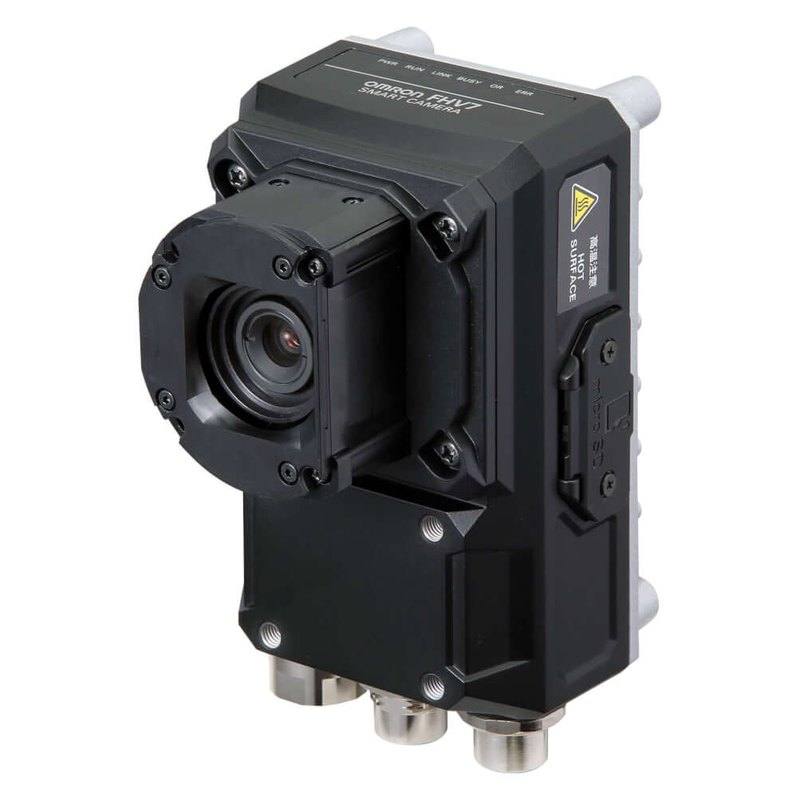
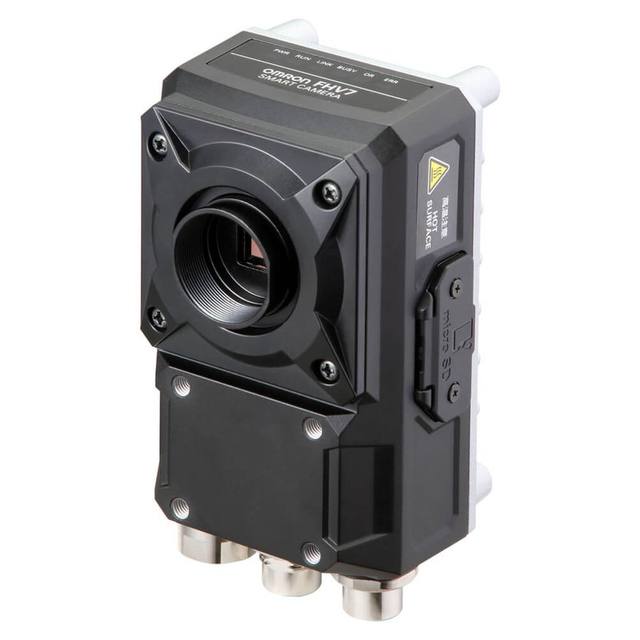
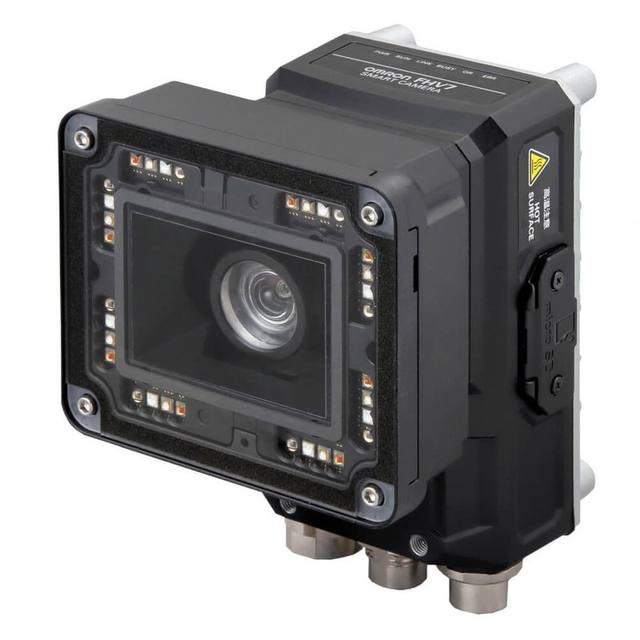
Seven order codes cover this monochrome autofocus configuration: motorized modules of 6, 9, 12 and 25 mm, working distances of 59–2000 mm, and a light that is none, infrared, multi-colour, white or red LED. Light and focal length come as a pair in the order codes: 6 mm unlit or with an infrared LED, 9 mm unlit or with a multi-colour LED, 12 mm with a multi-colour or white LED, and 25 mm with a red LED. Choosing the lens largely chooses the light.
Against FHV7 3.2 MP mono autofocus it has 3072 × 2048 px instead of 2048 × 1536 and 59 fps instead of 55, but the shutter is rolling rather than global and the pixels shrink from 3.45 to 2.4 µm, so a moving part skews unless it is stopped or flashed. As a thin-lens example, a 25 mm module at 500 mm sees about 7.37 mm × (500 − 25) ÷ 25 ≈ 140 mm across, 0.046 mm per pixel over 3072 px, so a 0.5 mm feature spans about 11 px. On a monochrome sensor the red LED brightens red and pale features and darkens blue ones (typical).
Best for
High-detail inspection of stationary or indexed parts at varying distances, where 3072 px across at 2.4 µm resolves small features and fine print.
Detail work at longer distances with the 25 mm module, the focal length that comes with a red LED.
Wide-field overviews with the 6 mm module, such as confirming that every item in a kit is present, where coverage matters more than fine detail.
Selection notes
If you need a light colour that the pairing does not offer, take FHV7 6.3 MP mono C-mount and add an external light of your choice.
For moving parts, FHV7 3.2 MP mono autofocus has a global shutter at 55 fps and also offers a 16 mm module.
Because the order code locks focal length and light colour together, a trial on your parts, such as the lighting study AIS Vision offers, is cheaper than a wrong code.
Confirm the IP rating of the exact order code before using it in a wet or dusty location. Omron plans to end production of the series on 2027-09-01.
Ethernet, EtherNet/IP, PROFINET, EtherCAT (option, via the FHV-SDU30 data unit), RS-232, digital I/O
Trigger / GPIO
Digital I/O
Connection
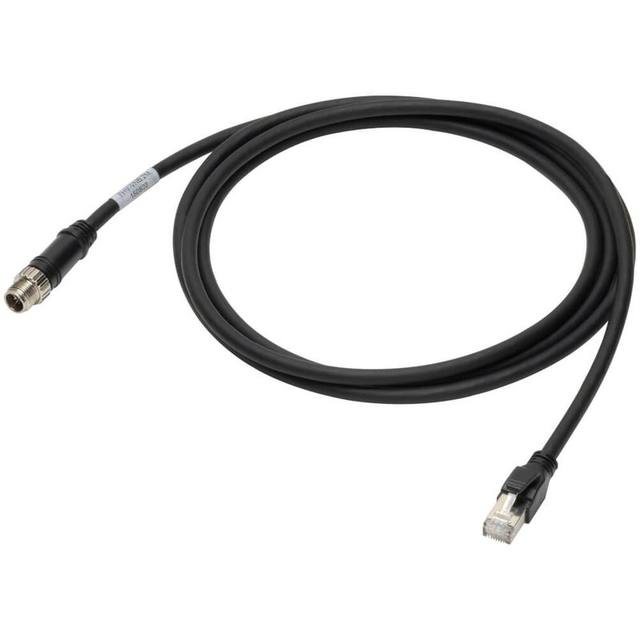
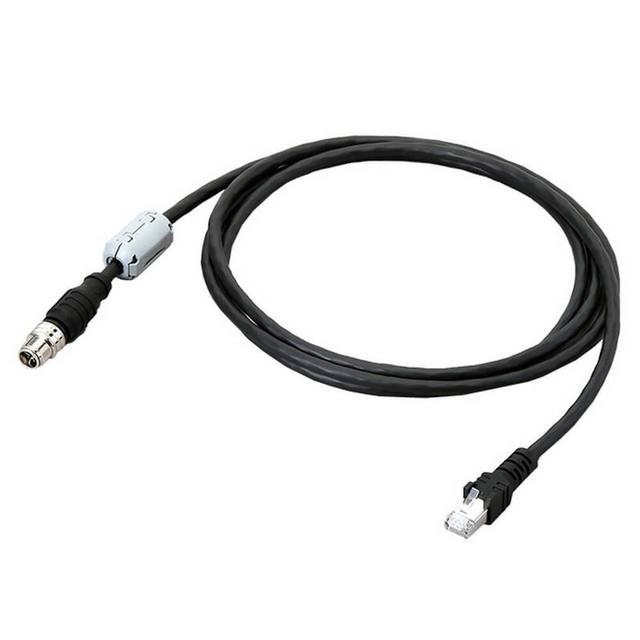
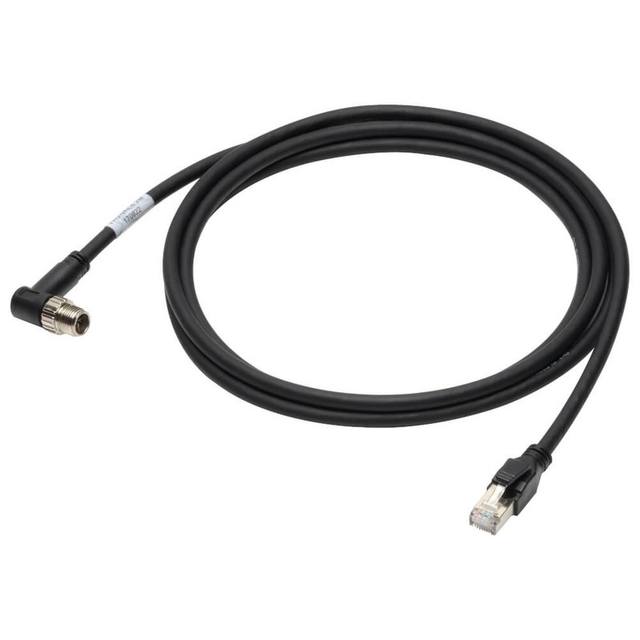
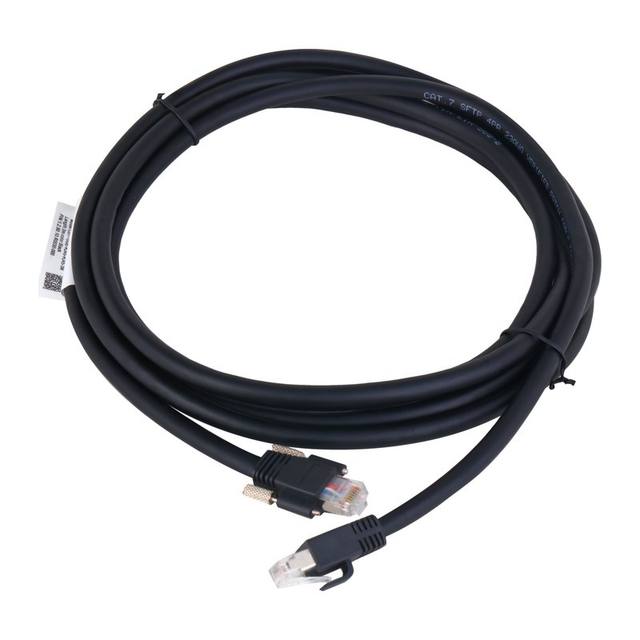
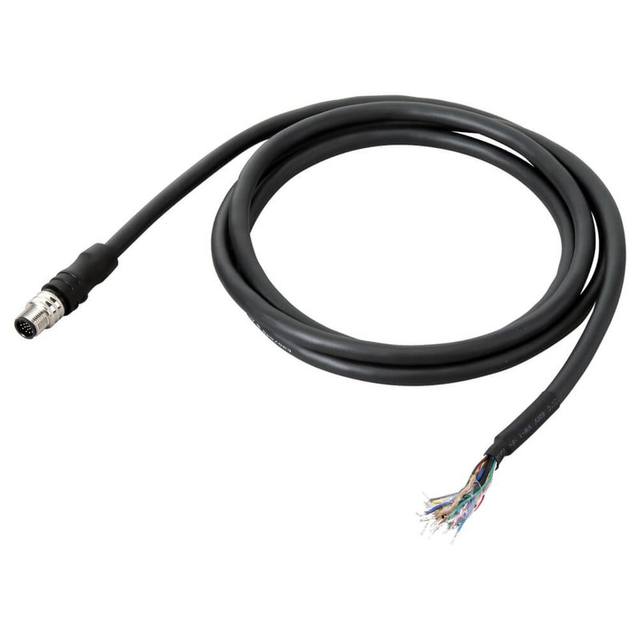
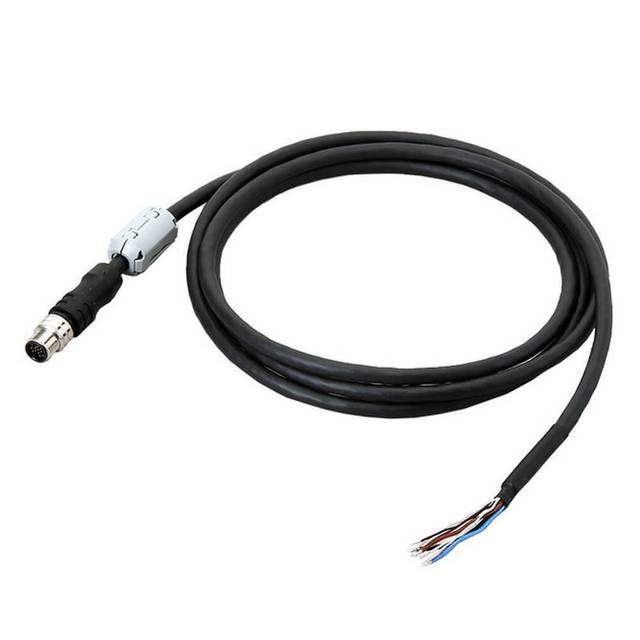
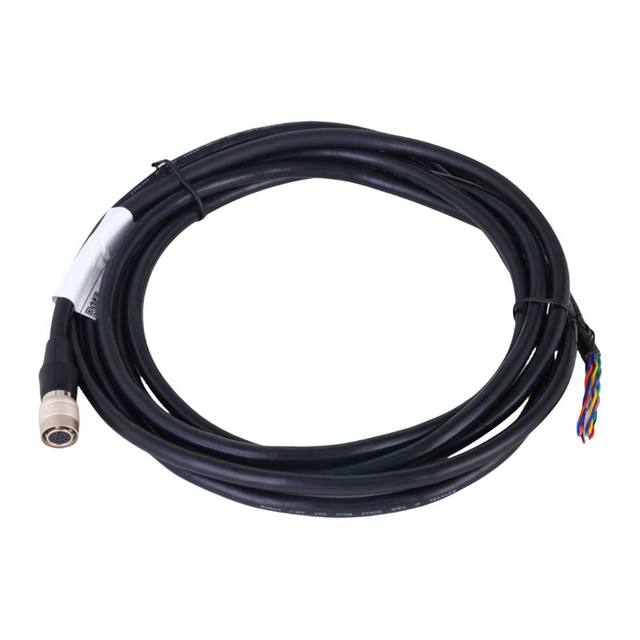
M12 connectors (per the Omron accessory cables for this series)
Specifications: Optical
Focus
Autofocus lens module (motorized)
Focal length
6 / 9 / 12 / 25 mm
Working distance
59–2000 mm autofocus range
Integrated lighting
Infrared LED / Multi-coloured LED / White LED / Red LED (model-dependent); also offered without illumination
Illumination colour
Infrared, Multi-colour, White, Red
Specifications: Electrical
Supply voltage
24 V DC (Omron model description)
Specifications: Environment
IP rating
IP40 (2 models); IP67 (5 models)
Specifications: Software
Software / API
FH vision software (FH/FHV series)
This product groups every purchasable order code that shares the same sensing method, range and output. Cable length, connector type and operation mode (Light-ON/Dark-ON, NO/NC) vary by order code below.
Family variants with highlighted differences
Model
Focal length ●
Working distance ●
Integrated lighting ●
IP rating ●
Illumination colour ●
Availability
FH Vision Smart Camera, high performance, monochrome type, 6.3 Mpix resolution, 2.4 µm pixel size, 1/1.8" chip size, rolling shutter, motorized lens module, focal length 6 mm, 24 VDC, IP40, pre-assembled Base
6 mm (motorized lens module 6 mm)
59–1000 mm (autofocus)
No illumination
IP40
—
On request
FH Vision Smart Camera, high performance, monochrome type, 6.3 Mpix resolution, 2.4 µm pixel size, 1/1.8" chip size, rolling shutter, motorized lens module, focal length 6 mm, IR illuminator, 24 VDC, IP40, pre-assembled
These steps take an Omron Sentech (STC) camera from the box to a stable first image and on to your own application. They apply across the GigE Vision, USB3 Vision and CoaXPress STC families; the interface only changes how you cable and power the camera.
Download and install the Sentech SDK on the host PC. The package provides StViewer, the viewing and configuration software you use to bring the camera up, and StApi, the programming SDK you integrate later. Because the cameras are GenICam/GenTL-compliant, StApi also registers a GenTL producer, so any GenICam-compliant third-party vision software can discover and drive the camera as an alternative front end.
2. Cable, power and connect the camera
Connect according to the interface. GigE Vision: link to a Gigabit NIC (use PoE or the separate power input) and put the camera and host on the same subnet; for USB3 Vision use a USB 3.x port and a certified cable; for CoaXPress (STC) connect to a CoaXPress frame grabber, which also supplies Power-over-Coax. Then open StViewer and let it enumerate the camera. If a GigE camera does not appear, check the IP configuration and firewall, and on USB3 confirm the host bandwidth and driver.
3. Configure exposure, gain and white balance
Open the device in StViewer and start a live stream. Set exposure and gain for a well-exposed, low-noise image: raise exposure first and only add gain when more light or a faster shutter is not an option, keeping exposure short enough to freeze motion on global-shutter models. On colour cameras, run white balance under your actual production lighting. Adjust the lens aperture and focus on a representative target before tuning anything else.
4. Set the trigger and grab a first image
Start in free-run (continuous) acquisition to confirm a clean, stable image. For inline inspection switch to hardware or software triggering: select the trigger source, set the active edge and any delay, and wire the strobe or illumination to the camera's I/O so lighting fires with each exposure. Acquire and save a frame in StViewer; this saved image is your reference for the SDK stage and for downstream inspection.
5. Move to the StApi SDK (or any GenICam software)
Once the image is stable, reproduce the same settings in code. Use StApi to open the device, apply the GenICam features you validated in StViewer (exposure, gain, trigger, pixel format) and grab frames into your application via the bundled C++, C, C#/.NET or Python interfaces; the included samples are the fastest starting point. Prefer a different stack? The same GenICam/GenTL camera works with third-party vision libraries. With a reliable feed, you can route it into a deep-learning inspection such as Rosepetal for AI-based defect detection.
Frequently asked questions
None, infrared, multi-colour, white or red, depending on the code: infrared with the 6 mm module, multi-colour with 9 and 12 mm, white with 12 mm and red with 25 mm.
FHV7 6.3 MP color autofocus has the same pixel count and rolling shutter, with white or multi-colour LEDs.
Camera Housing: Basler Camera housing ace 2 GigE, Basler Camera housing ace 2 USB / CXP / GMSL, Basler Camera housing ace USB, Basler Camera housing ace GigE