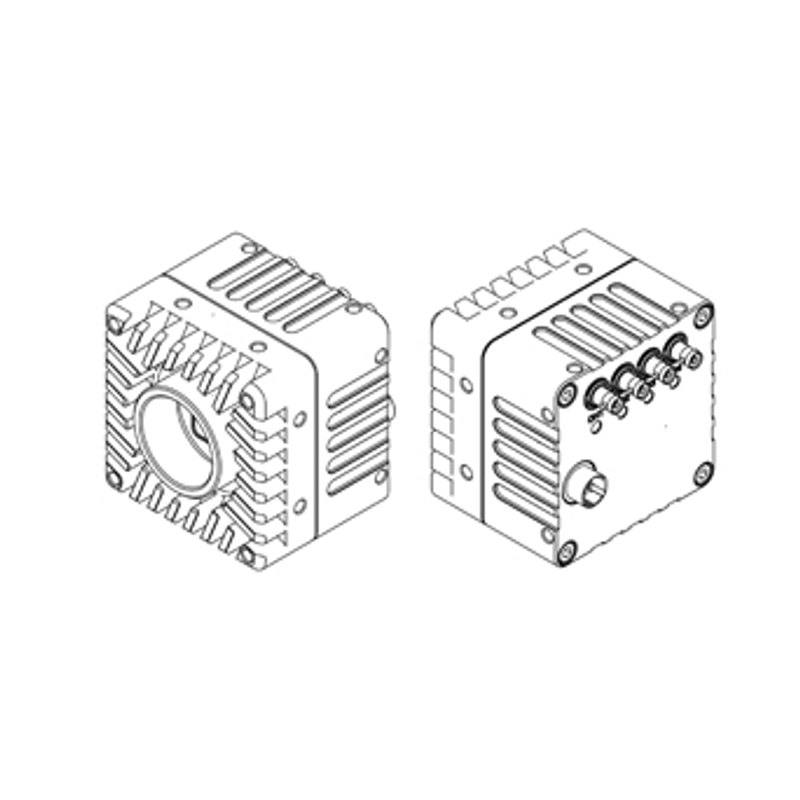
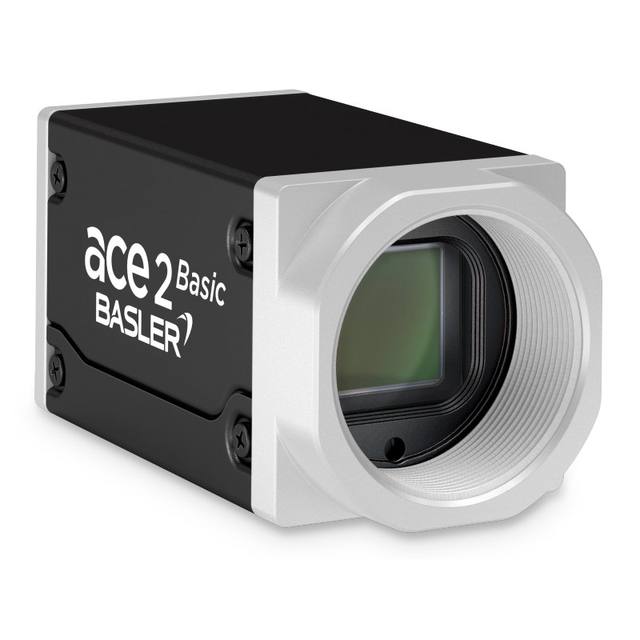
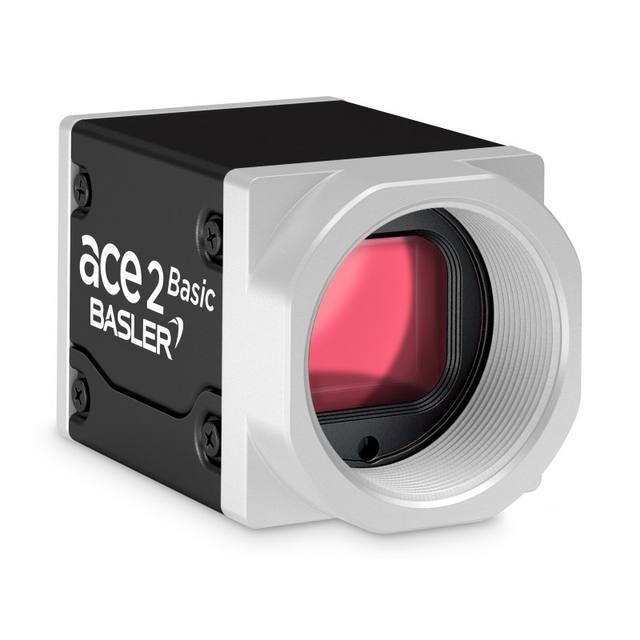
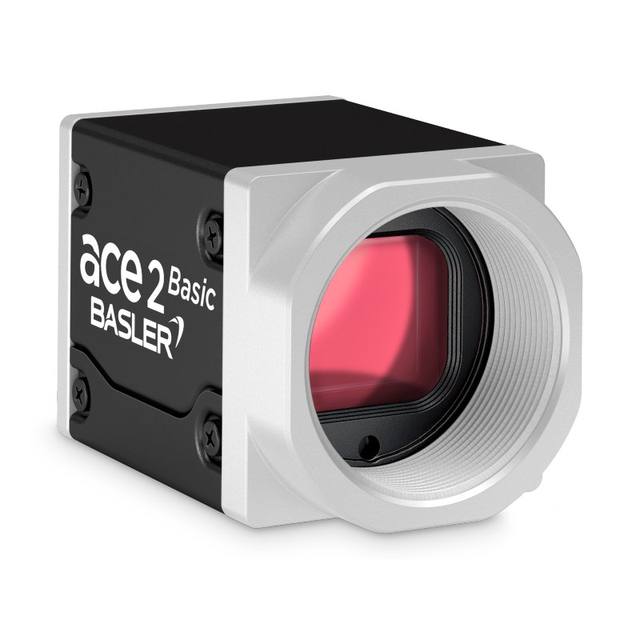
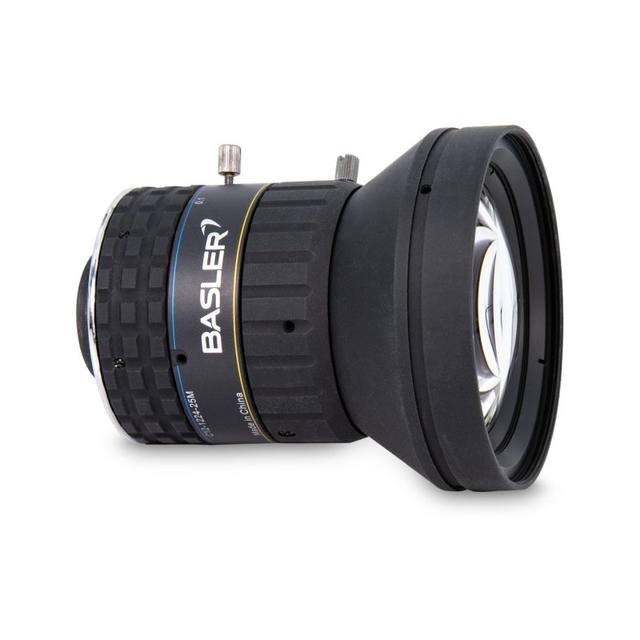
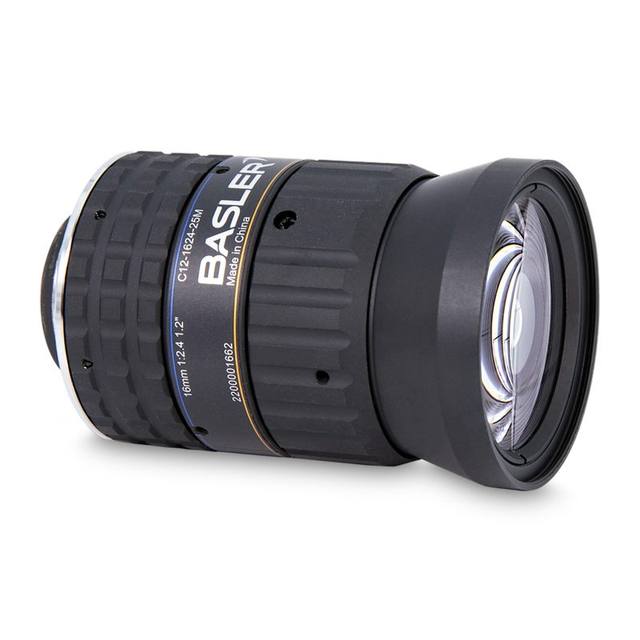
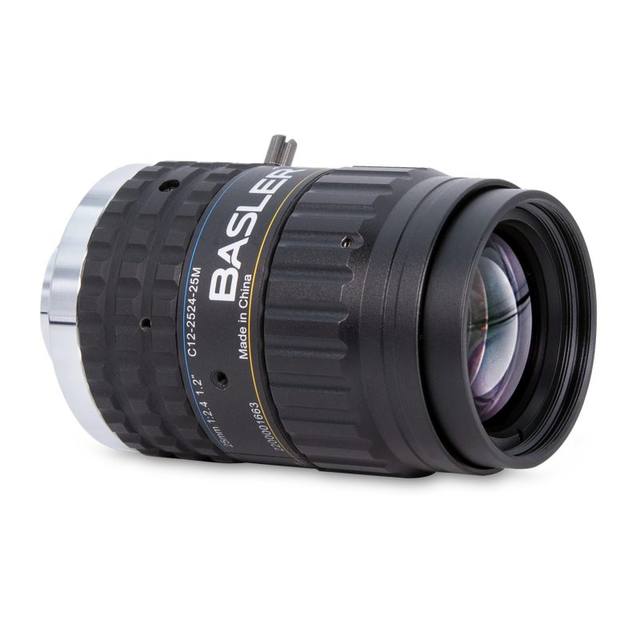
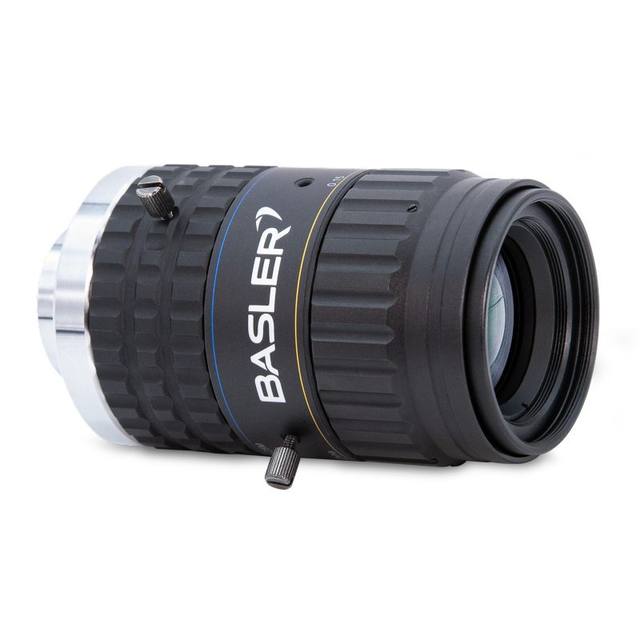
The STC-LBS246CCXP124 (mono) and STC-LCS246CCXP124 (color) are high-resolution CoaXPress 2.0 area scan cameras using the Sony IMX530 5320×4600-pixel global shutter CMOS sensor with a 2.74 µm pixel pitch on a 1.2-inch optical format. Both models transmit over four CXP-12 lanes via Micro BNC connectors, achieving up to 106 fps at 24.5 MP. They are powered via PoCXP or an external 18.5–26 Vdc supply consuming 8.2 W or less, housed in a compact 55×55×46.5 mm C-mount body. Features include binning/decimation, flat-field correction, defective pixel correction, multiple trigger modes, and image flip.
The STC-LBS246CCXP124 (monochrome) and STC-LCS246CCXP124 (color) are built around the Sony IMX530, a Pregius S global shutter CMOS sensor. The 5320 × 4600 pixel array delivers 24.5 megapixels at a 2.74 µm pixel pitch on a 1.2-inch optical format — a combination that provides both high spatial resolution and meaningful photon-collection area per pixel. The global shutter architecture is essential: every pixel integrates simultaneously, eliminating the motion artifact and geometric distortion that rolling-shutter designs introduce on moving lines or vibrating fixtures. At full 24.5 MP the camera runs to 106 fps, giving integrators a wide tradeoff range between throughput and pixel budget — they can crop to a region of interest and push frame rates further, or run full frame for maximum field coverage.
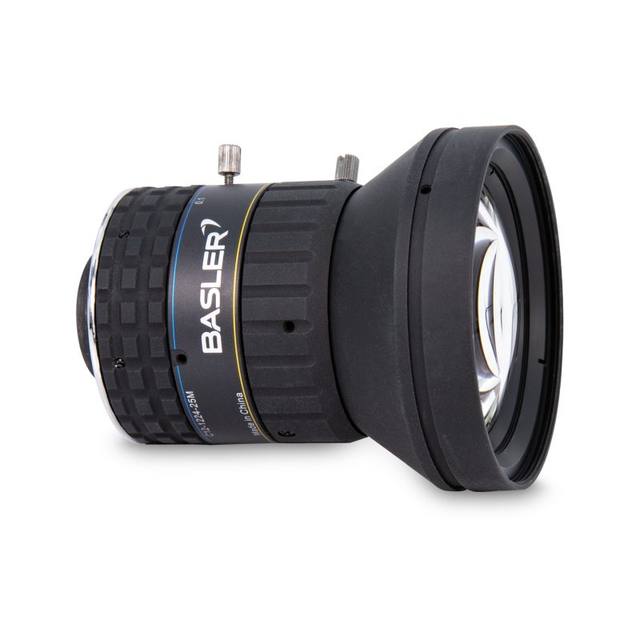
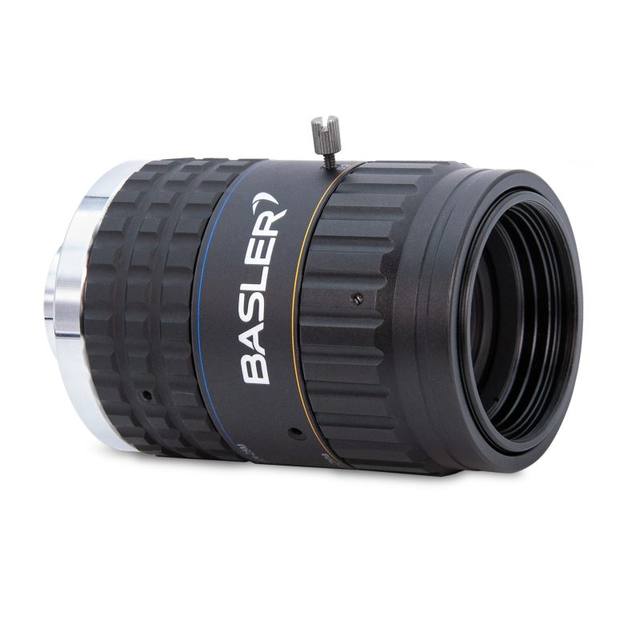
Data transport runs over four-lane CoaXPress 2.0 at CXP-12 speeds via Micro BNC connectors, delivering the aggregate bandwidth needed to sustain 106 fps at this resolution over cable runs that GigE or USB 3.0 cannot match. Power-over-CoaXPress (PoCXP) allows a single coax cable per lane to carry both data and power, simplifying cable management in multi-camera arrays; an external 18.5–26 Vdc supply is also supported for installations where frame-grabber PoCXP capacity is constrained. Power consumption is 8.2 W or less — moderate for a camera of this pixel count and frame rate. The camera ships in a compact 55 × 55 × 46.5 mm C-mount body weighing 220 g, which keeps the lens-camera assembly manageable on multi-axis gantries or robotic arms. The C-mount interface is well-served by the large-format lens market: installers should confirm the lens image circle covers at least the 1.2-inch (approximately 17.6 mm diagonal) sensor format to avoid corner shading.
On-camera processing features — binning, decimation, flat-field correction, defective pixel correction, image flip, and multiple trigger modes — reduce demands on the frame grabber and host CPU. Flat-field correction is particularly valuable at 24.5 MP: lens illumination falloff and sensor non-uniformity that are acceptable at lower resolution become measurable errors in precision dimensional work, and correcting them in-camera avoids adding a software calibration step to every frame. The trigger subsystem supports the external hardware signals typical of conveyor-synchronized inspection, while the monochrome variant (LBS) maximises pixel-level sensitivity and is the natural choice for most industrial measurement and defect tasks; the color variant (LCS) is available where hue discrimination is needed without an external filter wheel. Operating temperature is specified at 0–40 °C, standard for controlled factory environments.
Best for
High-throughput surface and cosmetic defect inspection on fast-moving production lines — 106 fps at 24.5 MP means a single camera can cover a wide field without sacrificing the pixel density needed to resolve fine scratches, pinholes, or contamination.
Sub-pixel dimensional gauging of machined parts, PCB features, or display panels, where the combination of global shutter (no geometric distortion from motion), fine 2.74 µm pixel pitch, and flat-field correction supports traceable measurement repeatability.
Semiconductor wafer and substrate inspection, where the 1.2-inch format and high pixel count allow large die or panel areas to be imaged in fewer acquisition steps, reducing cycle time on back-end inspection cells.
Pharmaceutical blister-pack, label, and tablet inspection requiring both OCR/OCV character verification and packaging completeness checks in a single acquisition — the resolution budget accommodates small text alongside a full carton field.
Automotive and electronics traceability: reading 2D Data Matrix codes at the fine print densities now standard on EV battery cells, semiconductor packages, and microelectronic assemblies, where a lower-resolution camera would require a separate close-up station.
Selection notes
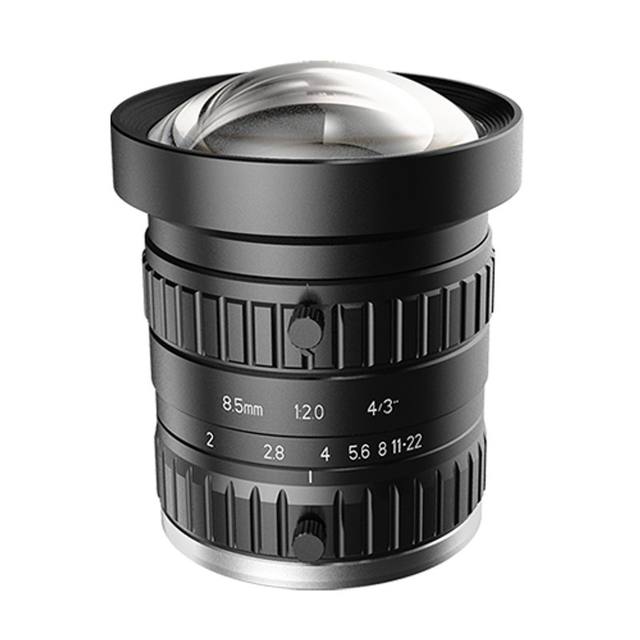
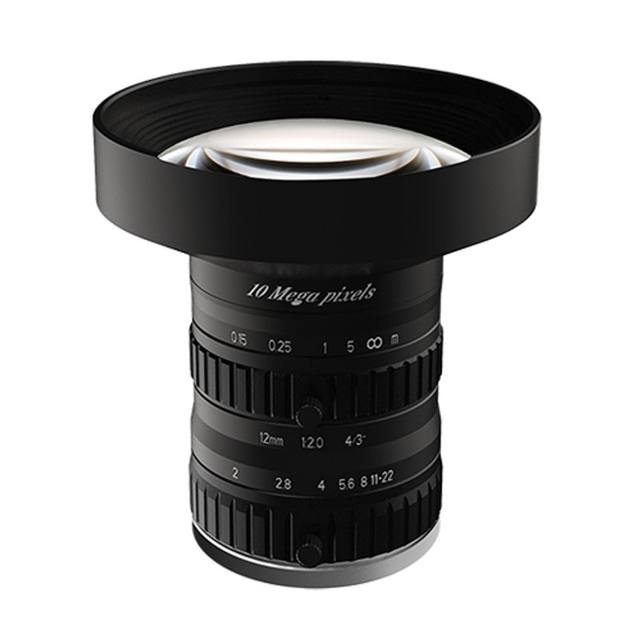
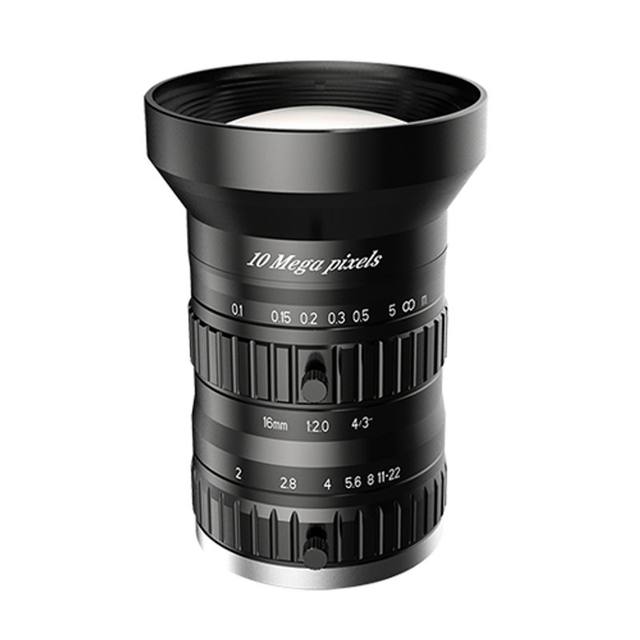
Lens image-circle coverage: the 1.2-inch sensor format (approximately 17.6 mm diagonal) exceeds what lenses rated for 1.1-inch or smaller formats can cover cleanly. Specify lenses explicitly rated for 1.2-inch or larger to avoid vignetting at the corners of the full 5320 × 4600 array.
Frame-grabber lane allocation: sustaining 106 fps at 24.5 MP requires four active CXP-12 lanes. Confirm the frame grabber has four dedicated CXP-12 ports (or two dual-port cards) per camera, and verify that the frame grabber's PoCXP output per port meets the camera's 8.2 W draw if not cabling with an external supply.
Illumination triggering: global shutter cameras require illumination that is stable for the full integration window. Strobe-mode LED controllers synchronised to the camera trigger output avoid the partial-frame brightness gradients that can otherwise appear with high-current flash at 106 fps, particularly when running in continuous free-run mode at speed.
Monochrome vs. color selection: the LBS monochrome variant delivers higher effective sensitivity and is the correct choice whenever defect contrast, dimensional measurement, or code reading drives the application. Reserve the LCS color variant for tasks where distinguishing hue — for example, identifying pill color or verifying label artwork color fidelity — is a genuine inspection requirement, as the Bayer mask reduces effective spatial resolution and per-pixel SNR.
Thermal management: the 8.2 W dissipation within a 55 × 55 mm body will raise housing temperature in still air; installations near the upper operating limit of 40 °C ambient should provide forced-air cooling or a heatsink bracket to maintain sensor temperature stability over long production runs.
Specifications: General
Brand
Omron / Sentech
Camera type
Area Scan
Specifications: Sensor
Resolution
24.5 MP
Horizontal resolution
5320 px (H) × 4600 px (V)
Mono / color
Mono (LBS) / Color (LCS)
Sensor manufacturer
Sony Pregius S
Sensor model
Sony IMX530
Shutter
Global Shutter
Sensor size
1.2 inch
Pixel size
2.74 µm × 2.74 µm
Specifications: Performance
FPS
106 fps (max, full resolution)
Specifications: Interface
Interface
CoaXPress CXP-12 (4-lane)
Protocols
CoaXPress Standard Version 2.0
Specifications: Optics
Mount
C-Mount
Specifications: Electrical
Power
PoCXP or External +18.5 to +26 Vdc
Power consumption
8.2 W
Specifications: Environment
Operating temperature
0 to +40 °C
Specifications: Mechanical
Dimensions
55 × 55 × 46.5 mm
Weight
220 g
Applications this camera is commonly selected for. Open one to see the full recommended hardware and approach.
These steps take an Omron Sentech (STC) camera from the box to a stable first image and on to your own application. They apply across the GigE Vision, USB3 Vision and CoaXPress STC families; the interface only changes how you cable and power the camera.
Download and install the Sentech SDK on the host PC. The package provides StViewer, the viewing and configuration software you use to bring the camera up, and StApi, the programming SDK you integrate later. Because the cameras are GenICam/GenTL-compliant, StApi also registers a GenTL producer, so any GenICam-compliant third-party vision software can discover and drive the camera as an alternative front end.
2. Cable, power and connect the camera
Connect according to the interface. GigE Vision: link to a Gigabit NIC (use PoE or the separate power input) and put the camera and host on the same subnet; for USB3 Vision use a USB 3.x port and a certified cable; for CoaXPress (STC) connect to a CoaXPress frame grabber, which also supplies Power-over-Coax. Then open StViewer and let it enumerate the camera. If a GigE camera does not appear, check the IP configuration and firewall, and on USB3 confirm the host bandwidth and driver.
3. Configure exposure, gain and white balance
Open the device in StViewer and start a live stream. Set exposure and gain for a well-exposed, low-noise image: raise exposure first and only add gain when more light or a faster shutter is not an option, keeping exposure short enough to freeze motion on global-shutter models. On colour cameras, run white balance under your actual production lighting. Adjust the lens aperture and focus on a representative target before tuning anything else.
4. Set the trigger and grab a first image
Start in free-run (continuous) acquisition to confirm a clean, stable image. For inline inspection switch to hardware or software triggering: select the trigger source, set the active edge and any delay, and wire the strobe or illumination to the camera's I/O so lighting fires with each exposure. Acquire and save a frame in StViewer; this saved image is your reference for the SDK stage and for downstream inspection.
5. Move to the StApi SDK (or any GenICam software)
Once the image is stable, reproduce the same settings in code. Use StApi to open the device, apply the GenICam features you validated in StViewer (exposure, gain, trigger, pixel format) and grab frames into your application via the bundled C++, C, C#/.NET or Python interfaces; the included samples are the fastest starting point. Prefer a different stack? The same GenICam/GenTL camera works with third-party vision libraries. With a reliable feed, you can route it into a deep-learning inspection such as Rosepetal for AI-based defect detection.
Frequently asked questions
The camera achieves 106 fps at the full 5320 × 4600 resolution. Reducing the active vertical height via ROI lowers the data volume per frame, allowing higher frame rates — the exact figure depends on the ROI dimensions and the frame-grabber configuration. Check Omron/Sentech's published ROI fps tables for precise numbers at your required window size.
Yes. The camera supports Power-over-CoaXPress (PoCXP), so the frame grabber can supply power through the coax lanes provided its PoCXP output per port meets the camera's requirement. The camera consumes 8.2 W or less; verify that each active CXP-12 port on your frame grabber can source sufficient current, and account for cable losses on longer runs.
Global shutter eliminates the geometric distortion (skew, wobble) caused by rolling readout, but motion blur during the integration period is still possible if the shutter is open while the target moves. To freeze motion at full speed you must keep integration time short — typically achieved by using a high-intensity strobe illuminator triggered to the camera exposure window rather than continuous lighting.
The camera uses a standard C-mount. However, the 1.2-inch optical format is larger than the more common 1-inch and 2/3-inch formats, so you must select a C-mount lens whose specified image circle covers at least the 1.2-inch format (approximately 17.6 mm diagonal). Using a lens rated only for a smaller format will produce visible corner shading across the full 5320 × 4600 pixel array.
The monochrome LBS variant is the better choice for code reading on metal. It delivers higher per-pixel sensitivity and full spatial resolution without the Bayer interpolation overhead of the color variant, resulting in sharper contrast at the mark boundaries. Pair it with an illumination wavelength that maximises the reflectance differential between the marked and unmarked metal surface — typically red or near-IR for anodised aluminium, or diffuse axial lighting for low-contrast dot-peen marks.