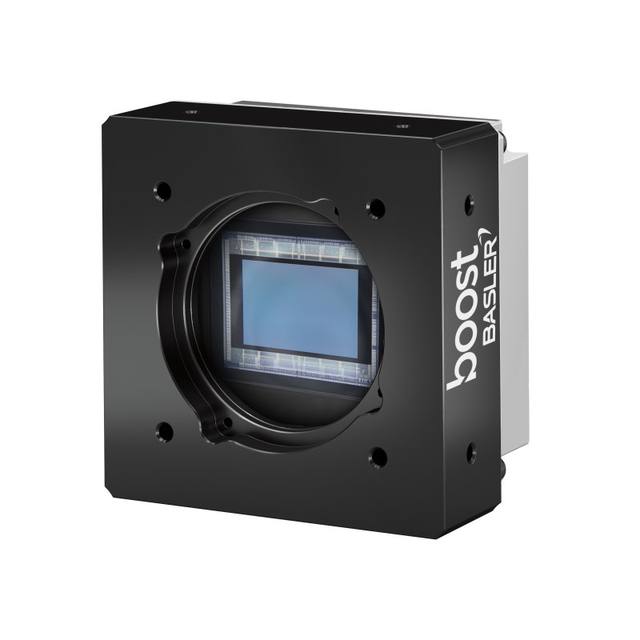
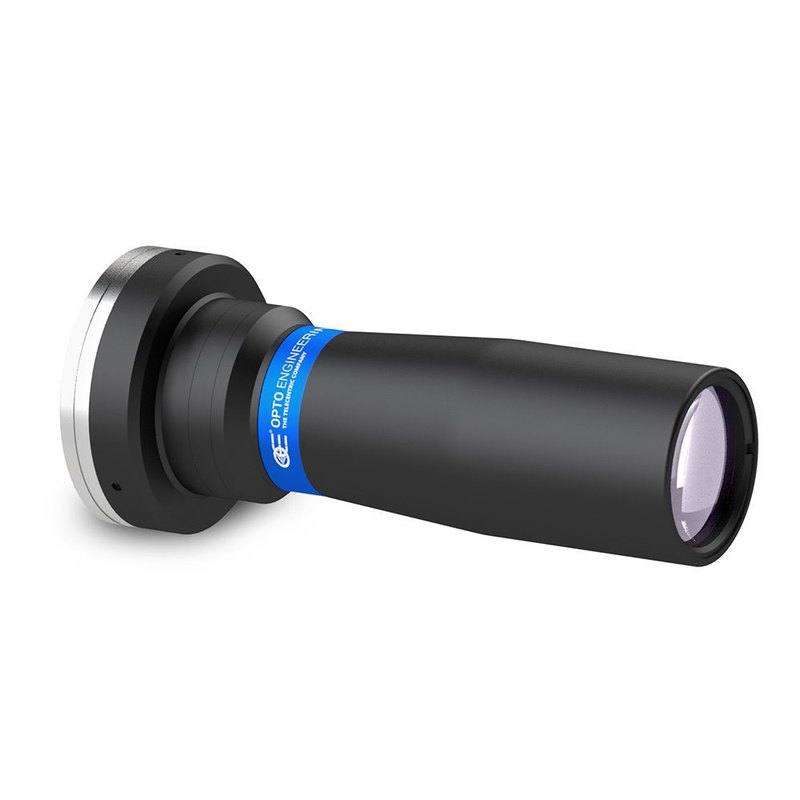
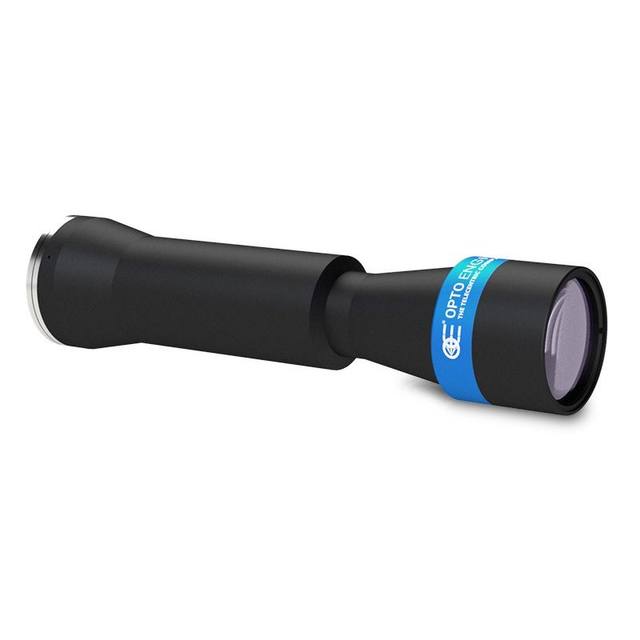
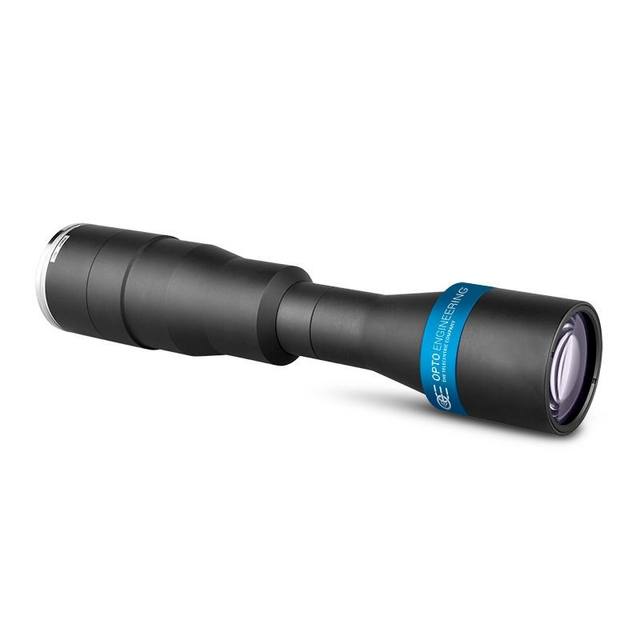
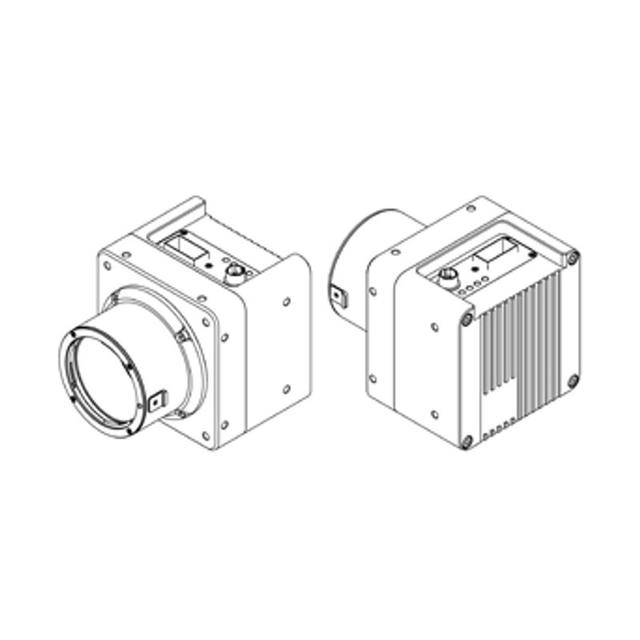
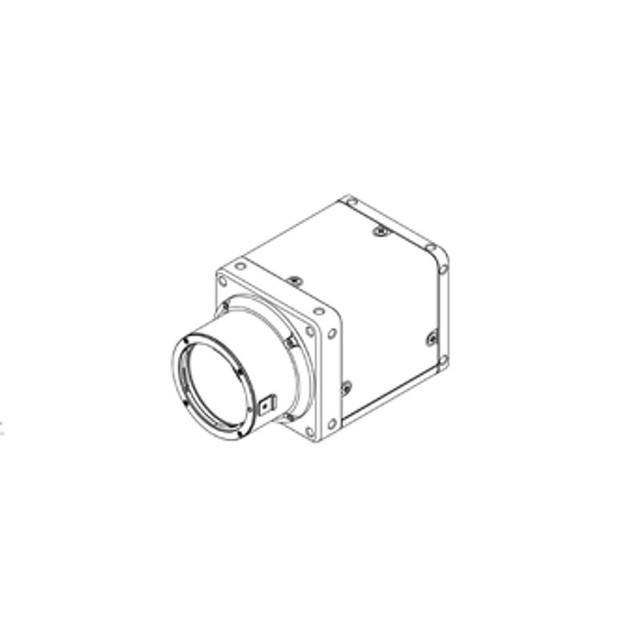
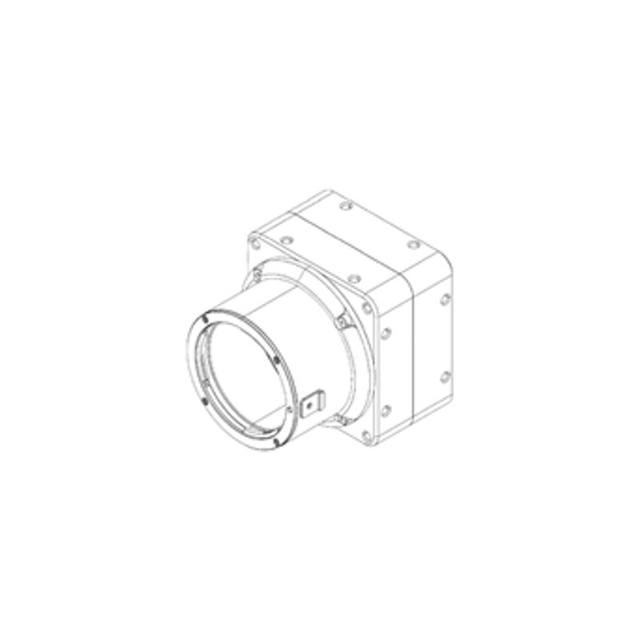
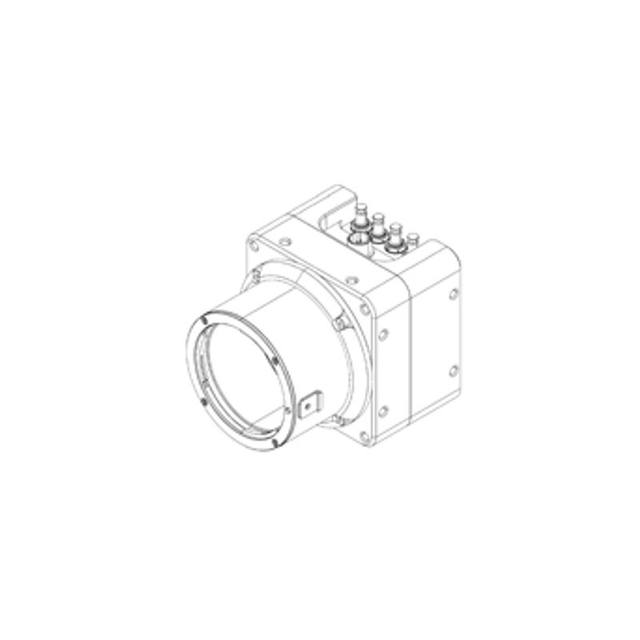
The Opto Engineering TC10M024-F is a high resolution telecentric lens for APS-C sensors, with 0.888× magnification, a 67.2 mm working distance and an image circle of Ø 28.0 mm labelled max sensor APS-C. At 0.888× the object field is somewhat larger than the sensor, so the lens images a wider area of the part with an APS-C camera. The TC10M series is described as covering sensors up to APS-C and 4k line scan cameras.
The listed distortion is <0.06 (0.10) % typ. (max) and the listed telecentricity is <0.07 (0.10) deg typ. (max). In gauging, distortion governs how faithfully the image geometry matches the object across the field, while telecentricity governs how much magnification shifts as the object moves in depth. The working f-number of wF/# 11 generally gives less depth of field than higher f-numbers, but it lets more light reach the sensor.
The F-mount connects the lens to F-mount camera bodies. At a 67.2 mm working distance, lighting and mechanical clearance around the lens need to be planned for that spacing. Confirm that the camera sensor is APS-C or smaller so that it sits within the Ø 28.0 mm image circle.
Best for
High resolution gauging of parts with an APS-C camera at 0.888×.
Measurement applications where the listed distortion and telecentricity figures form part of the accuracy budget.
Imaging a wider field at 0.888× with an APS-C sensor and a 67.2 mm working distance.
Imaging with 4k line scan cameras, which the TC10M series description lists alongside APS-C sensors.
Selection notes
Confirm the camera sensor is APS-C or smaller within the Ø 28.0 mm image circle.
Match the F-mount on the camera body before ordering.
Fix the object plane at 67.2 mm and plan the lighting for wF/# 11 at that distance.
Include the listed distortion <0.06 (0.10) % typ. (max) and telecentricity <0.07 (0.10) deg typ. (max) in any gauging uncertainty calculation.
Specifications: General
Brand
Opto Engineering
Specifications: Optical
Lens mount
F-mount
Image circle / max sensor
Ø 28.0 mm (max sensor APS-C)
Magnification
0.888×
Working distance
67.2 mm
Telecentric
Yes
Applications this product is commonly selected for. Open one to see the full recommended hardware and approach.
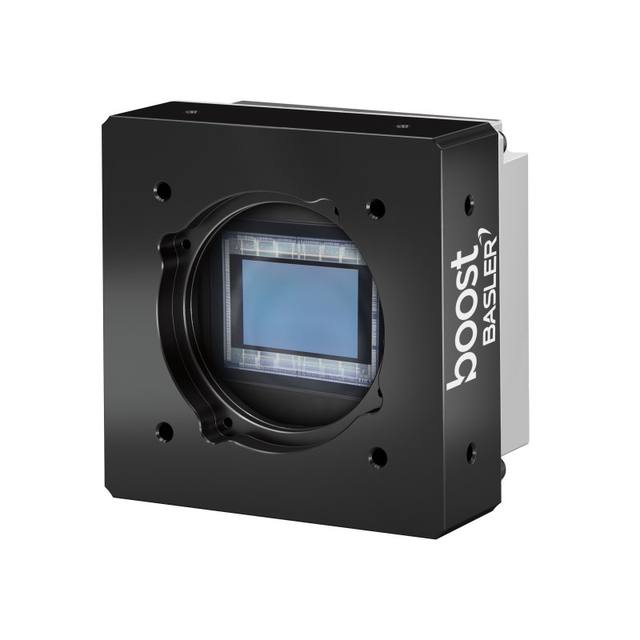
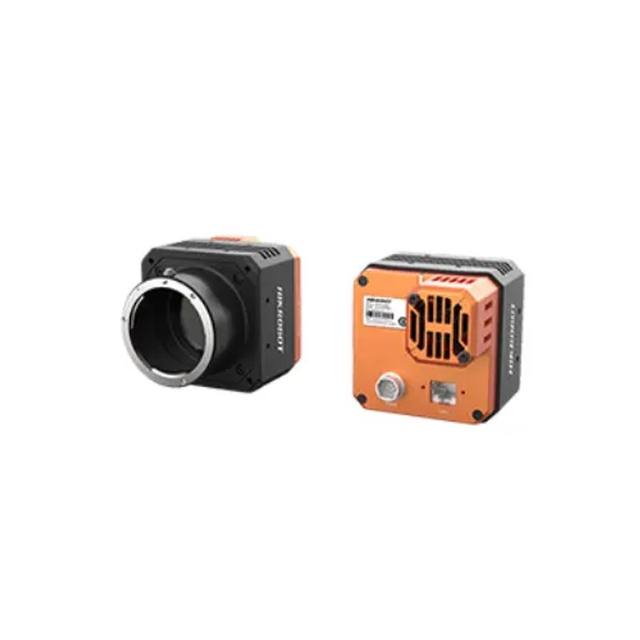
Matched automatically by: camera mount fits the lens mount · camera sensor is covered by the lens image circle — this lens: F-mount · Ø 28.0 mm (max sensor APS-C) image circle.
By category
All 17High-resolution cameras 8High-speed cameras 6Area scan cameras 3
By brand
All 17Omron / Sentech 11Basler 3Hikrobot 2iRAYPLE 1