A 704 × 540 px sensor with 6.9 µm pixels is 704 × 6.9 µm ≈ 4.86 mm wide. With the 6.72 mm lens, a rough thin-lens estimate at an example distance of 80 mm gives a field width of 4.86 × (80 − 6.72) ÷ 6.72 ≈ 53 mm, or 0.075 mm per pixel across 704 px, so a 10 mil (0.254 mm) module spans about 3.4 px. At the 40 mm near limit the field is only 4.86 × (40 − 6.72) ÷ 6.72 ≈ 24 mm wide, so the label has to fit inside that width.
Its 6.9 µm pixels are large next to the 2.7 µm pixels of the MV-ID2013EMI-03N and MV-ID2013EMI-05, which typically means more signal per pixel at the same light, so exposures can stay short. The global shutter matters on moving parts: at an example 0.5 m/s, a 100 µs exposure smears 0.5 m/s × 100 µs = 0.05 mm, about 0.7 px at 0.075 mm per pixel. It decodes up to 38 codes/s and works with Hikrobot's IDMVS client software.
Best for
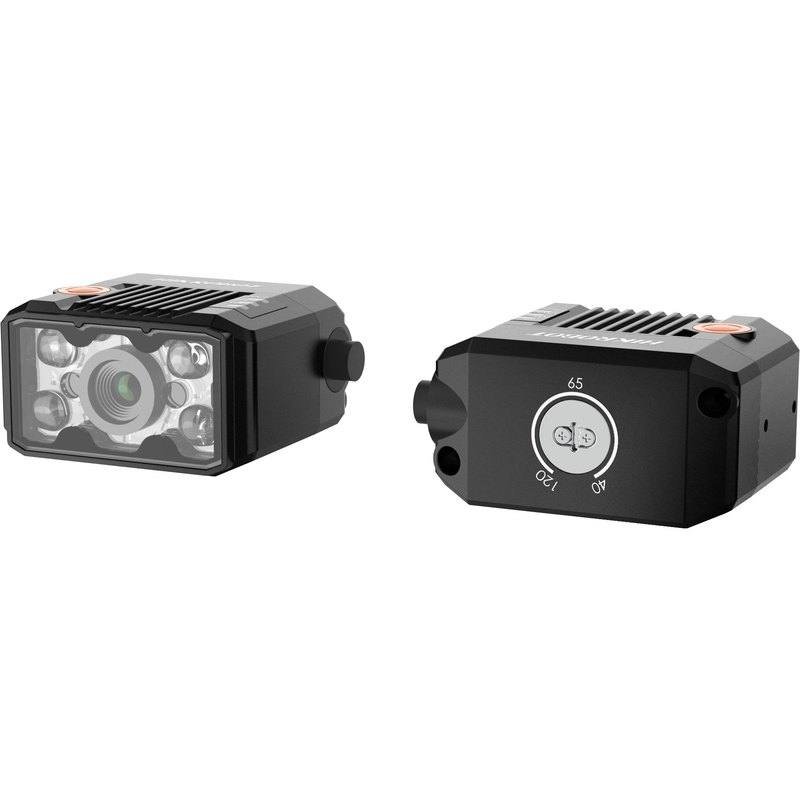
Small-part cells where the reader sits 40–120 mm from QR or Data Matrix labels and the built-in white light gives enough contrast.
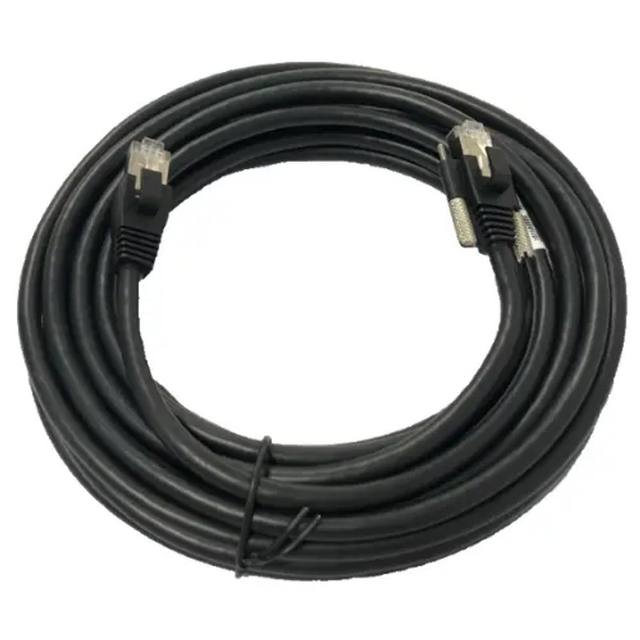
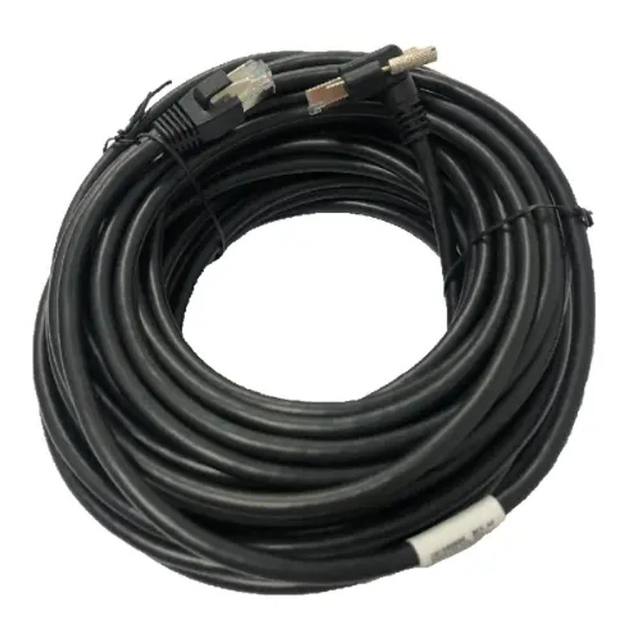
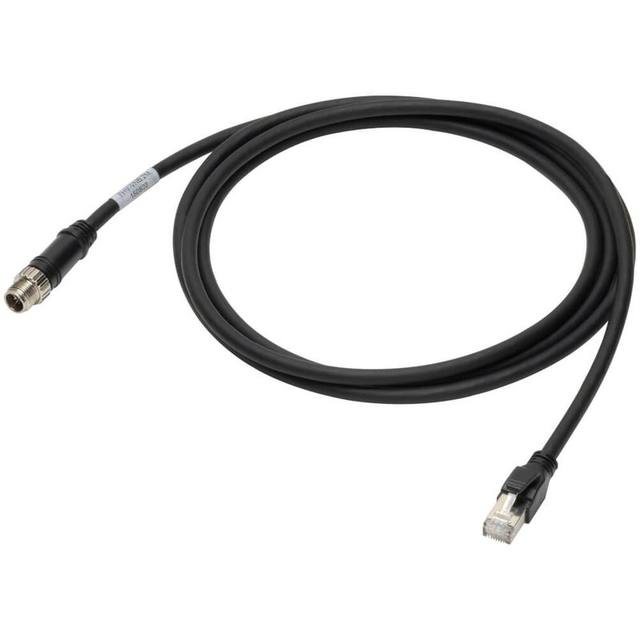
USB-hosted stations: one USB 3.0 cable carries data and 5 V power, so there is no separate supply to wire as long as the port can supply the peak current.
Bright surroundings: it is rated for 0–50,000 lux of ambient light, five times the 10,000 lux of the MV-ID2013EMI-03N and MV-ID2013EMI-05.
Selection notes
The 2D codes supported are QR Code and Data Matrix; if you also need Micro QR, Aztec, Han Xin or PDF417, the MV-ID2013EMI-05 supports them.
Average draw is 3 W and peak 5 W; at 5 V the peak is 5 ÷ 5 = 1 A, above the 900 mA a standard USB 3.0 port typically supplies, so use a port or powered hub that can deliver it.
A button on the side triggers a read by hand. If the cell needs opto-isolated trigger inputs and output lines for a PLC, the network versions MV-ID2013EMI-03N and MV-ID2013EMI-05 have two of each.
Camera Housing: Basler Camera housing ace 2 GigE, Basler Camera housing ace 2 USB / CXP / GMSL, Basler Camera housing ace USB, Basler Camera housing ace GigE