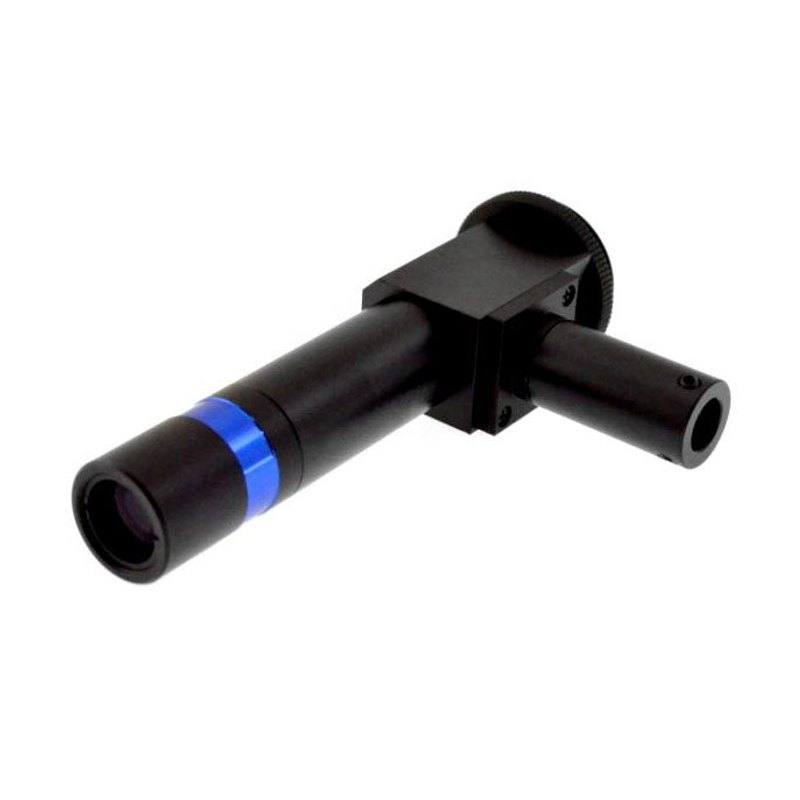
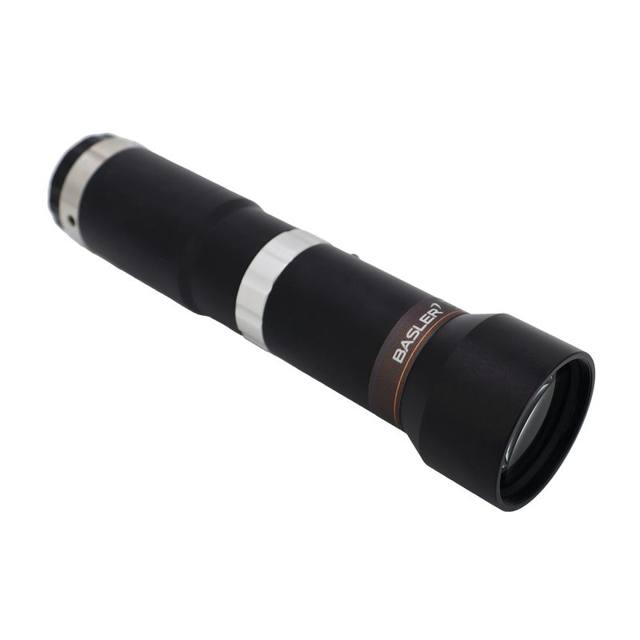
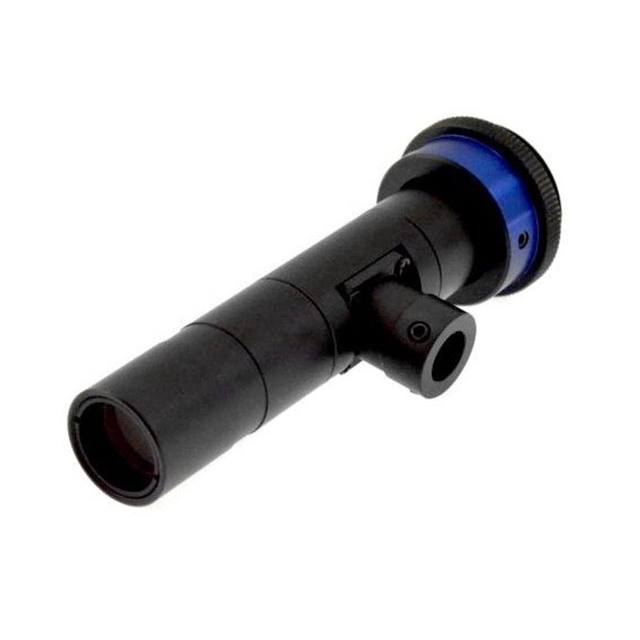
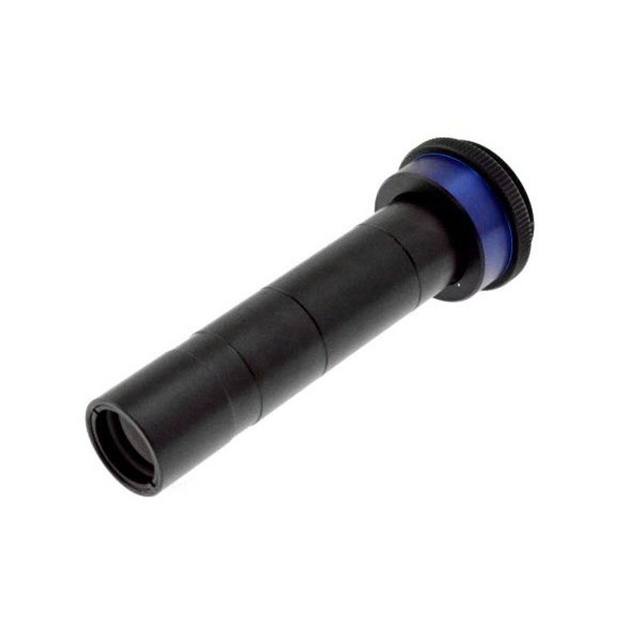
The Opto Engineering RT-HR-2F-71 is a 2.000× telecentric lens with built-in coaxial illumination and a 71.0 mm working distance. It is part of the TCCXHM series of high magnification coaxial telecentric lenses, designed for sensors up to 2/3″ with an Ø 11.0 mm image circle. It uses a C-mount and has a working f-number of wF/# 18.5.
At 2.000× the object is magnified twice, so the sensor covers a smaller part area and each sensor pixel samples a finer slice of it. The field of view is set by the sensor dimension divided by the magnification and is bounded by the Ø 11.0 mm image circle. Telecentric optics keep magnification steady across small object distance changes, which supports repeatable measurement of small features at this magnification.
The built-in coaxial illumination projects light along the optical axis, which suits flat or reflective surfaces that face the lens, where edges, scratches and surface marks become easier to see. The 71.0 mm working distance places the lens close to the part for compact cells. The wF/# 18.5 balances depth of field against the light reaching the sensor, so the built-in light and camera exposure should be considered together.
Best for
Dimensional measurement of small features at 2.000× within a 2/3″ sensor frame
Surface and edge inspection on flat, reflective parts with built-in coaxial light
Compact inspection cells where the lens sits 71.0 mm from the part
Repeatable gauging at higher magnification with telecentric optics
Selection notes
Use a C-mount camera with a sensor of 2/3″ or smaller to stay within the Ø 11.0 mm image circle.
Confirm the feature fits the 2.000× field, and keep the part at the 71.0 mm working distance with clearance planned around the lens and part.
Account for the built-in coaxial light when setting exposure, since wF/# 18.5 links depth of field with light throughput.
Confirm the coaxial illumination's trigger and I/O details in the manufacturer datasheet before wiring the cell.
Specifications: General
Brand
Opto Engineering
Specifications: Optical
Lens mount
C-mount
Image circle / max sensor
Ø 11.0 mm (max sensor 2/3″)
Magnification
2.000×
Working distance
71.0 mm
Telecentric
Yes
Applications this product is commonly selected for. Open one to see the full recommended hardware and approach.
Matched automatically by: camera mount fits the lens mount · camera sensor is covered by the lens image circle — this lens: C-mount · Ø 11.0 mm (max sensor 2/3″) image circle.