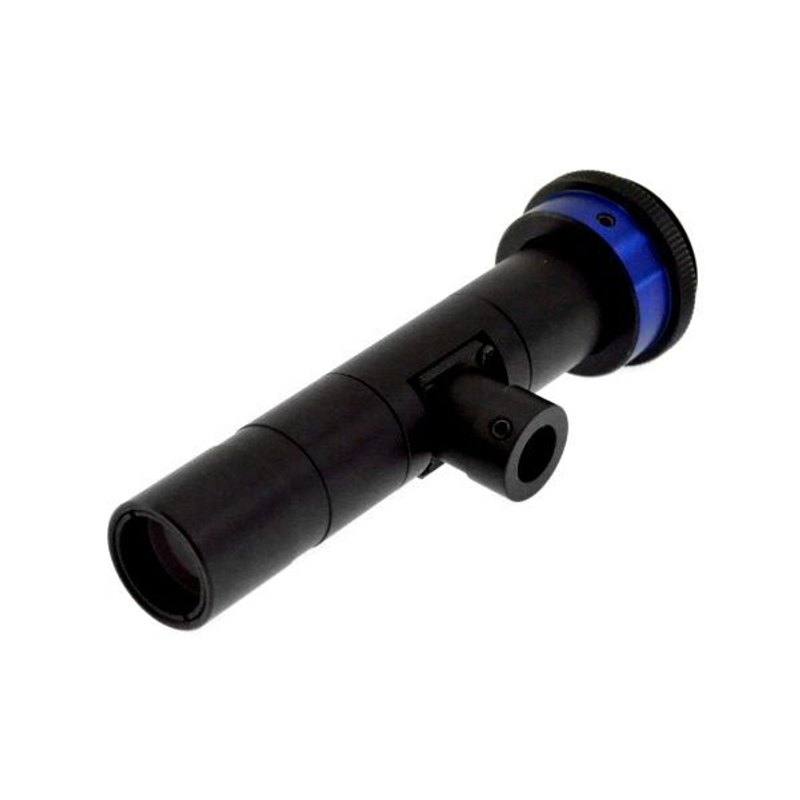
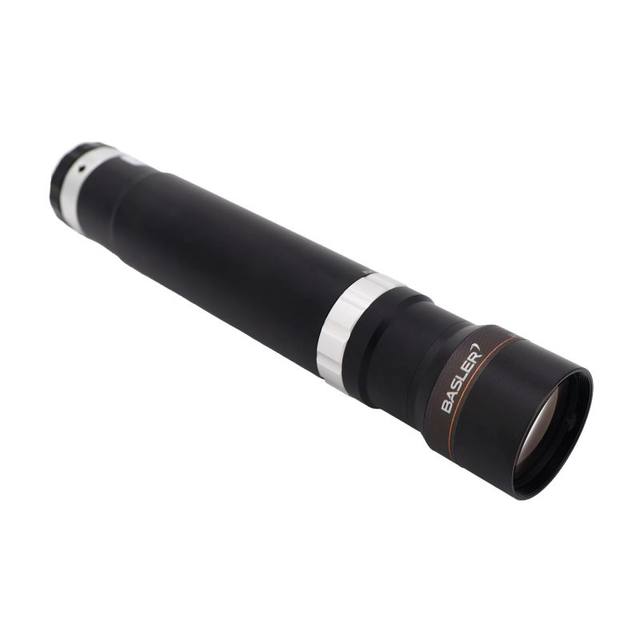
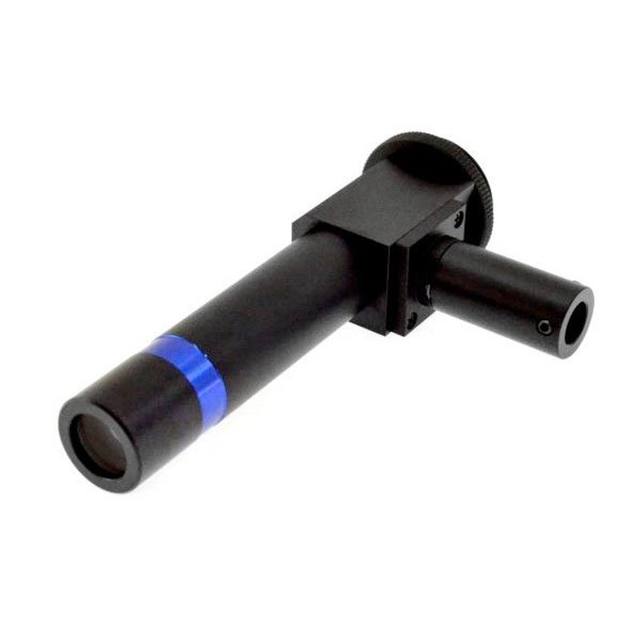
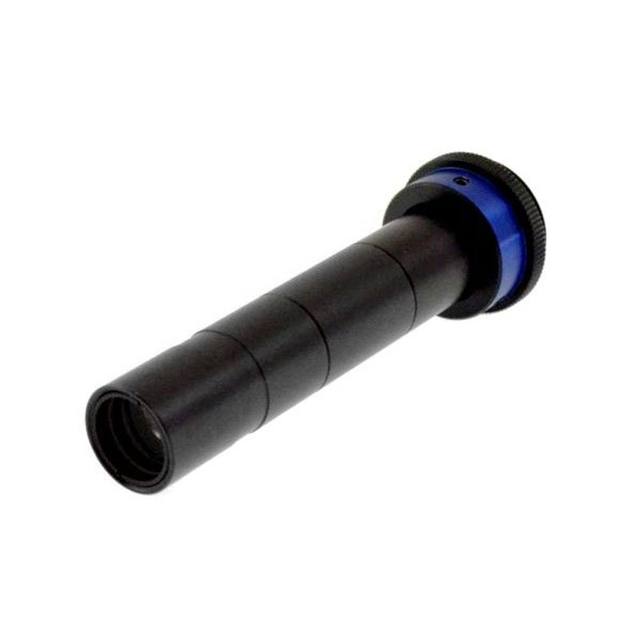
The Opto Engineering RT-HR-4F-110 is a 4.000× telecentric lens with built-in coaxial illumination, a 110.0 mm working distance and a C-mount. It belongs to the TCCXHM series of high magnification coaxial telecentric lenses for sensors up to 2/3″, with an Ø 11.0 mm image circle and a working f-number of wF/# 39.2.
At 4.000× the field of view is narrow: the sensor dimension divided by the magnification defines the region of the part that is imaged, so the sensor sees a small area of the part. This suits inspection of small features where fine detail on the part matters more than total coverage. Telecentricity keeps magnification steady as the object shifts slightly in depth, which is important at high magnification, where the measured scale has to stay repeatable.
The wF/# 39.2 is a high working f-number: it gives a deep depth of field but reduces the light reaching the sensor, so the built-in coaxial illumination and camera exposure should be set together. Coaxial light runs along the optical axis and lights the surfaces facing the lens, which can help reveal edges and surface marks on flat parts. The 110.0 mm working distance leaves room in front of the lens for fixtures and guards.
Best for
Fine inspection of small features at 4.000× using built-in coaxial light
Inspection that needs a deep depth of field at high magnification (wF/# 39.2)
Edge and surface-mark inspection on small flat, reflective parts
Inspection cells that need a 110.0 mm working distance for fixtures and guards
Selection notes
Use a C-mount camera whose sensor is 2/3″ or smaller so the sensor stays within the Ø 11.0 mm image circle.
Confirm that the feature fits the narrow 4.000× field before fixing the camera and part positions.
Plan for less light at the sensor with wF/# 39.2, and set the coaxial light and camera exposure together.
Confirm the coaxial illumination's trigger and I/O details in the manufacturer datasheet before wiring the cell.
Specifications: General
Brand
Opto Engineering
Specifications: Optical
Lens mount
C-mount
Image circle / max sensor
Ø 11.0 mm (max sensor 2/3″)
Magnification
4.000×
Working distance
110.0 mm
Telecentric
Yes
Applications this product is commonly selected for. Open one to see the full recommended hardware and approach.
Matched automatically by: camera mount fits the lens mount · camera sensor is covered by the lens image circle — this lens: C-mount · Ø 11.0 mm (max sensor 2/3″) image circle.