

- Rosepetal compatible
- Recommended by AIS Vision
On request
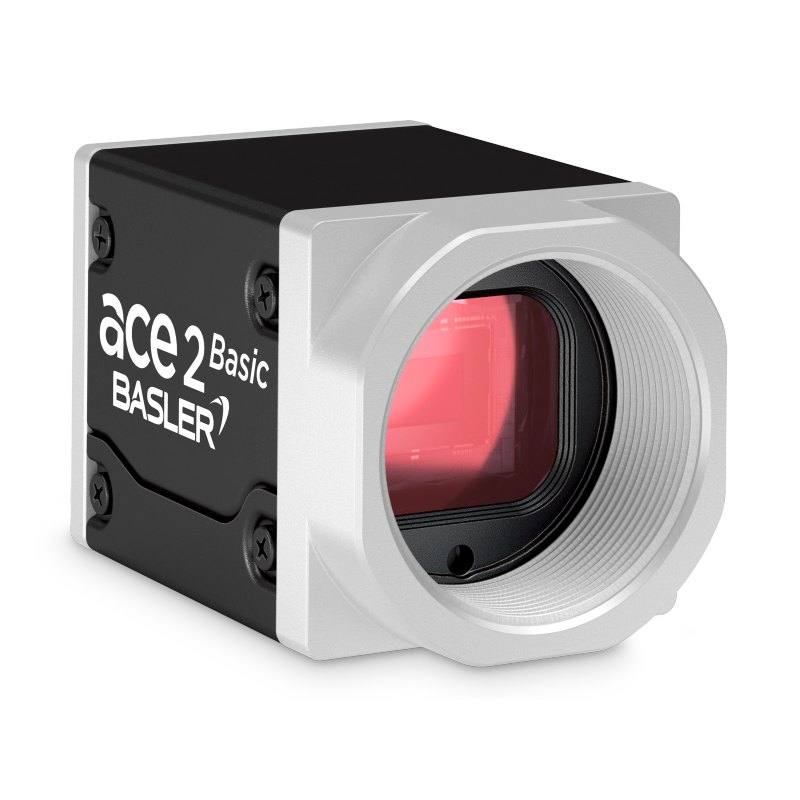
a2A2590-60uc
The Basler a2A2590-60ucBAS is a USB 3.0 (USB3 Vision) industrial area scan camera in the ace 2 Basic line, built around a 1/2.8" Sony IMX334 progressive-scan CMOS color sensor with 2592 x 1944 resolution (5 MP) and 2.0 x 2.0 um pixels. It uses a rolling shutter and delivers up to roughly 60 fps in free-run, with selectable 8/10/12-bit pixel depth output over a USB 3.0 Micro-B interface. The camera is powered over USB (typ. ~2.9 W), uses a C-mount lens mount, weighs under 85 g, and carries an IP30 rating with an operating range of -10 to 60 C.
The Basler ace 2 a2A2590-60ucBAS is a 5 MP USB 3.0 area scan camera built around a 1/2.8" Sony IMX334 progressive-scan CMOS color sensor. Its 2592 x 1944 native resolution gives an installer roughly 5 million pixels per frame, and because the sensor diagonal is only 6.53 mm with very small 2.0 x 2.0 um pixels, you get high spatial detail in a physically compact optical format. That density is the camera's main story: it lets you resolve fine features (print, surface texture, small codes) over a modest field of view without moving to a large, expensive sensor. The trade-off to plan for is light hunger and lens demand, since 2 um pixels collect comparatively few photons each and need optics that can actually resolve at that pitch.
| Brand | Basler |
|---|---|
| Camera type | Area scan |
| Resolution | 5 MP |
|---|---|
| Horizontal resolution | 2592 x 1944 px |
| Mono / color | Color |
| Sensor model | Sony IMX334 (1/2.8" CMOS) |
| Shutter | Rolling shutter |
| Sensor size | 1/2.8" (6.53 mm diagonal) |
| Pixel size | 2.0 x 2.0 um |
| FPS | up to ~60 fps |
|---|
| Interface | USB 3.0 (USB3 Vision, 5 Gbit/s) |
|---|---|
| Protocols | USB3 Vision v1.0, GenICam |
| Mount | C-mount |
|---|
| Power | Power over USB (5 VDC, ~2.9 W) |
|---|---|
| Power consumption | 2.9 W |
| Operating temperature | -10 to 60 C |
|---|
| Dimensions | 48.1 x 29 x 29 mm |
|---|---|
| Weight | 85 g |
A practical, application-first method for selecting an industrial camera: derive resolution from field of view and smallest detail, then match shutter, speed, interface, lens and lighting.
How global and rolling shutters differ, why rolling shutter distorts moving objects, and when each is the right choice for industrial inspection.
A practical decision guide to the three dominant machine-vision interfaces: bandwidth, cable length, multi-camera support, PoE, latency, frame grabber needs and cost.

Rosepetal · AI
Validate your visual inspection with AI: send us sample images and we evaluate the case on your hardware.
AIS Vision · Integration
AIS Vision defines and tests the optimal combination of camera, optics and lighting for your application before you buy.










