Skip to content
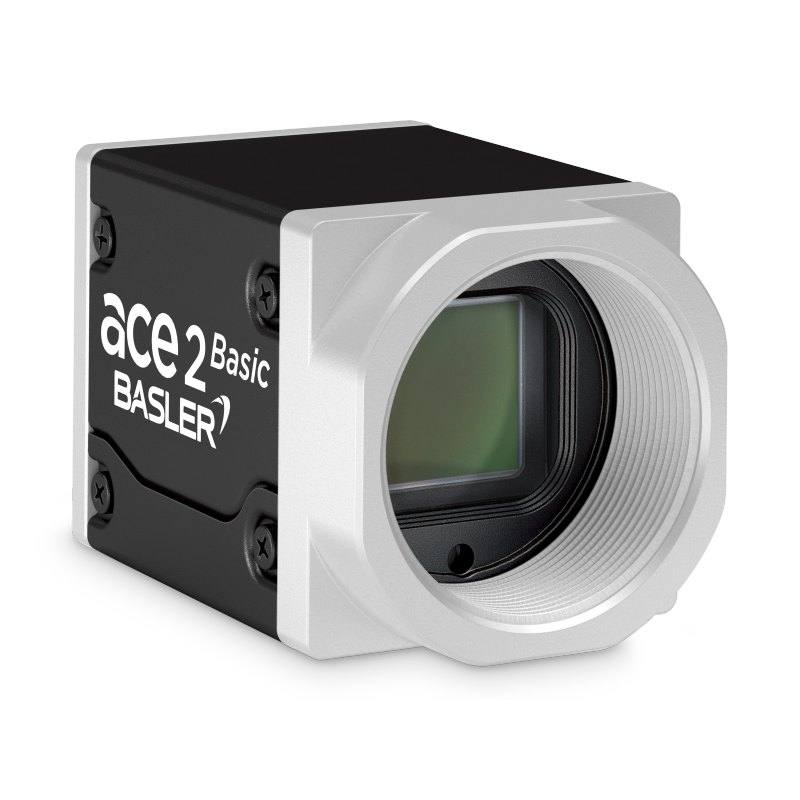
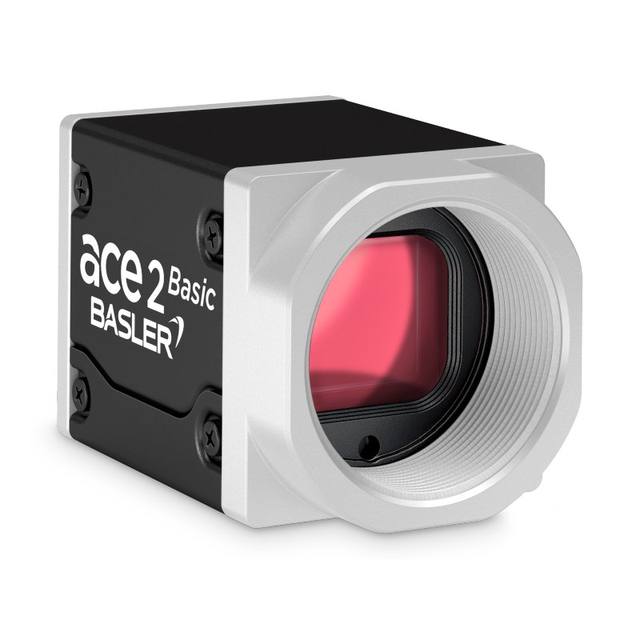
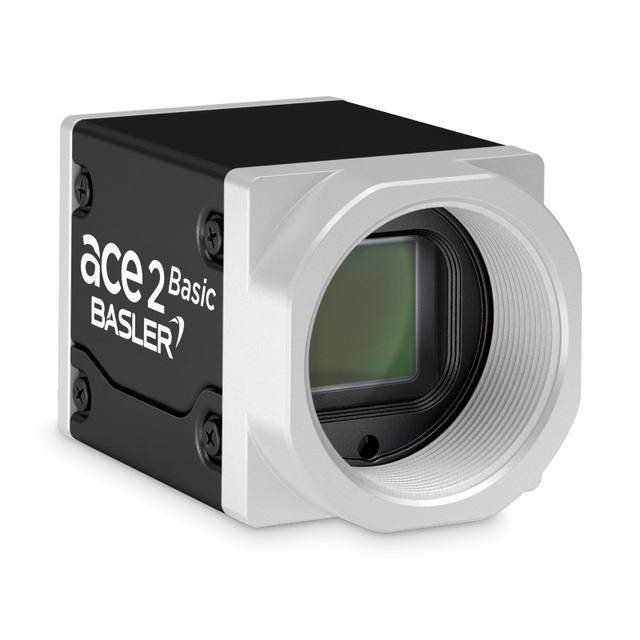
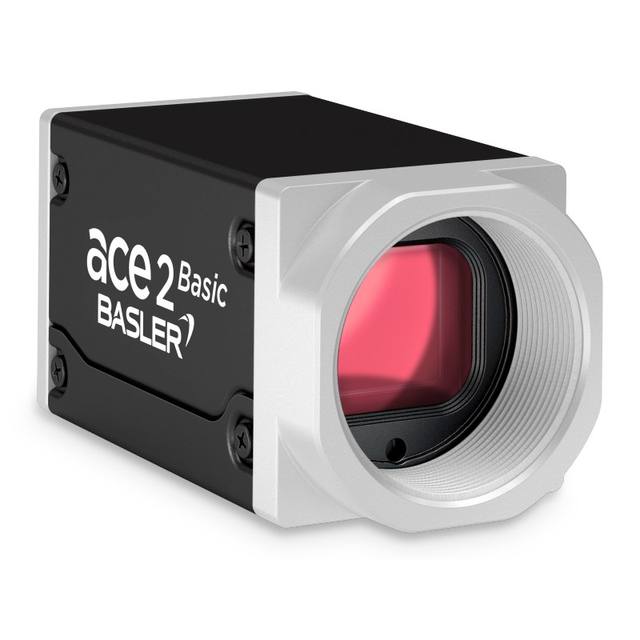
Basler a2A5060-15um machine vision camera
  • Rosepetal compatible
  • Recommended by AIS Vision

Basler ace 2 R a2A5060-15umBAS

a2A5060-15um

The Basler a2A5060-15umBAS is part of the ace 2 R (high-megapixel) series and uses the 25 MP E2525A 1.1" progressive scan CMOS sensor with a global shutter and 2.5 x 2.5 µm pixels (5060 x 5060 active resolution). It connects over USB 3.0 (SuperSpeed, 5 Gbit/s) using a Micro-B connector and reaches about 15 fps at full resolution. The camera is monochrome (visible light), uses a C-mount, and complies with the USB3 Vision and GenICam standards. It is powered via the USB 3.0 port (~3.5 W typical) or the 12-24 VDC I/O connector, and supports 8/10/12-bit output.

Brand
Basler
Camera type
Area scan
Interface
USB 3.0 (SuperSpeed, 5 Gbit/s)
Resolution
25.6 MP (datasheet); 25 MP marketing rounding acceptable
Horizontal resolution
5064 x 5064 px (default); 5068 x 5068 px (full sensor)
Mono / color
Monochrome
Sensor manufacturer
Gpixel (E2525A)
Sensor model
Gpixel E2525A, progressive scan CMOS
Shutter
Global shutter
FPS
15 fps (≈14.1 fps default)
Mount
C-mount
Sensor size
1.1" (12.65 x 12.65 mm, square)

Technical overview

The Basler ace 2 R a2A5060-15umBAS is a 25 MP monochrome area scan camera built around the Gpixel E2525A 1.1" progressive scan CMOS sensor. With a 5064 x 5064 px square active resolution on a 12.65 x 12.65 mm sensor and 2.5 x 2.5 um pixels, it puts an enormous, geometrically balanced pixel grid in front of your optics. The square aspect ratio is unusual and genuinely useful: it lets you cover round wafers, square panels, flat parts and full pallets without orienting the camera around a wide-but-short frame, and it means horizontal and vertical sampling are identical. At 2.5 um, pixels are small, so resolving power per millimeter of field is high, but you should budget for that on the lighting side because small pixels collect less light per exposure than large ones.

The defining feature for motion is the global shutter. Every pixel starts and stops integrating at the same instant, so parts moving on a conveyor, indexing under the lens, or vibrating on a stage are captured without the skew and smear that a rolling shutter introduces. Paired with the 25 MP resolution that makes this camera a natural fit for high-resolution inspection where the object is in motion or where a flash strobe must freeze it. Throughput is the trade-off you accept for the pixel count: full-frame readout runs at about 15 fps (roughly 14.1 fps in the default mode). That is a measurement-grade frame rate, not a high-speed one, so it suits indexed or moderate-speed line work; if you need faster cycles you typically window the sensor to a region of interest, which raises the effective frame rate at reduced resolution. Output supports 8/10/12-bit depth, so for fine grayscale gradients (subtle surface defects, low-contrast print) you can step up to 12-bit and give your algorithms more tonal headroom.

Connectivity is USB 3.0 (SuperSpeed, 5 Gbit/s) over a Micro-B connector, compliant with USB3 Vision and GenICam, which makes the camera plug-and-play with standard machine-vision SDKs and most third-party software. USB3 keeps cabling and host cost low for a single camera at the bench or in a fixed cell, with the practical caveat that USB3 runs are short (a few meters of high-quality cable) compared to GigE; for long cable runs or many-camera setups, plan the host topology accordingly. The camera is C-mount and 36.3 x 29 x 29 mm at 85 g, so it drops into compact fixtures, but a 1.1" sensor demands a lens with an image circle large enough to cover it and resolving power matched to 2.5 um pixels, otherwise corner sharpness and MTF will limit the resolution you paid for. It is powered from the USB port at about 3.5 W typical, or alternatively from the 12-24 VDC I/O connector, which also carries the trigger and strobe lines you will use to synchronize external lighting. IP30 rating and a -10 to 50 C operating range place it firmly as an enclosure or cabinet camera rather than a washdown device.

Best for

  • High-resolution surface and defect inspection on electronics, semiconductor wafers and printed media, where 25 MP across a square field captures fine flaws in a single grab
  • Dimensional measurement and metrology of flat or panel-like parts, exploiting the global shutter and identical horizontal/vertical sampling for distortion-free gauging
  • Inline OCR/OCV and verification of 1D/2D codes where small text or fine code modules must be resolved at moderate, indexed cycle rates
  • Imaging parts in motion on a conveyor or index table, using the global shutter with a strobed light triggered through the 12-24 VDC I/O connector to freeze the frame
  • Compact, single-camera benchtop or fixed-cell vision stations where USB3 Vision keeps integration simple and host cost low

Selection notes

  • Budget your light: 2.5 um pixels and 25 MP mean low light per pixel, so plan bright, well-controlled illumination (often strobed) and expect to use the 12-24 VDC I/O for trigger and strobe synchronization rather than relying on ambient light
  • Match the lens to the sensor: a 1.1" (12.65 x 12.65 mm) format needs a lens with a sufficient image circle and resolving power for 2.5 um pixels, or corner MTF will cap real resolution below the 5064 x 5064 spec
  • Plan cable topology for USB 3.0: SuperSpeed over a Micro-B connector is ideal for one camera at short distance, but USB3 runs are limited compared with GigE, so verify cable length and host bandwidth for your layout
  • Frame rate is resolution-bound at about 15 fps full-frame; if your cycle time is tight, use a sensor region of interest to trade pixels for speed, or confirm 15 fps meets the indexed throughput you need
  • This is an IP30 camera rated -10 to 50 C, so it belongs in an enclosure or clean cabinet, not a washdown or harsh outdoor location; choose 8/10/12-bit output to match your contrast needs, stepping to 12-bit for low-contrast surface or print work

Specifications: General
BrandBasler
Camera typeArea scan

Specifications: Sensor
Resolution25.6 MP (datasheet); 25 MP marketing rounding acceptable
Horizontal resolution5064 x 5064 px (default); 5068 x 5068 px (full sensor)
Mono / colorMonochrome
Sensor manufacturerGpixel (E2525A)
Sensor modelGpixel E2525A, progressive scan CMOS
ShutterGlobal shutter
Sensor size1.1" (12.65 x 12.65 mm, square)
Pixel size2.5 x 2.5 µm

Specifications: Performance
FPS15 fps (≈14.1 fps default)

Specifications: Interface
InterfaceUSB 3.0 (SuperSpeed, 5 Gbit/s)
ProtocolsUSB3 Vision, GenICam

Specifications: Optics
MountC-mount

Specifications: Electrical
PowerUSB 3.0 port (~3.5 W) or 12-24 VDC I/O
Power consumption3.5 W

Specifications: Environment
IP ratingIP30
Operating temperature-10 to 50 °C

Specifications: Mechanical
Dimensions36.3 x 29 x 29 mm
Weight85 g

Frequently asked questions

Related technical guides

Rosepetal · AI

Test this camera with Rosepetal

Validate your visual inspection with AI: send us sample images and we evaluate the case on your hardware.

AIS Vision · Integration

We validate camera + lens + lighting

AIS Vision defines and tests the optimal combination of camera, optics and lighting for your application before you buy.