Skip to content
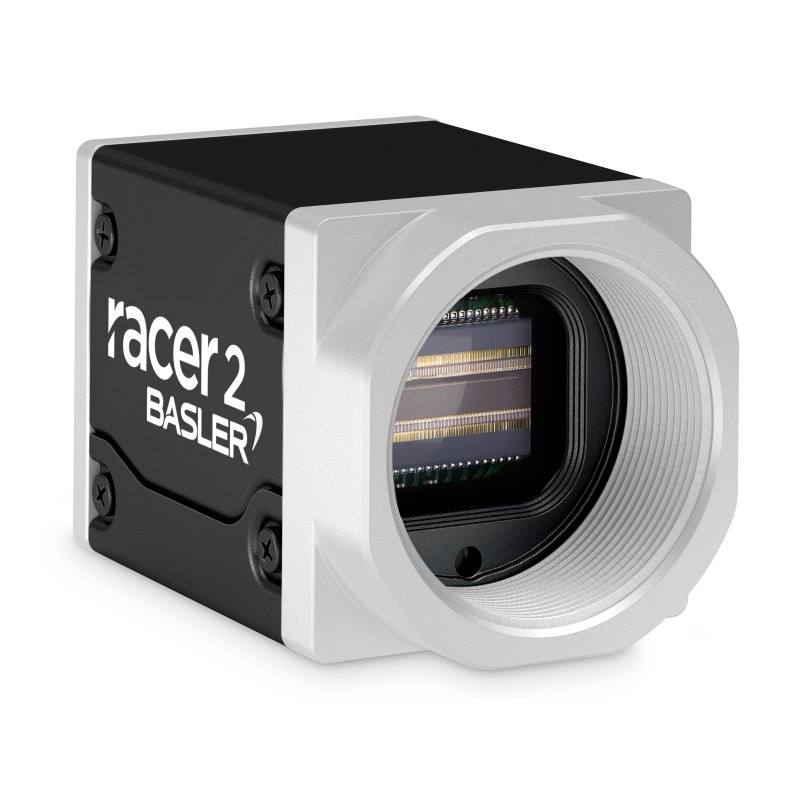
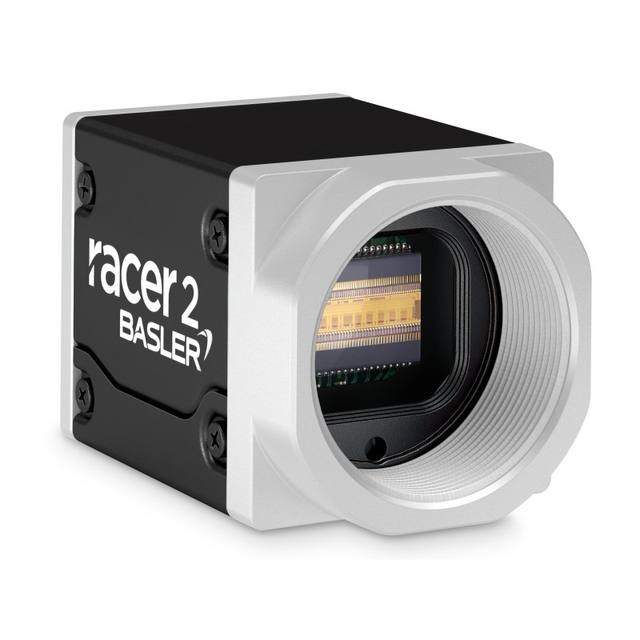
Basler r2L2048-62cc machine vision camera
  • Rosepetal compatible
  • Recommended by AIS Vision

Basler racer 2 r2L2048-62cc

r2L2048-62cc

The Basler racer 2 r2L2048-62cc is a member of the racer 2 S line scan family with a single CXP-12 CoaXPress 2.0 interface (2.5-12.5 Gbps) and Power over CoaXPress. It uses a GPixel GL3504 color trilinear CMOS sensor with 2048 pixels, 7 x 7 µm pixel pitch (14.34 mm sensor length), and 12-bit depth, reaching 62.7 kHz at 8-bit and 44.7 kHz at 12-bit. The camera has a C-mount, a compact 62.2 x 29 x 29 mm housing weighing under 85 g, draws about 3.6 W at 24 VDC, and is rated IP30 with GenICam compliance. It targets high-speed quality control such as battery foil, PCB, web, and surface inspection.

Brand
Basler
Camera type
Line scan
Interface
CoaXPress, 1x CXP-12 (2.5-12.5 Gbps)
Horizontal resolution
2048 px (2048 x 1)
Mono / color
Color (trilinear, no IR cut filter)
Sensor manufacturer
GPixel
Sensor model
GPixel GL3504 (color linear CMOS, 3 lines)
Shutter
Global shutter
Line rate
Up to 62.7 kHz (8-bit); 44.7 kHz (12-bit)
Mount
C-mount
Sensor size
14.34 mm (line length)
Pixel size
7 x 7 µm

Technical overview

The Basler racer 2 r2L2048-62cc is a color line scan camera, meaning it captures a single row of 2048 pixels at a time and builds a 2D image only as the part (or the camera) moves underneath it. The imaging core is a GPixel GL3504 trilinear CMOS sensor: three physical lines of pixels with a 7 x 7 micron pitch across a 14.34 mm sensor length, giving native color without a color mosaic or an IR cut filter. Because it is trilinear, the red, green, and blue lines are physically offset, so a stable, consistent transport speed and correct spatial-correction setup are essential to keep the three color planes registered. With 2048 pixels of useful width, the achievable across-web resolution is set entirely by your optics and working distance: at roughly 1:1 magnification the 14.34 mm sensor covers about a 14 mm field, while a wider field trades away spatial detail per pixel.

Speed is the headline trait here. The camera reaches up to 62.7 kHz line rate at 8-bit output and 44.7 kHz at 12-bit, fed out over a single CXP-12 CoaXPress 2.0 link running at 2.5 to 12.5 Gbps. That bandwidth is what makes continuous high-throughput inspection of moving material practical, and the higher 8-bit rate versus the 12-bit rate is a direct trade between maximum web speed and tonal/color depth. The interface also carries Power over CoaXPress, so a single coax cable handles data, control, and power to the camera, simplifying cabling on long runs to a frame grabber. The camera is GenICam compliant and speaks CoaXPress 2.0, so it integrates with standard CXP grabbers and machine-vision software stacks. Note the global shutter spec applies to exposure timing of each captured line; in line scan operation the real determinant of geometry is matching line rate to transport speed.

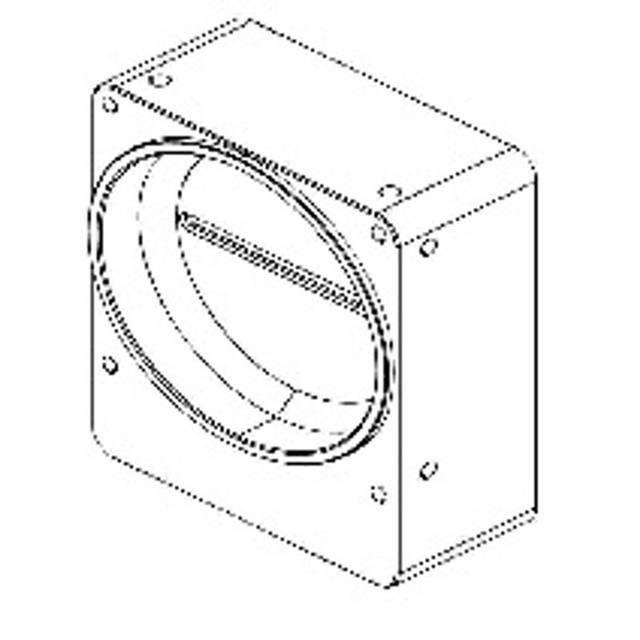
Physically the camera is built for tight integration: a 62.2 x 29 x 29 mm housing under 85 g, a C-mount lens interface, about 3.6 W draw at 24 VDC, an operating range of -10 to 50 C, and IP30 rating. The C-mount and 14.34 mm line length mean lens selection is straightforward with common machine-vision optics, but the lens must resolve the 7 micron pixel pitch across the full line and cover the sensor without vignetting at the edges. The IP30 rating indicates no protection against water or fine dust, so for foil, web, or surface lines in harsher environments you will want an enclosure or air purge. Lighting is the other half of any line scan design: a high-intensity, uniform line light (or bright-field bar) aligned precisely to the scanned row is required to expose each line correctly at these rates, and an encoder-driven line trigger keeps the image geometry locked to the material as speed varies.

Best for

  • High-speed surface and defect inspection of moving web material such as battery electrode foil and films
  • PCB and electronics surface inspection where fine, color-relevant defects must be caught at line speed
  • Continuous web inspection in printing and converting lines (coating, lamination, label stock)
  • Traceability and code/print-quality reading on continuously fed material
  • Semiconductor and roll-to-roll surface quality control requiring 2k color resolution at up to 62.7 kHz

Selection notes

  • This is a line scan, not area scan, camera: it needs relative motion between camera and part plus an encoder-based line trigger to build geometrically correct images; it is not suited to static or stop-and-go imaging.
  • It is a color trilinear sensor with no IR cut filter; the three offset color lines require correct spatial correction and stable transport speed for clean color registration, and an external IR-blocking filter may be needed under broadband illumination.
  • Plan around the bandwidth/depth trade: budget for full 62.7 kHz only at 8-bit; choosing 12-bit color depth caps the line rate at 44.7 kHz and therefore maximum web speed.
  • Designing in CXP-12 requires a matching CoaXPress 2.0 frame grabber and proper coax cabling; Power over CoaXPress lets one cable carry data, control, and power, but the grabber must supply PoCXP.
  • Specify a uniform, high-output line light precisely aligned to the scanned row and pair the C-mount with a lens that resolves the 7 micron pitch across the full 14.34 mm line; the IP30 rating means added protection is needed in dusty or wet lines, and keep ambient within -10 to 50 C.

Specifications: General
BrandBasler
Camera typeLine scan

Specifications: Sensor
Horizontal resolution2048 px (2048 x 1)
Mono / colorColor (trilinear, no IR cut filter)
Sensor manufacturerGPixel
Sensor modelGPixel GL3504 (color linear CMOS, 3 lines)
ShutterGlobal shutter
Sensor size14.34 mm (line length)
Pixel size7 x 7 µm

Specifications: Performance
Line rateUp to 62.7 kHz (8-bit); 44.7 kHz (12-bit)

Specifications: Interface
InterfaceCoaXPress, 1x CXP-12 (2.5-12.5 Gbps)
ProtocolsCoaXPress 2.0, GenICam

Specifications: Optics
MountC-mount

Specifications: Electrical
Powerpocxp
Power consumption3.6 W

Specifications: Environment
Operating temperature-10 to 50 °C

Specifications: Mechanical
Dimensions62.2 x 29 x 29 mm
Weight85 g

Frequently asked questions

Related technical guides

Rosepetal · AI

Test this camera with Rosepetal

Validate your visual inspection with AI: send us sample images and we evaluate the case on your hardware.

AIS Vision · Integration

We validate camera + lens + lighting

AIS Vision defines and tests the optimal combination of camera, optics and lighting for your application before you buy.