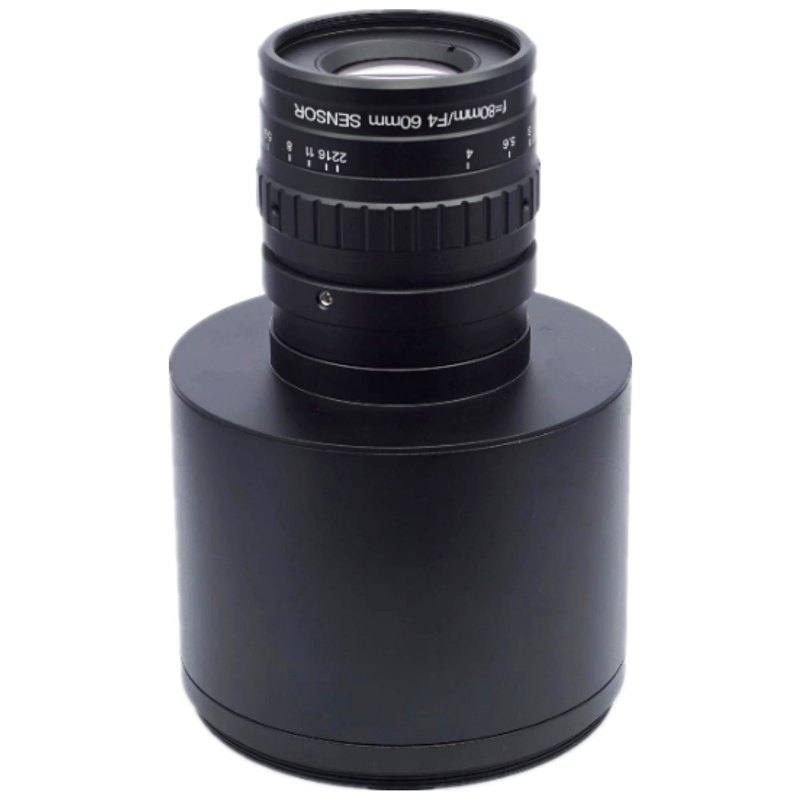
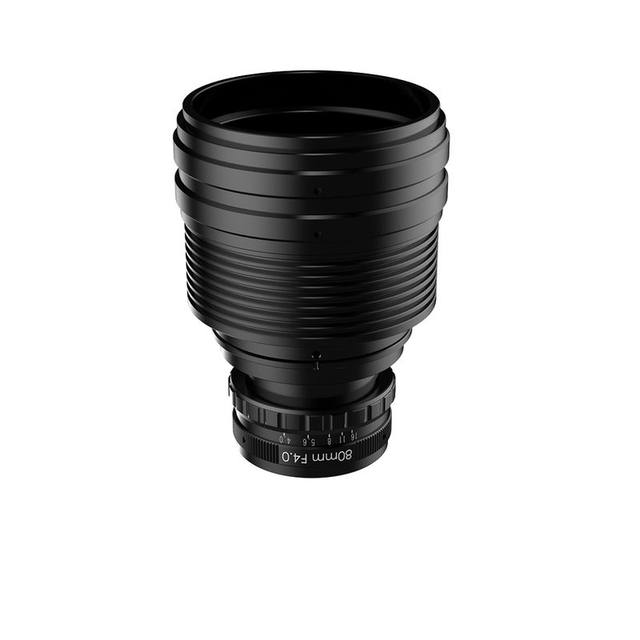
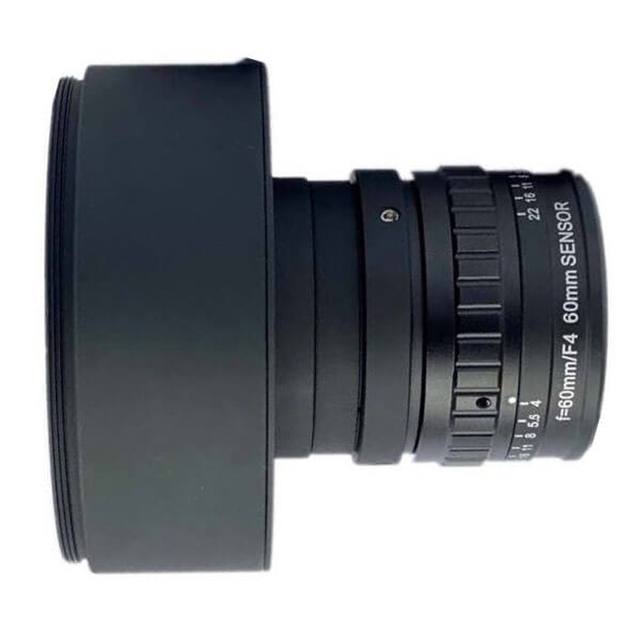
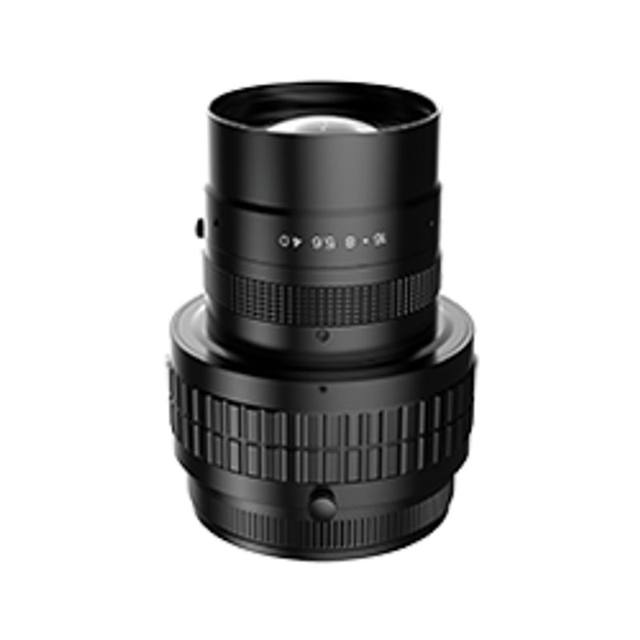
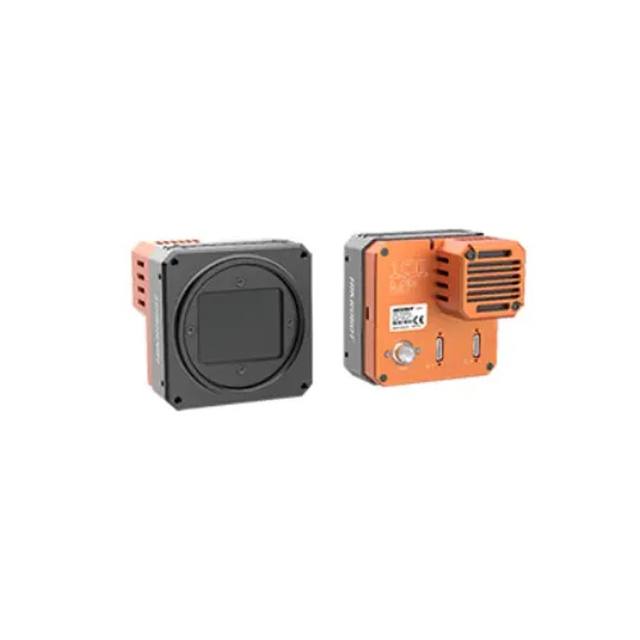
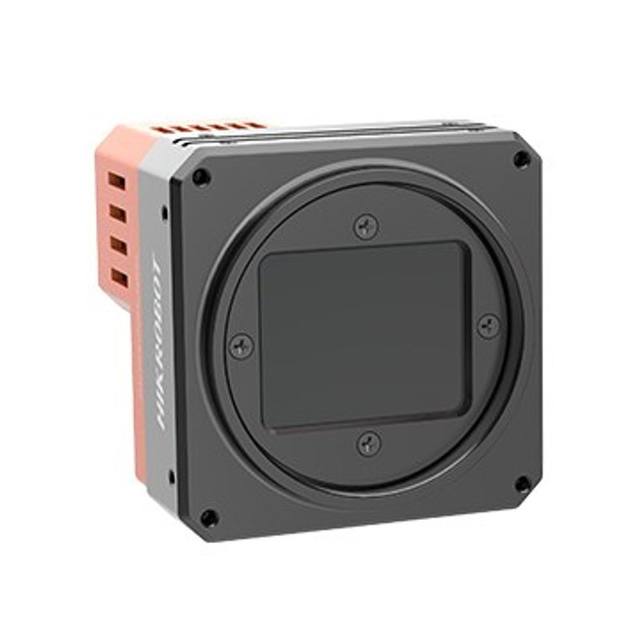
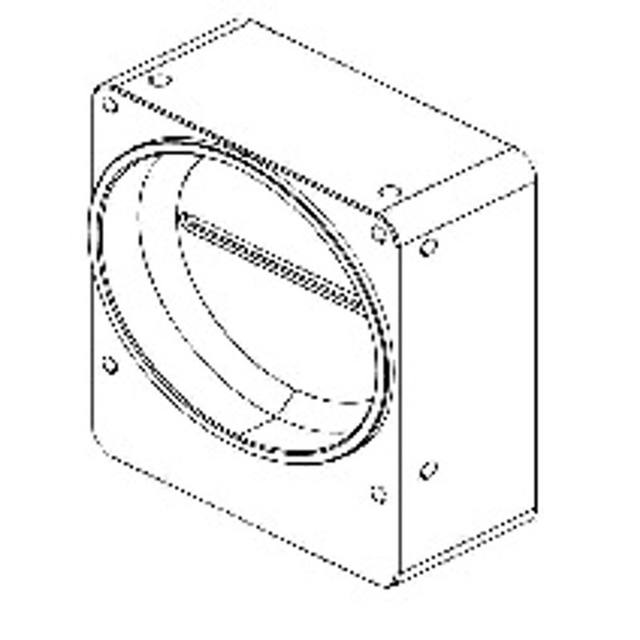
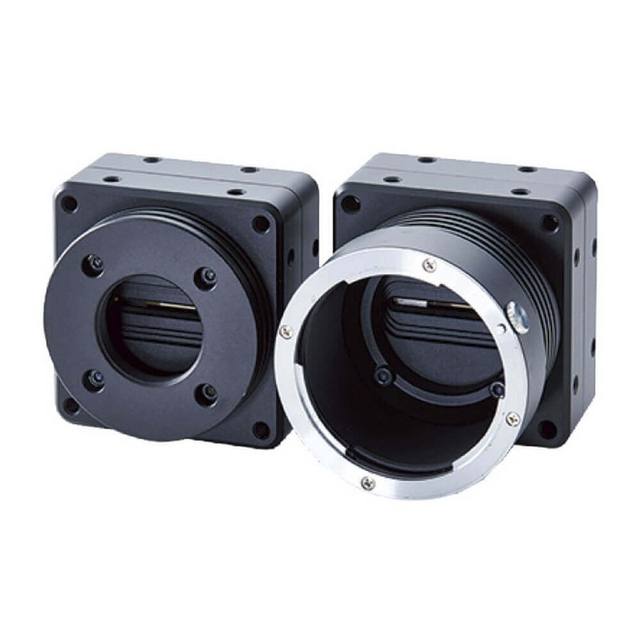
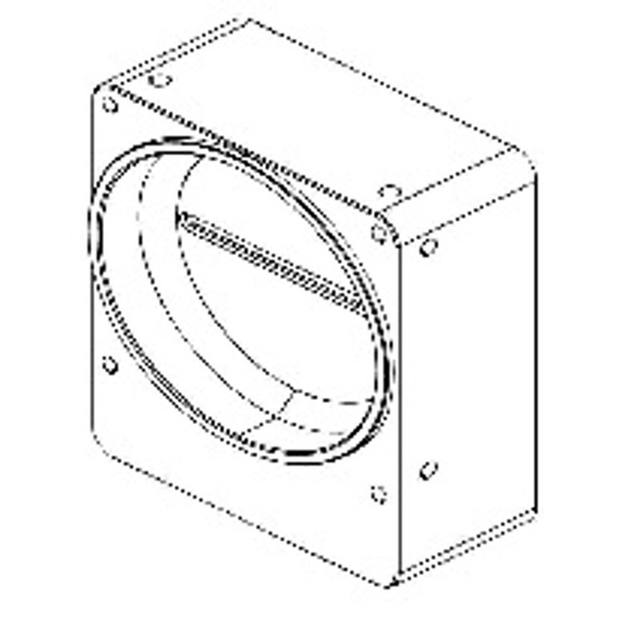
The MVL-LF8040M-021V-M72 is an 80 mm lens with an aperture range of F4.0 to F22 and a Ø60 mm image circle. Its M72 × P0.75 mount is the mechanical interface, so the camera side must present that thread. The 60 mm circle is the coverage limit for the sensor: the sensor diagonal should fit inside it, because a larger sensor will lose its corners.
The manufacturer gives a recommended magnification of 0.12~0.31X, and the working distance is listed as 750 mm to 450 mm to 325 mm ± 9 mm. Magnification and working distance are tied together: for a given focal length and sensor, the distance sets the image scale and the field of view. Build the mechanical layout around the listed working distance and its ± 9 mm tolerance, then confirm that the resulting field of view matches the part size.
The lens weighs 321.2 g. Keep the camera and its cable from pulling on the lens, and size the illumination to cover the Ø60 mm image circle evenly. The aperture range of F4.0 to F22 lets the system builder control exposure and depth of field at the chosen working distance.
Best for
Imaging at the recommended magnification of 0.12~0.31X with an 80 mm focal length.
Work at the listed working distance of 750 mm to 450 mm to 325 mm ± 9 mm.
Camera builds with an M72 × P0.75 mount and a sensor whose diagonal fits the Ø60 mm image circle.
Setups that need the aperture adjusted across F4.0 to F22 to balance exposure and depth of field.
Selection notes
Confirm the sensor diagonal fits within the Ø60 mm image circle before choosing the camera.
Build the mechanics around the listed working distance of 750 mm to 450 mm to 325 mm ± 9 mm, and carry the ± 9 mm tolerance into the stackup.
Keep the image scale within the recommended 0.12~0.31X when choosing sensor size and working distance together.
Use an M72 × P0.75 thread on the camera side, and keep the camera cable from pulling on the 321.2 g lens.
Specifications: General
Brand
Hikrobot
Specifications: Optical
Lens mount
M72 × P0.75
Focal length
80 mm
Aperture (f-number)
F4.0 to F22
Image circle / max sensor
Ø60 mm
Working distance
750 mm to 450 mm to 325 mm ± 9 mm
Specifications: Mechanical
Weight
321.2 g
Applications this product is commonly selected for. Open one to see the full recommended hardware and approach.
Matched automatically by: camera mount fits the lens mount · camera sensor is covered by the lens image circle — this lens: M72 × P0.75 · Ø60 mm image circle.