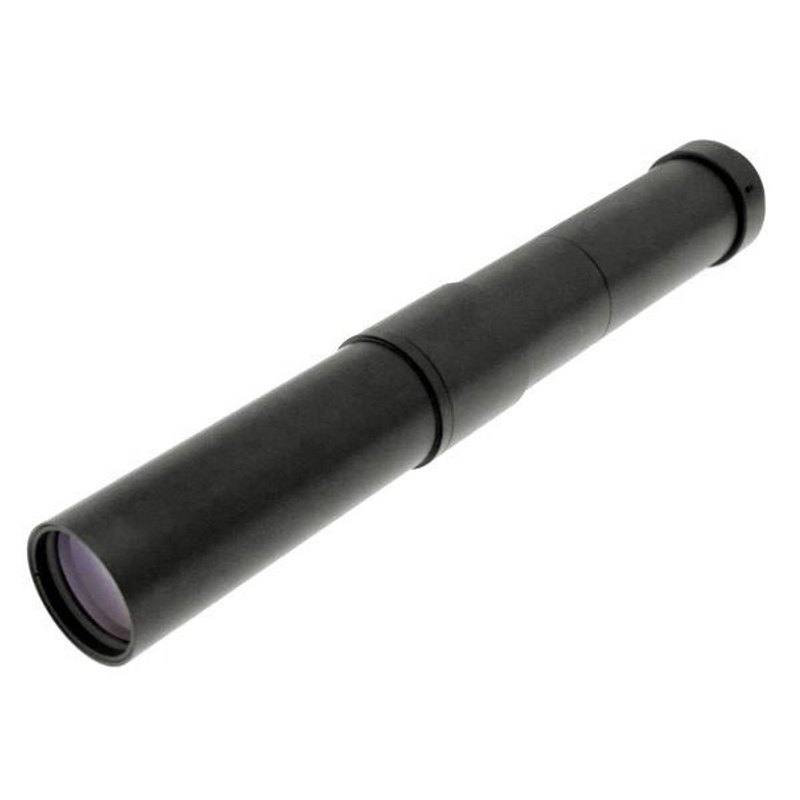
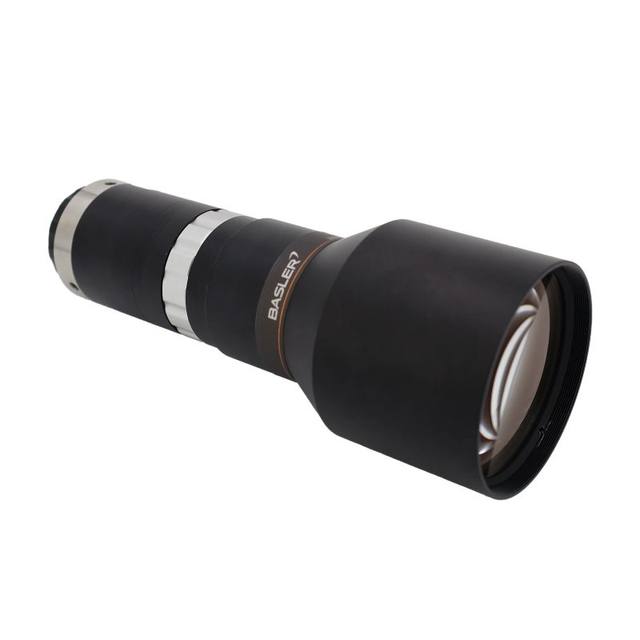
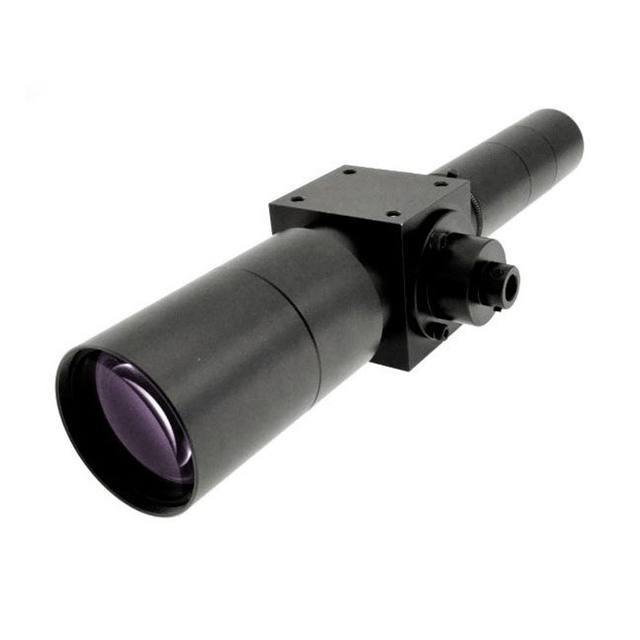
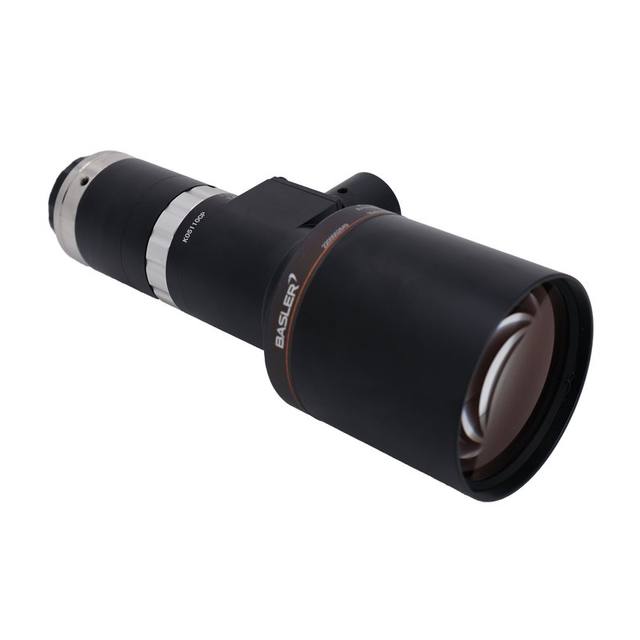
The RT-TV-05M-400 is a very long working distance telecentric lens with 0.500× magnification, so the sensor records objects at half their true size. Its Ø 8.0 mm image circle is rated for a maximum sensor of 1/2″, and it mounts by C-mount. It belongs to the TCVLWD series, described as long working distance telecentric lenses for sensors up to 1/1.8″, so design the camera around 1/2″.
The 400.0 mm working distance is the defining feature of this lens. It leaves substantial space for enclosures, fixtures or handling equipment between the lens and the part. Telecentric imaging keeps magnification nearly constant across a small change in object distance, which matters at long working distances where the part position may vary. The working f-number of wF/# 13.9 sets the balance between light and depth of field: a higher value deepens focus but needs more illumination.
Plan illumination as a separate choice that suits the part's surface and contrast, and position it within the 400.0 mm working distance. Keep the sensor at 1/2″ or smaller so it stays within the Ø 8.0 mm image circle. Because the working distance is long, verify framing and focus on sample parts before fixing the mechanical layout.
Best for
Inspection of parts where enclosures, fixtures or handling equipment must sit between the lens and the object.
Dimensional checks on a 1/2″ sensor at 0.500×, where telecentric imaging keeps the scale consistent.
Applications with a long standoff between the camera optics and the part.
Setups where small changes in object distance should have little effect on magnification.
Selection notes
Keep the camera sensor at 1/2″ or smaller to match the Ø 8.0 mm image circle.
Plan the 400.0 mm working distance into the layout from the start.
Size the illumination for the wF/# 13.9 aperture, because the light needed depends on the working f-number.
Validate framing, focus and lighting on representative parts before committing to the mechanics.
Specifications: General
Brand
Opto Engineering
Specifications: Optical
Lens mount
C-mount
Image circle / max sensor
Ø 8.0 mm (max sensor 1/2″)
Magnification
0.500×
Working distance
400.0 mm
Telecentric
Yes
Applications this product is commonly selected for. Open one to see the full recommended hardware and approach.
Matched automatically by: camera mount fits the lens mount · camera sensor is covered by the lens image circle — this lens: C-mount · Ø 8.0 mm (max sensor 1/2″) image circle.