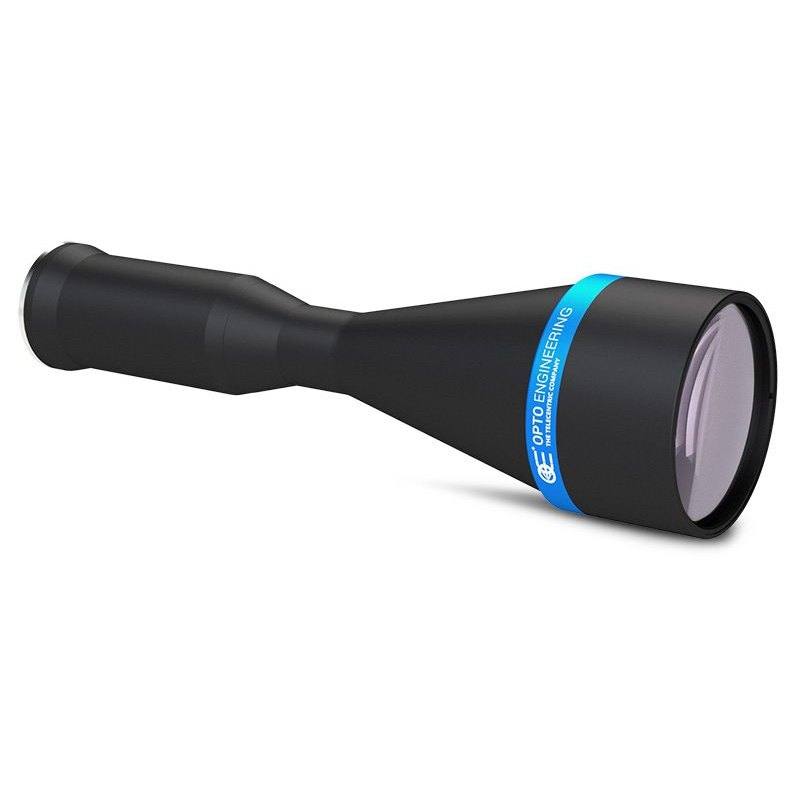
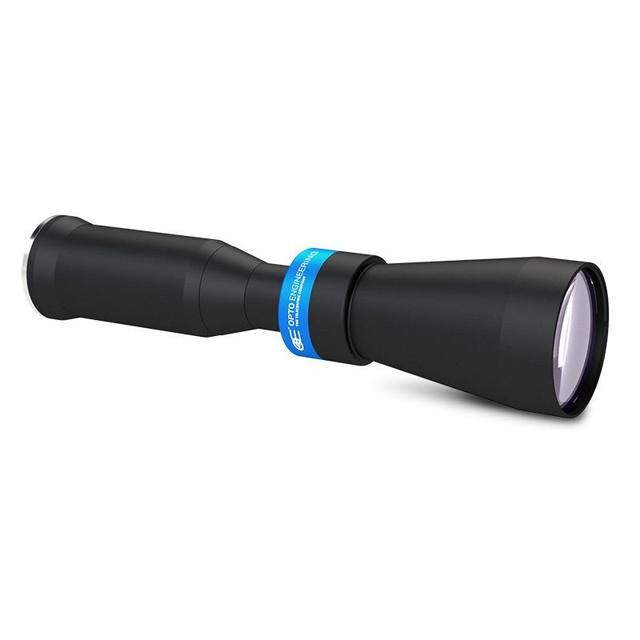
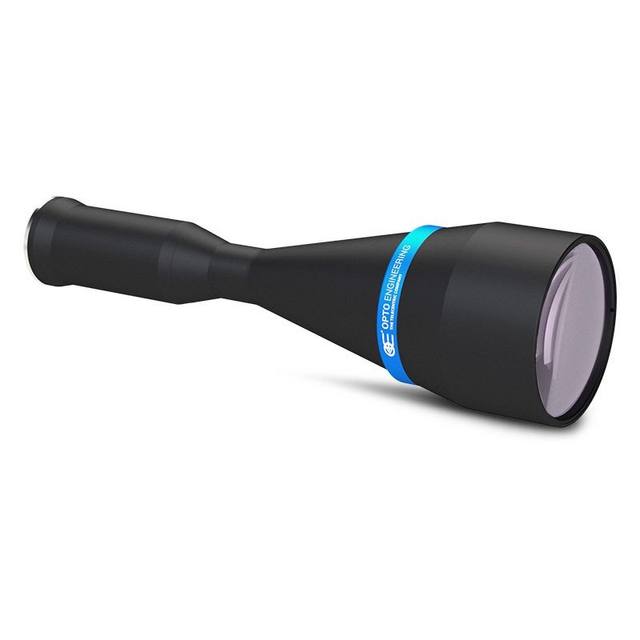
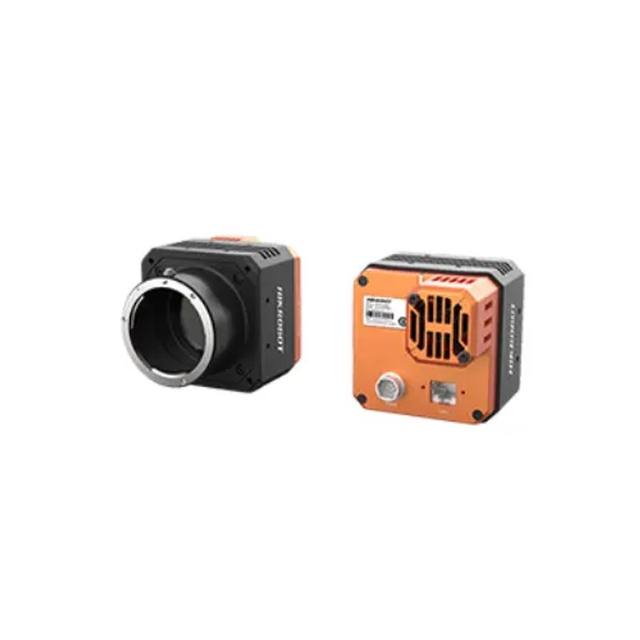
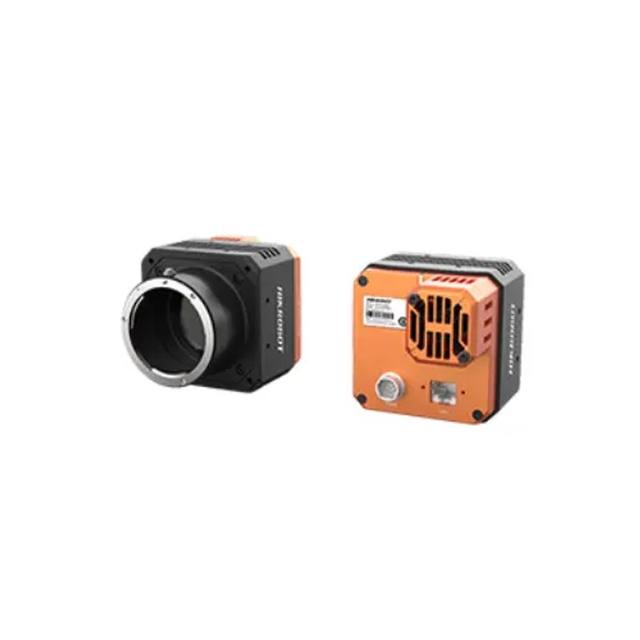
The Opto Engineering TC16M064 is a telecentric lens with 0.561× magnification and a 170.6 mm working distance. Its image circle is Ø 43.3 mm and the lens is listed for 35 mm Full Frame sensors (max sensor 35 mm Full Frame), so sensor size is the first check when you choose a camera. This variant uses an F-mount, so the camera side has to provide a matching F-mount.
Telecentricity is the key measurement feature. The TC16M064 lists telecentricity below 0.04 deg typical and 0.08 deg maximum, so the chief rays are close to parallel to the optical axis and the image scale stays steady as the part moves within the depth of focus. Distortion is listed below 0.06% typical and 0.15% maximum, which matters when pixel positions are converted into millimeters. The wF/# 16 working f-number gives a deeper depth of field at the cost of light, so the illumination needs to be strong enough for the exposure you need.
The TC16M series is described for sensors up to 43.3 mm and 8k line scan cameras. Use the 170.6 mm working distance to define the object plane in the fixture design, and verify the F-mount on your camera before ordering.
Best for
Gauging and dimensional measurement where telecentric optics reduce perspective error
Fixtured parts positioned at the 170.6 mm working distance
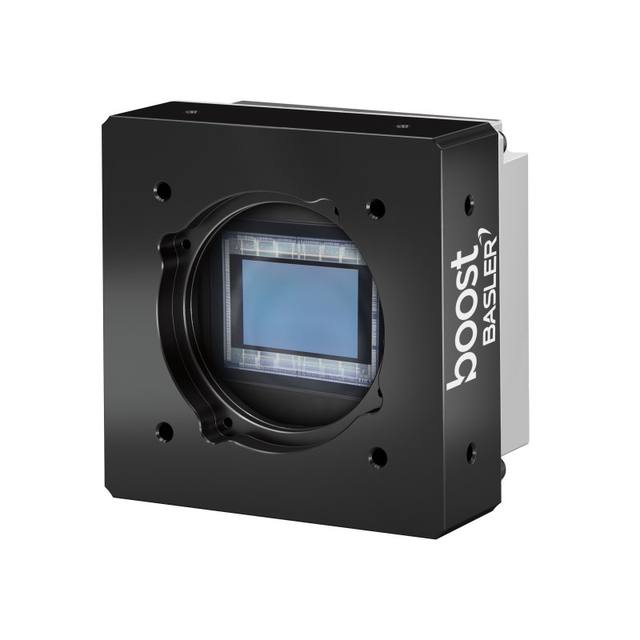
Camera builds with sensors up to 35 mm Full Frame
Camera systems built around an F-mount
Imaging with 8k line scan cameras, the camera type the TC16M series is described for
Selection notes
Check sensor coverage: the Ø 43.3 mm image circle is listed for sensors up to 35 mm Full Frame.
Confirm the F-mount on the camera side before ordering.
Design the layout around the 170.6 mm working distance, which sets where the object plane sits.
Budget light for wF/# 16: the small aperture needs sufficient illumination for the exposure time you choose.
Specifications: General
Brand
Opto Engineering
Specifications: Optical
Lens mount
F-mount
Image circle / max sensor
Ø 43.3 mm (max sensor 35 mm Full Frame)
Magnification
0.561×
Working distance
170.6 mm
Telecentric
Yes
Applications this product is commonly selected for. Open one to see the full recommended hardware and approach.
Matched automatically by: camera mount fits the lens mount · camera sensor is covered by the lens image circle — this lens: F-mount · Ø 43.3 mm (max sensor 35 mm Full Frame) image circle.