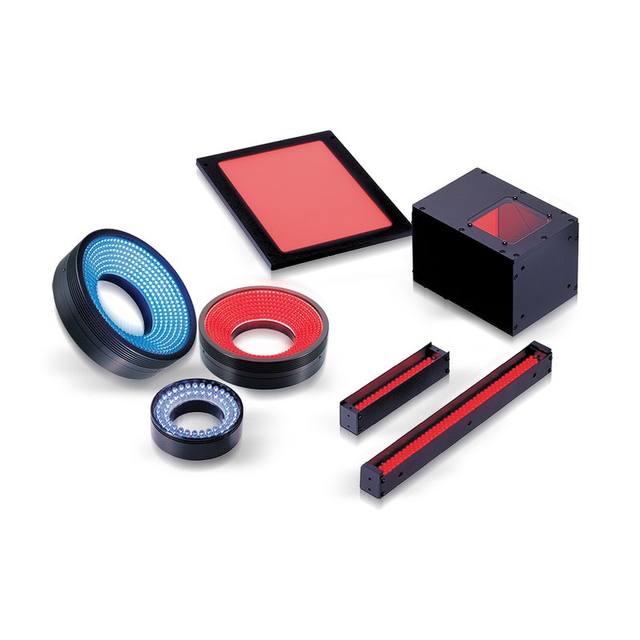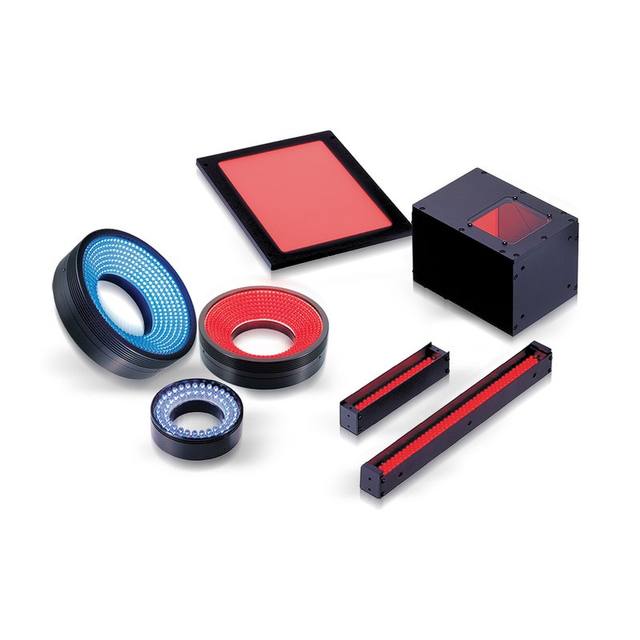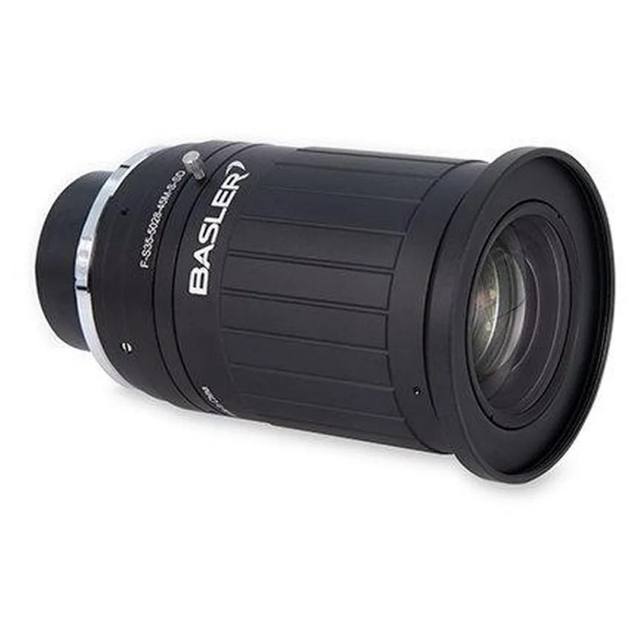
- Rosepetal compatible
- Recommended by AIS Vision
On request
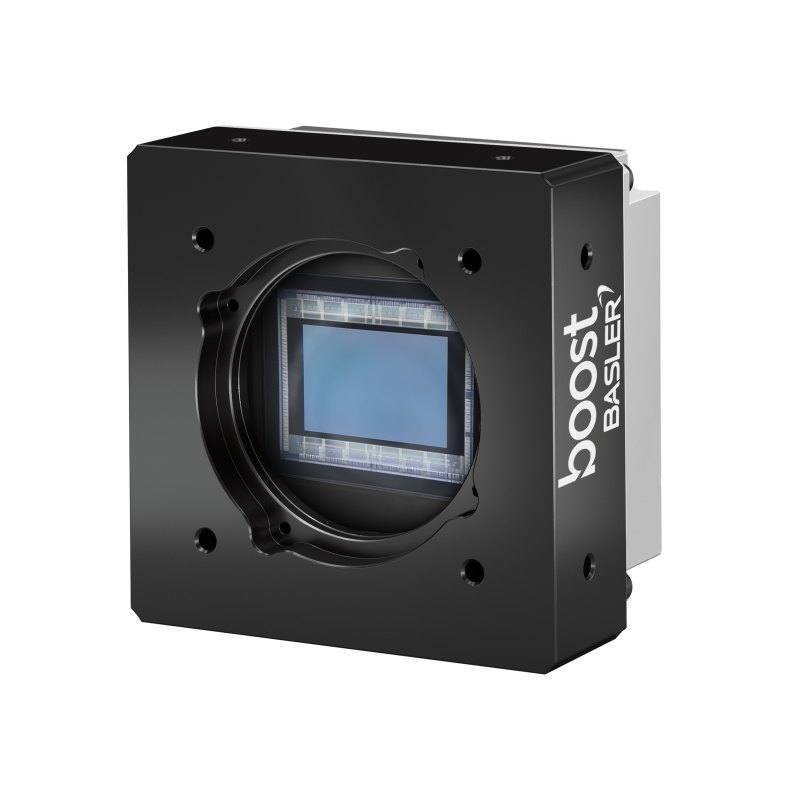
boA8100-16cm
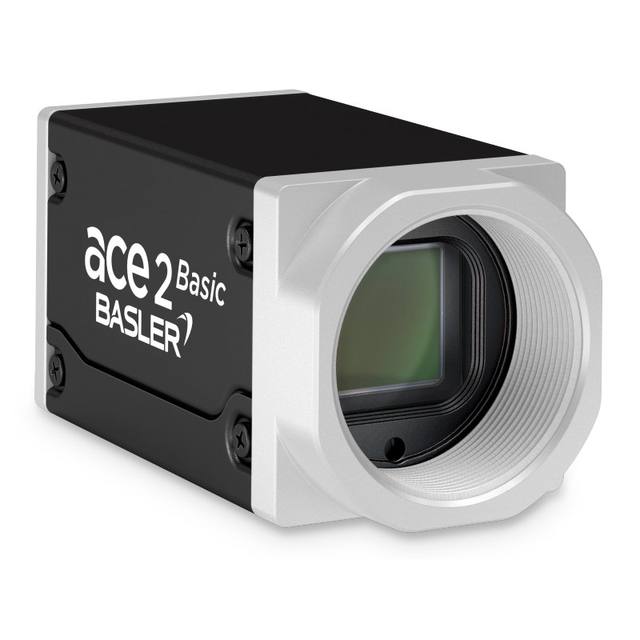
The Basler boost boA8100-16cm is a high-resolution monochrome area scan camera based on the onsemi XGS 45000 CMOS sensor (Super 35 mm format, 3.2 µm pixel pitch) with a global shutter. It uses the CoaXPress 2.0 interface at up to 12.5 Gbps per link (single-link CXP-12), achieving 19 fps at full 44.7 MP resolution. Power is supplied via PoCXP or 24 VDC, and the camera is compliant with GenICam, CoaXPress 2.0, CE, FCC, and UL standards. Available lens mounts include F-mount, M42 × 0.75, and M42 × 1; the housing measures 49.1 × 80 × 80 mm and weighs approximately 525 g.
The boA8100-16cm is built around the onsemi XGS 45000, a Super 35 mm format CMOS sensor measuring 26.2 × 17.4 mm with a 31.5 mm diagonal. At 3.2 µm pixel pitch across an 8192 × 5460 array, the camera delivers 44.7 MP of genuine resolving power — enough to cover a 300 mm-wide part at better than 35 µm/pixel from a fixed single station, or to support sub-pixel measurement on small features without a second camera pass. The global shutter ensures every pixel integrates simultaneously, so fast-moving parts, rotating components, or conveyor lines captured under strobe illumination produce geometrically undistorted images — a non-negotiable property for dimensional gauging and any application where feature position must be accurate rather than merely sharp.
| Brand | Basler |
|---|---|
| Camera type | Area Scan |
| Resolution | 44.7 MP |
|---|---|
| Horizontal resolution | 8192 × 5460 px |
| Mono / color | Monochrome |
| Sensor manufacturer | onsemi |
| Sensor model | onsemi XGS 45000 |
| Shutter | Global Shutter |
| Sensor size | Super 35 mm (26.2 × 17.4 mm) |
| Pixel size | 3.2 × 3.2 µm |
| FPS | 19 fps (max, full resolution) |
|---|
| Interface | CoaXPress 2.0 CXP-12 (2.5–12.5 Gbps, 1 link) |
|---|---|
| Protocols | GenICam, CoaXPress 2.0 |
| Mount | F-mount, M42 × 0.75, M42 × 1 |
|---|
| Power | PoCXP or 24 VDC (18.6–26 VDC) |
|---|---|
| Power consumption | 8.6 W |
| Operating temperature | 0–50 °C |
|---|
| Dimensions | 49.1 × 80 × 80 mm |
|---|---|
| Weight | 525 g |
When 20+ MP cameras earn their place in inspection: sensor formats, the optics and MTF challenge, bandwidth and interfaces, lighting uniformity, and single high-res vs multi-camera.
A practical decision guide to the three dominant machine-vision interfaces: bandwidth, cable length, multi-camera support, PoE, latency, frame grabber needs and cost.
How global and rolling shutters differ, why rolling shutter distorts moving objects, and when each is the right choice for industrial inspection.
Rosepetal · AI
Validate your visual inspection with AI: send us sample images and we evaluate the case on your hardware.
AIS Vision · Integration
AIS Vision defines and tests the optimal combination of camera, optics and lighting for your application before you buy.