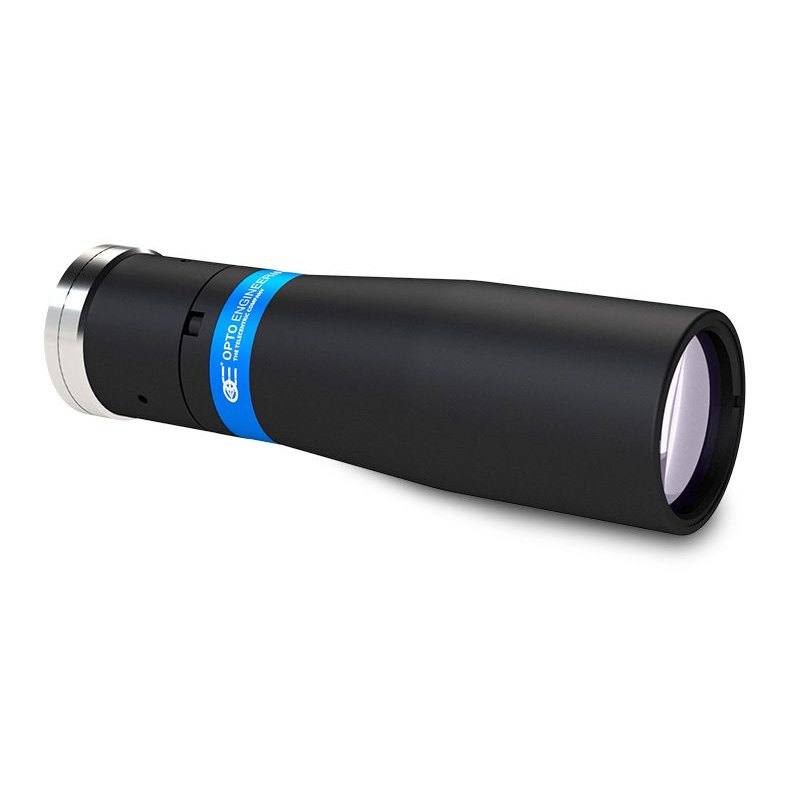
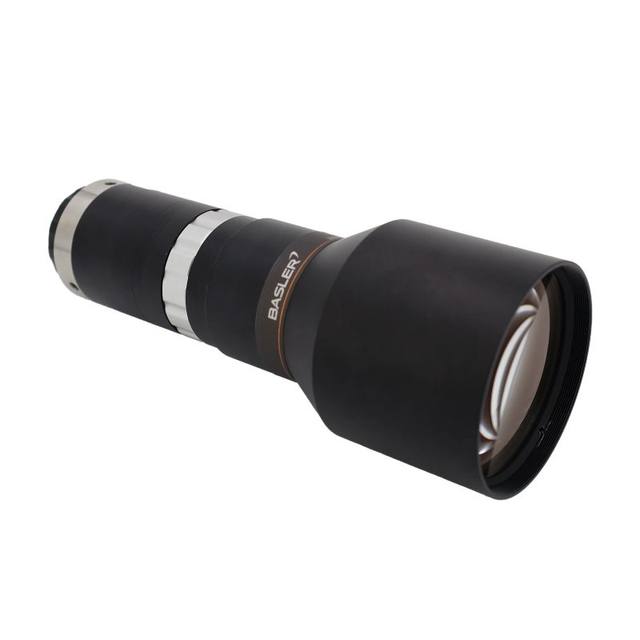
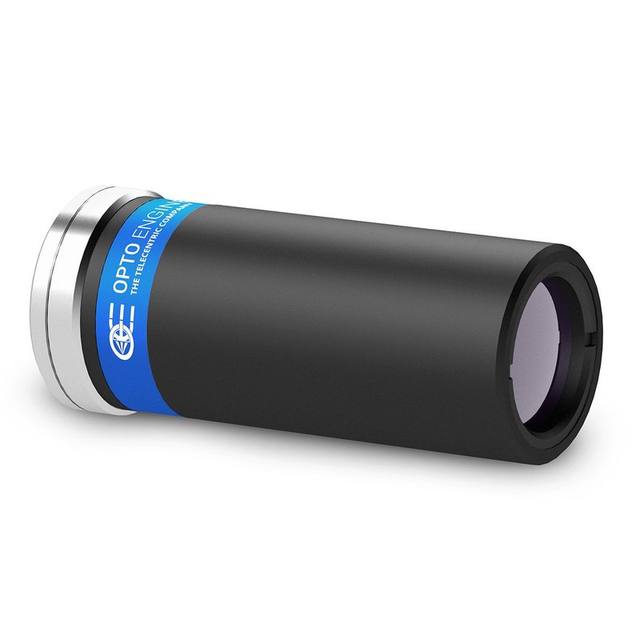
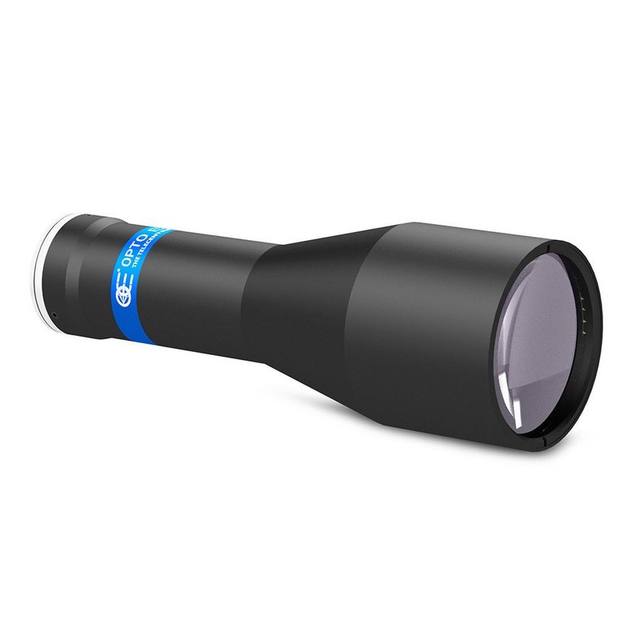
The Opto Engineering TC1MHR024-C is a high resolution telecentric lens for 1/1.2″ sensors, with 0.424× magnification and an image circle of Ø 13.3 mm (max sensor 1/1.2″). At 0.424× the lens images a broad area of the object onto a 1/1.2″ sensor, which suits parts that need a wider field of view. Each feature is rendered at a smaller scale, so match the sensor's pixel count to the finest detail you need to measure.
Telecentricity is <0.08° typical with a 0.10° maximum, and distortion is <0.08% typical with a 0.10% maximum. These figures support dimensional measurement where the part is presented at a fixed object distance and must read consistently across the field. A telecentric lens keeps magnification nearly constant over small changes in object distance, reducing perspective error in gauging applications.
The 67.2 mm working distance leaves room for lighting and mechanical hardware between the lens and the object. The working f-number (wF/#) of 11 sets the balance of depth of field and light, so plan the illumination and exposure with the chosen camera. The C-mount fits C-mount camera bodies directly.
Best for
Telecentric gauging of small parts at a fixed 67.2 mm object distance.
Edge and hole-position measurement on 1/1.2″ sensors where perspective error must stay low.
Machine cells that need working distance for lighting and part-handling hardware.
Inspection systems using C-mount cameras with 1/1.2″ sensor formats.
Selection notes
Keep the sensor at or below 1/1.2″ so it stays within the Ø 13.3 mm image circle.
Hold the object at the 67.2 mm working distance, since the 0.424× magnification and the telecentric accuracy both depend on it.
Plan lighting for wF/# 11 and check exposure against part motion.
Use the maximum values (0.10° telecentricity and 0.10% distortion) when budgeting measurement uncertainty.
Mount the lens square to the object plane so telecentric alignment holds across the field.
Specifications: General
Brand
Opto Engineering
Specifications: Optical
Lens mount
C-mount
Image circle / max sensor
Ø 13.3 mm (max sensor 1/1.2″)
Magnification
0.424×
Working distance
67.2 mm
Telecentric
Yes
Applications this product is commonly selected for. Open one to see the full recommended hardware and approach.
Matched automatically by: camera mount fits the lens mount · camera sensor is covered by the lens image circle — this lens: C-mount · Ø 13.3 mm (max sensor 1/1.2″) image circle.