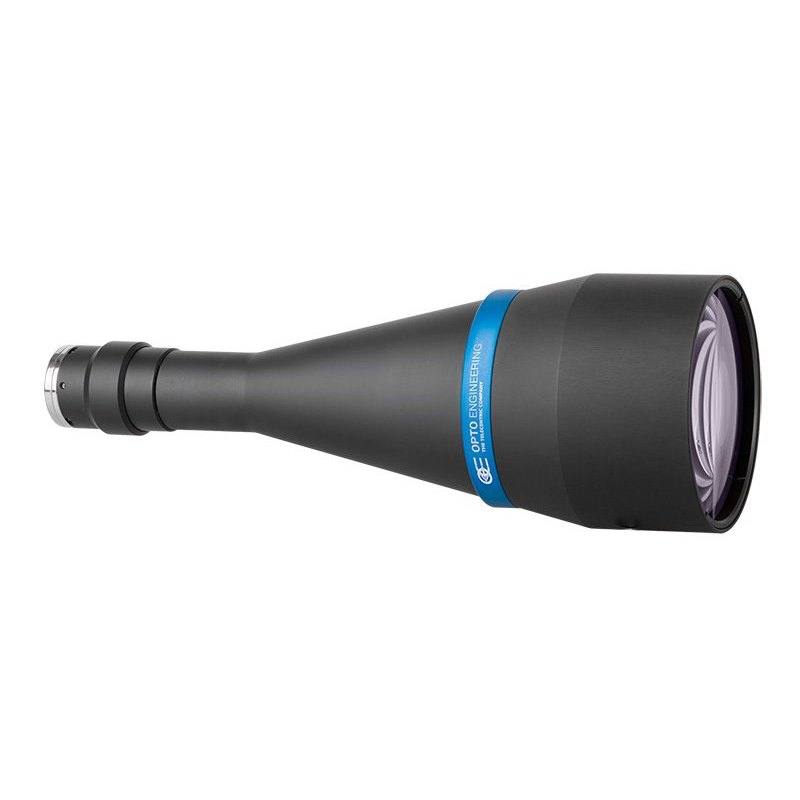
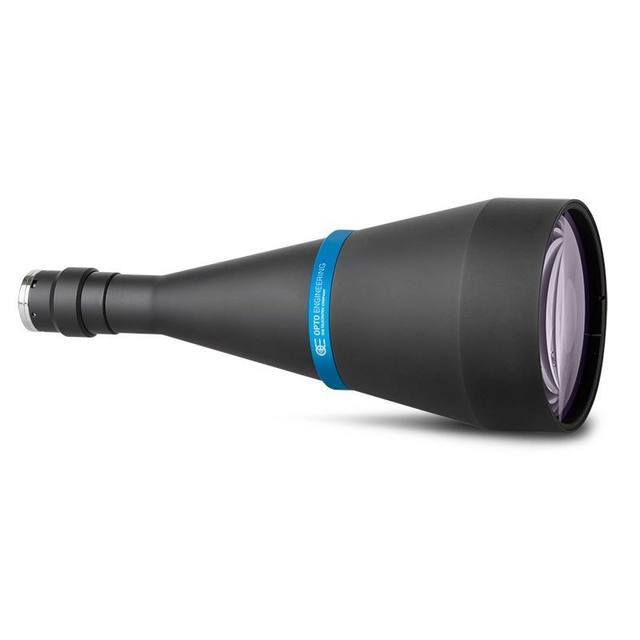
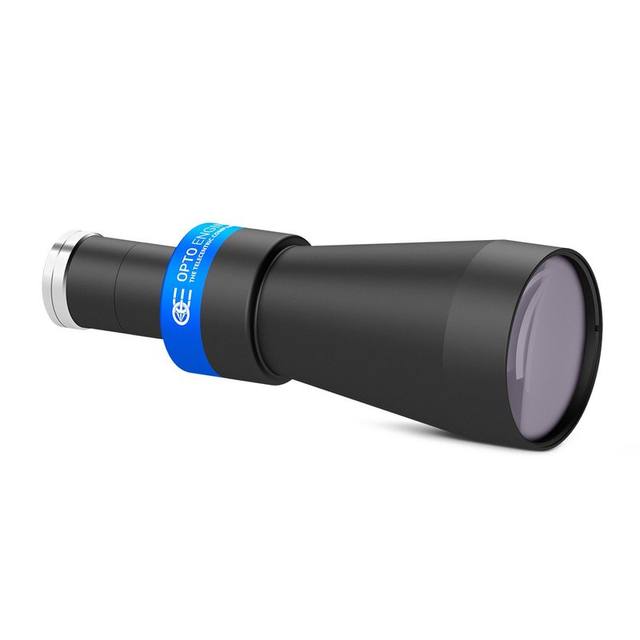
The TC2MHRP080-C is a high resolution telecentric lens with a C-mount for sensors up to 1″, with an image circle of Ø 16 mm (max sensor 1″). Its 0.160× magnification lets the sensor see a wide area of the object, and the 226.8 mm working distance gives considerable stand-off. That helps when the camera has to sit well back from the work area.
The telecentricity figure of <0.04 (0.10) deg typ. (max) describes how parallel the imaging rays are. A small value keeps the apparent size of a feature stable even when the part sits at a different distance from the lens, which is important for dimensional checks made at a long stand-off. Distortion is <0.05 (0.10) % typ. (max), so the geometry of the image stays faithful to the object for measurement purposes.
The working f-number is wF/# 8, balancing light intake with depth of field. With a long working distance, plan the illumination carefully and limit stray ambient light on the work area so exposures stay consistent. Use a C-mount camera with a 1″ or smaller sensor to match the image circle, and mount the lens and camera rigidly so the geometry remains stable.
Best for
Gauging of larger parts where the camera needs a long stand-off of 226.8 mm.
Inspection where the camera cannot sit close to the part, given the 226.8 mm working distance.
Feature position measurement across a wide 0.160× field of view.
Backlit silhouette checks of part outlines.
Presence and position verification of several features in a single frame.
Selection notes
Confirm a C-mount camera with a sensor of 1″ or smaller, since the Ø 16 mm image circle sets the maximum sensor size.
Lay out the machine with the 226.8 mm working distance in mind, including lens length and mounting clearance.
Size the lighting and exposure for the 0.160× field of view and the wF/# 8 light intake.
Keep parts within the depth of field to avoid soft feature edges, and hold the mounting rigidly for stable calibration.
Specifications: General
Brand
Opto Engineering
Specifications: Optical
Lens mount
C-mount
Image circle / max sensor
Ø 16 mm (max sensor 1″)
Magnification
0.160×
Working distance
226.8 mm
Telecentric
Yes
Applications this product is commonly selected for. Open one to see the full recommended hardware and approach.
Matched automatically by: camera mount fits the lens mount · camera sensor is covered by the lens image circle — this lens: C-mount · Ø 16 mm (max sensor 1″) image circle.