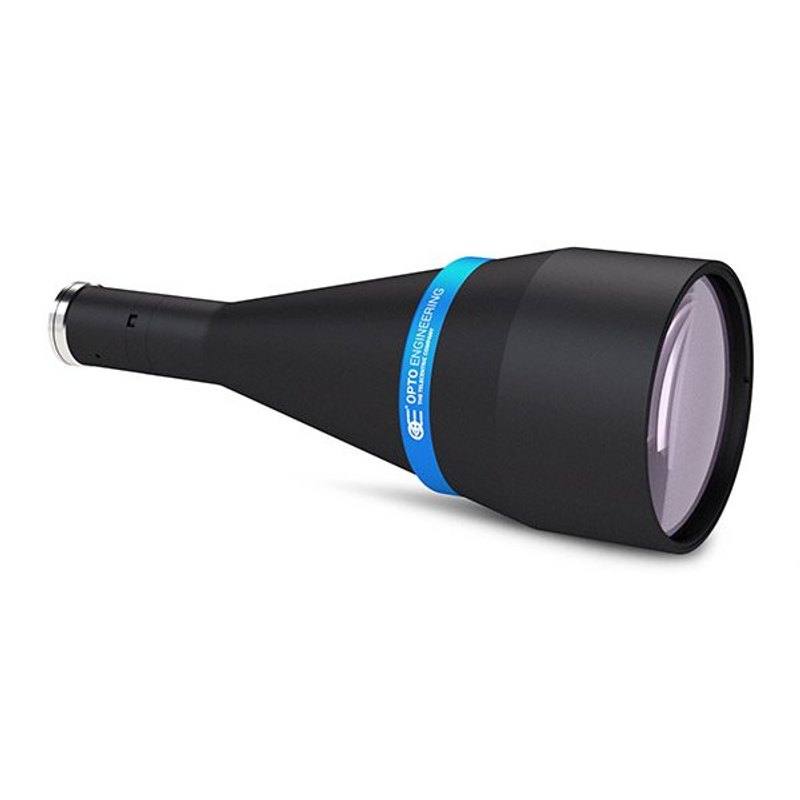
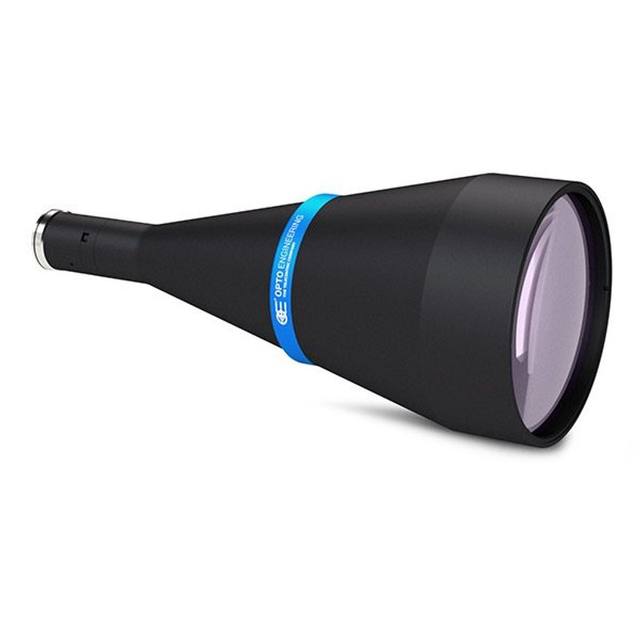
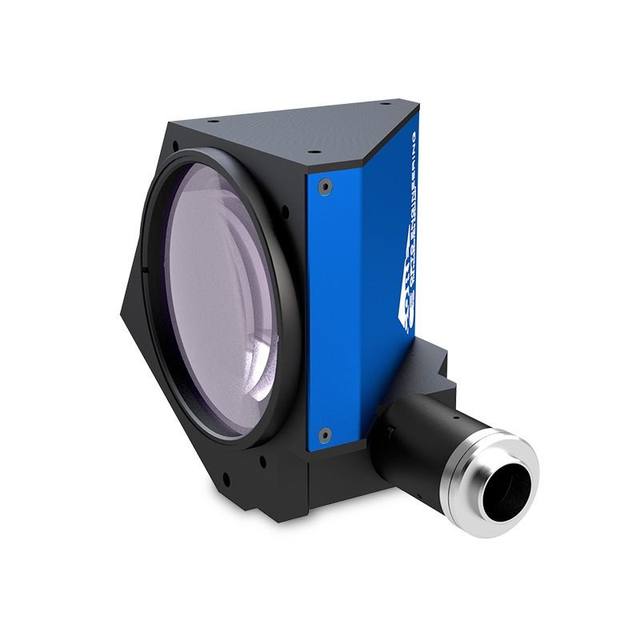
The Opto Engineering TC3MHR080-C is a high resolution telecentric lens at 0.182× magnification, with a Ø 17.6 mm image circle for sensors up to 1.1″, mounted by C-mount. At this magnification the sensor covers a large field of view, so large parts or wide assemblies can be measured in one image without moving the camera.
The 226.8 mm working distance places the lens well away from the part, giving clearance for fixtures, lighting arrangements and protective hardware. The wF/# 8 passes more light than higher f-numbers, while giving a narrower depth of field. Telecentricity is typically below 0.08 deg with a maximum of 0.10 deg, so the image scale is largely unaffected by small changes in depth. Distortion, typically below 0.08 % and at most 0.10 %, keeps geometric measurements accurate across the whole field.
For installation, position the camera so the part sits at the 226.8 mm working distance, and use a sensor no larger than 1.1″. Because the image covers a wide area, the position and orientation of the part in the field determine which features are seen, so define a fixed presentation. Calibrate the pixel scale at 0.182× with a certified target, and use backlight for edge or silhouette measurement.
Best for
Measurement of large parts or wide assemblies in one frame at 0.182×.
Gauging across a broad field, where telecentric geometry keeps readings stable.
Cells with a 226.8 mm working distance for fixtures, lighting and guarding.
Silhouette measurement of part outlines with backlighting.
Presence and position verification of several features across a single 1.1″ sensor image.
Selection notes
Position the camera so the part sits at the 226.8 mm working distance, and build fixtures that hold that distance.
Confirm the sensor is no larger than 1.1″ and fits within the Ø 17.6 mm image circle.
Standardize part presentation. With a wide field, position and orientation determine what is measured.
Calibrate the pixel scale at 0.182× and recheck after any camera or mount change.
Plan lighting for wF/# 8. The lens passes more light, but depth of field is narrower, so keep part height within the focus range.
Specifications: General
Brand
Opto Engineering
Specifications: Optical
Lens mount
C-mount
Image circle / max sensor
Ø 17.6 mm (max sensor 1.1″)
Magnification
0.182×
Working distance
226.8 mm
Telecentric
Yes
Applications this product is commonly selected for. Open one to see the full recommended hardware and approach.
Matched automatically by: camera mount fits the lens mount · camera sensor is covered by the lens image circle — this lens: C-mount · Ø 17.6 mm (max sensor 1.1″) image circle.