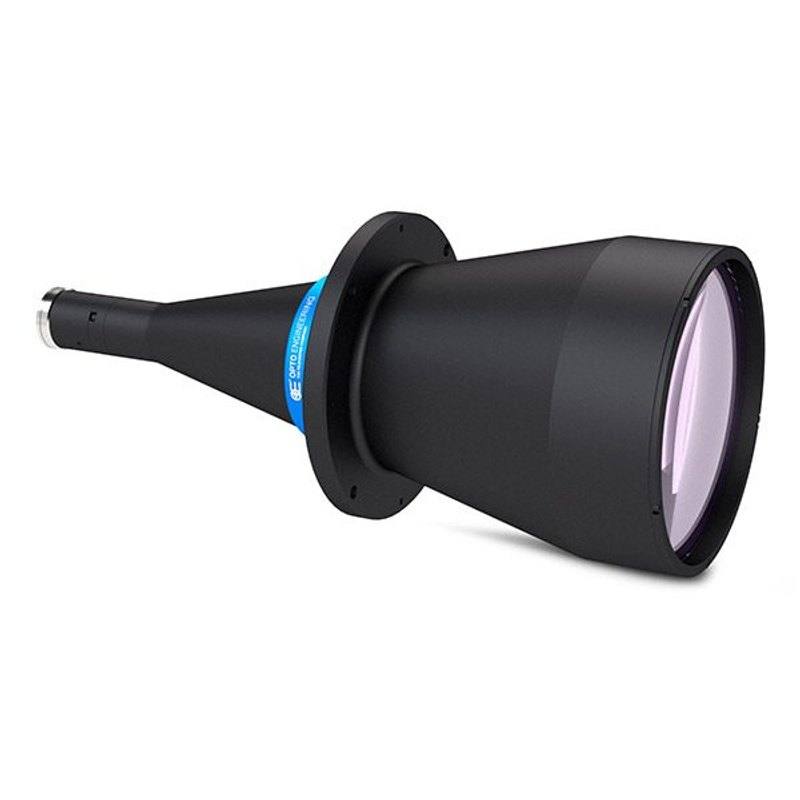
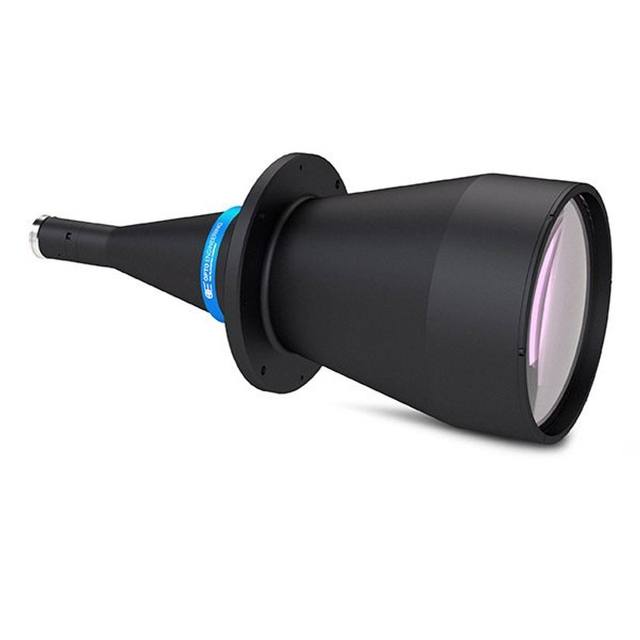
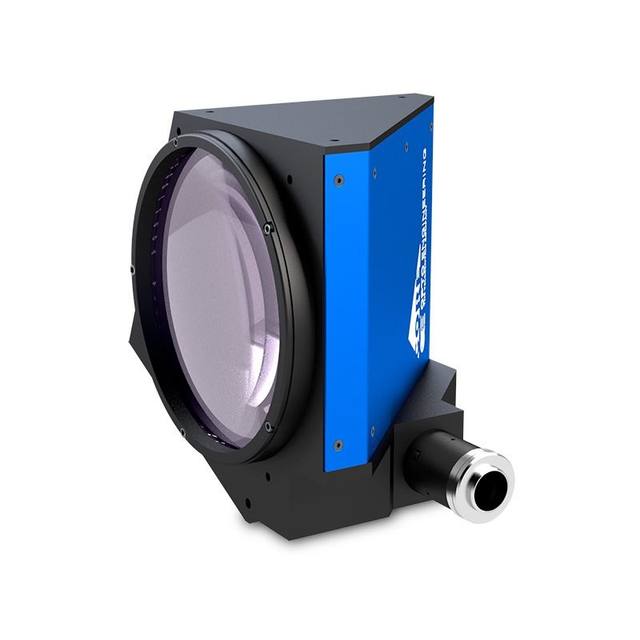
The Opto Engineering TC3MHR120-C is a high resolution telecentric lens at 0.118× magnification, with a Ø 17.6 mm image circle for sensors up to 1.1″ and a C-mount. At this low magnification the sensor covers a very wide field of view, so large areas such as full panels or wide assemblies can be imaged by one camera.
The 334.6 mm working distance provides a long standoff between the front of the lens and the object, leaving space for fixtures, lighting and guarding. The wF/# 8 passes more light than higher f-numbers, at the cost of a narrower depth of field. Telecentricity is typically below 0.08 deg with a maximum of 0.10 deg, which keeps the image scale nearly constant when the part shifts in depth within focus. Distortion, typically below 0.08 % and at most 0.10 %, keeps feature positions accurate across the wide field.
Install with the part at the 334.6 mm working distance and a sensor no larger than 1.1″. The long standoff and wide field make the measurement sensitive to how the part is presented, so define a repeatable fixture and mount. Calibrate the pixel scale at 0.118× using a known target, then verify after any change. Backlight is typically used for silhouette measurement, and front light for surface features.
Best for
Imaging large areas such as panels or wide assemblies in one frame at 0.118×.
Installations with a 334.6 mm working distance for fixtures, guarding or part handling.
Gauging across a wide field, where telecentric geometry keeps the image scale steady.
Backlit outline measurement of large components.
Multi-feature presence and position checks across one 1.1″ sensor image.
Selection notes
Design the machine layout around the 334.6 mm working distance, including cell depth and fixture height.
Confirm the camera sensor is no larger than 1.1″ and within the Ø 17.6 mm image circle.
Fix the part presentation. With a wide field, position and orientation determine what is measured.
Calibrate the pixel scale at 0.118× with a certified target, and verify after any camera or mount change.
Plan lighting for wF/# 8, which passes more light but gives a narrower depth of field, so keep part height within the focus range.
Specifications: General
Brand
Opto Engineering
Specifications: Optical
Lens mount
C-mount
Image circle / max sensor
Ø 17.6 mm (max sensor 1.1″)
Magnification
0.118×
Working distance
334.6 mm
Telecentric
Yes
Applications this product is commonly selected for. Open one to see the full recommended hardware and approach.
Matched automatically by: camera mount fits the lens mount · camera sensor is covered by the lens image circle — this lens: C-mount · Ø 17.6 mm (max sensor 1.1″) image circle.