Skip to content
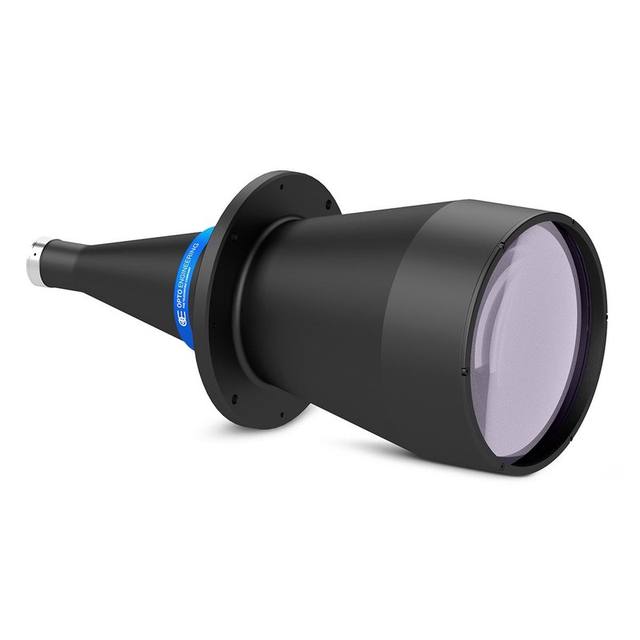
Opto Engineering TCCP23192 machine vision lens
  • Rosepetal compatible
  • Recommended by AIS Vision

Opto Engineering TCCP23192 (TC CORE PLUS series)

TCCP23192

Opto Engineering TCCP23192 — 0.044× magnification, up to 2/3" sensor, WD 328.0 mm, wF/# 8, distortion < 0.8 % typ. (max), telecentricity < 0.12 (0.18) deg typ. (max), C-mount.

Brand
Opto Engineering
Lens mount
C-mount
Image circle / max sensor
2/3″ max sensor
Magnification
0.044×
Working distance
328.0 mm
Telecentric
Yes

Technical overview

The TCCP23192 is an ultra compact bi-telecentric lens with a C-mount for matrix detectors up to 2/3″. It operates at 0.044× magnification with a 328.0 mm working distance and a wF/# 8 working aperture. The TC CORE PLUS series is described as compact, large field-of-view bi-telecentric lenses for sensors up to 2/3″, and this model combines that 2/3″ coverage with a 328.0 mm working distance.

Telecentricity is listed as < 0.12 (0.18) deg typ. (max) and distortion as < 0.8 % typ. (max). The telecentricity value determines how much the apparent size of a feature shifts when the part sits at a different distance from the lens, so the typical 0.12° and the 0.18° maximum belong in the tolerance budget. The distortion figure is a systematic geometric error that calibration can address when converting pixel coordinates to millimeters.

At 0.044× and 328.0 mm the lens gives a wide view of the part from a 328.0 mm standoff, which suits fixture clearance and handling. The 2/3″ coverage makes it a direct match for C-mount cameras of that sensor format. Because the aperture is wF/# 8, plan for enough light at the sensor, and place the object precisely at 328.0 mm so the telecentric geometry is used as intended.

Best for

  • Inspection of parts on a 2/3″ sensor at 0.044× magnification from a 328.0 mm standoff.
  • Installations that need clearance between the lens and the part for fixtures or handling.
  • Presence, absence and assembly-position checks over a wide area.
  • Dimensional screening where the 0.18° maximum telecentricity is part of the tolerance budget.
  • C-mount inspection systems built around a 2/3″ camera.

Selection notes

  • Pair with a C-mount camera whose sensor is up to 2/3″.
  • Keep the object at 328.0 mm so the lens works at its specified standoff.
  • Budget telecentricity (0.12° typical, 0.18° maximum) and distortion (< 0.8 % typ. (max)).
  • Calculate the object-side pixel size as the sensor pixel pitch divided by 0.044×.
  • Plan the lighting for the wF/# 8 working aperture.

Specifications: General
BrandOpto Engineering

Specifications: Optical
Lens mountC-mount
Image circle / max sensor2/3″ max sensor
Magnification0.044×
Working distance328.0 mm
TelecentricYes

Frequently asked questions

Related technical guides

Often used with

Optical filters

Bandpass and polarizing filters raise contrast and block ambient light.

All optical filters →
  • DCM Sistemes VPF Series Polarizer Filter machine vision optical filter
    DCM SistemesVPF Series Polarizer FilterVPF Series
    • protector
    • Match companion lighting unit footprint (from approx. 40×34 mm to 307×292 mm depending on model)
    • 0–40°C
    • Rosepetal compatible
    • Recommended by AIS Vision
    On request
    View
  • Omron 3Z4S-LE SV-PLA225 machine vision lens
    Omron / SentechOmron 3Z4S-LE SV-PLA2253Z4S-LE SV-PLA225
    • Polarizing Filter
    • M22.5 P0.5
    • 7.2 g
    • For lenses for C-mount cameras
    • Rosepetal compatible
    • Recommended by AIS Vision
    On request
    View
  • Datalogic FLT-ORA-BP-590 machine vision optical filter
    Datalogic / DatasensingDatalogic FLT-ORA-BP-590FLT-ORA-BP-590
    • bandpass
    • 560-600nm
    • M25.5
    • Rosepetal compatible
    • Recommended by AIS Vision
    On request
    View

Optical accessories

Extension tubes, adapters and spacers to reach the working distance.

All optical accessories →

Rosepetal · AI

Test this camera with Rosepetal

Validate your visual inspection with AI: send us sample images and we evaluate the case on your hardware.

AIS Vision · Integration

We validate camera + lens + lighting

AIS Vision defines and tests the optimal combination of camera, optics and lighting for your application before you buy.