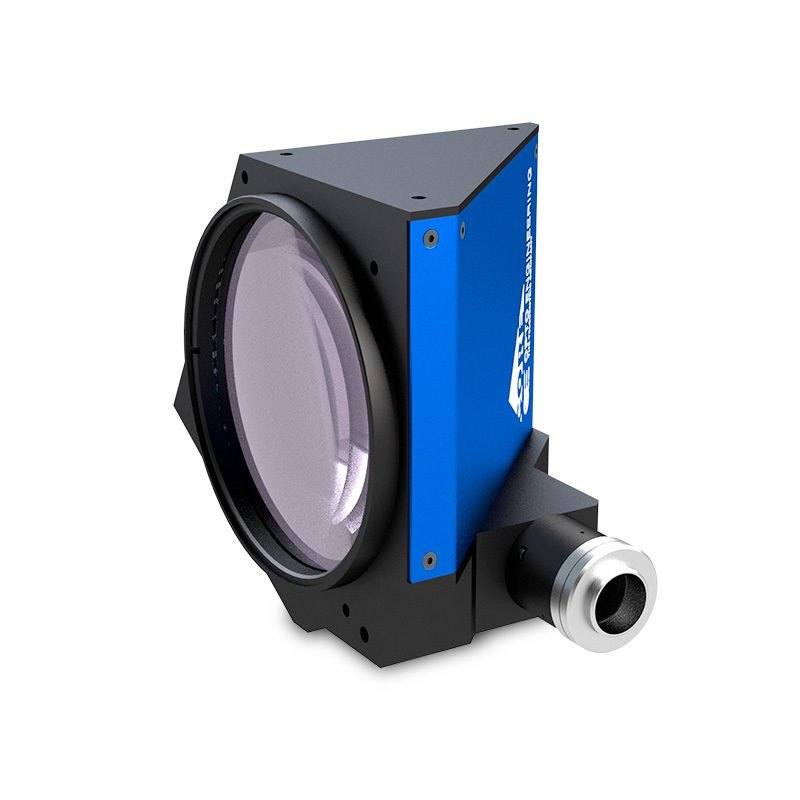
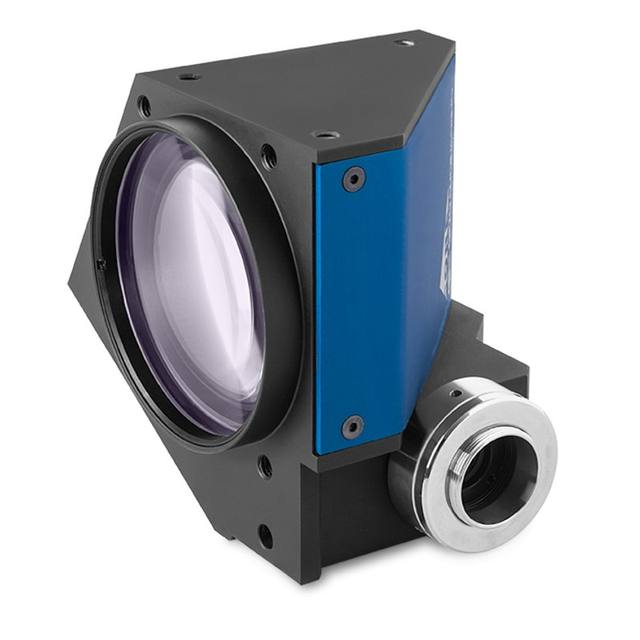
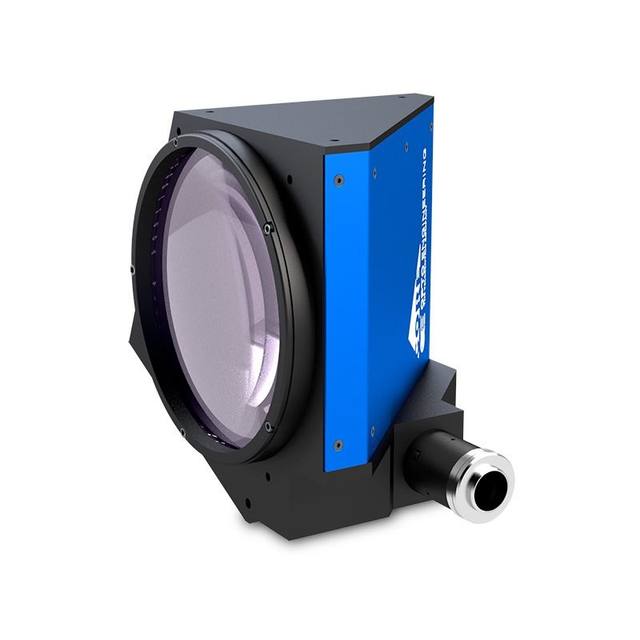
The Opto Engineering TCCR1M096-C is a telecentric CORE lens from the TC1MHR CORE series, with a C-mount and a maximum sensor rating of 1/1.2″ (listed as “1/1.2″ max sensor”). It operates at 0.114× magnification and a working distance of 278.6 mm. At 0.114× the sensor records 0.114 mm for every millimetre of the object, so a large portion of the part fits in one image and each pixel covers a larger distance on the part. The 278.6 mm working distance gives generous clearance between the lens and the object, which allows fixtures, lights and handling equipment to be arranged around the measurement point.
Telecentricity is what makes the optical geometry suitable for measurement. The lens is listed with distortion typically below 0.08% (maximum 0.10%) and telecentricity typically below 0.08° (maximum 0.10°). The working f-number is 8 (wF/# 8), which makes the illumination a key variable to control. The intended pairing is a camera with a C-mount and a sensor that stays within the 1/1.2″ rating.
Typical applications are gauging, backlit silhouette measurement and presence or position verification of parts on a fixture, where the object plane sits at 278.6 mm. The working distance leaves room for a backlight behind the part and for handling equipment in front of the lens.
Best for
Gauging of parts imaged at 278.6 mm
Backlit silhouette measurement with space for lights and fixtures around the part
Position and presence verification on a fixture
Measurement cells that need clearance between the lens and the object plane
Telecentric imaging at a 0.114× scale with a C-mount camera up to 1/1.2″
Selection notes
Check the camera sensor against the 1/1.2″ rating and confirm the C-mount interface.
Hold the object plane at 278.6 mm with a fixture or conveyor that places the part repeatably.
Size the illumination for wF/# 8, the working f-number of this lens.
Use 0.10% distortion and 0.10° telecentricity as worst-case figures in the uncertainty budget.
Specifications: General
Brand
Opto Engineering
Specifications: Optical
Lens mount
C-mount
Image circle / max sensor
1/1.2″ max sensor
Magnification
0.114×
Working distance
278.6 mm
Telecentric
Yes
Applications this product is commonly selected for. Open one to see the full recommended hardware and approach.
Matched automatically by: camera mount fits the lens mount · camera sensor is covered by the lens image circle — this lens: C-mount · 1/1.2″ max sensor image circle.