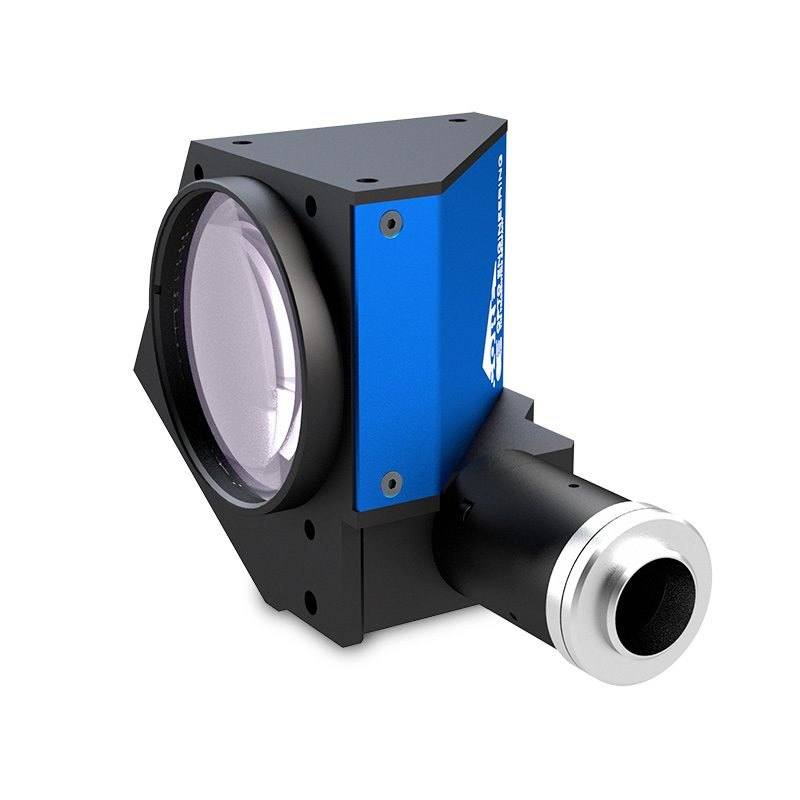
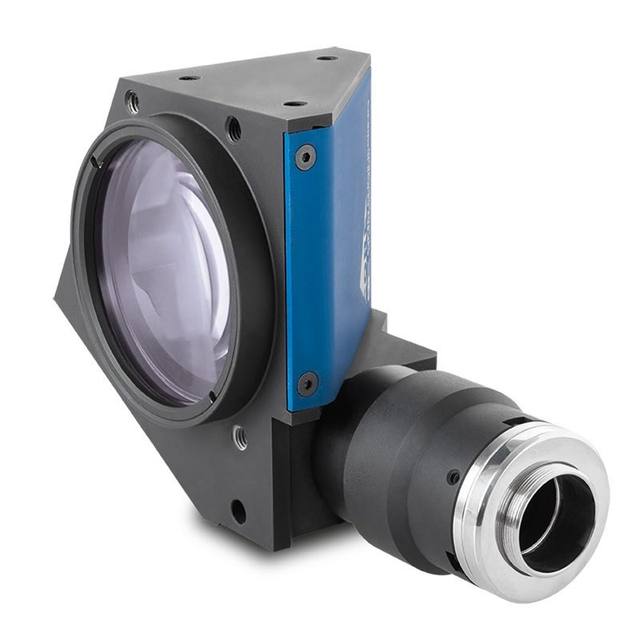
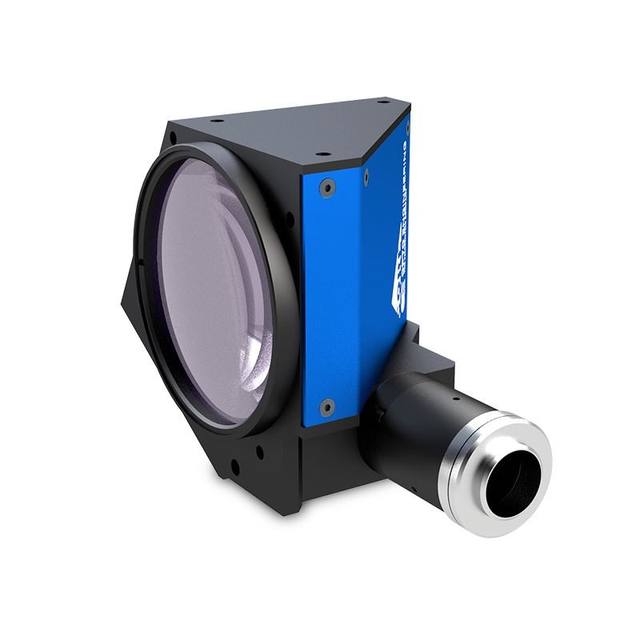
The Opto Engineering TCCR3M056-C is a telecentric CORE lens for 1.1″ sensors, with a C-mount and a magnification of 0.259×. Its working distance is 157.8 mm and its working f-number is wF/# 8. It is part of the TC3MHR CORE series of compact telecentric lenses for sensors up to 1.1″. The object is imaged at 0.259 times its real size on the sensor, giving a telecentric view of the part at a 157.8 mm standoff.
The accuracy figures are telecentricity < 0.08 (0.10) deg typ. (max) and distortion < 0.08 (0.10) % typ. (max). Telecentricity describes how parallel the chief rays are, which keeps the image scale steady when the part's distance from the lens changes slightly. Distortion describes how closely the image matches the true geometry of the part. Typical values describe expected performance, and the bracketed maximums should set the worst-case tolerance in a measurement budget.
Installation is governed by the 1.1″ max sensor limit and the C-mount. Use a 1.1″ or smaller sensor on a C-mount camera or adapter. The mechanics have to hold the 157.8 mm working distance so that focus stays consistent, and telecentric gauging is usually paired with illumination aligned to the optical axis, so plan the light source as part of the same design.
Best for
Telecentric gauging of parts on 1.1″ sensor cameras at 0.259× magnification.
Edge and hole measurement in production cells that need a 157.8 mm working distance.
Silhouette inspection on C-mount camera systems where stable scale matters.
Dimensional checks where the telecentric view keeps feature size steady under small part-height changes.
Selection notes
Use a 1.1″ or smaller sensor, the listed maximum.
Specify a C-mount camera or adapter.
Calculate the object field from the 0.259× magnification and the sensor size, then confirm the part fits within it.
Use the bracketed maximums (0.10 % distortion and 0.10 deg telecentricity) for tolerance planning, and the typical values for expected performance.
Specifications: General
Brand
Opto Engineering
Specifications: Optical
Lens mount
C-mount
Image circle / max sensor
1.1″ max sensor
Magnification
0.259×
Working distance
157.8 mm
Telecentric
Yes
Applications this product is commonly selected for. Open one to see the full recommended hardware and approach.
Matched automatically by: camera mount fits the lens mount · camera sensor is covered by the lens image circle — this lens: C-mount · 1.1″ max sensor image circle.