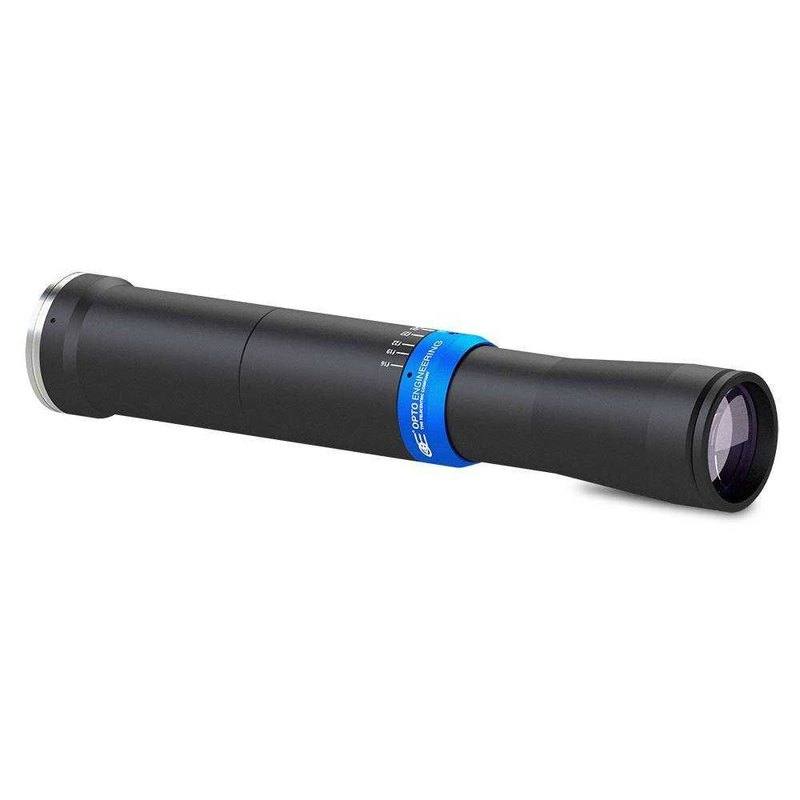
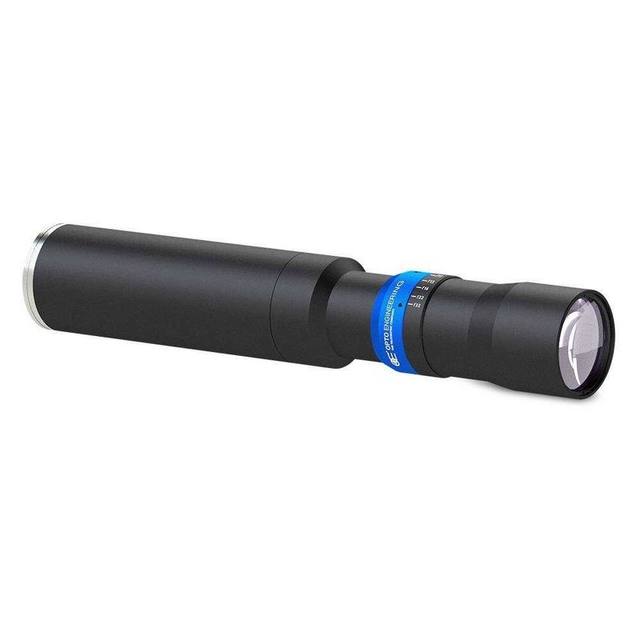
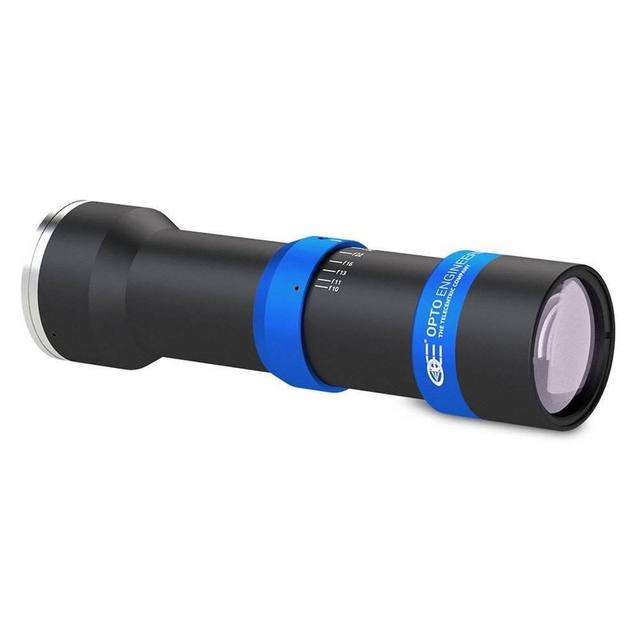
The Opto Engineering TCSE16M028VISNIR-F is a telecentric lens with 1.500× magnification, a 212.2 mm working distance and an F-mount. Its image circle is listed as Ø 37.4 mm, with the maximum sensor given as 2.4″, and that image circle is the figure to check against the camera sensor. The TCSE series is described as high-resolution telecentric lenses for 4/3”, APS-C, APS-H and full frame sensors.
The accuracy figures are distortion <0.06 (0.08) % typ. (max) and telecentricity <0.06 (0.08) deg typ. (max). Telecentric imaging keeps the chief rays close to parallel, so the size of a feature in the image stays nearly constant as the part moves toward or away from the lens. The wF/# span of 16-32 sits at higher f-numbers, which gives greater depth of field than lower f-numbers but passes less light, so the lighting plan must deliver enough intensity to offset that.
The 212.2 mm working distance provides clearance for fixtures, lighting and part handling. The F-mount requires a camera body that accepts F-mount optics. The model name carries the VISNIR designation, so the illumination and the camera sensor should be matched to the spectral band that designation indicates for the application.
Best for
Telecentric gauging where depth of field matters across variations in part height.
Cells that need 212.2 mm of working-distance clearance for fixtures, lighting and part handling.
Inspection at 1.500× magnification with a 2.4″ maximum sensor and Ø 37.4 mm image circle.
Applications specified around the VISNIR designation in the model name, with lighting and camera matched to that band.
Selection notes
Check the sensor diagonal against the Ø 37.4 mm image circle; the listed maximum sensor is 2.4″.
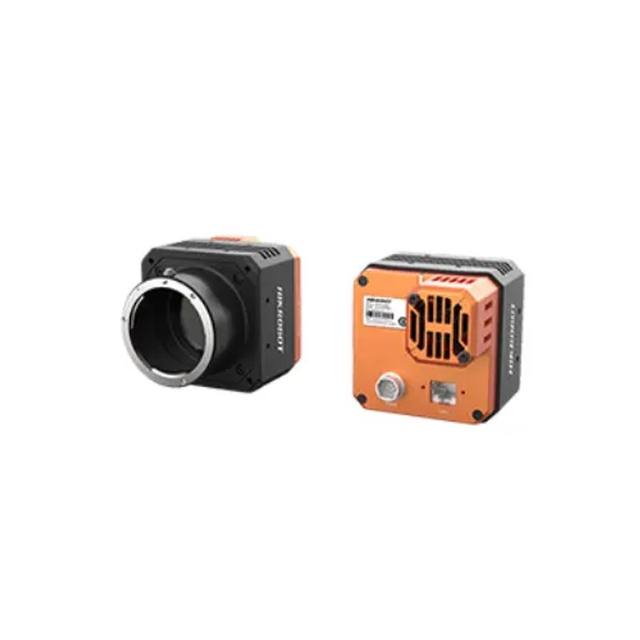
Confirm the camera body accepts F-mount lenses.
Plan lighting intensity for the wF/# 16-32 span, since the higher f-numbers pass less light.
Confirm that the illumination and the camera sensor match the spectral band indicated by the VISNIR designation in the model name.
Specifications: General
Brand
Opto Engineering
Specifications: Optical
Lens mount
F-mount
Image circle / max sensor
Ø 37.4 mm (max sensor 2.4″)
Magnification
1.500×
Working distance
212.2 mm
Telecentric
Yes
Applications this product is commonly selected for. Open one to see the full recommended hardware and approach.
Matched automatically by: camera mount fits the lens mount · camera sensor is covered by the lens image circle — this lens: F-mount · Ø 37.4 mm (max sensor 2.4″) image circle.